
In an era where wearables have evolved from clunky fitness trackers to sleek, discreet devices, the smart ring has emerged as one of the most polarizing innovations. Marketed as a minimalist alternative to smartwatches, these tiny rings promise health monitoring, gesture control, contactless payments, and even sleep tracking—all wrapped in a piece of jewelry that doesn’t scream “tech gadget.” But beyond the marketing hype, are smart rings actually useful, or are they simply overpriced trinkets for early adopters chasing novelty?
The answer isn’t binary. For some users, smart rings deliver tangible value—especially those who prioritize subtlety, continuous biometrics, and seamless integration into daily life. For others, they remain redundant, underpowered, or too limited to justify their cost. To understand where smart rings stand in 2024, we need to look past aesthetics and assess their functionality, reliability, privacy implications, and real-world use cases.
The Rise of the Smart Ring: From Concept to Consumer Reality
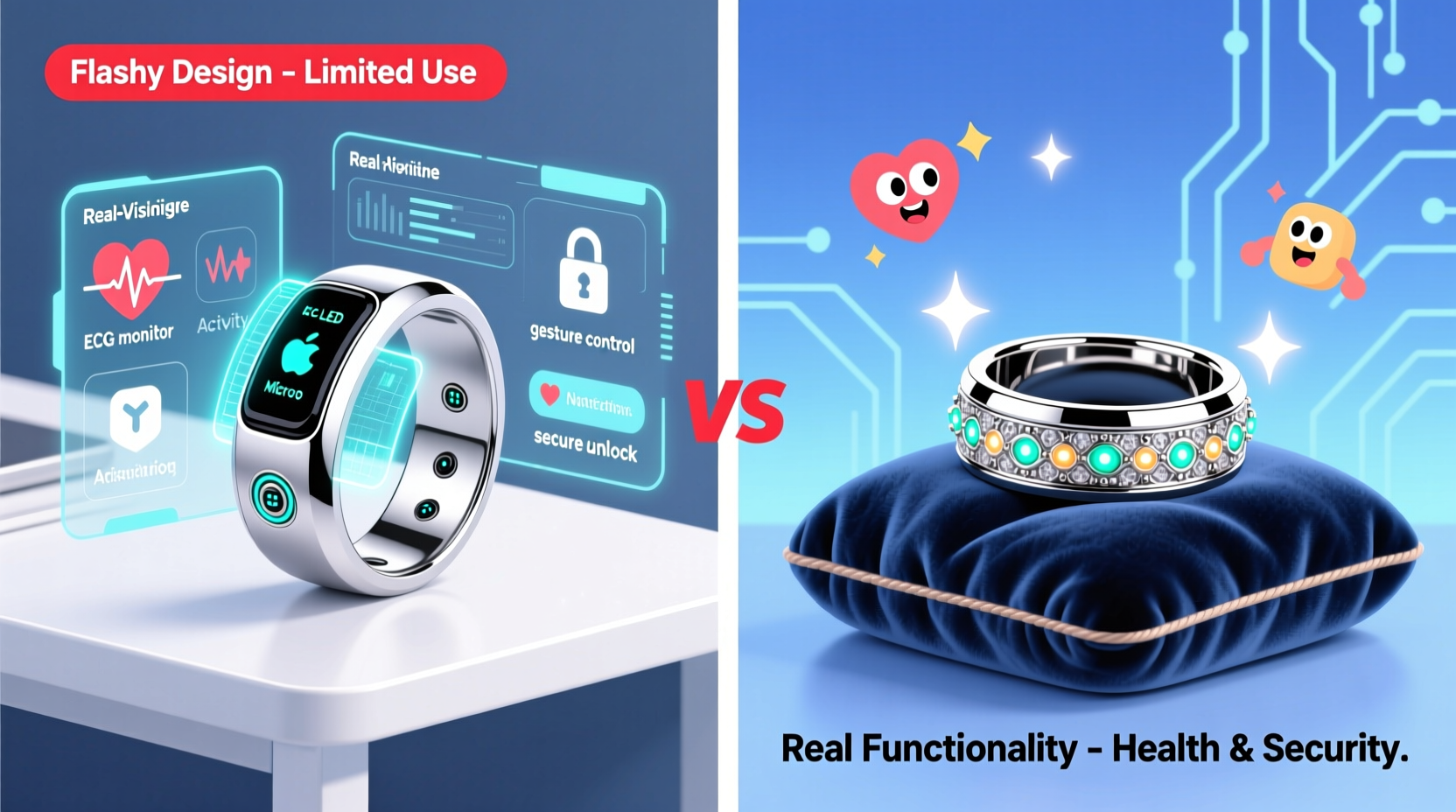
Smart rings were once confined to science fiction and prototype labs. Today, companies like Oura, Ultrahuman, Circular, and Samsung (with its rumored Galaxy Ring) are bringing them into mainstream consumer markets. The appeal lies in their form factor: unlike smartwatches, which require wrist space and frequent charging, smart rings sit unobtrusively on a finger, collecting data around the clock without drawing attention.
Early models focused almost exclusively on health tracking—measuring heart rate variability (HRV), body temperature, blood oxygen levels, and sleep stages. As sensor technology improved, so did functionality. Modern smart rings now support gesture recognition, NFC payments, smartphone unlocking, and even stress detection through continuous physiological monitoring.
Still, skepticism remains. Critics argue that many features either duplicate what smartphones and watches already do—or fall short due to hardware constraints. A ring’s small size limits battery life, processing power, and sensor accuracy compared to larger wearables. Yet, proponents counter that the trade-off is intentional: less distraction, more consistency.
“Wearables succeed when they become invisible. The smart ring isn’t about doing more—it’s about sensing more, quietly.” — Dr. Lena Patel, Digital Health Researcher at MIT Media Lab
Core Functions: What Can Smart Rings Actually Do?
To evaluate usefulness, let’s dissect the primary functions offered by leading smart rings:
- Sleep Tracking: One of the strongest use cases. Rings like the Oura Ring Gen3 and Ultrahuman Ring Air use infrared sensors to monitor sleep architecture—light, deep, REM cycles—with clinical-grade accuracy in some studies. They also track入睡 latency, restlessness, and recovery metrics.
- Heart Rate & HRV Monitoring: Continuous heart rate tracking enables insights into cardiovascular health, workout recovery, and autonomic nervous system balance. High HRV typically indicates good resilience; low HRV may signal fatigue or illness.
- Body Temperature Trends: Subtle shifts in baseline temperature can predict ovulation, detect early signs of infection (like flu or COVID-19), or identify hormonal fluctuations.
- Activity & Movement Sensing: While not replacements for GPS-enabled fitness trackers, smart rings log steps, active calories, and general movement patterns throughout the day.
- NFC Payments & Device Unlocking: Some models support tap-to-pay via embedded NFC chips and can unlock phones or laptops using Bluetooth proximity.
- Gesture Control: Experimental but growing. Certain rings allow users to answer calls, skip music tracks, or control smart home devices with predefined finger movements.
Useful or Flashy? A Real-World Breakdown
The utility of a smart ring depends heavily on individual needs and expectations. Consider the following scenarios:
For Athletes & Biohackers: High Utility
Endurance athletes and performance-focused individuals often rely on HRV and recovery scores to guide training intensity. A smart ring provides continuous, nighttime-optimized data without disrupting workouts. Because it stays on during showers and swimming (most are water-resistant), compliance is higher than with devices people remove frequently.
For Sleep-Deprived Professionals: Moderate to High Value
Chronic poor sleep affects cognitive function, mood, and long-term health. A user struggling with insomnia might benefit significantly from detailed sleep staging and personalized recommendations based on circadian rhythms. Unlike phone apps that estimate sleep, smart rings measure actual physiology.
For General Consumers: Limited Appeal
If you’re already using a smartwatch or fitness band that tracks steps, heart rate, and notifications, switching to a ring offers minimal added value—and sacrifices screen feedback, app access, and voice assistant integration. For casual users, the high price tag (often $300–$600) makes adoption hard to justify.
For Medical Monitoring (Emerging Potential)
Though not medical devices (yet), smart rings show promise in early disease detection. In pilot programs, Oura Ring data helped identify pre-symptomatic cases of respiratory infections among healthcare workers. Future integrations with telehealth platforms could enable proactive interventions.
“We’ve seen patients catch infections two days before symptoms appeared, purely through resting heart rate and temperature deviations.” — Dr. Rajiv Mehta, Preventive Care Physician, Cleveland Clinic
Comparison: Smart Rings vs. Alternatives
| Feature | Smart Ring | Smartwatch | Fitness Tracker |
|---|---|---|---|
| Battery Life | 4–7 days | 1–3 days | 5–10 days |
| Sleep Accuracy | High (proximity to arteries) | Moderate (motion artifacts) | Low-Moderate |
| Notifications | Limited (vibrations only) | Full (screen + sound) | Basic alerts |
| Water Resistance | Yes (shower/swim safe) | Varies | Mostly splash-proof |
| Price Range | $300–$600 | $200–$800 | $80–$200 |
| Discreetness | Very high | Low-Moderate | Moderate |
This comparison shows that while smart rings excel in specific areas—particularly passive health monitoring and discretion—they lag behind in interactivity and versatility. Their niche is clear: users who want rich biometric data without wearing a visible tech device.
Mini Case Study: Sarah, a Remote Worker Managing Burnout
Sarah, a 34-year-old software developer working remotely, struggled with chronic fatigue and inconsistent sleep. She tried multiple sleep apps and a Fitbit, but found herself removing the tracker at night or ignoring insights buried in complex dashboards.
After reading about biohacking tools, she invested in an Oura Ring. Within two weeks, the ring detected elevated resting heart rate and reduced HRV—markers of sympathetic overdrive—despite her feeling “fine.” The app suggested she take recovery days, reduce caffeine after noon, and maintain a stricter bedtime.
Over three months, Sarah adjusted her routine based on nightly readiness scores. Her deep sleep increased by 22%, daytime focus improved, and she reported fewer headaches. For her, the ring wasn’t about convenience—it was about gaining objective insight into a condition she couldn’t perceive subjectively.
Was it worth $599? In her words: “It paid for itself in avoided sick days and better work quality.”
Practical Tips for Evaluating a Smart Ring Purchase
- Assess your primary health or productivity goals. Are you optimizing sleep, managing stress, or tracking fertility?
- Check compatibility. Does the ring work with your smartphone OS and preferred health apps (Apple Health, Google Fit)?
- Review battery requirements. Most charge every 4–7 days—can you commit to consistent recharging?
- Consider long-term wear comfort. Rings should fit snugly but not restrict circulation.
- Look at data ownership policies. Who owns your biometrics? Can you export raw data?
Step-by-Step Guide: Getting Started with a Smart Ring
- Purchase & Unbox: Choose a model aligned with your goals (e.g., Oura for sleep, Ultrahuman for metabolic insights).
- Download Companion App: Install the official app and create an account.
- Charge Fully Before First Use: Ensure the ring starts with maximum battery.
- Select Proper Finger: Most manufacturers recommend the index or middle finger on the non-dominant hand for optimal sensor contact.
- Calibrate Baseline: Wear the ring consistently for 5–7 nights to establish personal baselines for HRV, temperature, and sleep.
- Set Goals: Define objectives—better sleep, higher activity, lower stress—and enable relevant notifications.
- Review Weekly Reports: Analyze trends, adjust habits, and refine routines based on insights.
- Integrate with Other Tools: Sync data with Apple Health or wearable ecosystems for holistic tracking.
FAQ: Common Questions About Smart Rings
Can smart rings replace my smartwatch?
Not entirely. While they offer superior passive health tracking, they lack screens, voice assistants, GPS, and robust notification systems. Most users keep both or choose one based on priority: visibility and interaction (watch) versus stealth and biometrics (ring).
Are smart rings accurate?
They are generally accurate for heart rate, HRV, and sleep staging when worn correctly, though not clinically certified. Independent studies show Oura Ring correlates closely with ECG and polysomnography results. However, accuracy drops if the ring is too loose or worn on cold fingers.
Do smart rings pose privacy risks?
Yes. Biometric data is highly sensitive. Always review the manufacturer’s data policy. Prefer brands that encrypt data, allow local storage options, and don’t sell information to third parties. Avoid linking rings to employer-sponsored wellness programs unless privacy safeguards are transparent.
Final Verdict: Niche Tool, Not Mass-Market Must-Have
Smart rings are not useless—but they aren’t universally useful either. Their value lies in specialization. For individuals deeply invested in health optimization, sleep science, or discreet monitoring, they offer unique advantages over bulkier alternatives. For everyone else, they remain a premium accessory with marginal benefits.
The future may change this equation. As AI interprets biometric patterns more intelligently, and as rings gain FDA clearance for medical use, their role could expand from lifestyle gadgets to preventive health tools. Until then, buyers should approach them with clear intent, not impulse.




 浙公网安备
33010002000092号
浙公网安备
33010002000092号 浙B2-20120091-4
Comments
No comments yet. Why don't you start the discussion?