
Staying hydrated is one of the simplest yet most overlooked aspects of health. Despite knowing that water supports energy levels, cognitive function, and physical performance, many people still struggle to drink enough throughout the day. Enter smart water bottles—devices that promise to track intake, glow reminders, sync with apps, and even celebrate milestones. But behind the sleek designs and blinking LEDs, a critical question remains: are these gadgets genuinely effective tools for improving hydration, or are they merely overpriced timers wrapped in plastic?
The answer isn’t binary. For some, a smart bottle can be a game-changer. For others, it’s digital clutter. The truth lies in understanding how hydration habits form, what drives behavior change, and whether technology adds meaningful value—or just distraction.
How Smart Water Bottles Work
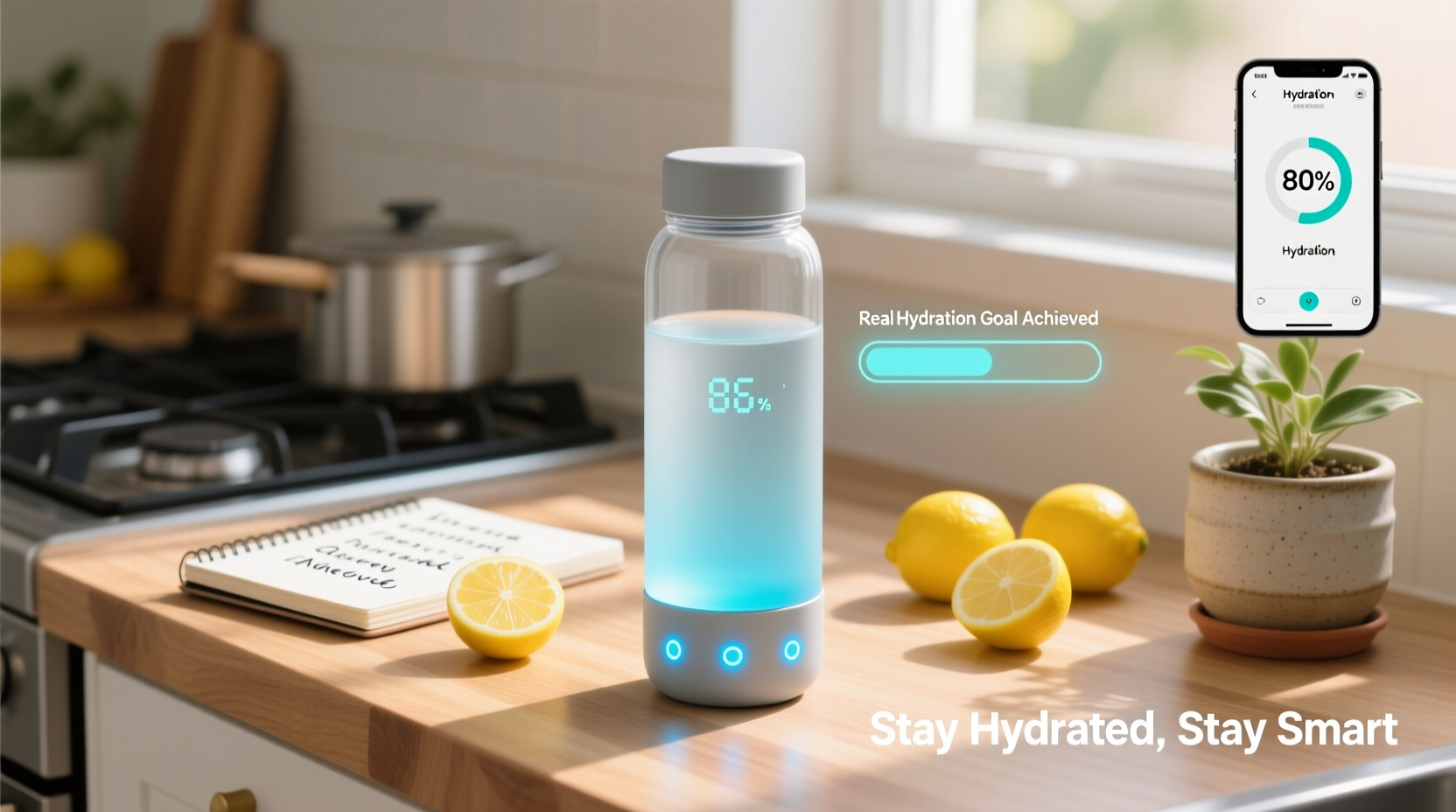
Smart water bottles use embedded sensors, Bluetooth connectivity, and companion apps to monitor your drinking patterns. Most models detect movement and tilt to estimate when you take a sip. Some use capacitive sensors to measure liquid level changes, while others rely on manual input through app logging. Advanced versions include features like temperature tracking, hydration goal setting, reminder notifications, and integration with fitness trackers such as Apple Health or Google Fit.
Popular brands like HidrateSpark, Thermos Hydration Bottle, and Ozmo Smart Bottle offer variations in design and functionality. While not medical devices, they aim to bridge the gap between intention and action by making hydration more visible and interactive.
But functionality doesn’t equal effectiveness. Just because a bottle glows blue every hour doesn’t mean you’ll reach for it—especially if you’re deep in focus at work or mid-workout. The real test is whether these features translate into lasting behavioral shifts.
The Science Behind Habit Formation and Hydration
Hydration is less about precision and more about consistency. According to the National Academies of Sciences, Engineering, and Medicine, adequate daily fluid intake is about 3.7 liters (125 oz) for men and 2.7 liters (91 oz) for women from all beverages and foods. However, individual needs vary based on climate, activity level, body size, and metabolism.
The challenge isn’t usually knowledge—it’s execution. Behavioral psychology shows that habit formation relies on three key components: cue, routine, and reward. A smart bottle attempts to manipulate this loop:
- Cue: A light pulse or phone notification reminds you to drink.
- Routine: You take a sip from the bottle.
- Reward: The app registers progress, sometimes with celebratory animations or streaks.
This structure mirrors principles used in successful habit-tracking apps. But unlike meditation or step counting, hydration lacks immediate feedback. You don’t “feel” the benefit of drinking water right away unless you were already dehydrated. That delayed reinforcement makes motivation harder to sustain.
“Technology can support behavior change, but only if it aligns with the user’s lifestyle and psychological triggers.” — Dr. Lena Patel, Behavioral Scientist at Stanford Wellness Lab
Do Smart Bottles Actually Improve Hydration?
Several small-scale studies have explored the impact of smart hydration devices. A 2021 pilot study published in the Journal of Medical Internet Research found that participants using connected water bottles increased their average daily intake by 42% over four weeks compared to a control group. Notably, engagement dropped after eight weeks, suggesting novelty plays a significant role.
In real-world settings, success often depends on personal context:
- Office workers with sedentary routines may benefit from hourly nudges.
- Athletes might prefer simpler tracking via wearables they already use.
- Parents managing kids’ hydration may find visual cues helpful.
- Minimalists may see little value beyond basic mindfulness.
The strongest evidence supports smart bottles as short-term motivators. They work best during transitions—starting a new fitness plan, recovering from illness, or adjusting to a remote work schedule. Long-term adherence, however, requires internal motivation, not external prompts.
Comparing Smart Bottles: Features vs. Real Utility
| Feature | Potential Benefit | Common Pitfall |
|---|---|---|
| LED Reminders | Visual cue during focused work | Easily ignored; may cause notification fatigue |
| App Integration | Syncs with health data for holistic tracking | Requires consistent charging and app usage |
| Auto-Tracking | Reduces manual logging effort | Sensors can misfire (e.g., pouring water without drinking) |
| Temperature Control | Keeps water cold up to 24 hours | Increases cost and weight significantly |
| Streak Tracking & Badges | Engages gamification psychology | Loses appeal once novelty fades |
While these features sound compelling on paper, their real-world utility diminishes if they add friction rather than reduce it. A bottle that needs nightly charging or frequent recalibration defeats the purpose of convenience.
Real-World Example: Sarah’s 6-Week Experiment
Sarah, a 34-year-old software developer, struggled with afternoon fatigue and headaches. Her doctor suggested she evaluate her hydration. She purchased a HidrateSpark PRO and committed to using it for six weeks.
Weeks 1–2: She drank nearly 100 oz daily, driven by glowing reminders and app notifications. Headaches decreased, and energy improved.
Weeks 3–4: She began ignoring some alerts, especially during meetings. The app showed missed goals, triggering mild guilt.
Weeks 5–6: She stopped charging the bottle. Without the light cues, intake dropped—but not to pre-experiment levels. She now keeps a regular insulated bottle on her desk and refills it twice a day, a rhythm she learned from the smart device.
Verdict: The smart bottle didn’t create permanent compliance, but it served as a training wheel. It helped her recognize patterns and establish a baseline routine she could maintain independently.
When Smart Bottles Help (and When They Don’t)
Smart water bottles are most effective under specific conditions:
- You’re starting from a place of chronic underhydration.
- You respond well to visual or digital prompts.
- You enjoy data tracking and app-based feedback.
- You’re in a transitional phase (new job, fitness journey, post-illness recovery).
They tend to fail when:
- The device is inconvenient to clean or charge.
- Notifications become background noise.
- Users expect automatic results without mindset shifts.
- The cost outweighs perceived benefit (many models range $60–$90).
For those already mindful of hydration, a smart bottle offers marginal gains. For those who forget to drink altogether, it can provide crucial scaffolding.
Step-by-Step: Building Sustainable Hydration Habits
Whether you use a smart bottle or not, lasting hydration improvement follows a structured approach:
- Assess your current intake: Track your drinking for three days using a journal or app. Note when you feel thirsty or fatigued.
- Set a realistic goal: Increase gradually. If you drink 40 oz/day, aim for 50 oz next week, then 60 oz the following.
- Create environmental cues: Place a filled bottle at your workstation, bedside, or gym bag.
- Pair drinking with existing habits: Drink a glass after brushing teeth, before each meal, or after checking email.
- Monitor physical signals: Watch for dark urine, dry mouth, or brain fog—early signs of dehydration.
- Review weekly: Adjust volume and timing based on energy, activity, and weather.
This method builds intrinsic awareness, reducing reliance on gadgets over time.
Expert Insight: What Health Professionals Say
“Hydration tracking devices can be useful diagnostic tools, much like food journals. They reveal gaps in behavior. But no gadget replaces bodily intuition.” — Dr. Marcus Tran, Primary Care Physician and Sports Medicine Consultant
Medical experts emphasize that over-reliance on technology can lead to obsessive tracking or anxiety around “perfect” hydration. Overhydration, though rare, is a real risk—especially among endurance athletes who force fluid intake without electrolyte balance.
The goal isn’t to hit an exact number every day, but to develop a responsive relationship with your body’s needs.
Frequently Asked Questions
Can smart water bottles accurately track how much I drink?
Most use motion and sensor data to estimate intake, but accuracy varies. Sudden movements, sharing the bottle, or refilling without drinking can skew results. They’re best viewed as approximations, not lab-grade measurements.
Are smart bottles worth the price?
For under $20, a basic insulated bottle with time markers can achieve similar results through visual cues. Smart bottles justify their cost only if you actively engage with the app, respond to reminders, and benefit from data insights. For casual users, they’re likely overkill.
Do I need to charge my smart bottle every day?
Most require charging every 5–10 days, depending on usage. Frequent charging can disrupt consistency, especially if the bottle becomes unusable when powered off. Consider models with long battery life and USB-C charging for convenience.
Checklist: Is a Smart Water Bottle Right for You?
- ☐ I often forget to drink water during the day.
- ☐ I enjoy using health and fitness apps regularly.
- ☐ I’m willing to charge the bottle every few days.
- ☐ I want objective data on my hydration patterns.
- ☐ I’ve tried basic methods (marked bottles, alarms) without success.
- ☐ I’m in a phase of active health improvement (fitness, weight management, recovery).
If you checked four or more, a smart bottle may be a worthwhile investment. If fewer, consider low-tech solutions first.
Conclusion: Tools, Not Solutions
Smart water bottles aren’t magic. They don’t hydrate you—they remind you to hydrate yourself. Their value lies not in their circuitry, but in their ability to make invisible habits visible. For some, that visibility sparks change. For others, it’s fleeting.
The most effective hydration strategy combines awareness, simplicity, and sustainability. Technology can jumpstart the process, but lasting results come from listening to your body, designing supportive environments, and building routines that endure beyond the glow of a LED.
If you’re curious, try one for a month. Use it as a mirror, not a crutch. Then ask: did it teach you something you couldn’t have learned otherwise? If yes, it served its purpose. If not, return it, refill your old bottle, and drink mindfully anyway.




 浙公网安备
33010002000092号
浙公网安备
33010002000092号 浙B2-20120091-4
Comments
No comments yet. Why don't you start the discussion?