
In an era where office workers spend upwards of eight hours a day seated, the standing desk has emerged as a symbol of modern ergonomic reform. Marketed as a solution to back pain, poor posture, and sedentary-related health risks, these adjustable workstations have flooded homes and corporate offices alike. But beneath the sleek designs and wellness claims lies a critical question: Are standing desks genuinely better for posture, or are they simply another overhyped trend in the ever-evolving world of workplace ergonomics?
The answer isn’t binary. While research supports certain benefits of alternating between sitting and standing, the idea that standing all day is inherently superior is a misconception. The truth lies in movement, balance, and proper implementation—factors often overlooked in the marketing of standing desks.
The Posture Problem: What Sitting Really Does to Your Body
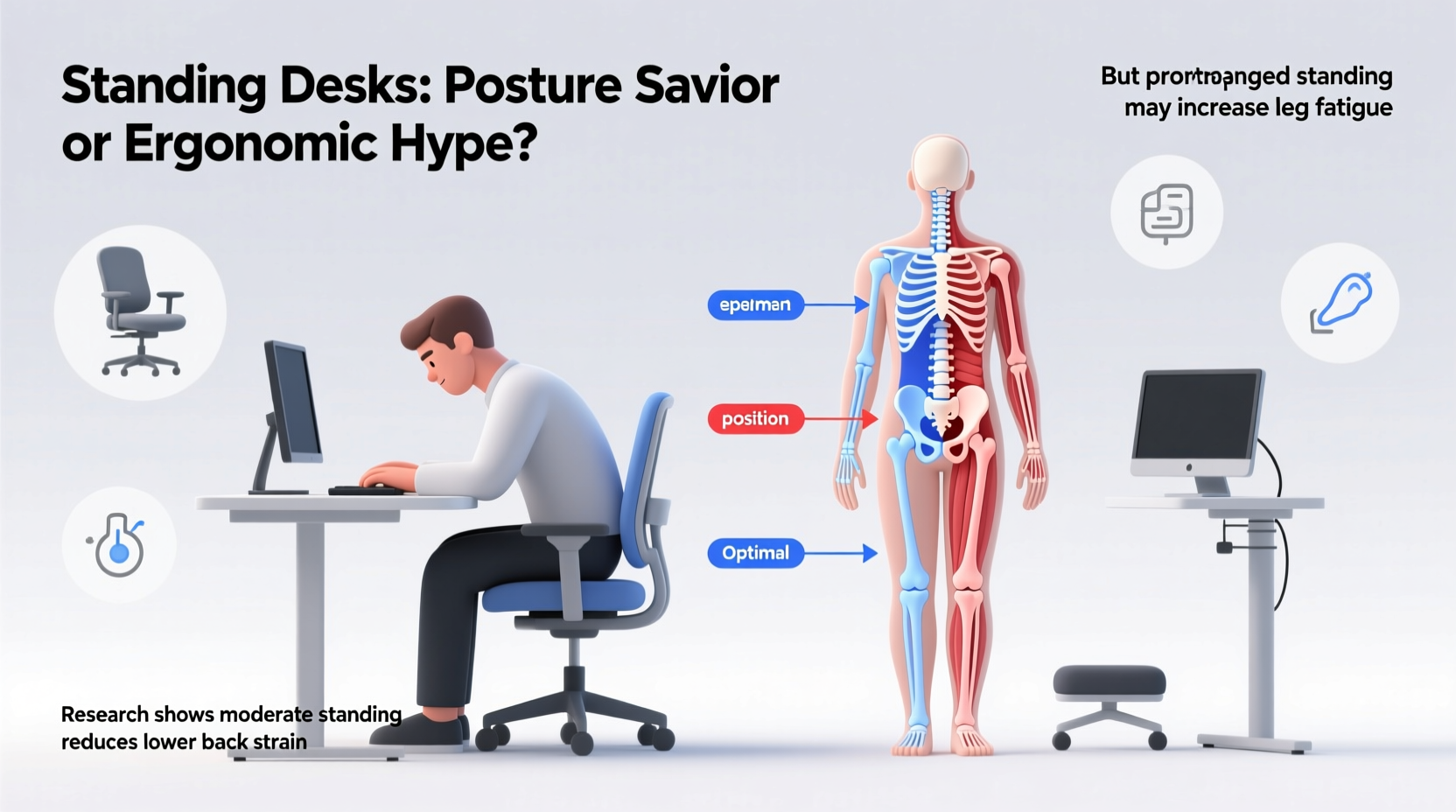
Prolonged sitting, especially in poorly designed chairs or at improperly configured desks, contributes significantly to postural deterioration. When seated for extended periods, the hip flexors tighten, the spine curves into a C-shape (particularly in slouched positions), and the shoulders roll forward—leading to what’s commonly known as “tech neck” or forward head posture.
A 2020 study published in the journal *Ergonomics* found that individuals who sit for more than six hours daily show measurable declines in spinal alignment and increased muscle fatigue in the lower back and neck. This isn't just about discomfort; chronic poor posture can lead to long-term musculoskeletal disorders, including disc degeneration and nerve compression.
Enter the standing desk—a seemingly logical antidote. By encouraging upright work, it promises to realign the spine, engage core muscles, and reduce pressure on the lumbar region. But does standing actually fix these issues, or does it merely shift them?
Standing Desks: The Science Behind the Hype
Research on standing desks presents a nuanced picture. A meta-analysis from the *Cochrane Database of Systematic Reviews* concluded that sit-stand desks lead to a modest reduction in lower back pain and improved self-reported comfort levels. However, the same review noted no significant improvement in actual posture metrics when users stood for prolonged periods without guidance or training.
One key finding across multiple studies is that the benefit comes not from standing itself, but from movement and variation. Dr. Peter Kahn, an occupational biomechanist at the University of Michigan, explains:
“Standing isn’t a posture correction tool—it’s a movement strategy. The real value of a standing desk is its ability to break up static sitting. It’s not about replacing sitting with standing, but about introducing dynamic transitions throughout the day.” — Dr. Peter Kahn, Occupational Biomechanist
This insight shifts the conversation from “standing vs. sitting” to “movement vs. stagnation.” Standing desks become effective only when used as part of a broader strategy to reduce sedentariness.
Common Misconceptions About Standing Desks
Despite growing popularity, several myths persist about standing desks and their impact on posture:
- Misconception 1: Standing all day improves posture. In reality, standing for too long can cause new problems—such as plantar fasciitis, varicose veins, and lower limb fatigue—especially if done on hard surfaces without supportive footwear.
- Misconception 2: Any standing desk will help. Poorly adjusted desks—too high or too low—can worsen posture by forcing users to crane their necks or hunch their shoulders.
- Misconception 3: You’ll burn hundreds of extra calories. While standing burns slightly more than sitting (about 0.15 kcal per minute more), the metabolic boost is modest and shouldn’t be mistaken for exercise.
Optimizing Your Standing Desk for Real Postural Benefits
To derive actual postural improvements from a standing desk, setup and usage matter far more than ownership. Here’s how to use one effectively:
1. Proper Desk and Monitor Height
Your desk should allow your elbows to rest at 90 degrees when typing, with wrists straight and shoulders relaxed. The top of your monitor should be at or slightly below eye level, about an arm’s length away. This prevents neck strain and encourages neutral spinal alignment.
2. Anti-Fatigue Mat and Supportive Footwear
Standing on concrete or hardwood floors increases discomfort. An anti-fatigue mat encourages subtle muscle engagement and reduces joint stress. Wear supportive shoes—even minimalist ones with arch support—to prevent foot pain.
3. Dynamic Movement Integration
Don’t just stand still. Shift weight between legs, perform micro-movements (like calf raises), or use a small balance pad to keep muscles engaged. Consider pairing your desk with a walking pad for light activity during calls.
4. Timed Transitions
Follow a sit-stand rhythm. A common recommendation is the 20-8-2 rule: 20 minutes sitting, 8 minutes standing, and 2 minutes moving (stretching, walking). This keeps the body active without overloading any single posture.
“The best posture is the next posture.” — Katy Bowman, Biomechanist and Movement Educator
Checklist: How to Use a Standing Desk Correctly
- ✅ Adjust desk height so elbows form a 90-degree angle when typing
- ✅ Position monitor at eye level, centered in front of you
- ✅ Use an anti-fatigue mat if standing on hard flooring
- ✅ Wear supportive shoes or go barefoot on a cushioned surface
- ✅ Start with 15-minute standing intervals, building up over weeks
- ✅ Alternate between sitting and standing every 30–60 minutes
- ✅ Incorporate light movement during standing periods (shift weight, stretch)
- ✅ Avoid locking knees or leaning on one leg for extended time
Real-World Example: Sarah’s Posture Transformation
Sarah, a 34-year-old graphic designer, spent nearly a decade working at a standard-height desk. Over time, she developed chronic lower back pain and frequent tension headaches. After purchasing a standing desk, she initially stood for three hours straight each day—only to develop foot pain and knee discomfort.
It wasn’t until she consulted an ergonomic specialist that she realized her mistake. Her monitor was too low, forcing her to look down, and her desk height caused shoulder elevation while typing. With adjustments—raising the monitor, lowering the desk slightly, adding a mat, and adopting a 30-min sit/stand cycle—her symptoms began to improve within six weeks.
“I thought just having the desk would fix everything,” Sarah said. “But it was learning how to use it properly that made the difference.”
Sit vs. Stand: A Comparative Overview
| Factor | Sitting (Poorly Configured) | Standing (Prolonged) | Alternating Sit-Stand (Optimal) |
|---|---|---|---|
| Spinal Alignment | Poor (increased lumbar flexion) | Moderate (if posture is maintained) | Best (dynamic alignment) |
| Muscle Fatigue | High in lower back and neck | High in legs and feet | Low (distributed load) |
| Circulation | Reduced blood flow | Improved leg circulation | Optimized through movement |
| Productivity Impact | Decreases after long periods | May dip due to discomfort | Stable or improved |
| Long-Term Postural Risk | High (kyphosis, anterior pelvic tilt) | Moderate (joint overload) | Low (with proper use) |
FAQ: Standing Desks and Posture
Can a standing desk fix my slouching?
Not automatically. A standing desk can help reduce slouching if used correctly, but poor standing posture (e.g., leaning, locked knees) can be just as harmful. Combine desk use with posture awareness and core strengthening exercises for lasting results.
How long should I stand at my desk each day?
There’s no one-size-fits-all answer, but experts recommend starting with 30–60 minutes total per day, broken into 15–20 minute intervals. Gradually increase as tolerated, aiming for no more than two hours of cumulative standing during an eight-hour workday.
Do standing desks reduce back pain?
Yes, for many users—but only when integrated into a balanced routine. Studies show a 30–50% reduction in self-reported lower back pain among those who alternate sitting and standing, compared to those who remain seated all day.
Conclusion: Beyond the Hype—A Balanced Approach to Posture
The standing desk is neither a miracle cure nor a pointless gadget. Its value lies in its ability to disrupt the sedentary norm and encourage movement—a cornerstone of healthy posture and long-term musculoskeletal health. However, like any tool, its effectiveness depends on how it’s used.
Simply swapping a chair for a standing position won’t correct years of postural imbalance. True improvement comes from intentional ergonomics: proper setup, regular transitions, and mindful body awareness. When combined with core strength, stretching, and periodic movement breaks, a standing desk becomes part of a holistic strategy—not a standalone solution.




 浙公网安备
33010002000092号
浙公网安备
33010002000092号 浙B2-20120091-4
Comments
No comments yet. Why don't you start the discussion?