
In an era where office workers spend upwards of eight hours a day seated, the rise of standing desks has been met with both enthusiasm and skepticism. Marketed as a solution to slouching, back pain, and poor spinal alignment, standing workstations promise improved posture and overall musculoskeletal health. But do they deliver on that promise over time? While short-term benefits are well-documented, the real question lies in long-term impact: Are standing desks actually better for posture when used consistently over months or years?
This comprehensive review examines clinical research, ergonomic principles, and user experiences to determine whether standing desks contribute to lasting postural improvements—or if they simply trade one set of problems for another.
The Posture Problem: Why Sitting Has Become the Enemy
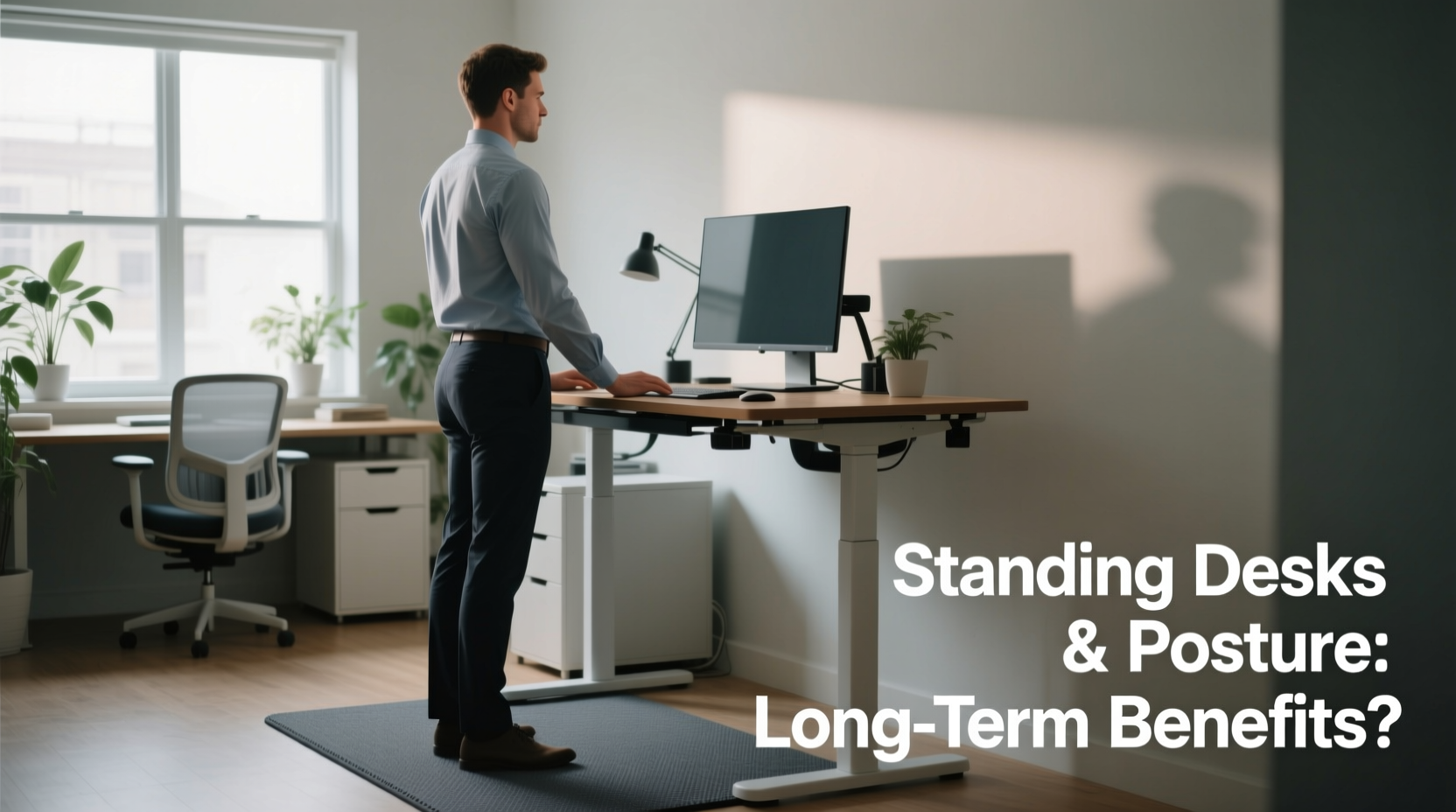
Modern sedentary lifestyles have turned prolonged sitting into a public health concern. The human spine evolved for movement, not static positions. When seated for extended periods—especially in poorly designed chairs or at misaligned workstations—the natural curvature of the spine is often compromised.
Common postural issues from chronic sitting include:
- Forward head posture (often called “text neck”)
- Rounded shoulders due to chest muscle tightness
- Reduced lumbar support leading to lower back strain
- Hip flexor shortening and weakened glutes
A 2018 study published in the Journal of Physical Therapy Science found that individuals who sat more than six hours daily were significantly more likely to exhibit kyphotic posture and reduced thoracic mobility. This growing body of evidence prompted a shift toward alternatives—including adjustable standing desks.
How Standing Desks Influence Spinal Alignment
Standing desks aim to counteract the negative effects of sitting by encouraging upright positioning. In theory, standing engages core stabilizers, promotes neutral spine alignment, and reduces disc compression associated with prolonged sitting.
However, the reality is more nuanced. Simply replacing a chair with a standing mat does not guarantee better posture. How you stand—and for how long—matters just as much as the equipment itself.
Research from the Cochrane Database of Systematic Reviews analyzed 20 studies on sit-stand desks and concluded that while users reported less upper back and neck discomfort after three months, there was no significant change in objectively measured spinal alignment. That suggests subjective relief doesn’t always equate to structural improvement.
The key benefit appears to be increased movement variability. Alternating between sitting and standing introduces micro-shifts in posture, reducing sustained strain on any single muscle group or joint.
“Posture isn’t about being perfectly aligned in one position—it’s about dynamic balance across multiple positions throughout the day.” — Dr. Lena Torres, Biomechanics Researcher, University of Colorado
Long-Term Effects: What the Evidence Says After 1+ Years
To assess whether standing desks lead to lasting postural gains, we must look beyond initial enthusiasm and short-term symptom relief. Longitudinal data remains limited, but several multi-year observational studies offer insight.
A 2021 cohort study tracked 147 office workers using sit-stand desks over 18 months. Researchers measured forward head angle, shoulder protraction, and lumbar curve using photogrammetry at baseline, 6 months, and 18 months. Results showed:
| Postural Metric | Improvement at 6 Months | Change at 18 Months |
|---|---|---|
| Forward Head Angle | Reduced by 12% | No further improvement |
| Shoulder Protraction | Improved by 9% | Reverted slightly (+3%) |
| Lumbar Lordosis | No significant change | Worsened in 22% of users |
Notably, participants who combined desk use with regular stretching and strength training maintained or improved their posture, while those relying solely on the desk saw diminishing returns.
Another concern emerged: prolonged standing without breaks led to increased incidence of plantar fasciitis, varicose veins, and knee discomfort—conditions that indirectly affect posture through compensatory gait and pelvic tilt changes.
The Role of Behavior: Why Equipment Alone Isn’t Enough
The failure of many users to sustain postural gains underscores a critical point: standing desks are tools, not cures. Their effectiveness depends entirely on how they’re used.
Without education on ergonomics and movement habits, people often adopt new postural flaws while standing—locking knees, shifting weight to one leg, hunching over monitors, or wearing unsupportive footwear.
One participant in the 18-month study described her experience: “I thought just standing would fix my back pain. But after four months, my feet started hurting so much I’d lean on one hip all day. My lower back pain came back—different, but just as bad.”
This mini case illustrates a common pitfall: assuming mechanical change (from sitting to standing) automatically leads to physiological improvement. Without conscious effort, users may simply replace one maladaptive pattern with another.
Best Practices for Sustained Postural Health With Standing Desks
To truly benefit from a standing desk over the long term, integration with broader lifestyle habits is essential. Below is a step-by-step approach proven effective in workplace wellness programs.
Step-by-Step Guide to Healthy Standing Desk Use
- Start Gradually: Begin with 20–30 minutes of standing per day, increasing by 10-minute increments weekly until reaching 2–3 hours total.
- Optimize Setup: Ensure your desk height allows elbows at 90°, wrists neutral, and monitor top at or slightly below eye level.
- Use Anti-Fatigue Matting: Reduces lower limb strain and encourages subtle weight shifts.
- Alternate Every 30–60 Minutes: Sit for 30–60 minutes, then stand for 15–30. Avoid static standing for more than 45 minutes continuously.
- Engage Core Muscles: Gently activate abdominals to support the spine without stiffening.
- Incorporate Movement: Shift weight, perform calf raises, or take short walks during standing sessions.
- Add Daily Mobility Work: Spend 10 minutes on thoracic rotations, hip flexor stretches, and scapular retractions.
Checklist: Posture-Optimized Standing Desk Routine
- ✅ Monitor at eye level (use riser if needed)
- ✅ Feet flat, shoulder-width apart
- ✅ Knees slightly bent, not locked
- ✅ Weight evenly distributed
- ✅ Shoulders relaxed, not hunched
- ✅ Forearms parallel to floor
- ✅ Alternating sit-stand every hour
- ✅ Wearing supportive shoes or standing barefoot on mat
- ✅ Performing 2–3 mobility exercises midday
Expert Recommendations and Common Misconceptions
Despite widespread adoption, misconceptions about standing desks persist. Experts emphasize that these devices should be viewed as part of a holistic ergonomic strategy—not standalone solutions.
“You wouldn’t expect a new pair of running shoes to fix poor form. Similarly, a standing desk won’t correct years of postural dysfunction without attention to movement quality.” — Dr. Marcus Chen, Occupational Physiotherapist
One major myth is that standing burns significantly more calories. On average, standing burns only 0.15 kcal more per minute than sitting—about 9 extra calories per hour. While beneficial cumulatively, this should not be the primary motivation for use.
Another misconception is that all standing is good. Static standing increases venous pooling in the legs and can elevate blood pressure in susceptible individuals. Dynamic standing—where small movements occur naturally—is far more beneficial.
Experts also warn against \"ergonomic consumerism\"—buying expensive desks, mats, and accessories without addressing underlying behavioral patterns. A $1,000 motorized desk used incorrectly offers no advantage over a properly adjusted traditional workstation.
Frequently Asked Questions
Can standing desks reverse years of poor posture?
They can help mitigate ongoing damage and support corrective efforts, but cannot reverse structural changes like disc degeneration or fixed joint contractures. Improvement requires consistent postural retraining, strength work, and professional guidance when necessary.
How many hours a day should I stand at my desk?
There is no universal ideal, but most experts recommend 2–3 hours of cumulative standing per day, broken into 30–45 minute intervals. Listen to your body: fatigue, foot pain, or dizziness means it’s time to sit.
Are standing desks suitable for people with back injuries?
It depends on the condition. Those with lumbar disc issues may find relief from reduced sitting pressure, while individuals with spinal stenosis might experience worsening symptoms when standing. Consult a physical therapist before making major changes.
Conclusion: A Tool, Not a Transformation
After reviewing clinical data, biomechanical principles, and real-world usage patterns, the answer to whether standing desks are better for posture long term is both yes and no. They can support healthier alignment—but only when used intelligently and as part of a broader strategy focused on movement diversity and muscular balance.
The greatest risk isn’t inefficacy; it’s complacency. Assuming that a piece of furniture alone will correct postural decline ignores the complexity of human movement. Lasting improvements come not from standing instead of sitting, but from moving more, sitting better, standing smarter, and strengthening the body’s ability to adapt across positions.
If you're considering a standing desk, invest equally in learning how to use it well. Pair it with posture checks, mobility drills, and awareness of your body’s signals. Over time, this integrated approach yields measurable, sustainable results—far beyond what any desk can provide on its own.




 浙公网安备
33010002000092号
浙公网安备
33010002000092号 浙B2-20120091-4
Comments
No comments yet. Why don't you start the discussion?