
When it comes to holiday lighting, the flicker of a candle once defined the season’s warmth. Today, electric lights carry that legacy forward—but with a twist: do we seek stillness or motion in our glow? The debate between twinkle (or twinkling) lights and steady-burning Christmas lights isn’t just about preference; it’s about emotion, ambiance, and the subtle psychology of light. For many, the gentle flicker of twinkling bulbs evokes nostalgia, enchantment, and childlike wonder. Others argue that steady lights offer elegance, consistency, and a timeless charm. So, which truly creates a more magical Christmas vibe?
The answer isn’t absolute—it depends on context, design goals, and emotional intent. By examining how each type affects mood, complements decor, and performs in real-world settings, we can make informed choices that elevate our seasonal spaces.
The Psychology of Light: How Flickering vs. Steady Illumination Affects Mood
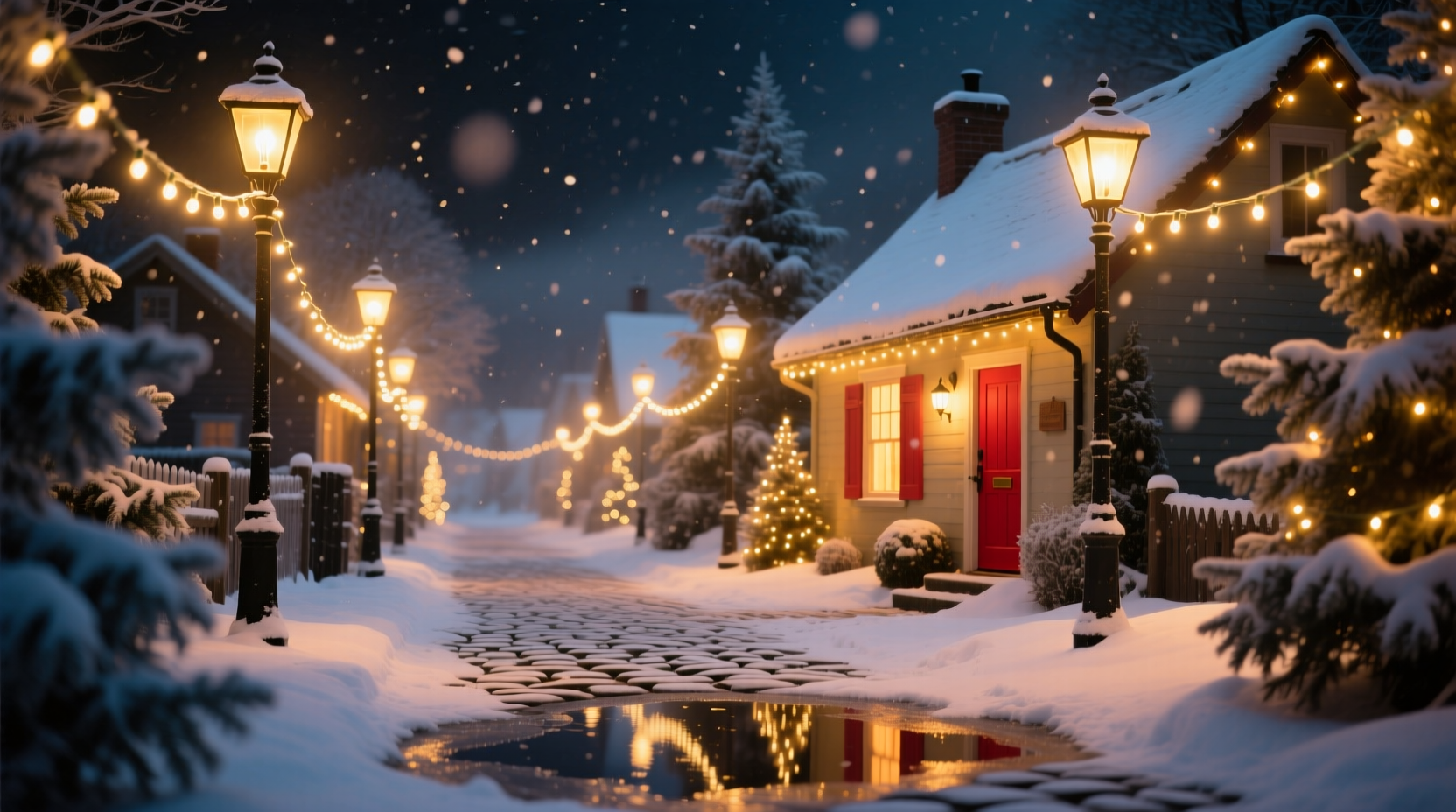
Lighting does more than illuminate—it shapes perception, influences emotions, and triggers memories. Research in environmental psychology shows that dynamic lighting (such as flickering or moving light) tends to capture attention and stimulate emotional engagement more than static sources.
Twinkling lights mimic natural phenomena: firelight, starlight, or distant city glimmers through snow. These irregular patterns activate parts of the brain associated with curiosity and comfort. Dr. Lila Monroe, an environmental psychologist specializing in sensory design, explains:
“Flickering light has an inherently organic quality. It feels alive. That unpredictability signals safety and intimacy—like sitting around a campfire. In contrast, steady light reads as controlled and deliberate, which can feel secure but less emotionally charged.”
This may explain why children are often mesmerized by twinkle lights—they resemble the playful randomness of fairy tales. Adults, too, report higher feelings of nostalgia when exposed to blinking or shimmering displays, especially during holidays tied to memory and tradition.
However, steady lights have their own psychological strengths. They provide visual stability, reduce sensory overload, and support relaxation. In spaces meant for quiet reflection—like a mantel display or a bedroom tree—steady illumination can feel more soothing and refined.
Visual Comparison: Twinkle vs. Steady Lights in Holiday Decor
To understand the impact of each lighting style, consider how they perform across key decorative criteria. The table below summarizes real-world observations from interior designers and lighting professionals.
| Feature | Twinkle Lights | Steady Lights |
|---|---|---|
| Ambiance | Playful, whimsical, dynamic | Calm, elegant, classic |
| Attention-Grabbing | High – draws the eye continuously | Moderate – blends into surroundings |
| Best For | Outdoor displays, kids’ rooms, party spaces | Formal decor, minimalist themes, meditation areas |
| Energy Use | Slightly lower (LED versions cycle off) | Consistent draw |
| Durability | Slightly reduced due to cycling mechanisms | Generally longer lifespan |
| Emotional Impact | Joyful, nostalgic, exciting | Peaceful, comforting, dignified |
The data suggests that neither option is universally superior. Instead, the choice hinges on the desired emotional tone. Want to delight guests and spark conversation? Twinkle lights win. Seeking serenity and sophistication? Steady lights take the lead.
Real-World Application: A Mini Case Study in Living Room Lighting
In suburban Denver, homeowner Maria Tran redesigned her family’s living room for the 2023 holiday season. Her goal was to balance festivity with comfort—her teenage daughter loved bold displays, while her husband preferred a calm, clutter-free environment.
Maria tested both lighting styles over two weekends. On the first, she draped her 7-foot tree and mantle with traditional steady white LEDs. Guests described the space as “beautiful” and “elegant,” but one friend remarked, “It feels like a showroom—lovely, but not cozy.”
The following weekend, she switched to warm-white twinkle lights. She kept the same layout and color scheme but introduced rhythmic flickering across the garland and tree. Immediate reactions shifted: children laughed, calling it “a winter wonderland,” and adults lingered longer near the fireplace. Even her husband admitted, “It feels more… alive.”
Maria’s conclusion? “The twinkle lights didn’t just change the look—they changed the feeling. It became a place people wanted to stay in, not just walk through.”
She ultimately adopted a hybrid approach: twinkle lights on the tree and outdoor porch, steady lights on the dining table centerpiece and hallway sconces. This layered strategy maximized both magic and maturity.
Step-by-Step Guide: Choosing & Installing the Right Lights for Your Space
Selecting between twinkle and steady lights doesn’t have to be arbitrary. Follow this five-step process to ensure your decision enhances both aesthetics and experience.
- Define the Room’s Purpose
Is this a gathering space (living room, kitchen)? Or a retreat (bedroom, study)? High-traffic areas benefit from the energy of twinkle lights; private zones suit steady illumination. - Assess Existing Decor Style
Modern minimalist? Steady lights maintain clean lines. Rustic, vintage, or fantasy-themed? Twinkle lights amplify charm. Consider color temperature—warm white (2700K) works best for both types during holidays. - Determine Visibility & Distance
If viewers will be close (under 6 feet), twinkling can feel overwhelming. At a distance (porch, rooftop), the effect becomes softer and more atmospheric. - Test Before Committing
Buy a single strand of each type. Install them side by side for 24–48 hours. Observe how they feel at different times of day and with other lights on or off. - Layer for Depth
Combine both types strategically. Use steady lights as a base layer (e.g., outlining windows) and twinkle lights as accents (wreaths, trees). This creates dimension without chaos.
Expert Insight: What Designers Say About Holiday Lighting
Interior designer Rafael Jensen, known for his luxury holiday installations in Aspen and Nantucket, emphasizes intentionality: “Magic isn’t created by brightness or quantity—it’s created by movement and surprise. That’s why I use twinkle lights on evergreen swags and chandeliers. They catch the eye in waves, like stars appearing at dusk.”
Yet he cautions against overuse: “A whole house lit with twinkle mode becomes noise. I always ground the design with steady lighting—candles, lanterns, or fixed wall sconces—to give the eyes a place to rest.”
Jensen’s rule of thumb: “No more than 60% of visible lights should be twinkling in any given space. The rest should be steady or dimmable ambient sources.”
“The most memorable holiday lighting feels intentional, not excessive. It guides emotion, not just visibility.” — Rafael Jensen, Interior Designer & Holiday Stylist
Checklist: Creating a Magical Christmas Lighting Plan
- ☐ Identify primary function of each decorated space (festive, serene, welcoming)
- ☐ Choose warm-white LEDs for all strands (avoid cool white for holiday warmth)
- ☐ Decide on dominant lighting style per room (twinkle or steady)
- ☐ Purchase sample strands for testing before full installation
- ☐ Plan placement: trees, mantles, railings, windows, outdoor features
- ☐ Layer lighting types for depth and balance
- ☐ Use timers to automate on/off cycles (ideal: 4–11 PM)
- ☐ Inspect cords and connections for safety before hanging
- ☐ Consider smart lights for remote control and pattern switching
- ☐ Step back and observe after installation—adjust if needed
Frequently Asked Questions
Can I mix twinkle and steady lights in the same room?
Absolutely—and it’s often the best approach. Use steady lights as a foundation (e.g., outlining architecture) and twinkle lights as accents (on trees or garlands). This combination adds visual interest without overwhelming the senses.
Are twinkle lights harder on the eyes or more likely to trigger headaches?
For most people, modern LED twinkle lights with random or slow flicker rates are not problematic. However, individuals with photosensitivity or migraines may find rapid, uniform blinking uncomfortable. In such cases, opt for steady lights or twinkle modes with soft, irregular pulses.
Do twinkle lights use more electricity than steady ones?
No—in fact, many LED twinkle lights use slightly less energy because individual bulbs cycle off part of the time. A strand of 50 LED twinkle lights typically consumes 2–4 watts, compared to 4–5 watts for steady operation. Over a month, the difference is minimal, but every bit helps in sustainable decorating.
Final Thoughts: Magic Is in the Moment, Not Just the Medium
Ultimately, whether twinkle lights are “better” than steady ones depends on what kind of magic you’re trying to create. Twinkle lights excel at generating wonder, excitement, and childlike awe—the sparkle in a child’s eye when they see the tree for the first time. They turn ordinary spaces into storybook scenes, where every flicker feels like a whisper of holiday spirit.
But steady lights hold their own kind of enchantment: the quiet glow of a candlelit dinner, the dignified beauty of a well-lit fir, the peaceful hush of a snow-covered night. Their constancy is its own comfort—a reminder that some joys don’t need flashing signals to be felt deeply.
The most magical Christmas environments don’t rely on a single lighting type. They blend both—using twinkle lights to surprise and steady lights to soothe. They understand that true ambiance isn’t about brightness, but about emotional resonance.
This season, don’t ask which light is better. Ask instead: what feeling do I want to invite? Joy? Peace? Wonder? Connection? Let that guide your choice. And remember: the most unforgettable moments aren’t illuminated by bulbs alone, but by the presence of those you share them with.




 浙公网安备
33010002000092号
浙公网安备
33010002000092号 浙B2-20120091-4
Comments
No comments yet. Why don't you start the discussion?