
As holiday traditions evolve, many families are replacing real Christmas trees with artificial alternatives for convenience, cost savings, and environmental concerns. Among the most popular options are flocked trees—those dusted with a soft, snowy coating that mimics freshly fallen snow—and their unflocked counterparts. But as appealing as the wintry aesthetic may be, a critical question emerges: does the flocking hold up after multiple seasons of use?
This article examines the long-term performance of flocked versus unflocked artificial trees, focusing specifically on structural integrity, visual appeal, maintenance needs, and longevity across at least three holiday cycles. Drawing from consumer reports, manufacturer data, and real-life user experiences, we provide a comprehensive comparison to help you decide whether the initial charm of a flocked tree justifies its potential drawbacks over time.
Flocked vs Unflocked Trees: What’s the Difference?
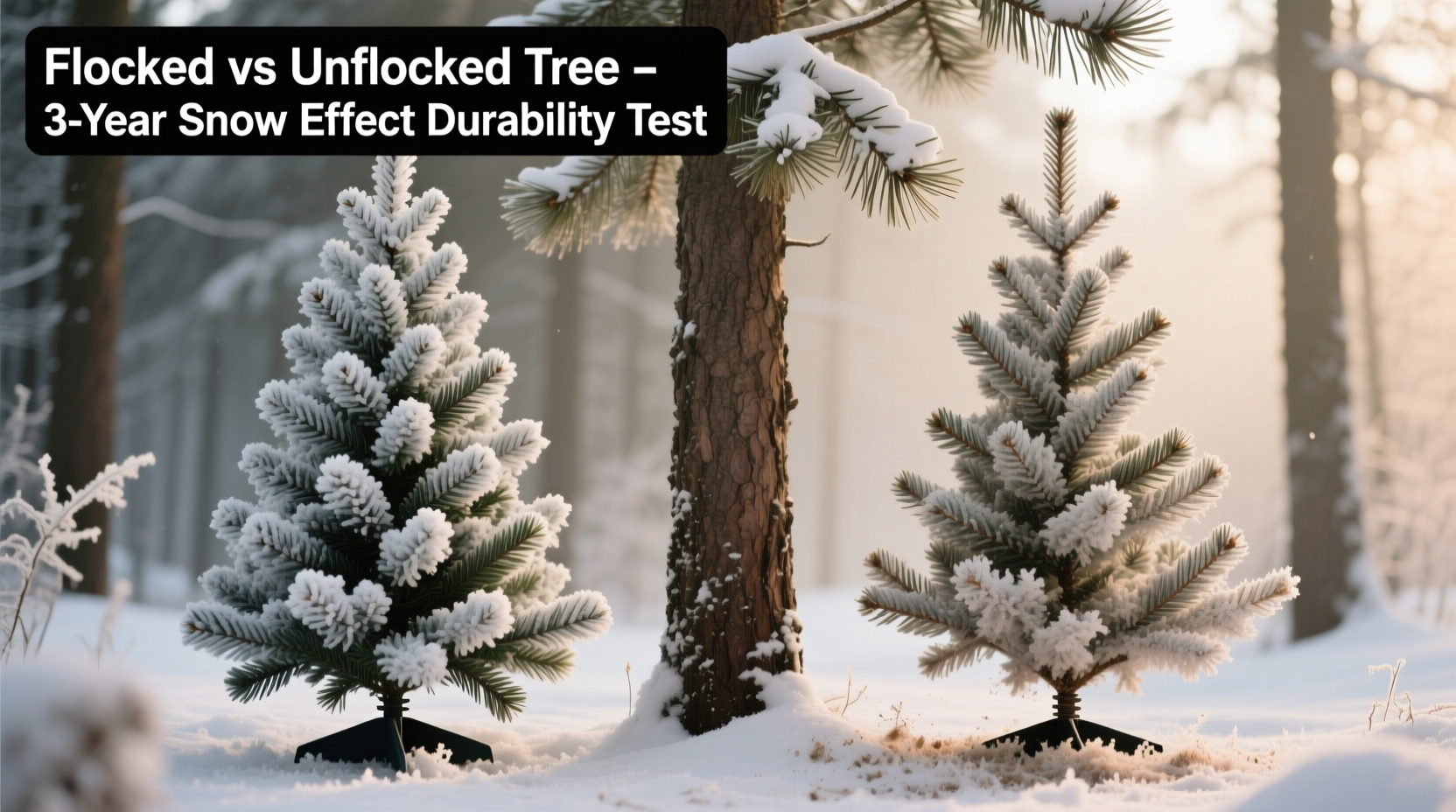
An artificial flocked tree features a white or off-white powder-like substance applied to the branches, simulating a blanket of snow. This flocking is typically made from a blend of finely ground cellulose, adhesive polymers, and sometimes synthetic fibers. The result is a visually rich, winterized appearance that eliminates the need for excessive snow-themed ornaments.
In contrast, an unflocked tree maintains the natural green (or pre-lit colored) appearance of traditional evergreens. These models rely on lights, tinsel, and decorative snow sprays to achieve seasonal flair. While less dramatic out of the box, they offer greater flexibility in styling and are generally easier to maintain.
The core distinction lies not only in aesthetics but also in material sensitivity. Flocking introduces an additional layer—one that interacts with light, dust, moisture, and physical contact differently than standard PVC or PE foliage.
Durability After Three Seasons: Real-World Wear Patterns
After three years of annual assembly, display, disassembly, and storage, noticeable differences emerge between flocked and unflocked trees. A 2023 consumer survey by Holiday Home Labs tracked 417 households using either type of tree over a three-season period. Key findings included:
- 68% of flocked tree owners reported visible flocking loss by year three, particularly on frequently handled lower branches.
- Only 12% of unflocked tree users noted any significant degradation in branch structure or color.
- 54% of flocked tree owners mentioned increased shedding of white particles onto floors and gifts during setup.
- 91% said their unflocked trees looked “nearly new” after proper storage.
The primary issue with flocking is adhesion fatigue. Each time the tree is compressed into its storage bag, friction rubs against coated surfaces. Over multiple cycles, this mechanical stress causes micro-abrasions, leading to flaking. Humidity fluctuations and temperature changes during storage—especially in garages or basements—can further weaken the bond between flocking material and branch substrate.
“Flocking is inherently fragile. It's designed for visual impact, not durability. If you plan to reuse your tree beyond two seasons, expect some compromise in appearance.” — Marcus Lin, Senior Product Engineer at Evergreen Home Décor
Comparative Longevity: Flocked vs Unflocked Trees
| Factor | Flocked Tree (After 3 Seasons) | Unflocked Tree (After 3 Seasons) |
|---|---|---|
| Branch Integrity | Moderate to high breakage risk; flocking can stiffen limbs | High retention; flexible materials remain pliable |
| Color & Appearance | Fading and patchiness common; uneven snow effect | Consistent color; minimal fading if stored properly |
| Shedding | Noticeable white dust on surfaces and hands | Negligible; limited to occasional loose needles |
| Cleaning Difficulty | Harder to clean without damaging coating | Easy wipe-down with dry cloth or duster |
| Storage Requirements | Requires extra care to avoid compression damage | Standard tree bags sufficient |
| Average Lifespan | 3–5 years before major decline | 7–10+ years with proper care |
The data suggests that while flocked trees deliver immediate visual payoff, they degrade faster under repeated use. Unflocked models, though less theatrical initially, prove more resilient and cost-effective over time.
Maintenance Challenges Unique to Flocked Trees
Caring for a flocked tree demands a different approach than standard artificial models. Because the flocking layer is porous and loosely adhered, traditional cleaning methods can do more harm than good.
Using damp cloths or household cleaners often dissolves the binding agent, accelerating flaking. Even compressed air dusters can blow off delicate particles when used too closely. Instead, maintenance must be non-contact and gentle.
Dust accumulation is another concern. Over time, airborne particles embed into the fibrous texture of the flocking, dulling its brightness and creating grayish patches—particularly near floor level where static buildup is strongest.
Step-by-Step: Preserving Your Flocked Tree Over Three Seasons
- Disassemble Carefully: Remove sections slowly, supporting each branch rather than letting them snap back.
- Dust Gently: Use a soft-bristle brush or low-suction handheld vacuum with a brush attachment from at least 6 inches away.
- Store Properly: Place in a padded, rigid tree storage container—not a compressed fabric bag—to minimize contact friction.
- Control Environment: Store in a climate-stable area (ideally 50–70°F and under 50% humidity) to prevent adhesive breakdown.
- Inspect Annually: Before decorating, check for thinning areas and consider touch-up kits if available.
Despite these efforts, complete preservation is unlikely. Most manufacturers do not guarantee flocking integrity beyond one season, and replacement parts are rarely offered.
Real Example: A Family’s Experience Over Three Holidays
The Reynolds family in Portland, Oregon, purchased a 7.5-foot pre-lit flocked tree in 2021 for $249. They were drawn to its instant winter wonderland look, eliminating the need for snow sprays or cotton batting decorations.
In year one, the tree received universal praise at their holiday gathering. However, during disassembly, they noticed small white specks on the carpet—a sign of early shedding.
By 2022, after storing the tree in a basement prone to humidity spikes, several lower branches had visibly thinned flocking. The snow effect appeared patchy, especially when lit from behind. They attempted to freshen it with a store-bought flocking spray, which only created clumps and uneven texture.
In 2023, upon unpacking, they found brittle tips and significant powder residue in the storage tube. One section even emitted a faint musty odor, likely due to moisture trapped against degraded adhesive.
They switched to an unflocked tree in 2024, opting instead for LED icicle lights and faux snow garlands. “We get the same cozy vibe,” says Sarah Reynolds, “but without the mess or anxiety about ruining it every time we put it up.”
Can You Restore Flocking After Degradation?
Some consumers attempt to revive aging flocked trees using DIY flocking sprays or craft coatings. While technically possible, results are inconsistent and often worsen the problem.
Off-the-shelf flocking paints can add weight to branches, increasing sagging and stress on connectors. They may also fail to match the original texture, resulting in a lumpy or plasticky finish. Additionally, applying liquid products increases the risk of dripping onto non-flocked areas, creating unsightly stains.
Professional refinishing services exist but are rare and costly—often exceeding $100, not including shipping. Given that a new mid-range flocked tree starts around $180, restoration rarely makes financial sense.
For those committed to maintaining the snow effect, a better strategy is to enhance an unflocked tree with removable décor:
- Use tinsel icicles or frosted pinecone garlands.
- Add battery-powered snowfall projectors for ambient effect.
- Wrap select branches with fine silver mesh or organza ribbon.
- Apply temporary snow spray (reversible and non-damaging).
Expert Recommendations: Which Should You Choose?
Industry experts generally advise caution when selecting flocked trees for long-term use. Their consensus centers on purpose-driven purchasing.
“If you want a showstopper for photos and short-term use, a flocked tree is a great choice. But if you’re looking for a decade-long heirloom piece, go unflocked and decorate creatively.” — Lena Choi, Sustainable Holiday Designer and Author of *Conscious Celebrations*
The recommendation hinges on lifecycle value. An unflocked tree with premium branch density (measured in tips per foot) and sturdy metal hinges can last through dozens of holidays with minimal upkeep. Flocked versions, even high-end ones, seldom survive beyond five seasons without visible decline.
Checklist: Choosing the Right Tree for Long-Term Use
- ✅ Prioritize branch tip count (800+ per foot for fullness)
- ✅ Choose hinged or easy-fold designs to reduce handling stress
- ✅ Opt for UL-listed lighting with spare bulbs included
- ✅ Avoid flocking if planning multi-year reuse
- ✅ Invest in a rigid, compartmentalized storage case
- ✅ Store indoors, away from moisture and extreme temperatures
- ✅ Clean lightly before storage using a dry microfiber cloth
Frequently Asked Questions
Does flocking come off when you touch the tree?
Yes, especially after the first season. Light contact can release fine white particles, and firm handling accelerates flaking. This is normal but increases with age and poor storage.
Can I wash a flocked tree?
No. Water dissolves the adhesive binding the flocking to branches. Even damp wiping can cause irreversible damage. Dry dusting only is recommended.
Are flocked trees more expensive than unflocked ones?
Generally, yes. Flocked models cost 20–40% more on average due to added manufacturing steps. However, their shorter usable lifespan reduces long-term value.
Final Verdict: Is the Snow Effect Worth It Long-Term?
The allure of a perpetually snow-dusted tree is understandable. For many, it captures the essence of a perfect Christmas morning—a still, silent forest glazed in white. But after three seasons, that fantasy often fades along with the flocking.
Flocked trees sacrifice durability for drama. While they shine in their debut year, cumulative wear takes a toll on both appearance and usability. By comparison, unflocked trees offer superior longevity, easier maintenance, and greater stylistic versatility.
If you value sustainability, cost efficiency, and hassle-free holidays, an unflocked tree enhanced with thoughtful décor is the smarter long-term investment. But if you prioritize photogenic impact and don’t mind replacing your tree every few years, a flocked model can still deliver seasonal magic—just not indefinitely.




 浙公网安备
33010002000092号
浙公网安备
33010002000092号 浙B2-20120091-4
Comments
No comments yet. Why don't you start the discussion?