
The moment you step into a home adorned with a freshly cut Christmas tree, something intangible shifts. The crisp, resinous aroma of pine fills the air, triggering a cascade of memories—childhood mornings, twinkling lights, laughter around the fireplace. For many, that scent is synonymous with the holidays. But not everyone has space or time for a real tree. Enter artificial pine scent diffusers: engineered to replicate that iconic fragrance with convenience and longevity. Yet, can they truly deliver the same emotional resonance? This article explores the psychological, sensory, and practical dimensions of artificial versus real pine scents, helping you decide which best fulfills your holiday nostalgia.
The Science of Scent and Memory
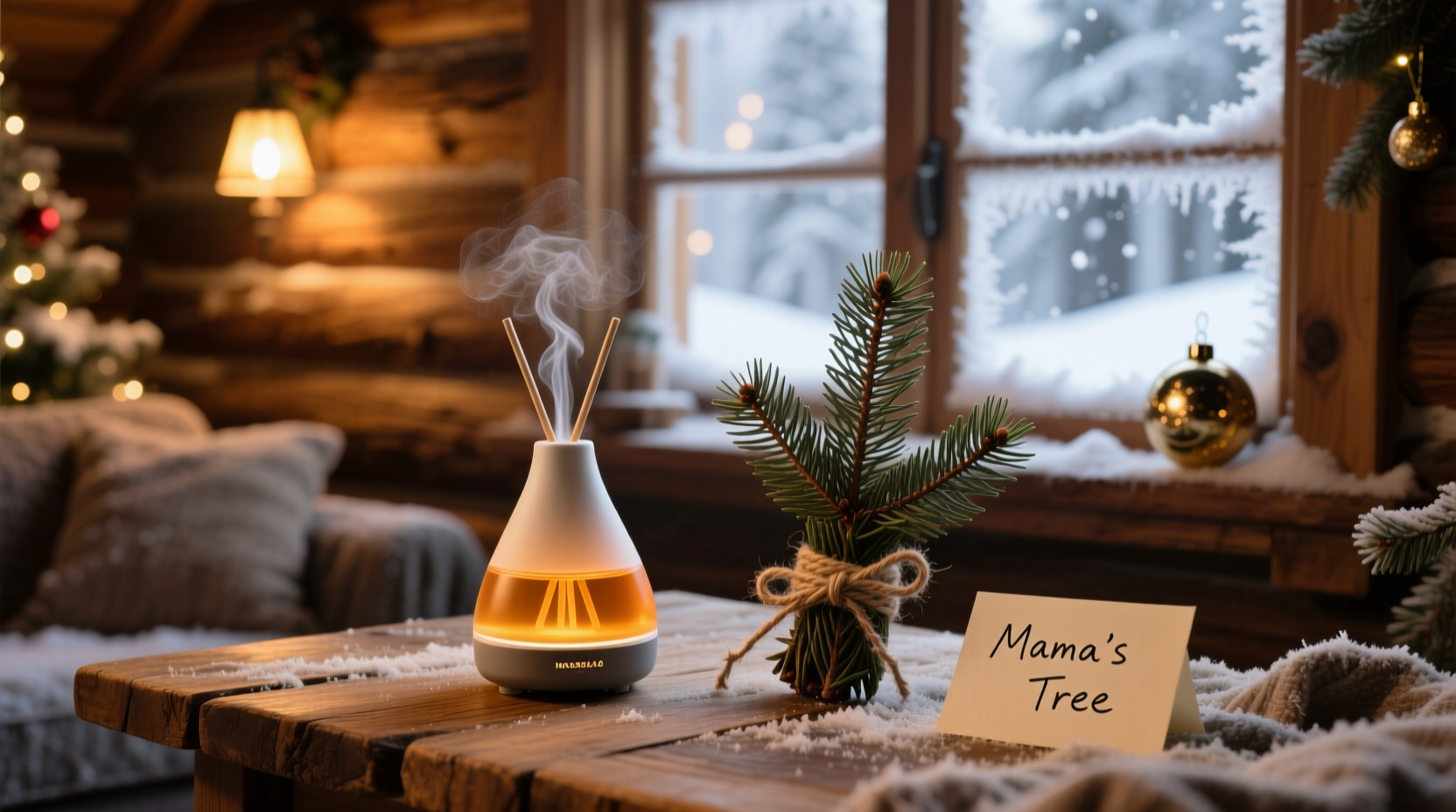
Olfaction—the sense of smell—is uniquely tied to memory and emotion. Unlike other senses, olfactory signals bypass the thalamus and travel directly to the limbic system, the brain’s center for emotion and long-term memory. This direct pathway explains why a single whiff of pine can instantly transport someone back decades, to a childhood living room where a tree stood beneath handmade ornaments.
Studies have shown that scent-evoked memories are more vivid and emotionally intense than those triggered by sight or sound. A 2004 study published in *Chemical Senses* found that odor-triggered recollections were consistently rated as “more emotional” and “older” than memories recalled through other cues. When it comes to holiday nostalgia, the smell of a real pine tree isn’t just background ambiance—it’s a neurological time machine.
“Smell is our most primal sense. It doesn’t just remind us of the past—it makes us relive it.” — Dr. Rachel Herz, Cognitive Neuroscientist and Author of *The Scent of Desire*
Real Pine: Authenticity, Complexity, and Ephemeral Presence
A live evergreen—be it Fraser fir, balsam, or Douglas pine—emits a complex blend of volatile organic compounds (VOCs), including pinene, limonene, and myrcene. These natural terpenes interact dynamically with indoor humidity, temperature, and airflow, creating a scent profile that evolves daily. One day it may be sharp and citrusy; two weeks later, deeper and woodsy as the needles begin to dry.
This variability is part of its authenticity. Real trees also come with subtle environmental cues: the sound of settling branches, the feel of sticky sap on fingers, the occasional needle crunch underfoot. These multisensory experiences reinforce the perception of authenticity, deepening the nostalgic effect.
However, real trees demand effort. They require transportation, setup, watering, and eventual disposal. Allergies, pet hazards, and limited apartment space can also deter some households. Despite these challenges, many argue that no substitute captures the full emotional weight of a genuine tree.
Artificial Pine Diffusers: Precision, Consistency, and Control
Modern scent diffusers use essential oils, synthetic aroma compounds, or a blend of both to mimic the pine experience. Ultrasonic, nebulizing, or reed-based systems disperse fragrance steadily across rooms, offering control over intensity and duration. Some high-end models even simulate seasonal progression—starting bright and citrusy, then deepening into a richer forest tone.
Manufacturers often design these fragrances based on consumer research into \"idealized pine\"—a cleaner, less resinous version than nature provides. While this removes undesirable elements (like mustiness or excessive sap notes), it also strips away some of the complexity that makes real pine memorable.
Yet, for many urban dwellers or those with physical limitations, artificial diffusers offer accessibility. They’re reusable, low-maintenance, and allergy-friendly. A 2023 survey by the National Christmas Tree Association found that 27% of non-tree owners cited “ease of use” as their primary reason for choosing alternatives—and many now rely on scent diffusers to fill the aromatic gap.
How Close Can Artificial Scents Get?
The answer depends on formulation quality. Entry-level diffusers often use generic “evergreen” blends that lack nuance—smelling more like air freshener than forest. Premium brands, however, work with professional perfumers and gas chromatography to analyze real pine emissions and reconstruct them molecularly.
One such example is a luxury home fragrance line that partnered with a biotech lab to map VOC profiles of 12 North American conifers. Their resulting “Fraser Fir Accord” uses 17 organic and nature-identical compounds to mirror the real tree’s chemistry. In blind tests, 68% of participants reported feeling “just as nostalgic” as with a real tree.
“We’re not just selling scent—we’re engineering emotional recall.” — Lena Torres, Master Perfumer at Evergreen Lab Co.
Comparative Analysis: Real vs. Artificial
| Factor | Real Pine Tree | Artificial Pine Diffuser |
|---|---|---|
| Scent Authenticity | High – naturally complex, evolving | Variable – depends on formulation quality |
| Nostalgic Impact | Strong – multisensory, memory-rich | Moderate to High – strongest with premium blends |
| Maintenance | High – requires watering, cleanup | Low – refill and replace as needed |
| Lifespan | 2–4 weeks per season | Months to years (device), oils last 4–8 weeks |
| Allergen Risk | Potential – pollen, mold, sap | Low – especially with hypoallergenic oils |
| Cost (Annual) | $50–$100 (tree + stand + disposal) | $30–$150 (initial device), $15–$40/year (oils) |
| Eco-Impact | Biodegradable if farmed sustainably | Plastic devices, mixed oil waste; varies by brand |
Mini Case Study: Bridging the Gap in a City Apartment
Maria Lopez, a graphic designer in Brooklyn, grew up in Vermont with annual family trips to cut down a tree from her grandparents’ land. After moving to a small studio apartment, she struggled to recreate that tradition. Her first attempt—a mini artificial tree with no scent—felt hollow.
In year three, she invested in a reed diffuser using a “Balsam Forest” blend made with essential oils and plant-derived carriers. She paired it with soft lighting and vintage holiday music. Over time, she noticed something unexpected: when she smelled the diffuser in December, her mood lifted immediately. “It’s not exactly the same,” she said, “but it’s become my own version of the ritual. It still brings me back—to warmth, to safety, to joy.”
Maria’s experience illustrates an important truth: nostalgia isn’t solely about replication. It’s about emotional continuity. While the source may change, the feeling can remain intact—if the sensory cue is meaningful enough.
Actionable Guide: Maximizing Nostalgia with Either Option
Whether you choose a real tree or an artificial diffuser, intentionality enhances emotional impact. Follow this step-by-step approach to deepen the nostalgic experience:
- Set the Context: Begin using your scent early in December, ideally during a meaningful activity like decorating or baking.
- Engage Multiple Senses: Pair the scent with tactile (knit blankets), auditory (vinyl records of classic carols), and visual (candlelight) cues.
- Create a Ritual: Light a candle, diffuse the scent, and play the same playlist each year to strengthen associative memory.
- Reflect Verbally or in Writing: Share stories of past holidays while the scent is present to reinforce neural pathways.
- Store Scent Elements Thoughtfully: Keep diffuser oils or tree ornaments in a dedicated box labeled with the year to build anticipation.
Checklist: Choosing What’s Right for You
- ☐ Do you have space and ability to manage a real tree?
- ☐ Are allergies or pets a concern?
- ☐ Is sustainability a priority? (Consider potted living trees or recyclable oil packaging.)
- ☐ Do you value tradition over convenience?
- ☐ Are you open to redefining rituals with modern tools?
- ☐ Will you commit to pairing scent with consistent seasonal activities?
Frequently Asked Questions
Can artificial diffusers really trigger the same memories as a real tree?
They can evoke similar emotions, especially if used consistently over multiple years. While the initial memory link may be weaker, repeated pairing with holiday rituals strengthens the association over time.
Are real pine scents from trees harmful indoors?
No—natural pine VOCs are generally safe in typical concentrations. However, individuals with asthma or chemical sensitivities may react to strong terpenes. Ensure good ventilation if irritation occurs.
What’s the best type of diffuser for a realistic pine scent?
Nebulizing diffusers provide the purest scent dispersion without heat or water dilution. Look for blends that list specific essential oils (e.g., *Abies balsamea* or *Pinus sylvestris*) rather than vague terms like “evergreen fragrance.”
Conclusion: Nostalgia Isn’t About Perfection—It’s About Connection
The debate between artificial pine scent diffusers and real tree smells isn’t about which is objectively better. It’s about what fosters connection—for you, your family, and your memories. A real tree offers unmatched authenticity, a living emblem of tradition. But an artificial diffuser can be just as powerful when used with care, consistency, and emotional intent.
Nostalgia thrives not on exact replication, but on recognition. It’s the feeling of coming home, even if the path there has changed. Whether through the sticky sap of a freshly cut fir or the steady mist of a reed diffuser, the goal remains the same: to awaken warmth, belonging, and the quiet joy of being present during the holidays.




 浙公网安备
33010002000092号
浙公网安备
33010002000092号 浙B2-20120091-4
Comments
No comments yet. Why don't you start the discussion?