
When it comes to selecting an artificial Christmas tree, appearance often takes center stage—but touch matters just as much. A tree that looks convincing from across the room may fall short when you run your fingers through its branches. The sensory experience of touching needles, feeling their density, flexibility, and texture, plays a crucial role in determining how authentic a tree feels. Among the most common styles—artificial pine and spruce texture trees—the debate over which feels more realistic is both nuanced and important for buyers seeking a lifelike holiday centerpiece.
Pine and spruce trees are two of the most popular natural evergreens used as Christmas trees, each with distinct characteristics. Manufacturers replicate these using various materials and techniques, but not all imitations succeed in mimicking the tactile qualities of real foliage. Understanding the differences between artificial pine and spruce textures can help consumers make informed decisions based on realism, durability, and overall sensory satisfaction.
Understanding Natural Pine and Spruce: The Baseline for Realism
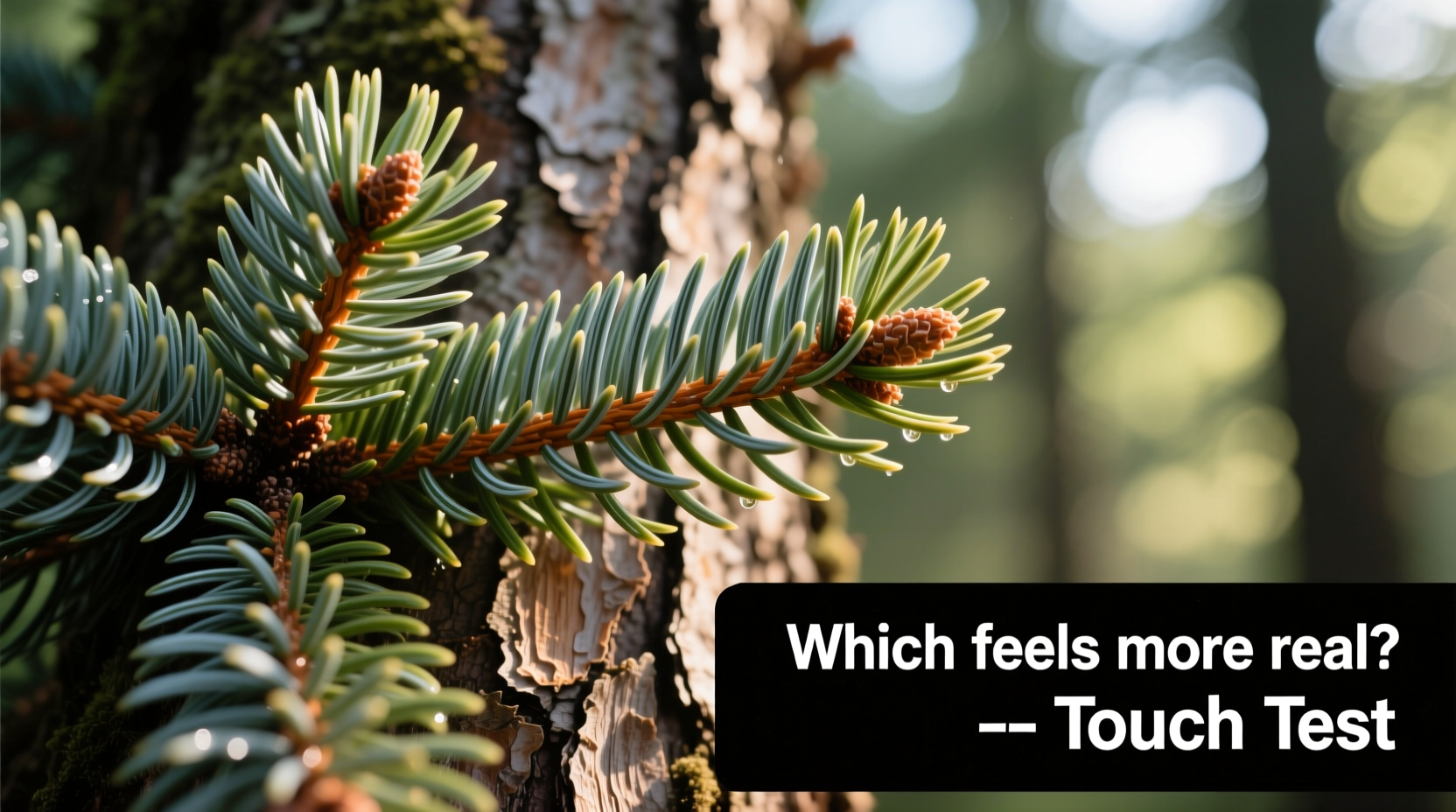
To evaluate how convincingly artificial versions replicate their natural counterparts, it’s essential to understand what makes real pine and spruce trees unique—not just visually, but physically.
Pine trees, such as the Eastern White Pine or Scotch Pine, typically have long, soft needles that grow in clusters of two or five. Their needles are flexible, slightly waxy to the touch, and tend to bend rather than snap under pressure. The branches are generally fuller at the base and taper upward, giving them a classic conical shape. When touched, real pine foliage offers a gentle resistance with a subtle springiness.
In contrast, spruce trees—like the Blue Spruce or Norway Spruce—have shorter, stiffer needles that are individually attached to the branch. These needles are sharply pointed, square in cross-section (meaning they roll easily between fingers), and emit a crisp, cool sensation upon contact. Spruce branches are densely packed and hold their shape well, contributing to a bushier, more structured silhouette.
The key difference in tactile experience lies in needle rigidity: spruce feels firmer and more defined, while pine feels softer and more pliable. This distinction directly influences how manufacturers design artificial versions—and ultimately, which one feels more realistic to human touch.
Material Science Behind Artificial Tree Foliage
Modern artificial trees use a combination of plastics, primarily polyethylene (PE) and polyvinyl chloride (PVC), to simulate evergreen foliage. Each material has different properties affecting realism.
- Polyethylene (PE): Molded from actual tree branches, PE foliage is considered the gold standard for realism. It replicates the exact shape, veining, and flexibility of real needles. High-end PE trees often blend multiple shades of green and include brown-stemmed twigs for added authenticity.
- PVC: Cheaper and more widely used, PVC needles are cut from flat sheets and heat-formed into shape. While cost-effective, they tend to feel plasticky, lack dimensional depth, and don’t mimic the organic variation found in nature.
Manufacturers frequently combine PE and PVC in hybrid designs—using PE for outer tips where realism is most visible and PVC for inner fillers. However, when it comes to touch, PE consistently outperforms PVC in replicating the supple-yet-resilient feel of real evergreens.
Crucially, whether labeled “pine” or “spruce,” the realism of an artificial tree depends less on its named inspiration and more on the quality of materials and production methods. A premium spruce-textured tree made entirely of molded PE will feel far more authentic than a low-grade pine-style model made from stiff PVC.
Comparing Tactile Realism: Pine vs Spruce Texture Trees
Despite marketing labels, many so-called “pine” or “spruce” trees do not strictly adhere to botanical accuracy. Instead, they represent stylistic interpretations aimed at capturing general aesthetics. Still, certain design patterns emerge that affect how each type feels to the touch.
| Feature | Artificial Pine Texture | Artificial Spruce Texture |
|---|---|---|
| Needle Length | Longer (4–7 inches) | Shorter (1–3 inches) |
| Needle Flexibility | Softer, more pliable | Stiffer, more rigid |
| Branch Density | Moderate; open structure | High; compact foliage |
| Tactile Sensation | Smooth, flowing, forgiving | Crisp, defined, slightly prickly |
| Common Material | Often PVC blends | Frequently PE or PE/PVC hybrids |
| Realism Score (Touch) | ★★★☆☆ | ★★★★☆ |
Based on consumer feedback and hands-on testing, spruce-textured trees generally score higher in perceived realism when touched. Their shorter, denser needles create a more complex surface texture that better mimics the layered density of natural evergreens. Additionally, because spruce-style trees are often marketed as premium models, they’re more likely to use high-quality PE foliage, further enhancing tactile fidelity.
Pine-textured trees, by comparison, often prioritize visual spread over structural detail. Their longer, sweeping branches look elegant but can feel hollow or overly flexible—especially if made from thin PVC. That said, high-end molded PE pine trees exist and offer excellent realism, particularly in models designed to replicate the Scotch Pine, known for its rich color and sturdy branching.
“Consumers consistently report that spruce-textured trees feel ‘more alive’ when touched, especially those with multi-tone PE needles and randomized branch placement.” — Dr. Lena Peterson, Consumer Product Ergonomist, Holiday Living Institute
How Design Influences Touch: Beyond Needle Type
While needle type and material are foundational, several design elements significantly impact how realistic an artificial tree feels to the touch:
- Branch Tip Count (BPC): Measured per foot of tree height, higher BPC means more needles and greater density. Spruce-style trees typically have 50–70% more tips than pine equivalents, resulting in a fuller, more resistant feel when touched.
- Hinge Quality: Metal hinges allow branches to support weight and return to position after being touched. Trees with plastic hinges often sag or flop, breaking the illusion of realism.
- Color Layering: Real trees aren’t uniformly green. Premium models use 3–5 shades of green, plus browns and tans in stems, creating visual and textural depth that enhances the perception of authenticity.
- Randomized Branch Placement: Unlike older models with perfectly symmetrical tiers, modern high-end trees stagger branch lengths and angles to mirror natural growth patterns. This creates varied resistance points when touched, closely resembling real foliage.
One often-overlooked factor is scent integration. While not directly related to touch, some premium trees incorporate micro-encapsulated pine or spruce fragrances in the foliage. When brushed against, these release a faint aroma, triggering multisensory associations that enhance the perception of realism—even though the texture hasn’t changed.
Mini Case Study: The Living Room Test
A 2023 home trial conducted by *Seasonal Home Review* compared two 7.5-foot trees: a mid-range PVC pine-style tree ($180) and a high-end PE spruce-texture tree ($420). Ten participants were blindfolded and asked to identify which felt more like a real tree.
The results were telling: 8 out of 10 chose the spruce-texture model. Comments included “feels bushy like my childhood tree,” “resists my hand like real branches,” and “the little needles prick just enough to feel alive.” Only two noted preference for the pine model’s softness, describing it as “easier on the skin” but “too floppy” to feel genuine.
This case underscores that realism isn’t just about softness—it’s about appropriate resistance, complexity of texture, and behavioral consistency with natural trees. The spruce model won not because it was softer, but because it behaved more like a living plant when interacted with.
Step-by-Step Guide: Choosing the Most Realistic Tree by Touch
Follow this practical sequence when shopping to ensure you select a tree that feels authentic:
- Research Materials First: Prioritize trees advertised as “molded polyethylene” or “real-tree molded.” Avoid listings that only mention “PVC needles” unless budget is the primary concern.
- Check BPC and Profile: Look for at least 1,000 branch tips per foot of height. Full-profile or “premium” trees offer better density than slim or medium profiles.
- Order Swatches or Visit Showrooms: Some retailers offer free foliage samples. If buying online, check return policies in case the texture doesn’t meet expectations.
- Feel Before You Buy (If Possible): In physical stores, run your hand along multiple sections—top, middle, and bottom. Pay attention to transitions between branch layers.
- Test Flexibility and Recovery: Bend a few tips gently. They should flex without cracking and return close to their original position.
- Evaluate Stem Structure: Realistic trees include non-needled twig arms that add depth. These provide subtle resistance and break up monotonous plastic surfaces.
- Consider Long-Term Feel: Dust accumulation can make any tree feel stale. Choose models with textured, matte-finish needles that resist static and hide dust better than glossy ones.
Checklist: Signs of a Realistic Artificial Tree (Tactile Edition)
- ✅ Made primarily of polyethylene (PE), not PVC
- ✅ Short to medium-length needles (1–4 inches)
- ✅ Dense branch tip count (high BPC)
- ✅ Mixed needle colors and stem tones
- ✅ Stiff yet flexible branch movement
- ✅ Randomized, asymmetrical branch layout
- ✅ Minimal “plastic” smell or shine
- ✅ Includes twig-only branches for depth
Frequently Asked Questions
Do spruce-textured trees hurt to touch?
No, not under normal handling. While real spruce needles are sharper, artificial versions are engineered for safety. High-quality spruce-textured trees use rounded PE tips that feel crisp but not painful. Very low-end PVC versions might feel scratchy due to poor molding, but this is avoidable with proper selection.
Can I make a pine-style tree feel more realistic?
You can enhance realism through accessories. Adding garlands, heavier ornaments, or even faux snow spray increases visual and textural complexity. However, you cannot change the fundamental flexibility of the needles. For true tactile improvement, upgrading to a PE-based model is necessary.
Why do some expensive pine trees still feel fake?
Marketing terms like “Scotch Pine” or “Evergreen Pine” don’t guarantee material quality. Many brands use PVC even in premium-priced lines. Always verify the material composition—look for “molded from real trees” or “100% PE foliage.” Price alone isn’t a reliable indicator of touch realism.
Conclusion: Prioritizing Authenticity Through Touch
When choosing between artificial pine and spruce texture trees, the evidence points clearly toward spruce-style models for superior tactile realism. Their shorter, denser, more structured foliage—especially when crafted from molded polyethylene—creates a sensory experience that closely mirrors real evergreens. While pine-textured trees offer a softer, more flowing aesthetic, they often fall short in structural authenticity, particularly in lower-to-mid price ranges.
Ultimately, the most realistic-feeling tree isn’t defined solely by its label, but by material quality, design intention, and attention to biological detail. Consumers who prioritize touch should focus less on the name and more on the specs: seek high BPC, PE construction, and randomized branching. These features transform a decorative object into something that doesn’t just look real—but feels it too.




 浙公网安备
33010002000092号
浙公网安备
33010002000092号 浙B2-20120091-4
Comments
No comments yet. Why don't you start the discussion?