
Every holiday season, millions of households face a familiar decision: should they buy an artificial tree or go with a fresh-cut evergreen? While tradition, convenience, and aesthetics often drive this choice, the environmental implications are far more complex than most realize. With growing awareness around climate change and sustainable living, it’s time to move beyond sentiment and examine the data. The answer isn’t as straightforward as “real is always better” or “reuse wins every time.” Instead, it depends on usage patterns, sourcing, disposal methods, and regional practices.
This article dives deep into the lifecycle impacts of both artificial and real Christmas trees—from production and transportation to end-of-life disposal—so you can make an informed, eco-conscious decision that aligns with your values and lifestyle.
The Lifecycle of a Real Christmas Tree
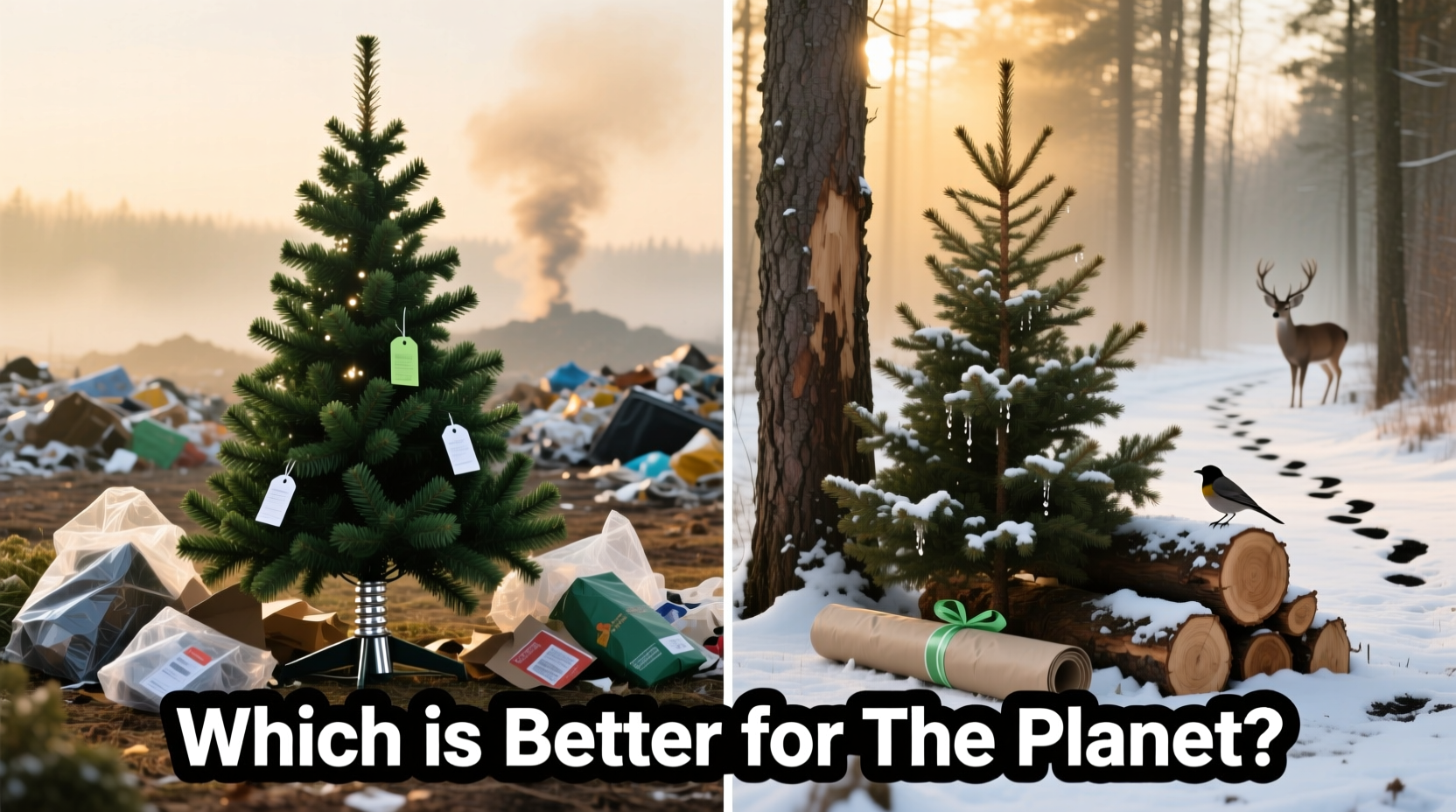
Real Christmas trees are grown on farms specifically for seasonal harvest, much like any agricultural crop. Most are species such as Fraser fir, balsam fir, or Scotch pine, cultivated over a period of 7 to 15 years before being cut and sold.
During their growth phase, these trees absorb carbon dioxide, release oxygen, stabilize soil, and provide habitat for wildlife. According to the U.S. Department of Agriculture, one acre of Christmas trees can produce enough oxygen for 18 people annually. That’s a meaningful ecological benefit during their cultivation.
However, once harvested, the environmental calculus shifts. Transportation from farm to retail lot or home contributes to emissions, especially if purchased from distant locations. A typical real tree travels between 50 and 400 miles depending on region and availability.
After the holidays, disposal becomes critical. Trees dumped in landfills decompose anaerobically, releasing methane—a greenhouse gas up to 28 times more potent than CO₂ over a 100-year period. But when properly recycled through municipal programs—chipped into mulch or used for habitat restoration—their post-holiday impact can be neutral or even beneficial.
“Christmas tree farming supports rural economies and provides green space, but only if managed sustainably and disposed of responsibly.” — Dr. Laura Chen, Forest Ecologist at Oregon State University
The Reality Behind Artificial Trees
Artificial Christmas trees are typically made from polyvinyl chloride (PVC), steel, and other plastics, mostly manufactured in factories in China and shipped globally. Their production involves fossil fuel extraction, chemical processing, and significant energy use—giving them a high initial carbon footprint.
A 2011 study by PE International estimated that the average two-meter artificial tree generates about 40 kilograms of CO₂-equivalent emissions during manufacturing and transport. By comparison, a real tree produces roughly 3.1 kg of CO₂-equivalent emissions per year—including farming, shipping, and incineration.
But here's where reuse matters: because artificial trees are designed for multiple seasons, their environmental cost per use decreases over time. To match the annual emissions of a real tree, an artificial tree must be used for at least four to six years. Beyond that point, its per-year footprint drops significantly.
Yet longevity doesn’t guarantee sustainability. Most artificial trees last only 6–9 years due to wear, outdated styles, or storage damage. When discarded, they don’t biodegrade. A single PVC tree can persist in a landfill for centuries. Recycling options are nearly nonexistent due to mixed materials and lack of infrastructure.
Hidden Environmental Costs of Artificial Trees
- PVC toxicity: Production releases dioxins and phthalates, harmful pollutants affecting human health and ecosystems.
- Non-renewable inputs: Made from petroleum-based plastics, contributing to fossil fuel dependence.
- Long-distance shipping: Most are produced overseas, increasing transport emissions.
- Low recyclability: Less than 1% of artificial trees are recycled globally.
Comparing the Two: A Data-Driven Table
| Factor | Real Christmas Tree | Artificial Christmas Tree |
|---|---|---|
| Carbon Footprint (annual avg.) | 3.1 kg CO₂e | ~6.5 kg CO₂e (if used 6 years) |
| Lifespan | One season (unless live potted) | 6–10 years (average) |
| Material Source | Renewable (farmed trees) | Non-renewable (PVC, metal, plastic) |
| End-of-Life Impact | Low (if recycled); High (if landfilled) | Very High (non-biodegradable) |
| Production Location | Local/regional farms | Primarily Asia (China, Korea) |
| Recyclability | High (through mulching programs) | Nearly zero |
| Water & Pesticide Use | Moderate (varies by farm practice) | None during use |
When Real Trees Are the Better Choice
For environmentally conscious consumers who prioritize renewable resources and support local agriculture, real trees make sense—especially under specific conditions:
- You purchase from a local tree farm within 50 miles of your home.
- Your community offers tree recycling or mulching programs.
- You avoid flocking (artificial snow sprays) and chemical treatments.
- You're committed to using a real tree only once per season.
Additionally, some farms now use organic practices, minimize pesticide use, and integrate biodiversity into their operations. These “eco-farms” offer a greener alternative to conventional tree cultivation.
Another option gaining popularity is renting a live potted tree. Companies deliver container-grown evergreens that can be replanted after the holidays. While more expensive upfront, this model dramatically reduces waste and promotes reusability without synthetic materials.
When Artificial Trees Win Environmentally
Despite their heavy initial footprint, artificial trees become the more sustainable choice when used for a decade or longer. Families who keep their tree for 10+ years effectively reduce their annual carbon cost to about 4 kg CO₂e—comparable to or lower than the real tree cycle, especially when factoring in transportation and landfill decomposition.
They also eliminate recurring demand for farmed trees, reducing pressure on land and water resources. For urban dwellers without access to recycling, or those who travel frequently and rely on consistent decor, artificial trees offer practicality with long-term benefits—if maintained properly.
“If you’re going to buy an artificial tree, treat it like an heirloom. Store it carefully, repair minor damage, and use it for 10 years or more. That’s the only way it truly pays off ecologically.” — Mark Jensen, Sustainable Design Consultant
Step-by-Step Guide to Maximizing Your Tree’s Eco-Impact
- Evaluate your usage pattern: Will you celebrate Christmas every year at home? Do you move frequently?
- Calculate your break-even point: If switching to artificial, commit to using it for at least 8 years.
- Source responsibly: Choose real trees from nearby farms with sustainable certifications (e.g., USDA Organic, SFI).
- Optimize transportation: Carpool to pick up your tree or choose delivery routes shared with others.
- Dispose correctly: Recycle real trees; donate usable artificial ones instead of trashing.
- Store artificial trees properly: Use sturdy boxes, avoid damp areas, label parts for easy setup.
- Consider alternatives: Explore potted live trees, minimalist decor, or creative non-tree centerpieces.
Mini Case Study: The Thompson Family’s Tree Transition
The Thompsons of Denver, Colorado, used to buy a fresh-cut tree every December. After learning about landfill methane emissions, they switched to an artificial tree in 2015. Initially skeptical, they were surprised by how much time and money they saved on annual purchases and disposal fees.
They invested in a high-quality, pre-lit 7.5-foot tree with hinged branches for easier assembly. Stored in custom compartments in their garage, the tree has remained in excellent condition for nine years. They estimate they’ve avoided buying nine real trees—saving approximately 250 kg of CO₂ emissions and over $900 in cumulative costs.
While not perfect, their long-term use makes the artificial tree the lower-impact option for their household. As Sarah Thompson puts it: “We didn’t switch for fashion—we did it for the planet. And now it just feels right.”
Checklist: Choosing the Most Sustainable Tree for Your Home
- ☐ I plan to use my tree for at least 6–8 years
- ☐ My local area offers real tree recycling
- ☐ I can source a real tree within 50 miles
- ☐ I will avoid flocking and chemical sprays
- ☐ I have safe, dry storage for an artificial tree
- ☐ I’m willing to rent or replant a live potted tree
- ☐ I’ll donate my artificial tree when done, not landfill it
Frequently Asked Questions
Is it better to burn a real Christmas tree than throw it away?
No. Burning releases all stored carbon immediately as CO₂ and may emit toxic fumes, especially if the tree was treated with chemicals or paint. Municipal composting or mulching is far safer and more sustainable.
Are fake trees made in the USA more eco-friendly?
Slightly. Domestic production reduces shipping emissions, but most artificial trees—even those assembled in the U.S.—still rely on imported PVC and components. The material issue remains unless plant-based or recycled plastics are used, which is rare.
Can I make my real tree more sustainable?
Yes. Choose organic farms, avoid flocking, use LED lights, and ensure recycling. Some cities even use chipped trees to restore wetlands or prevent erosion—check local programs to maximize impact.
Conclusion: It’s Not About Which Is Better—It’s About How You Use It
The debate over artificial versus real Christmas trees isn’t settled by labeling one inherently greener than the other. The real determinant is behavior: how long you keep it, how you dispose of it, and how you source it.
Real trees offer renewable origins and carbon sequestration during growth—but only shine environmentally when locally sourced and properly recycled. Artificial trees carry a steep initial burden but can outperform real ones over a decade of faithful use.
Ultimately, sustainability isn’t just about the object—it’s about stewardship. Whether you string lights on a freshly cut fir or unfold a metallic spruce from the attic, the most eco-friendly tree is the one you care for, reuse, and dispose of responsibly.




 浙公网安备
33010002000092号
浙公网安备
33010002000092号 浙B2-20120091-4
Comments
No comments yet. Why don't you start the discussion?