
Every December, millions of households across the world make a seasonal decision that carries more environmental weight than most realize: whether to bring home a real or artificial Christmas tree. While both options evoke warmth and tradition, their ecological footprints differ significantly. The choice isn’t simply about convenience or aesthetics—it’s about long-term sustainability, resource use, and climate impact. Understanding the full lifecycle of each type of tree reveals surprising truths about what “going green” really means during the holidays.
The debate has persisted for decades, often clouded by misconceptions. Some assume that cutting down a real tree harms forests, while others believe artificial trees are inherently wasteful. The reality is more nuanced. When evaluated through scientific research, agricultural practices, manufacturing emissions, and disposal methods, one option emerges as more sustainable—but only under specific conditions.
Lifecycle Analysis: From Production to Disposal
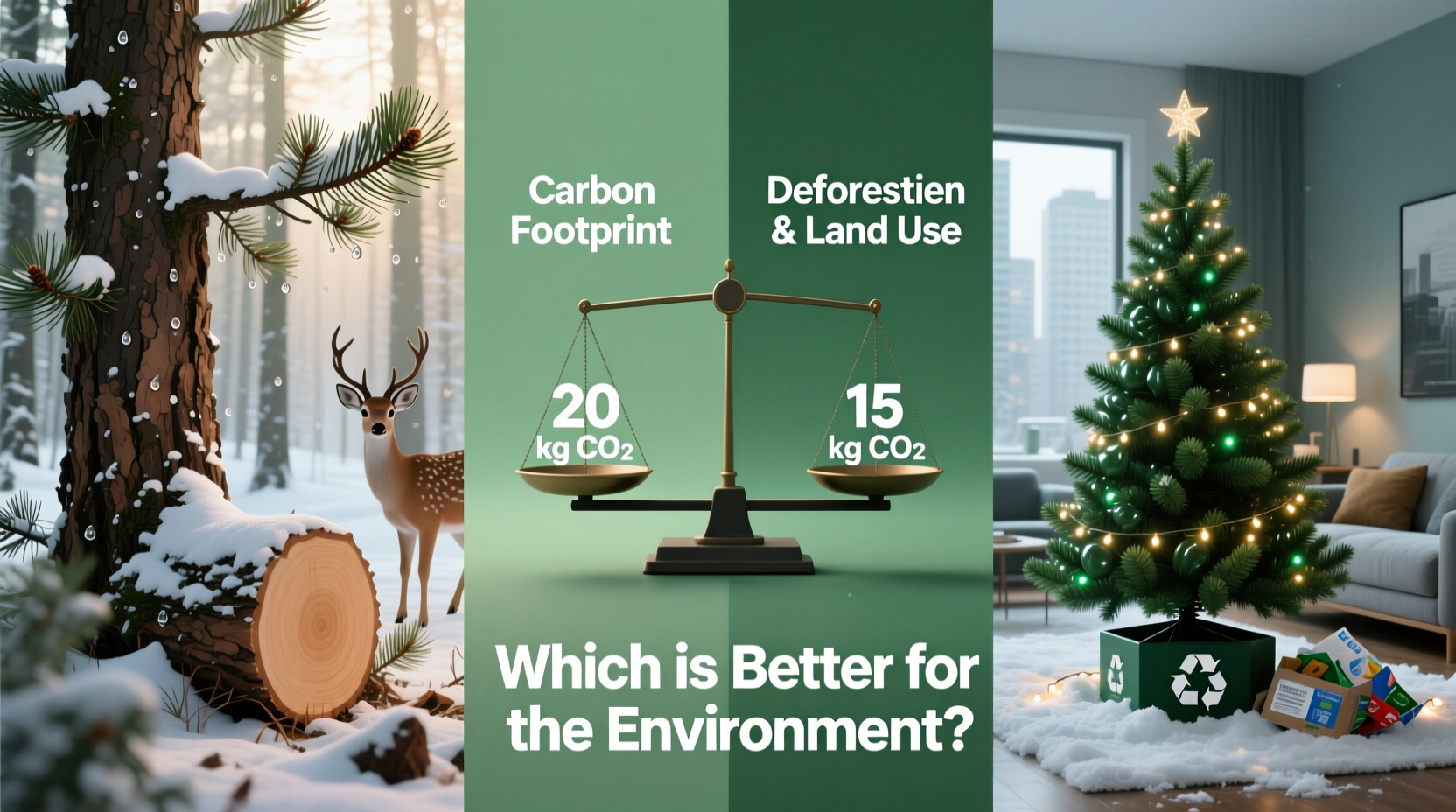
To fairly compare artificial and real Christmas trees, it's essential to examine their entire lifecycle—from raw material extraction to final disposal. This method, known as a Life Cycle Assessment (LCA), measures environmental impacts such as greenhouse gas emissions, energy consumption, water use, and waste generation.
Real Christmas Trees: Most are grown on farms specifically for holiday harvest, much like crops. Farmers plant new seedlings every year to replace those cut, maintaining a continuous cycle. These trees absorb carbon dioxide during growth, support local biodiversity, and are typically biodegradable when properly disposed of. However, cultivation requires land, water, pesticides, and fuel for transportation and harvesting.
Artificial Christmas Trees: Made primarily from polyvinyl chloride (PVC), steel, and plastic, these trees are manufactured in factories—often overseas. Their production involves fossil fuel extraction, high-energy manufacturing processes, and global shipping. Once purchased, they’re designed for reuse but eventually end up in landfills, where they can take centuries to decompose.
“An artificial tree must be used for at least 10 to 20 years to match the environmental impact of purchasing a new real tree annually.” — Dr. Sarah Harper, Environmental Scientist, University of British Columbia
This threshold comes from multiple studies, including a notable 2009 analysis by PE International, which found that the cumulative carbon footprint of an artificial tree surpasses that of real trees unless reused extensively. Even then, recycling options remain limited due to mixed materials.
Carbon Footprint Comparison
The carbon footprint—the total amount of greenhouse gases emitted during a product’s life—is a critical metric in this comparison. Let’s break it down.
| Tree Type | Average Carbon Footprint (kg CO₂e) | Primary Emission Sources |
|---|---|---|
| Real Christmas Tree (farmed, composted) | 3.1 kg per year | Fertilizers, farm machinery, transport to lot, disposal |
| Real Tree (landfilled) | 16.0 kg per year | Methane emissions from decomposition + cultivation |
| Artificial Tree (used once) | 40.0 kg | Manufacturing, shipping from Asia, landfill disposal |
| Artificial Tree (used 10 times) | 4.0 kg per year | Distributed manufacturing emissions over decade |
As shown, a real tree sent to landfill emits nearly five times more than one that’s composted due to methane release—a potent greenhouse gas. Meanwhile, a single-use artificial tree has a footprint equivalent to four decades of real tree purchases. But if reused for ten years, its annualized impact drops below that of a real tree—provided it’s not discarded prematurely.
Sustainable Practices for Real Trees
Choosing a real tree doesn’t automatically make you eco-friendly—how you source and dispose of it matters just as much as the initial decision.
Many tree farms operate sustainably, rotating crops, minimizing chemical inputs, and supporting pollinators. Some even offer “choose-and-cut” experiences that reduce transportation emissions by eliminating pre-harvest logistics. Additionally, real trees contribute to carbon sequestration while growing; a typical six-foot tree absorbs approximately 20 pounds of CO₂ per year during its 7–10 year lifespan.
After the holidays, proper disposal ensures minimal environmental harm. Municipal composting programs turn trees into mulch, which enriches soil and reduces the need for synthetic fertilizers. In coastal areas, some communities sink old trees into wetlands to create fish habitats. Burning trees releases carbon quickly, while landfilling generates methane—both should be avoided when alternatives exist.
- Look for certified sustainable tree farms (e.g., members of the Christmas Tree Farmers Association).
- Buy locally to reduce transport emissions.
- Participate in curbside pickup or drop-off composting programs.
- Avoid flocking (artificial snow) and chemical sprays, which contaminate compost.
“We’ve seen a 300% increase in tree recycling participation since we partnered with local nurseries to distribute free mulch bags.” — Mark Tran, Urban Forestry Coordinator, Portland, OR
The Hidden Costs of Artificial Trees
Beyond carbon, artificial trees pose other environmental concerns. PVC—the primary material—is one of the most toxic plastics in production. Its manufacture releases dioxins, carcinogens, and heavy metals. Though safe once made, PVC cannot be easily recycled and often ends up incinerated, releasing harmful fumes.
Moreover, most artificial trees are produced in China and shipped thousands of miles by cargo vessel, adding significant emissions. A single 6.5-foot tree traveling from Shanghai to New York generates about 8.8 kg of CO₂—nearly triple the footprint of a locally grown real tree.
And despite being marketed as reusable, many consumers replace artificial trees within six years due to wear, outdated styles, or storage issues. A 2020 consumer survey by the National Christmas Tree Association found that only 43% of artificial tree owners kept theirs for more than a decade. This premature replacement negates any potential environmental advantage.
Mini Case Study: The Johnson Family’s Tree Transition
The Johnsons of suburban Chicago owned a 7-foot artificial tree for eight years. Each November, they spent hours untangling lights and replacing broken branches. By year nine, half the tips had fallen off, and the metal stand rusted. They replaced it with a real Fraser fir from a nearby farm.
They now rent a biodegradable pot for their living tree, which they return after the holidays for replanting. Over three years, their estimated carbon savings exceed 70 kg compared to continuing with short-lived artificial models. “We didn’t think about how often we were replacing it,” says Lisa Johnson. “Now our kids help pick the tree, and we feel good knowing it’ll grow again.”
Living Trees and Alternative Options
An emerging trend offers a third path: living Christmas trees with roots intact. These potted evergreens spend the holidays indoors and are replanted outdoors afterward. While beautiful in concept, success depends on climate, care, and species selection.
Species like Norway spruce, Serbian spruce, or dwarf Alberta spruce tolerate temporary indoor stays if kept cool and hydrated. After no more than 7–10 days inside, they should be moved to a sheltered outdoor location and gradually acclimated before planting in early spring.
However, survival rates vary. Studies suggest only about 50–60% of replanted living trees thrive long-term, especially in harsh winters or urban soils. Still, when successful, they provide decades of carbon capture and habitat value.
Step-by-Step Guide to Eco-Friendly Tree Selection
- Assess your usage pattern: Will you celebrate annually? Do you have storage space?
- Choose based on longevity: If you won’t reuse an artificial tree for 10+ years, opt for real.
- Source responsibly: Buy from local farms with sustainable practices or consider a living tree.
- Minimize transport: Pick a tree lot within 10 miles of your home.
- Plan disposal ahead: Research municipal composting, drop-off sites, or replanting services.
- Decorate sustainably: Use LED lights, natural ornaments, and avoid plastic tinsel.
FAQ
Do real Christmas trees contribute to deforestation?
No. Over 98% of real Christmas trees are grown on farms specifically for harvest, similar to agricultural crops. For every tree cut, farmers typically plant one to three new seedlings. Natural forests are rarely affected.
Can artificial trees be recycled?
Very few facilities accept artificial trees due to their mixed materials (PVC, metal, plastic). Most end up in landfills. Some cities offer seasonal collection events, but true recycling remains rare. Donation or resale extends usability and is more sustainable than disposal.
Are fake trees safer for allergies?
Some people report fewer allergens with artificial trees, as real trees release small amounts of pollen and sap. However, dust accumulation on stored artificial trees can trigger reactions too. Washing artificial branches before use may help.
Checklist: Making the Most Sustainable Choice
- ☐ Decide honestly how many years you’ll keep an artificial tree
- ☐ Commit to reusing artificial trees for at least 10–15 years
- ☐ Choose real trees from local, sustainable farms
- ☐ Avoid flocking, chemical sprays, and non-recyclable decorations
- ☐ Arrange composting or recycling before purchase
- ☐ Consider renting or borrowing a tree if usage is infrequent
- ☐ Explore living tree options with confirmed replanting plans
Conclusion
The question of whether artificial or real Christmas trees are better for the environment doesn't have a one-size-fits-all answer—but data strongly favors informed choices. A real tree, responsibly sourced and composted, generally has a lower annual footprint. An artificial tree only becomes the greener option if used for a decade or more. Anything less amplifies its hidden environmental costs.
Sustainability isn’t just about the object itself, but how we treat it. Extending the life of any product, minimizing waste, and supporting local ecosystems are principles that go beyond the holidays. Whether you string lights on a fir or unfold a metal frame, the most environmentally sound decision is the one made with awareness and care.




 浙公网安备
33010002000092号
浙公网安备
33010002000092号 浙B2-20120091-4
Comments
No comments yet. Why don't you start the discussion?