
Every holiday season, millions of households across the world face the same question: should they buy a real tree or invest in an artificial one? While tradition, convenience, and aesthetics often drive the decision, a growing number of people are asking a more pressing question—what’s better for the planet? The answer isn’t as simple as it seems. Both real and artificial Christmas trees come with environmental costs, from production and transportation to disposal and long-term use. To make an informed choice, it’s essential to look beyond surface-level assumptions and examine the full lifecycle of each option.
The Lifecycle of a Real Christmas Tree
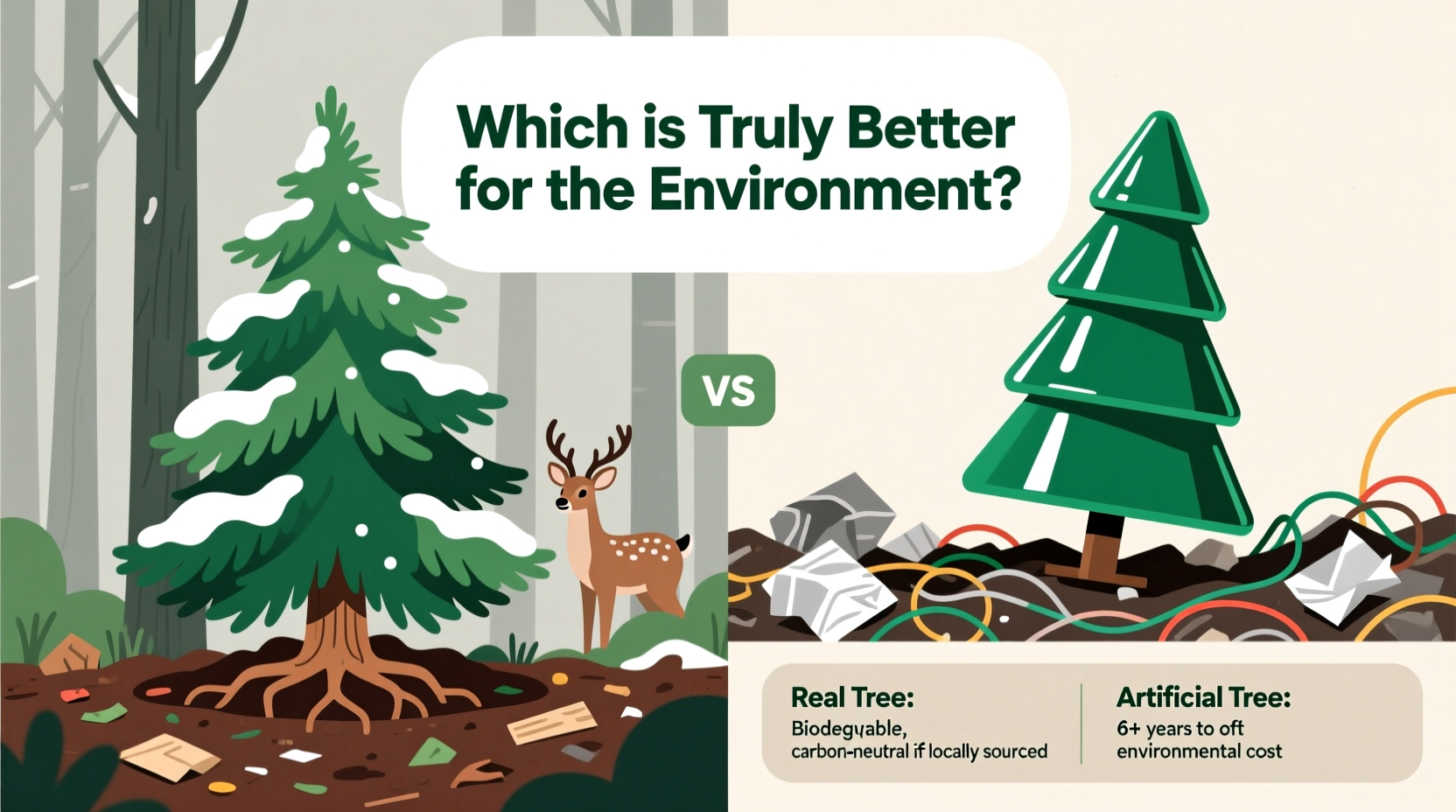
Real Christmas trees are grown on farms, typically taking 7 to 10 years to reach marketable height. During this time, they absorb carbon dioxide, release oxygen, and support local ecosystems. Most are cultivated specifically for harvest, much like crops, and farmers usually plant one to three seedlings for every tree cut. This rotation helps maintain a continuous green cover and soil stability.
Harvesting involves cutting the tree at the base, after which it’s transported—often regionally—to retail lots or pick-your-own farms. Once displayed in homes, the tree remains there for about four to six weeks before being disposed of. In many areas, municipal recycling programs chip the trees into mulch, use them for habitat restoration, or sink them in lakes to create fish shelters.
However, not all real trees are recycled. Trees that end up in landfills decompose anaerobically, producing methane—a greenhouse gas far more potent than CO₂. Additionally, some farms rely on chemical fertilizers, pesticides, and irrigation, which can affect water quality and biodiversity if not managed responsibly.
“Christmas tree farming provides renewable biomass and temporary carbon sequestration. When managed sustainably, it’s a relatively low-impact agricultural practice.” — Dr. Laura Bennett, Forest Ecologist, University of Vermont
The Lifecycle of an Artificial Christmas Tree
Artificial trees are primarily made from polyvinyl chloride (PVC), a petroleum-based plastic, and metal components for the frame. Most are manufactured overseas, predominantly in China, where raw materials are processed and assembled in factories powered by coal-heavy energy grids. The production process emits significant greenhouse gases and releases toxic byproducts such as dioxins.
After manufacturing, these trees are shipped thousands of miles by container ship and truck, adding to their carbon footprint before they even reach a consumer’s home. An average artificial tree travels over 12,000 miles from factory to North American living room.
Once purchased, artificial trees are designed for reuse—typically marketed as lasting six to ten years. However, many households replace them sooner due to wear, outdated styles, or storage damage. When discarded, they don’t biodegrade. Instead, they sit in landfills for centuries, leaching microplastics and heavy metals into the environment.
Comparative Environmental Impact: A Data-Driven Look
To determine which option is greener, researchers have conducted life cycle assessments (LCAs) comparing the total environmental cost of both types. These studies consider factors such as raw material extraction, manufacturing, transportation, use phase, and end-of-life disposal.
A widely cited 2008 study by PE International found that an artificial tree must be used for at least four to six years to match the environmental impact of purchasing a new real tree annually. More recent analyses, accounting for improved recycling rates and cleaner energy in agriculture, suggest the break-even point may now be closer to seven to ten years.
The largest contributors to environmental harm differ between the two:
- Real trees: Transportation, landfill methane emissions (if not recycled), and agrochemical runoff.
- Artificial trees: Manufacturing emissions, fossil fuel dependency, and non-recyclability.
Carbon footprint estimates vary by region and methodology, but a typical comparison looks like this:
| Tree Type | Estimated Carbon Footprint (kg CO₂e) | Lifespan Assumed | End-of-Life Fate |
|---|---|---|---|
| Real Christmas Tree (farmed) | 3.1 – 5.0 kg | 1 year | Recycled into mulch |
| Real Tree (landfilled) | 16.0 – 20.0 kg | 1 year | Landfill (methane emitted) |
| Artificial Tree | 40.0 – 80.0 kg | Single use (entire lifecycle) | Landfill (non-biodegradable) |
| Artificial Tree (used 10 years) | 4.0 – 8.0 kg/year | 10 years | Still landfilled, but impact amortized |
Note that reusing an artificial tree dramatically reduces its annual footprint. But if used for only two or three years, its environmental cost per season exceeds that of multiple real trees—even when the real ones aren’t recycled.
Practical Tips for Making the Greener Choice
No option is perfect, but informed decisions can significantly reduce your holiday footprint. Consider these actionable strategies based on your lifestyle and values.
Choose a Real Tree? Do This:
- Buy locally to minimize transport emissions.
- Select organic or sustainably farmed trees when available.
- Ensure your tree is recycled—check municipal programs or drop-off locations.
- Use LED lights and natural decorations to lower overall impact.
Stick with Artificial? Maximize Its Lifespan:
- Treat it like a long-term investment—protect it in storage with a durable bag.
- Repair broken branches or stands instead of replacing the whole tree.
- Avoid “disposable” mini-trees; they offer no reuse benefit and multiply waste.
Alternative: Living Trees and Rentals
Some nurseries and eco-conscious companies now offer potted evergreens that can be rented for the season. These trees arrive in containers, spend the holidays indoors (with limited time to prevent stress), then are returned to grow another year. Some services allow customers to eventually adopt and plant their tree.
“We’ve seen a 30% increase in living tree rentals over the past five years. People want tradition without guilt.” — Mark Tran, Founder of Evergreen Holiday Co.
Mini Case Study: The Peterson Family’s Tree Decision
The Petersons, a family of four in Portland, Oregon, used to buy a new artificial tree every few years. Their last one, purchased in 2016, began shedding needles and sagging by 2020. Frustrated, they considered switching to real trees but worried about waste.
They researched local farms and discovered a nearby lot offering pesticide-free Douglas firs, just 15 miles from their home. They bought one in 2021, placed it in a water stand, and enjoyed its fresh scent throughout December. After New Year’s, they dropped it off at a city recycling center, where it was chipped for trail surfacing in a regional park.
In 2022 and 2023, they repeated the process—each time choosing a locally grown tree and recycling it properly. Over three years, their total carbon footprint for real trees (including transport and recycling) was approximately 15 kg CO₂e. Had they replaced their artificial tree every four years, the equivalent footprint would have been around 60 kg CO₂e over the same period.
“We didn’t realize how much better a real tree could feel—not just environmentally, but emotionally,” said Sarah Peterson. “It smells like childhood, and we know it’s going back to the earth.”
Step-by-Step Guide: How to Minimize Your Tree’s Environmental Impact
Whether you go real or artificial, follow this timeline to make the most sustainable choice:
- November: Decide your approach
Assess whether you already own an artificial tree, plan to reuse one, or prefer a real tree. Consider storage space, budget, and local availability. - Early December: Source responsibly
If buying real, find a local farm or retailer. Ask about growing practices. For artificial, consider buying secondhand or renting. - Setup week: Use eco-friendly decor
Opt for LED lights, homemade ornaments, and reusable ribbons. Avoid tinsel (microplastic source) and plastic garlands. - During display: Maintain properly
Keep real trees watered to reduce needle drop and fire risk. Store artificial trees away from heat sources to prolong life. - Post-holiday: Dispose or store correctly
Recycle real trees through official programs. Store artificial trees clean and dry, disassembled if possible, in breathable bags.
Frequently Asked Questions
Is it better to burn a real Christmas tree?
No. Burning releases all stored carbon as CO₂ and produces air pollutants like particulate matter and volatile organic compounds. Recycling through municipal chipping or composting is far safer and more sustainable.
Are artificial trees recyclable?
Almost never. Most recycling facilities reject PVC due to contamination risks and lack of processing infrastructure. Metal parts may be salvageable, but separating them from plastic is labor-intensive. As of now, no widespread recycling program accepts whole artificial trees.
What’s the most eco-friendly Christmas tree option?
The most sustainable choice is a reused artificial tree kept for 10+ years, followed by a locally sourced real tree that’s properly recycled. The top-tier alternative is a rented living tree that continues growing after the holidays.
Conclusion: Making a Choice That Lasts Beyond the Holidays
The debate between artificial and real Christmas trees isn’t about declaring one universally superior—it’s about aligning your choice with long-term environmental responsibility. An artificial tree only wins on sustainability if used for many years. A real tree, while biodegradable, becomes problematic when dumped in landfills or shipped from distant regions.
The greenest tree is the one already in your home—or the one you commit to using again and again. It’s also the one paired with mindful habits: LED lighting, natural decorations, and proper end-of-life handling. Sustainability isn’t just about the object itself, but how we treat it across its entire journey.
This holiday season, let your tree reflect more than tradition. Let it reflect intention. Whether standing tall with pine-scented boughs or gleaming with reusable glitter, your choice can honor both celebration and stewardship.




 浙公网安备
33010002000092号
浙公网安备
33010002000092号 浙B2-20120091-4
Comments
No comments yet. Why don't you start the discussion?