
When it comes to choosing running shoes, two brands dominate casual conversations: ASICS and Skechers. One has decades of athletic credibility, the other a surge in lifestyle appeal and comfort marketing. But when laced up and hitting the pavement, which brand truly supports performance, durability, and injury prevention? The debate isn’t just about comfort—it’s about biomechanics, design philosophy, and long-term value.
ASICS has built its reputation on sports science, collaborating with podiatrists and kinesiologists to engineer shoes that support natural gait cycles. Skechers, meanwhile, rose to prominence through aggressive marketing, celebrity endorsements, and an emphasis on all-day comfort—especially with their memory foam insoles. While both brands sell millions of pairs annually, they serve different needs. Understanding the distinction can save runners from discomfort, inefficiency, or even injury.
The Science Behind ASICS: Engineering for Performance
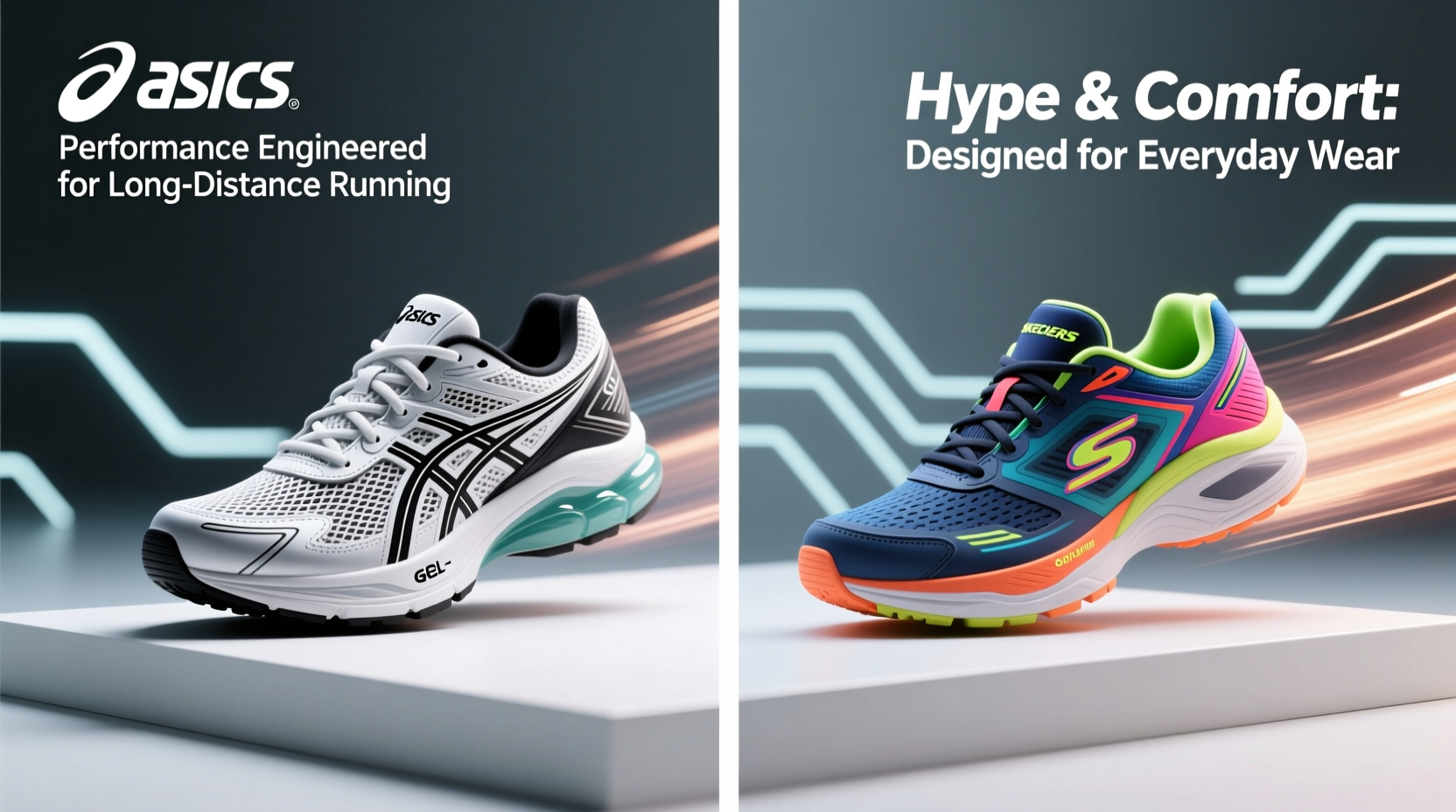
Founded in Japan in 1949, ASICS (an acronym for *Anima Sana In Corpore Sano* – “a sound mind in a sound body”) has always prioritized function over fashion. Their development process involves extensive gait analysis, pressure mapping, and clinical testing. Key technologies like Gel cushioning, Guidance Line midsole geometry, and Dynamic DuoMax support systems are engineered to reduce impact forces and correct overpronation.
For example, the ASICS Gel-Kayano series is a staple among serious runners seeking stability. It features a dual-density midsole, rearfoot and forefoot gel units, and a supportive heel counter designed to guide the foot through a neutral stride. These features aren’t just marketing—they’re responses to common biomechanical issues observed in long-distance runners.
“ASICS designs shoes around movement efficiency, not just cushioning. That makes them a top recommendation for runners logging high mileage.” — Dr. Marcus Lin, Sports Podiatrist
Independent studies have shown that motion-controlled shoes like the Kayano or GT-2000 can reduce the risk of knee pain and plantar fasciitis in overpronators by up to 30% compared to neutral, unstructured footwear.
Skechers: Comfort First, Running Second?
Skechers gained popularity in the 2010s with models like the Go Walk and Arch Fit lines, heavily advertised for “cloud-like” comfort and all-day wear. Their strategy targets casual users, shift workers, and fitness walkers rather than competitive runners. The signature feature—Ultra Go or Memory Foam insoles—delivers immediate softness underfoot, which many mistake for performance support.
However, this plush feel often comes at a cost. Many Skechers running models lack torsional rigidity, heel counters, and medial posting—critical components for maintaining alignment during repetitive impact. A 2022 review by Runner’s World found that while Skechers shoes scored high in initial comfort, they showed significant midsole breakdown after just 150 miles, leading to instability and reduced energy return.
Worse, some orthopedic specialists warn that prolonged use of overly cushioned, flat-profile shoes may weaken intrinsic foot muscles over time. Without proper arch engagement, runners can develop dependency on artificial support instead of building natural strength.
Real Example: The Mall Walker Turned Marathoner
Take Linda, a 52-year-old teacher who started walking daily in her Skechers Arch Fit shoes. She loved how they felt—light, springy, and instantly comfortable. Encouraged by her progress, she signed up for a half-marathon. After increasing her weekly mileage to 25 miles, she developed persistent plantar fasciitis. An MRI revealed no tear, but her physical therapist noted poor foot stabilization and excessive pronation.
Upon switching to ASICS Gel-Nimbus (a neutral-cushioned model with better structure), she gradually rebuilt her training load without pain. “I didn’t realize my shoes weren’t supporting me—they were just masking the problem,” she said. Her experience highlights a growing trend: comfort doesn’t equal capability.
Comparative Breakdown: ASICS vs Skechers
| Feature | ASICS | Skechers |
|---|---|---|
| Cushioning Type | Gel + FlyteFoam (responsive, durable) | Memory Foam + Ultra Go (soft, compressible) |
| Arch Support | Anatomically contoured, varying by model | Often flat or minimally structured |
| Stability Features | Guidance Trusstic, DuoMax, Heel Clutching | Limited; mostly neutral designs |
| Durability (Avg. Mileage) | 450–550 miles | 300–400 miles |
| Bio-Mechanical Focus | High (gait analysis, injury prevention) | Low (comfort-first approach) |
| Ideal For | Runners, high-mileage athletes, overpronators | Walkers, casual wear, light activity |
When Skechers Might Be the Right Choice
This isn’t to dismiss Skechers entirely. For certain users, they offer legitimate benefits. People with arthritis, those recovering from foot surgery, or individuals standing for long hours may find Skechers’ soft landings more tolerable than firmer performance shoes.
Additionally, Skechers has improved some models with added arch reinforcement and outsole durability. The Skechers GOrun Razor series, for instance, is designed specifically for speed and racing, featuring a lightweight mesh upper and responsive midsole—though still lacking the refined guidance systems seen in ASICS’ Metaspeed Sky.
Checklist: Choosing the Right Shoe for Your Needs
- ✅ Assess your primary activity: running vs walking
- ✅ Know your foot type: flat, neutral, or high-arched
- ✅ Determine if you overpronate (foot rolls inward)
- ✅ Try shoes later in the day when feet are slightly swollen
- ✅ Test run on a treadmill or track before committing
- ✅ Replace every 300–500 miles, regardless of brand
Expert Insight: What Podiatrists Recommend
Dr. Rachel Tran, a sports medicine specialist at Austin OrthoCare, emphasizes that shoe choice should be personalized: “We see more patients with metatarsal stress due to hyper-cushioned shoes than we did ten years ago. Just because a shoe feels soft doesn’t mean it’s protecting you. In fact, too much give can increase strain on tendons.”
“Think of your foot like a suspension system. You need balance between cushioning and control. ASICS tends to get that balance right for runners. Skechers often sacrifices control for instant comfort.” — Dr. Rachel Tran, DPM, Sports Medicine Specialist
Frequently Asked Questions
Can I run a marathon in Skechers?
You might complete the distance in certain Skechers models (like the GOrun series), but most experienced runners and coaches advise against it. The lack of midfoot containment and rapid compression of foam increases fatigue and injury risk over 26.2 miles.
Are ASICS worth the higher price?
Yes, for runners. ASICS typically cost $10–$30 more than comparable Skechers, but they last longer, offer better injury protection, and maintain performance consistency across hundreds of miles. The investment pays off in fewer doctor visits and replacements.
Do podiatrists recommend Skechers?
Some do—for non-running applications. Skechers Shape-Ups were once prescribed for rehabilitation, though they were discontinued due to lawsuit concerns. Today, podiatrists may recommend Skechers for elderly patients or those needing mild comfort—but rarely for athletic training.
Final Verdict: Function Over Hype
The Skechers hype is real—but it’s rooted in lifestyle marketing, not athletic performance. Their shoes sell because they feel good immediately, look clean, and require no break-in period. But running isn’t about immediate sensation; it’s about sustainable mechanics, joint protection, and efficient energy transfer.
ASICS, while less flashy, remains the preferred choice among coaches, physical therapists, and serious runners. Their focus on evidence-based design, superior durability, and biomechanical support makes them a smarter long-term investment for anyone logging consistent miles.
If you're walking less than 3 miles a day, Skechers may suit you well. But if you're training, improving pace, or aiming to stay injury-free, ASICS delivers where it matters: underfoot, mile after mile.




 浙公网安备
33010002000092号
浙公网安备
33010002000092号 浙B2-20120091-4
Comments
No comments yet. Why don't you start the discussion?