
ASP.NET, developed by Microsoft, has long been a robust, high-performance framework for building enterprise-grade web applications. It powers major platforms like Stack Overflow, Microsoft’s own services, and countless internal business systems. Yet, despite its technical strengths—scalability, security, and deep integration with Windows environments—it doesn’t dominate the broader web development landscape the way frameworks like React, Node.js, or Django do. So why isn’t ASP.NET more widely used?
The answer lies not in technical deficiency but in a combination of ecosystem dynamics, developer preferences, platform constraints, and evolving industry trends. Understanding this requires looking beyond lines of code and into culture, accessibility, and economics of software development.
Perception and Developer Mindshare
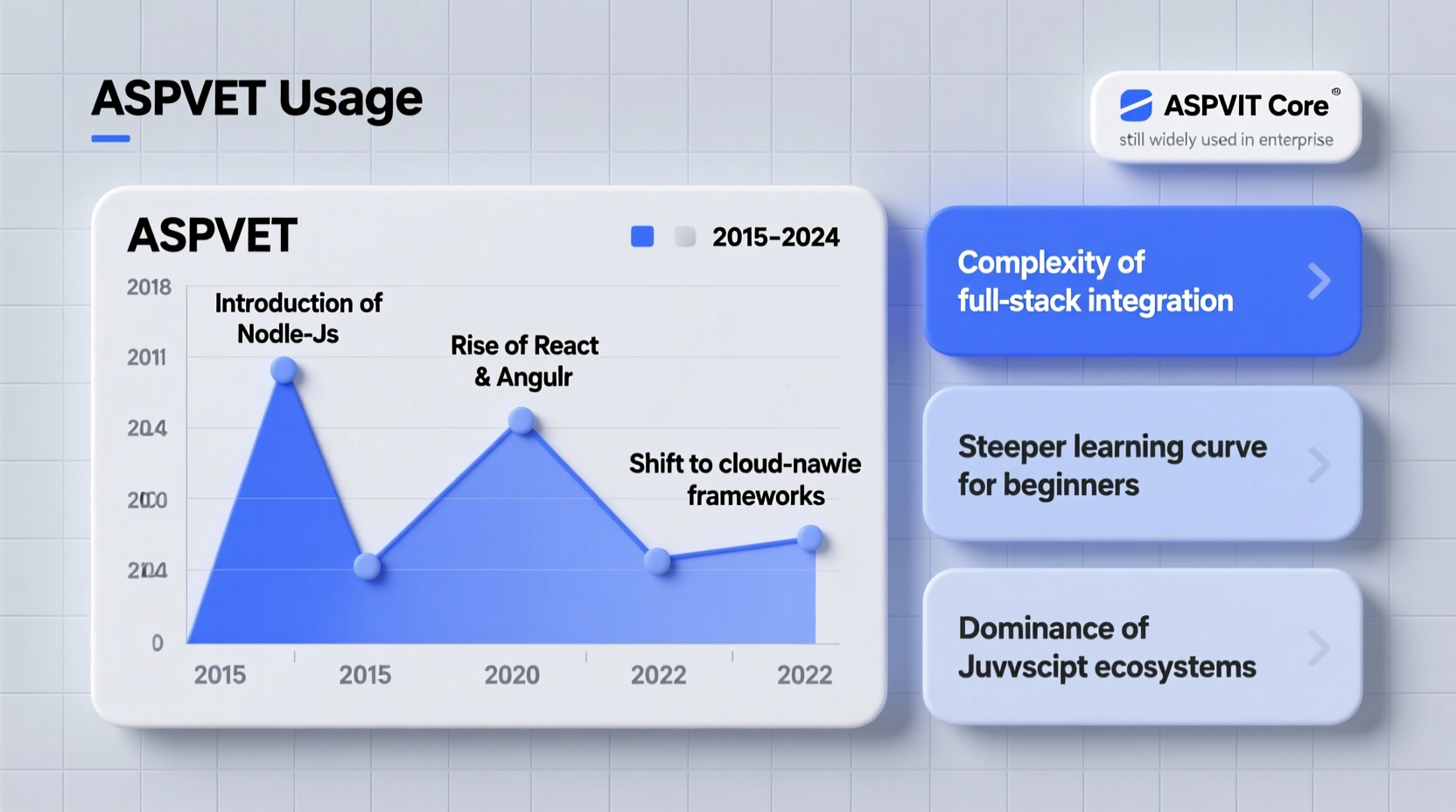
One of the biggest hurdles ASP.NET faces is perception. For many developers, especially those entering the field today, \"web development\" means JavaScript-heavy frontends paired with lightweight backend APIs. The rise of full-stack JavaScript (Node.js, Express, React) has created a unified, approachable environment that lowers the barrier to entry.
In contrast, ASP.NET has historically been associated with complex project structures, Visual Studio dependency, and a steep learning curve—especially when navigating older Web Forms architecture. While modern ASP.NET Core is lean, cross-platform, and open-source, the legacy reputation lingers.
Many junior developers gravitate toward tools they can start using quickly: install Node.js, create a server in 10 lines, deploy on Vercel or Netlify. With ASP.NET, even though it's now cross-platform, the initial setup often involves .NET SDKs, understanding project files (.csproj), and C# syntax—which, while powerful, feels heavier to newcomers.
“Developer adoption isn’t just about performance. It’s about velocity, community, and how fast you can go from zero to ‘hello world’.” — Sarah Chen, Senior Software Architect at DevTrek Inc.
Ecosystem and Open-Source Culture
The open-source movement has reshaped how developers choose technologies. Frameworks like Django, Flask, Express, and Laravel thrive on GitHub visibility, vibrant communities, and an abundance of free tutorials and plugins.
ASP.NET was closed-source for years. Though ASP.NET Core launched as open-source in 2016 under the MIT license, it took time to build trust and momentum. Even today, much of its tooling and documentation originates from Microsoft, which can feel corporate compared to grassroots communities.
Compare package ecosystems: npm has over 2 million packages; NuGet, while solid, hosts fewer third-party contributions relative to its competition. This affects everything from authentication libraries to UI components. When developers need a quick solution, they often find more options in non-Microsoft ecosystems.
Hosting and Cost Considerations
Historically, ASP.NET required Windows Server and IIS, both of which come with licensing costs. While ASP.NET Core runs perfectly on Linux, Docker, and Kubernetes, many organizations still associate the framework with expensive infrastructure.
Startups and indie developers often opt for LAMP (Linux, Apache, MySQL, PHP) or MEAN (MongoDB, Express, Angular, Node.js) stacks because they’re perceived as “free” or low-cost. Even cloud providers like AWS and Heroku made early support for open-source stacks easier than for .NET deployments.
Though Azure offers excellent .NET integration and Microsoft provides free tiers, the mental model persists: ASP.NET = Microsoft = cost. In reality, hosting ASP.NET Core on Linux via Nginx and Kestrel is no more expensive than running Node.js—but awareness lags behind.
Market Segmentation: Where ASP.NET Actually Shines
ASP.NET isn’t underused everywhere—it’s dominant in specific domains:
- Enterprise applications: Large corporations with existing Microsoft investments (Active Directory, SQL Server, Azure AD) naturally adopt ASP.NET for internal tools, CRMs, and ERP systems.
- Government and financial systems: These sectors value stability, security audits, and long-term support—all areas where Microsoft excels.
- High-performance APIs: ASP.NET Core consistently ranks among the fastest frameworks in the TechEmpower benchmarks, outperforming Ruby on Rails, Django, and Spring Boot in raw throughput.
In other words, ASP.NET is less visible because it operates behind firewalls, powering internal dashboards and banking backends rather than consumer-facing startups.
“We chose ASP.NET Core for our healthcare compliance platform because of its built-in security features and strong typing. It caught bugs at compile-time that would’ve slipped through in JavaScript.” — Marcus Tran, CTO at HealthFlow Systems
Comparison: ASP.NET vs. Popular Alternatives
| Framework | Learning Curve | Hosting Flexibility | Community Size | Typical Use Case |
|---|---|---|---|---|
| ASP.NET Core | Moderate-High | High (cross-platform) | Medium (growing) | Enterprise apps, high-load APIs |
| Node.js / Express | Low | Very High | Very Large | Full-stack JS, real-time apps |
| Django | Moderate | High | Large | Rapid prototyping, CMS, admin panels |
| Laravel | Low-Moderate | High | Large | Small-to-medium PHP apps |
| Ruby on Rails | Low-Moderate | High | Medium | Startup MVPs, e-commerce |
Real Example: A Mid-Sized SaaS Company’s Dilemma
A mid-sized fintech startup in Austin initially built their MVP using Express.js due to team familiarity. As user load grew, they faced performance bottlenecks and runtime errors caused by loose typing. After a critical outage during tax season, they reevaluated their stack.
They migrated core transaction processing to ASP.NET Core, leveraging its async-first design, built-in dependency injection, and superior error handling. The result? API response times dropped by 60%, and deployment reliability improved significantly. However, they kept their frontend in React and used ASP.NET only for backend services.
This hybrid approach reflects a growing trend: ASP.NET isn’t replacing JavaScript stacks, but complementing them where performance and correctness matter most.
How to Increase Adoption: A Checklist
If you're considering ASP.NET for your next project—or want to advocate for it within your organization—follow this actionable checklist:
- Evaluate actual needs: Are you building a high-throughput service or mission-critical system? ASP.NET may be ideal.
- Leverage cross-platform deployment: Run on Linux containers using Docker to eliminate cost concerns.
- Use minimal APIs: Start small with clean, modern syntax that resembles lightweight frameworks.
- Tap into open-source tools: Explore community projects like Hot Chocolate (GraphQL), MudBlazor (UI), and Entity Framework Core.
- Document and share: Contribute tutorials or internal guides to reduce onboarding friction.
- Measure performance: Benchmark against alternatives to demonstrate real-world advantages.
Frequently Asked Questions
Is ASP.NET only for Windows developers?
No. ASP.NET Core is fully cross-platform and runs on Windows, macOS, and Linux. You can develop and deploy it anywhere, including cloud platforms like AWS, Google Cloud, and Docker environments.
Why do startups rarely use ASP.NET?
Startups prioritize speed, low cost, and access to talent. JavaScript and Python ecosystems offer faster prototyping, abundant free resources, and larger pools of junior developers. ASP.NET is often seen as overkill for early-stage MVPs, even though it scales better later.
Can I use ASP.NET with React or Angular?
Absolutely. Many modern ASP.NET applications serve as backend APIs (via REST or GraphQL) while frontends are built in React, Angular, or Vue. This decoupled architecture is common in enterprise settings.
Conclusion: Rethinking Popularity vs. Suitability
ASP.NET isn’t unpopular because it’s flawed—it’s underused because its strengths align with niches that don’t generate viral GitHub stars or TikTok coding tutorials. Its true value emerges in scenarios demanding reliability, type safety, and high throughput.
Popularity isn’t always a measure of quality. While frameworks come and go, ASP.NET continues to evolve, embracing open-source principles, cloud-native patterns, and microservices architecture. For teams with the right requirements, it remains one of the most capable backend frameworks available.




 浙公网安备
33010002000092号
浙公网安备
33010002000092号 浙B2-20120091-4
Comments
No comments yet. Why don't you start the discussion?