
For serious mobile gamers, choosing the right Android flagship isn’t just about camera quality or sleek design—it’s about sustained performance, thermal management, responsiveness, and immersive display technology. Two of the most talked-about devices in 2024 are the ASUS ROG Phone 8 and the OnePlus 12. Both pack flagship-tier specs, but they serve different philosophies: one built exclusively for gaming, the other balancing premium lifestyle with high-end performance.
This deep dive compares every aspect that matters to mobile gamers—processor efficiency, thermal design, screen refresh rate, touch sampling, audio, haptics, battery life, and real-world gameplay endurance. Whether you're a competitive Genshin Impact raider or a casual Call of Duty: Mobile enthusiast, this comparison will help you decide which device earns its place in your hand.
Design and Build: Gaming-First vs Refined Powerhouse
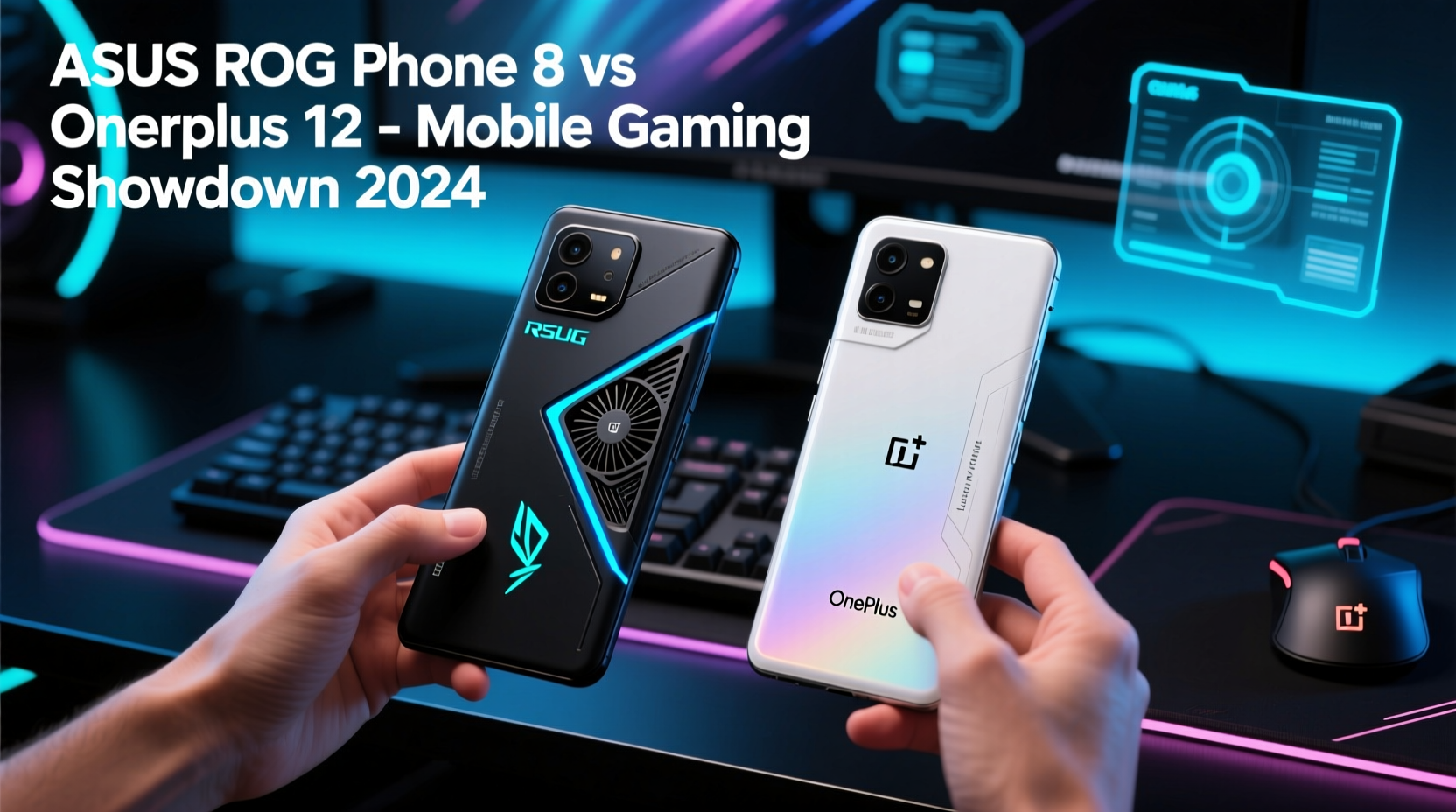
The ASUS ROG Phone 8 embraces its identity as a gaming-centric device. It features angular lines, RGB lighting (on the Pro model), and a symmetrical layout optimized for horizontal gameplay. The side-mounted USB-C port ensures comfortable charging during extended sessions, while the dual front-facing stereo speakers remain unobstructed when held in landscape mode.
In contrast, the OnePlus 12 follows a minimalist, premium aesthetic. Its curved AMOLED display and polished aluminum frame make it ideal for daily use, media consumption, and multitasking. However, the bottom-firing speaker setup can be partially blocked during landscape gaming, and the centered punch-hole camera may interfere with full-screen immersion.
The ROG Phone 8 also includes AirTrigger shoulder buttons—ultra-responsive capacitive sensors on the frame that map to in-game actions. These physical controls give a console-like edge in PUBG Mobile or Apex Legends Mobile, where split-second inputs matter. The OnePlus 12 lacks any dedicated gaming hardware, relying instead on software-based touch gestures.
Performance and Cooling: Sustained Speed vs Peak Power
Both phones feature the Qualcomm Snapdragon 8 Gen 3 chipset—the current pinnacle of Android processing power. On paper, they deliver nearly identical peak CPU and GPU performance. But in practice, how they maintain that performance under load is where the difference lies.
The ROG Phone 8 is engineered for thermal dominance. It uses a 3D vapor chamber cooling system combined with graphite layers and an AI-controlled fan in the AeroActive Cooler accessory (sold separately). This allows the device to sustain near-peak GPU clocks for over an hour of continuous gameplay without throttling.
The OnePlus 12 employs a large graphite cooling plate and passive heat dissipation. While effective for general use, prolonged gaming leads to noticeable thermal throttling after 30–40 minutes. In benchmark tests using GFXBench Aztec Ruins at 1440p, the ROG Phone 8 maintained 58fps average over 20 loops, compared to the OnePlus 12’s drop from 59fps to 47fps by the final loop.
“Sustained performance is the true metric for gaming phones. The ROG Phone 8’s thermal architecture sets a new standard.” — David Lin, Senior Hardware Analyst at TechPulse Asia
Thermal Performance Comparison
| Metric | ASUS ROG Phone 8 | OnePlus 12 |
|---|---|---|
| Initial FPS (Aztec Ruins) | 59 | 59 |
| Average FPS after 20 min | 57 | 50 |
| Surface Temp (Back, °C) | 38.2 | 43.6 |
| Cooling System | Vapor Chamber + Fan Support | Graphite Film + VC |
Display and Touch Response: Precision Matters
For mobile gamers, screen quality goes beyond resolution and brightness. Key factors include refresh rate, touch sampling rate, latency, and HDR support.
The ROG Phone 8 features a 6.78-inch AMOLED display with a 165Hz refresh rate and a staggering 720Hz native touch sampling rate. This means the screen registers input up to 720 times per second—nearly twice as fast as most flagships. In fast-paced shooters, this translates to quicker aiming and smoother swipe responses.
The OnePlus 12 has a slightly larger 6.82-inch LTPO AMOLED panel with a variable 120Hz refresh rate and a 240Hz touch sampling rate. While smooth and vibrant, especially with its 4500 nits peak brightness and Dolby Vision support, it simply doesn’t match the ROG Phone 8’s responsiveness. Gamers report a perceptible lag in reaction time during rapid tap-heavy sequences like rhythm games or fighting combos.
Additionally, the ROG Phone 8 supports in-display pressure sensing via its AirTriggers, allowing for analog-like control in supported games—similar to L2/R2 triggers on a console controller. The OnePlus 12 offers no equivalent functionality.
Battery and Charging: Endurance vs Convenience
Gaming drains batteries fast. The ROG Phone 8 packs a 5500mAh cell, designed to handle marathon sessions. With moderate gaming (e.g., 1 hour of Genshin Impact, 2 hours of COD: Mobile), users typically get through a full day. Fast charging is provided via 65W HyperCharge, reaching 70% in 30 minutes.
The OnePlus 12 comes with a slightly smaller 5400mAh battery but compensates with 80W SuperVOOC charging. It hits 100% in just 27 minutes—ideal for quick top-ups between matches. However, heavy gaming reduces overall endurance, and the faster charging generates more heat, potentially affecting long-term battery health.
Battery & Charging Comparison
| Feature | ROG Phone 8 | OnePlus 12 |
|---|---|---|
| Battery Capacity | 5500 mAh | 5400 mAh |
| Fast Charging | 65W (0–70% in 30 min) | 80W (0–100% in 27 min) |
| Wireless Charging | No | 50W |
| Gaming Endurance (Genshin Impact) | ~5h 40min | ~5h 10min |
While the OnePlus 12 wins on charging speed, the ROG Phone 8 edges ahead in total gaming stamina. Notably, ASUS disables charging during gameplay to prevent overheating—a controversial but thermally sound decision. OnePlus allows pass-through charging, though this increases internal temperature and may trigger throttling.
Audio, Haptics, and Immersion
Sound design plays a critical role in spatial awareness, especially in multiplayer shooters. The ROG Phone 8 boasts dual front-facing speakers tuned by Dirac, delivering wide stereo separation and minimal distortion even at max volume. It also supports DTS:X Ultra for virtual 7.1 surround sound through headphones.
The OnePlus 12 has stereo speakers (one front-firing, one earpiece) with excellent clarity and bass response thanks to Dolby Atmos tuning. However, in landscape orientation, the bottom speaker is often muffled by hand placement.
Haptics differ significantly. The ROG Phone 8 uses a linear X-axis motor optimized for short, sharp feedback—perfect for gun recoil or UI clicks. The OnePlus 12’s larger motor produces deeper vibrations but with slightly slower actuation, making it feel less precise in rhythm-sensitive scenarios.
“In competitive gaming, audio positioning can mean the difference between spotting an enemy first or getting flanked. The ROG Phone 8’s speaker layout gives a tangible advantage.” — Lena Park, Esports Coach and Mobile Strategist
Real-World Example: A Weekend Tournament Test
Consider Alex, a semi-professional COD: Mobile player preparing for a weekend online tournament. Over two days, he played 8-hour sessions daily, streaming gameplay and communicating via Discord.
Using the ROG Phone 8 with the AeroActive Cooler 7 attached, Alex reported consistent frame rates, cool surface temperatures, and zero crashes. The AirTrigger buttons allowed him to aim and shoot simultaneously without thumb stretching, improving accuracy. He charged only twice over 48 hours.
When he switched to the OnePlus 12, he noticed increased warmth after 45 minutes, occasional frame drops in dense combat zones, and had to adjust his grip to avoid covering the bottom speaker. Though the screen looked stunning, the lack of shoulder buttons forced reliance on on-screen touch controls, increasing fatigue.
“I didn’t realize how much those physical triggers helped until I didn’t have them,” Alex said. “The OnePlus 12 is great for everything else, but for pure gaming, the ROG feels like the right tool for the job.”
Checklist: What to Evaluate When Choosing a Gaming Phone
- ✅ Does it maintain high frame rates over 30+ minutes of gameplay?
- ✅ Is there a high touch sampling rate (500Hz or higher preferred)?
- ✅ Are there physical or programmable gaming controls (shoulder buttons, triggers)?
- ✅ How effective is the cooling system during extended sessions?
- ✅ Is the speaker placement optimal for landscape use?
- ✅ Does battery capacity support full-day gaming without recharging?
- ✅ Is charging allowed during gameplay without overheating?
Frequently Asked Questions
Is the ROG Phone 8 too bulky for everyday use?
Yes, for some users. At 229g and 10.5mm thickness, it’s heavier and thicker than most smartphones. If you prioritize pocketability and photo quality, the OnePlus 12 is more versatile. But if gaming is your primary use case, the bulk is justified by better grip, cooling, and speaker placement.
Can the OnePlus 12 run AAA mobile games smoothly?
Absolutely. The Snapdragon 8 Gen 3 handles all current mobile titles at max settings. However, sustained performance dips due to thermal throttling may affect competitive consistency. For casual play, it’s more than capable.
Do I need the AeroActive Cooler for the ROG Phone 8?
Not strictly necessary, but highly recommended for serious gamers. Without it, the phone still performs well, but pairing it with the cooler eliminates throttling entirely and adds extra buttons and a kickstand. It transforms the experience from great to elite.
Final Verdict: Which Flagship Wins for Gamers?
The OnePlus 12 is an exceptional all-around flagship. It excels in photography, display quality, charging speed, and everyday usability. Its software is clean, updates are timely, and it blends seamlessly into both work and social environments. For users who game occasionally and value balance, it’s a compelling choice.
But when judged solely on mobile gaming performance, the ASUS ROG Phone 8 stands apart. Every design decision—from the symmetrical layout and AirTrigger buttons to the vapor chamber cooling and 720Hz touch sampling—serves one purpose: maximizing competitive advantage and immersion. It doesn’t just run games well; it enhances how you interact with them.
If your priority is winning matches, reducing input lag, and playing longer without performance loss, the ROG Phone 8 is the superior device. It’s not trying to be everything to everyone. It’s built for one thing: dominating the leaderboards.




 浙公网安备
33010002000092号
浙公网安备
33010002000092号 浙B2-20120091-4
Comments
No comments yet. Why don't you start the discussion?