
Finding the right drone as a beginner can feel overwhelming. With so many models flooding the market, two brands consistently rise to the top: Autel Robotics and DJI. Both offer capable, high-quality drones, but which one truly suits someone just starting out in 2024? The answer isn’t as straightforward as brand loyalty might suggest. While DJI dominates the market with widespread recognition, Autel has been making aggressive strides in innovation and value. For new pilots, the decision hinges on more than just camera specs—it’s about ease of learning, reliability, support, and long-term usability.
Understanding the Brands: Market Position and Reputation
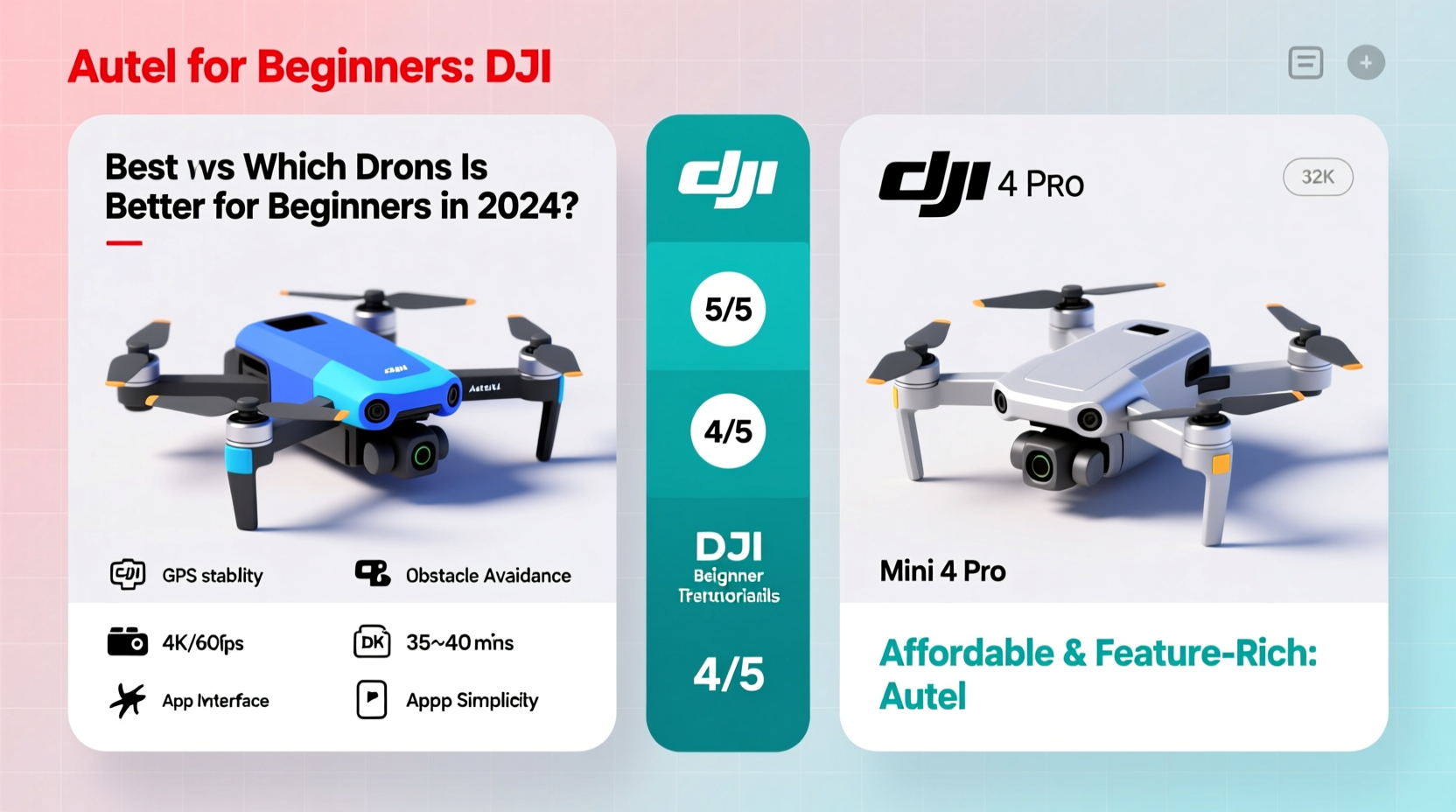
DJI, headquartered in Shenzhen, China, has been the undisputed leader in consumer and professional drones for over a decade. Its market share exceeds 70% globally, thanks to consistent innovation, intuitive software, and strong retail presence. Models like the Mavic series have become synonymous with beginner-friendly aerial photography.
Autel Robotics, though newer and less ubiquitous, has positioned itself as a serious alternative. Founded in 2014, Autel targets both hobbyists and commercial users with feature-rich drones that often match or exceed DJI's offerings at competitive prices. Their EVO series, particularly the EVO Nano and EVO Lite+, has drawn praise for balancing performance and accessibility.
“DJI sets the standard, but Autel is closing the gap fast—especially for cost-conscious beginners who don’t want to sacrifice image quality.” — Mark Tran, UAV Industry Analyst at DroneTech Insights
The key difference lies not in capability alone, but in ecosystem maturity. DJI benefits from years of refined user experience, while Autel is still building trust through customer service and app stability.
Beginner-Friendly Features Compared
For first-time drone owners, the learning curve matters more than megapixels. A smooth onboarding process, reliable safety features, and clear tutorials can mean the difference between frustration and enjoyment.
DJI excels here. Its Fly app (for entry-level models) is minimalist and guided, offering step-by-step flight tutorials, obstacle avoidance in all directions on mid-tier models, and GPS-assisted return-to-home. Even if you lose signal, DJI drones typically navigate back autonomously with minimal input.
Autel’s Autel Explorer app is functional but less polished. New users often report a steeper initial setup, especially when syncing firmware or calibrating sensors. However, once configured, flight controls are responsive, and the interface includes useful tools like dynamic waypoints and terrain-following modes—even on entry-level models.
Key Beginner Features Side-by-Side
| Feature | DJI (e.g., Mini 4 Pro) | Autel (e.g., EVO Nano+) |
|---|---|---|
| Weight (under 250g) | Yes – FAA registration exempt | Yes – also registration-free |
| Obstacle Avoidance | Full 360° on Mini 4 Pro | Front, back, bottom only |
| App Simplicity | High – designed for novices | Moderate – more pro-oriented |
| Tutorial Mode | Included with virtual practice | Limited – requires third-party resources |
| Customer Support | Extensive global network | Growing, but slower response times |
Camera Quality and Flight Performance
Both companies deliver impressive imaging for compact drones. The DJI Mini 4 Pro shoots 4K/60fps HDR video with a 1/1.3-inch sensor, while the Autel EVO Nano+ uses a 1/1.28-inch sensor—slightly larger—and captures equally vibrant footage with natural color grading.
In real-world conditions, DJI’s image processing tends to be more consistent, especially in low light, due to mature algorithms and D-Cinelike color profiles. Autel’s cameras produce excellent dynamic range but may require minor post-processing to match DJI’s out-of-camera punch.
Flight time is comparable: around 30 minutes per battery. Wind resistance on Autel models is slightly better due to heavier build, but DJI’s lighter frames benefit from superior efficiency and quieter motors—ideal for urban or nature filming where noise matters.
Mini Case Study: Sarah’s First Drone Experience
Sarah, a travel blogger based in Colorado, bought the Autel EVO Nano+ in early 2024 after reading reviews praising its camera. She found the initial setup confusing—the app didn’t recognize her controller until she updated firmware manually. After watching two YouTube tutorials, she got it flying. “The video quality stunned me,” she said. “But I crashed into a tree on day three because the side obstacle sensors weren’t active.” She later switched to a DJI Mini 3 Pro, citing easier handling and better crash prevention. “I wish Autel had clearer warnings during setup about sensor limitations.”
Cost, Value, and Long-Term Usability
Pricing plays a major role for beginners. The DJI Mini 4 Pro starts at $759, while the Autel EVO Nano+ is priced at $699—$60 less for similar specs. Autel also offers free firmware upgrades with new features, whereas DJI sometimes locks advanced capabilities behind paid subscriptions (e.g., Advanced RTH or airspace authorization).
However, resale value favors DJI. Used Mini drones retain up to 70% of their value after one year, compared to 50% for Autel models, largely due to demand and brand trust.
- DJI offers more accessories: extra batteries, propeller guards, carrying cases.
- Autel includes higher-grade materials (e.g., carbon fiber arms on some models).
- DJI integrates seamlessly with editing software like Adobe Premiere via pre-built LUTs.
- Autel supports open-source flight logging—useful for future learning or commercial licensing.
Checklist: Choosing Your First Drone in 2024
- ✅ Confirm the drone weighs under 250g to avoid FAA registration.
- ✅ Test the companion app on your phone before buying.
- ✅ Ensure obstacle avoidance covers all critical directions (front, back, sides, down).
- ✅ Check local regulations—some areas restrict non-DJI drones.
- ✅ Look for bundled training resources or community forums.
- ✅ Consider future needs: will you want thermal imaging or longer range later?
FAQ
Can I fly an Autel drone in restricted zones?
Yes, but unlike DJI, Autel does not integrate directly with LAANC (Low Altitude Authorization and Notification Capability) in the U.S. You’ll need to request airspace access manually through third-party apps like Kittyhawk or Airmap.
Is DJI banned in the U.S.?
No, consumer DJI drones are legal to own and operate. However, federal agencies are restricted from using certain DJI models due to data security concerns. This doesn’t affect personal users.
Do Autel drones have follow-me mode?
Yes, both ActiveTrack and Follow-Me modes are available on EVO series drones, though tracking accuracy lags slightly behind DJI’s APAS 5.0 system in dense environments.
Final Verdict: Which Is Better for Beginners in 2024?
If your priority is simplicity, reliability, and a seamless first-flight experience, **DJI remains the best choice for most beginners**. The ecosystem, app design, safety features, and widespread support create a forgiving environment for learning. Mistakes are less costly—both financially and emotionally—when your drone can sense danger and return home safely.
That said, **Autel is an excellent option for technically inclined beginners** who value raw value, image quality, and aren’t intimidated by a few extra setup steps. If you’re budget-conscious and plan to grow into advanced features, Autel offers room to evolve without upgrading immediately.
Ultimately, neither brand is universally “better.” But for peace of mind, faster mastery, and broader compatibility, DJI edges ahead in 2024—especially for those picking up a controller for the very first time.




 浙公网安备
33010002000092号
浙公网安备
33010002000092号 浙B2-20120091-4
Comments
No comments yet. Why don't you start the discussion?