
Cat owners are increasingly turning to feeding solutions that promise convenience, consistency, and better health management. Two of the most common options—automatic cat feeders and gravity feeders—offer very different approaches to meal delivery. While both eliminate the need for constant manual feeding, they carry distinct implications for your cat’s weight, eating habits, and long-term wellness. A growing concern among pet parents is whether using a gravity feeder might contribute to feline obesity. The short answer: it can—but not always. The real issue lies in how these systems are used, your cat’s individual needs, and whether portion control is properly managed.
How Gravity Feeders Work—and Why They’re Tempting
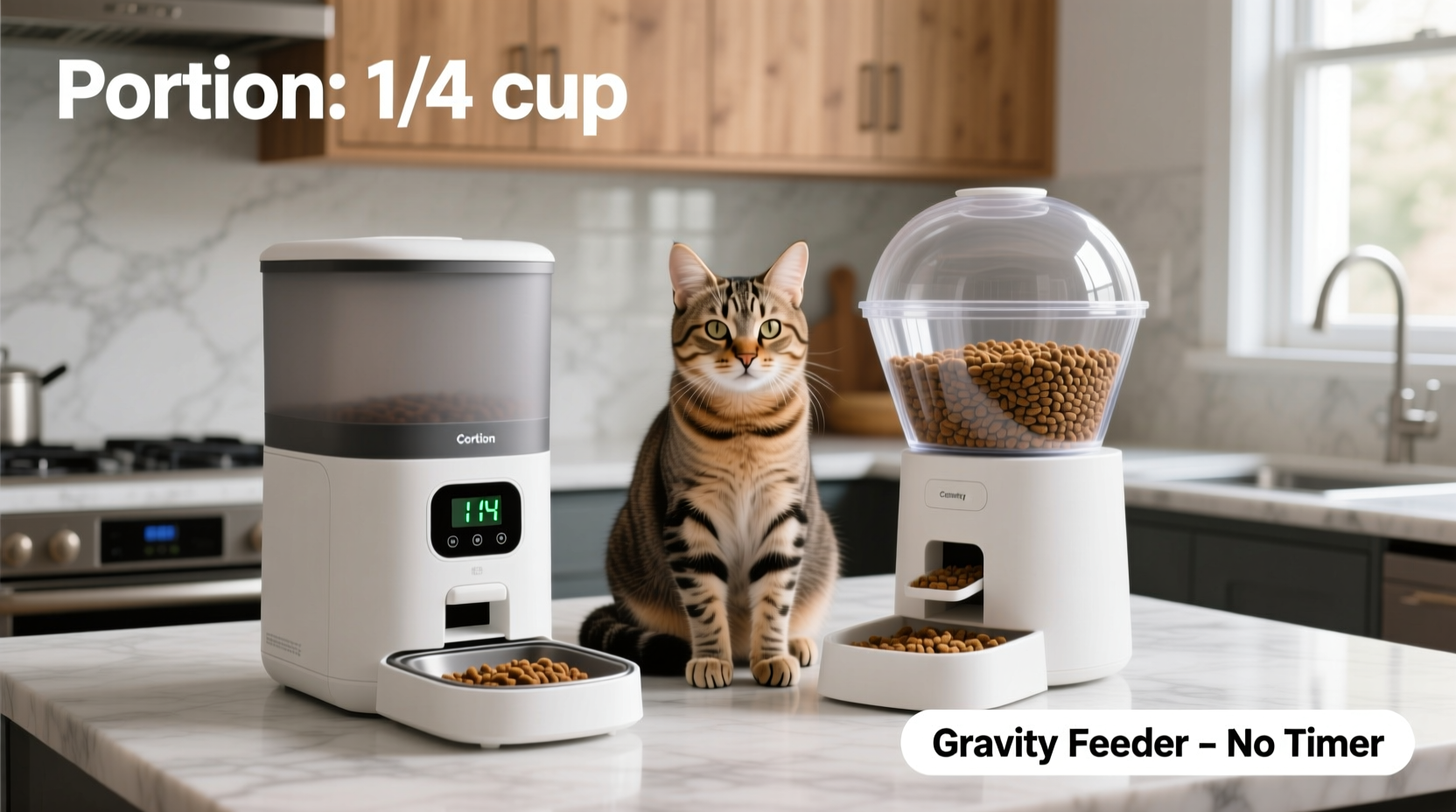
A gravity feeder operates on a simple principle: as your cat eats from a bowl, more food flows down from a reservoir above due to gravity. These feeders typically consist of a wide base with a transparent or opaque hopper that holds dry kibble. When the food level drops below a certain point, additional kibble slides into the bowl automatically. There’s no timer, no programming, and no restriction—just continuous access.
The appeal is obvious. Busy households benefit from “set it and forget it” feeding. Traveling pet owners appreciate not needing someone to refill bowls daily. And for multi-cat homes, gravity feeders can reduce competition at mealtimes by ensuring constant availability.
But this convenience comes with risk. Because food is always accessible, cats may graze throughout the day without natural breaks. This unrestricted access disrupts satiety cues and can lead to overconsumption—especially in breeds predisposed to weight gain or in less active indoor cats.
Automatic Feeders: Precision Over Permissiveness
Unlike gravity feeders, automatic feeders dispense measured portions at scheduled times. Most models allow you to program two to six meals per day, with adjustable portion sizes (usually in 1/8 to 1-cup increments). Some advanced units even feature voice recording, mobile app control, and dual power options (battery and USB).
This structure supports healthier eating patterns. By mimicking natural feeding rhythms—smaller, timed meals—automatic feeders help regulate metabolism and prevent mindless snacking. They also give owners full control over calorie intake, which is essential for weight management, especially in neutered or sedentary cats.
For households with multiple pets, many automatic feeders include locking mechanisms or microchip recognition to ensure only the designated cat accesses food. This prevents dominant cats from monopolizing meals and underfeeding others.
Do Gravity Feeders Cause Weight Gain? The Science Behind Feline Obesity
Feline obesity is a serious health concern affecting up to 60% of household cats in developed countries, according to studies published in the Journal of Feline Medicine and Surgery. Excess weight increases the risk of diabetes, arthritis, urinary tract disease, and hepatic lipidosis—a potentially fatal liver condition triggered by rapid weight loss after prolonged overfeeding.
Free-choice feeding—offering unlimited access to dry food—is consistently linked to higher body condition scores. Dry kibble is energy-dense and often high in carbohydrates, which cats don’t naturally require in large amounts. When combined with low activity levels typical of indoor living, constant grazing becomes a recipe for gradual but significant weight gain.
“Cats evolved as hunters who eat small, frequent meals rich in protein. Unlimited dry food goes against their biological design and promotes metabolic imbalance.” — Dr. Sarah Thompson, DVM, Board-Certified Feline Nutritionist
Gravity feeders enable free-choice feeding by default. Without monitoring total daily intake, owners may unknowingly exceed their cat’s caloric needs. One study found that cats fed ad libitum consumed 20–30% more calories than those on portion-controlled diets—even when given identical food.
Comparing the Two: Key Differences at a Glance
| Feature | Gravity Feeder | Automatic Feeder |
|---|---|---|
| Portion Control | None – continuous flow | Yes – programmable servings |
| Meal Timing | Unlimited, anytime access | Scheduled feedings only |
| Best For | Highly active cats, outdoor access, multi-cat homes with stable dynamics | Indoor-only cats, weight management, diabetic cats, travel scenarios |
| Risk of Overeating | High – especially in inactive cats | Low – if programmed correctly |
| Maintenance Frequency | Refill every few days; clean weekly | Refill daily or every other day; clean after each refill |
| Cost Range | $15–$30 | $40–$150+ |
When a Gravity Feeder Might Be Safe (And When It Isn’t)
Not all cats will become overweight on a gravity feeder. Individual factors determine risk:
- Activity Level: Cats with outdoor access or high play drive burn more calories and may self-regulate intake effectively.
- Breed Tendency: Breeds like Maine Coons or Ragdolls are prone to weight gain, while Abyssinians or Bengals tend to stay leaner.
- Age: Younger, growing kittens often need more frequent meals and can benefit from constant access during development. Adult and senior cats, however, usually require strict portioning.
- Diet Type: High-protein, low-carb kibble may be less fattening than standard grain-heavy formulas—even when offered freely.
If you choose a gravity feeder, consider pairing it with daily food rationing: pour only the amount your cat should consume in 24 hours into the hopper. Refill once empty, rather than keeping it perpetually full. This hybrid method maintains mechanical ease while introducing accountability.
Case Study: Bella, the Indoor Siamese Who Gained 2 Pounds in 6 Months
Bella, a 4-year-old indoor Siamese, lived in a quiet apartment with her owner, Mark, who worked long hours. To ensure she never went hungry, Mark installed a large-capacity gravity feeder filled with premium dry food. He believed she’d eat only what she needed.
Over six months, Bella became less playful, avoided jumping onto furniture, and began grooming less frequently. At her annual vet checkup, she weighed 12.4 lbs—two pounds over her ideal range. Her veterinarian diagnosed mild obesity and recommended switching to scheduled feeding.
Mark replaced the gravity feeder with an automatic model set for four 1/4-cup meals per day. He also introduced 10 minutes of interactive play before each meal to stimulate hunting behavior. Within three months, Bella lost 1.3 pounds, regained agility, and showed renewed interest in toys.
The lesson: even intelligent, active breeds like Siamese can overeat when food is too easily available. Environmental enrichment and structured feeding made a measurable difference.
Step-by-Step: Transitioning from Gravity to Portioned Feeding
Switching your cat from free-feeding to scheduled meals requires patience. Sudden changes can cause stress or refusal to eat. Follow this timeline for a smooth transition:
- Week 1: Monitor Current Intake – Measure how much your cat consumes in 24 hours using the gravity feeder. Empty the hopper, refill with a known quantity (e.g., 1 cup), and check remaining food after 24 hours. Repeat for 3–5 days to calculate average consumption.
- Week 2: Introduce Meal Structure – Divide daily intake into 3–4 equal portions. Offer them at consistent times using a regular bowl. Stay nearby during meals to observe eating speed and appetite.
- Week 3: Install Automatic Feeder – Program the device with the same schedule and portion sizes. Run it alongside manual feeding so your cat associates the sound with food.
- Week 4: Full Automation – Discontinue hand-feeding. Use the automatic feeder exclusively. Monitor for missed meals or signs of anxiety.
- Ongoing: Adjust as Needed – Reassess weight every 4 weeks. Increase or decrease portions by 1/8 cup based on progress toward target weight.
Checklist: Choosing the Right Feeder for Your Cat
- ☐ Determine your cat’s daily caloric needs (ask your vet or use a feline calorie calculator)
- ☐ Assess your cat’s activity level and weight history
- ☐ Decide whether portion control or convenience is the priority
- ☐ Consider multi-cat dynamics—if applicable
- ☐ Choose a feeder with easy-to-clean components
- ☐ Test the mechanism with your current kibble size (some small or oddly shaped pieces jam dispensers)
- ☐ Plan for backup power (battery pack) in case of outages
Frequently Asked Questions
Can I leave my cat alone for a week with a gravity feeder?
No. While a gravity feeder provides food, it doesn’t guarantee your cat will eat normally, drink enough water, or remain healthy. Illness, stress, or blockages can go unnoticed. Always arrange for a pet sitter to check daily—even if using any type of feeder.
Do automatic feeders work for picky eaters?
Some do, but freshness matters. Automatic feeders that expose food to air for hours may deter sensitive cats. Opt for models with sealed compartments or dual chambers that release fresh portions at each mealtime. Avoid leaving wet food in automated units unless specifically designed for it.
Is free feeding ever acceptable?
In limited cases, yes. Kittens under 6 months, pregnant or nursing queens, and cats recovering from illness may benefit from constant access to nutrient-dense food. However, once growth stabilizes or recovery is complete, transitioning to portioned meals is strongly advised.
Conclusion: Prioritize Health Over Convenience
While gravity feeders offer undeniable ease, they come with real risks for modern indoor cats whose lifestyles rarely match their ancestral energy demands. Unrestricted access to dry food can—and often does—lead to gradual weight gain, especially when paired with low physical activity.
Automatic feeders, though more expensive and requiring setup, provide superior control over your cat’s nutrition. They support metabolic health, aid in managing medical conditions like diabetes, and promote mindful eating behaviors. Used wisely, they align more closely with a cat’s natural rhythm than constant grazing ever could.
Your cat’s long-term well-being depends not just on *what* they eat, but *how* they eat. Making the switch from passive refilling to intentional feeding isn’t just about preventing obesity—it’s about honoring your cat’s biology and giving them the best chance at a vibrant, energetic life.




 浙公网安备
33010002000092号
浙公网安备
33010002000092号 浙B2-20120091-4
Comments
No comments yet. Why don't you start the discussion?