
Pet obesity is a growing concern in households across the country. According to the Association for Pet Obesity Prevention (APOP), over 60% of cats and dogs in the U.S. are overweight or obese. One major contributor? Feeding methods. While convenience often drives pet owners toward certain feeding tools—like gravity feeders—the long-term impact on pet health can be detrimental. Automatic feeders, on the other hand, offer structured portion control that supports weight management. Understanding the differences between these two systems is essential for promoting a healthier lifestyle for your pets.
Understanding Gravity Feeders: Convenience at a Cost
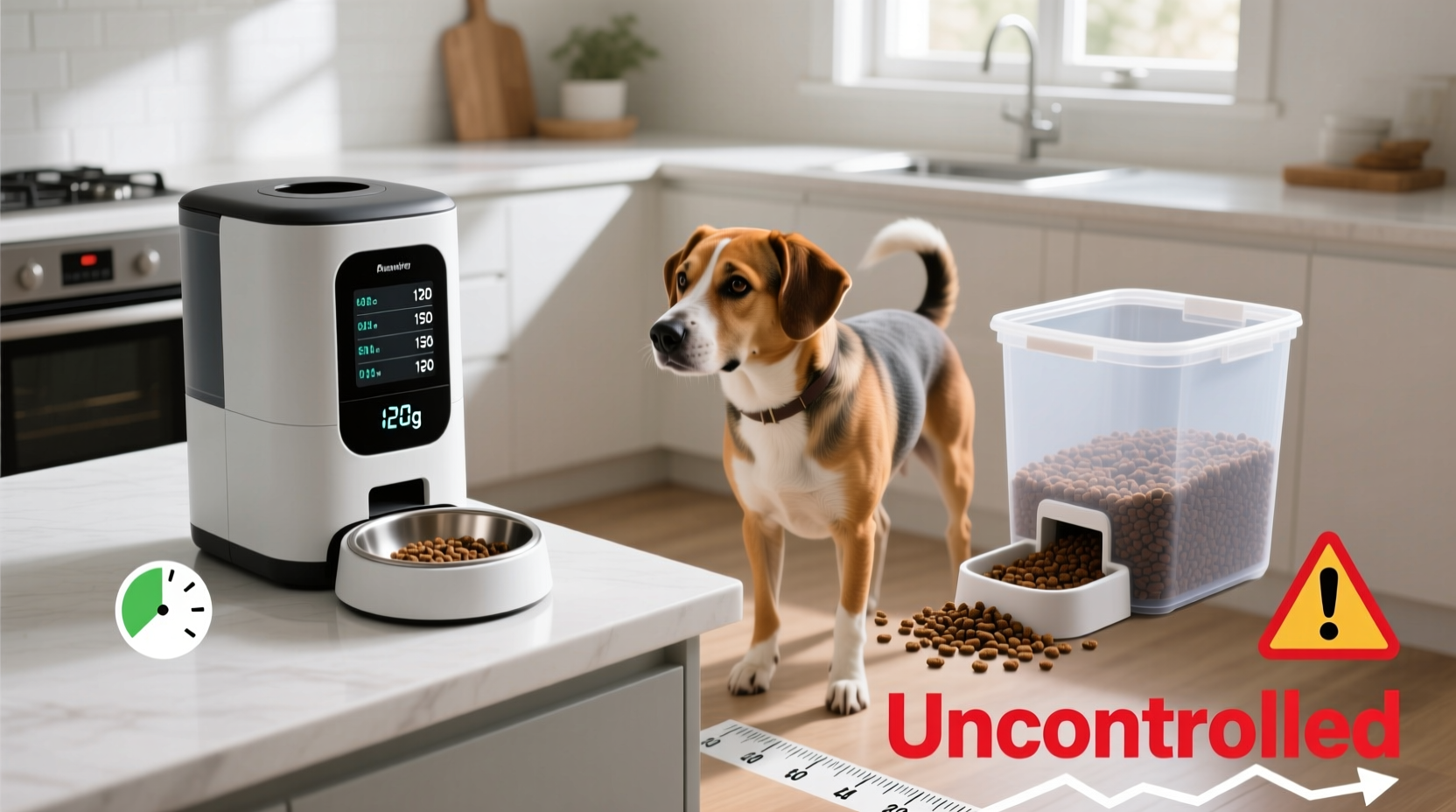
Gravity feeders operate on a simple principle: as food is eaten from the bowl, more flows down from a connected hopper or bin. This creates a constant supply of food, mimicking free-feeding behavior. These feeders are popular because they reduce the need for frequent refills and seem ideal for busy pet owners.
However, this constant access leads to overeating. Pets don’t self-regulate their food intake like humans might assume. Instead, they respond to availability. When food is always present, many animals eat out of boredom, habit, or instinct rather than hunger.
The absence of portion discipline makes gravity feeders one of the leading contributors to gradual, unnoticed weight gain. For pets already prone to obesity—such as neutered cats, older dogs, or breeds like Labradors and Persian cats—this setup can accelerate health problems including diabetes, joint stress, and reduced lifespan.
How Automatic Feeders Promote Portion Control
Automatic feeders introduce structure into feeding routines. These devices dispense a pre-measured amount of food at scheduled times, based on user programming. Most models allow customization of portion size and feeding frequency, aligning closely with veterinary dietary recommendations.
By limiting access to food and enforcing meal times, automatic feeders help regulate calorie intake. This is especially beneficial for pets on weight-loss plans or those requiring strict diets due to medical conditions. Advanced models even support multiple meals per day, voice recording features, and smartphone integration for remote monitoring.
Portion control isn’t just about reducing food—it’s about consistency. Irregular eating patterns confuse metabolism. Scheduled feeding stabilizes insulin levels, improves digestion, and reduces begging behavior. Over time, pets adapt to the routine, anticipating meals without constant grazing.
“Consistent portion control through timed feeding is one of the most effective non-pharmaceutical interventions for managing pet obesity.” — Dr. Laura Bennett, DVM, Veterinary Nutrition Specialist
Comparative Analysis: Automatic vs Gravity Feeders
| Feature | Automatic Feeder | Gravity Feeder |
|---|---|---|
| Portion Control | Yes – precise, programmable servings | No – continuous access |
| Meal Scheduling | Yes – customizable timing | No – free-feeding only |
| Obesity Risk | Low – supports weight management | High – encourages overeating |
| Breed Suitability | Ideal for all, especially prone-to-obesity breeds | Risky for sedentary or indoor pets |
| Maintenance Effort | Moderate – requires setup and power | Low – minimal intervention needed |
| Best For | Weight management, routine-driven homes, multi-pet households | Active outdoor animals, temporary use |
The data clearly favors automatic feeders when long-term health and portion control are priorities. While gravity feeders may appear easier in the short term, their long-term consequences often outweigh the convenience.
Real-World Example: Managing Max’s Weight with an Automatic Feeder
Max, a 5-year-old neutered domestic shorthair cat, lived in a two-person household where both owners worked full-time. Initially fed using a gravity feeder, Max gained nearly 3 pounds over 18 months—reaching an unhealthy 16 pounds. His veterinarian diagnosed mild arthritis and recommended immediate weight loss.
The family switched to a programmable automatic feeder, setting three measured meals per day totaling 220 kcal—aligned with Max’s ideal caloric needs. They removed all other food sources and supplemented with interactive play sessions.
Within five months, Max lost 2.2 pounds and showed improved mobility. His begging decreased significantly once he adapted to the feeding schedule. The owner noted, “He used to meow constantly by the food bin. Now he waits calmly near his feeder at mealtime.”
This case illustrates how replacing a gravity system with portion-controlled automation can reverse weight gain—even in pets already affected by obesity.
Step-by-Step Guide to Transitioning from Gravity to Automatic Feeding
Switching feeding systems requires care to avoid stress or digestive upset. Follow this timeline to ensure a smooth transition:
- Week 1: Assess Current Intake
Measure how much your pet currently eats daily using the gravity feeder. Weigh food added and subtract leftover amounts to estimate average consumption. - Week 2: Consult Your Veterinarian
Share your pet’s weight, age, activity level, and current diet. Request a recommended daily calorie target and appropriate portion sizes. - Week 3: Choose and Test the Feeder
Select an automatic feeder with reliable portion control. Test it with manual dispensing first to ensure your pet approaches it comfortably. - Week 4: Begin Gradual Transition
Phase out the gravity feeder. Offer one automated meal per day while providing the rest via hand-portioned bowls. Increase automated meals weekly until fully transitioned. - Month 2 Onward: Monitor and Adjust
Weigh your pet every two weeks. Adjust portion size if weight plateaus or declines too quickly. Maintain consistent timing and avoid treats unless accounted for in total calories.
This phased approach minimizes anxiety and allows pets to adapt behaviorally and metabolically to structured feeding.
Actionable Tips for Preventing Pet Obesity
Common Myths About Pet Feeding Debunked
- Myth: “Pets know when to stop eating.”
Truth: Most domesticated animals lack natural satiety cues due to generations of selective breeding and high-calorie diets. - Myth: “Free-feeding saves time and effort.”
Truth: It may save minutes daily but costs long-term health, vet bills, and quality of life. - Myth: “Automatic feeders are only for people who aren’t home.”
Truth: They’re valuable even for stay-at-home owners seeking portion discipline and routine.
Checklist: Choosing the Right Feeder for Your Pet
Use this checklist before purchasing any feeding system:
- ✅ Does my pet have a history of weight gain or low activity?
- ✅ Is my pet prone to gulping or overeating?
- ✅ Do I have multiple pets that compete for food?
- ✅ Can I commit to refilling and cleaning the feeder regularly?
- ✅ Am I willing to monitor my pet’s weight monthly?
- ✅ Does the feeder allow precise portion settings (not just “small/medium/large”)?
- ✅ Is the device compatible with my pet’s kibble size and moisture level?
If you answered “yes” to the first three questions, an automatic feeder is likely the better investment. If your pet is highly active, outdoors, or lives in a farm-style environment, a gravity feeder may still be appropriate—but with close monitoring.
Frequently Asked Questions
Can I use a gravity feeder occasionally without harm?
Occasional use—such as during vacations with oversight—may be acceptable for healthy, active pets. However, prolonged or unsupervised use increases obesity risk. If used temporarily, limit fill volume and pair with increased activity.
Are automatic feeders safe for puppies or kittens?
Yes, but with adjustments. Young animals require more frequent meals (3–4 times daily). Choose a feeder with flexible scheduling and small portion accuracy. Always consult your vet for growth-stage nutritional needs.
What if my pet refuses to eat from an automatic feeder?
Introduce it gradually. Place it beside the current bowl and manually dispense a few kibbles initially. Use positive reinforcement. Some pets take days to trust new mechanisms. Ensure the sound or motion of dispensing isn’t frightening.
Conclusion: Prioritizing Health Over Convenience
The choice between an automatic feeder and a gravity feeder is more than logistical—it’s a decision about your pet’s future well-being. While gravity feeders offer simplicity, they undermine one of the most critical aspects of pet health: portion control. Automatic feeders, despite requiring slightly more involvement, empower owners to take proactive steps against obesity, one of the most preventable yet widespread conditions in companion animals.
Technology has evolved to support responsible pet ownership. By embracing tools that enforce structure, measure intake, and align with veterinary science, you give your pet a longer, more energetic life. Don’t let convenience compromise care. Evaluate your current feeding method honestly, consider your pet’s individual needs, and make the switch if necessary.




 浙公网安备
33010002000092号
浙公网安备
33010002000092号 浙B2-20120091-4
Comments
No comments yet. Why don't you start the discussion?