
As pet ownership evolves with technology, automatic feeders have become increasingly popular for their convenience. They promise precise portion control, timely meals, and peace of mind when owners are away. But a growing concern among pet parents and veterinarians alike is whether these devices—designed to simplify feeding—are inadvertently contributing to sedentary behavior in pets. Could relying on automated systems be making your dog or cat lazier than they should be?
This article explores the real impact of automatic feeders on pet activity levels, compares them with traditional manual feeding, and provides practical strategies to ensure your pet stays both well-fed and mentally stimulated.
How Automatic Feeders Work—and Why People Love Them
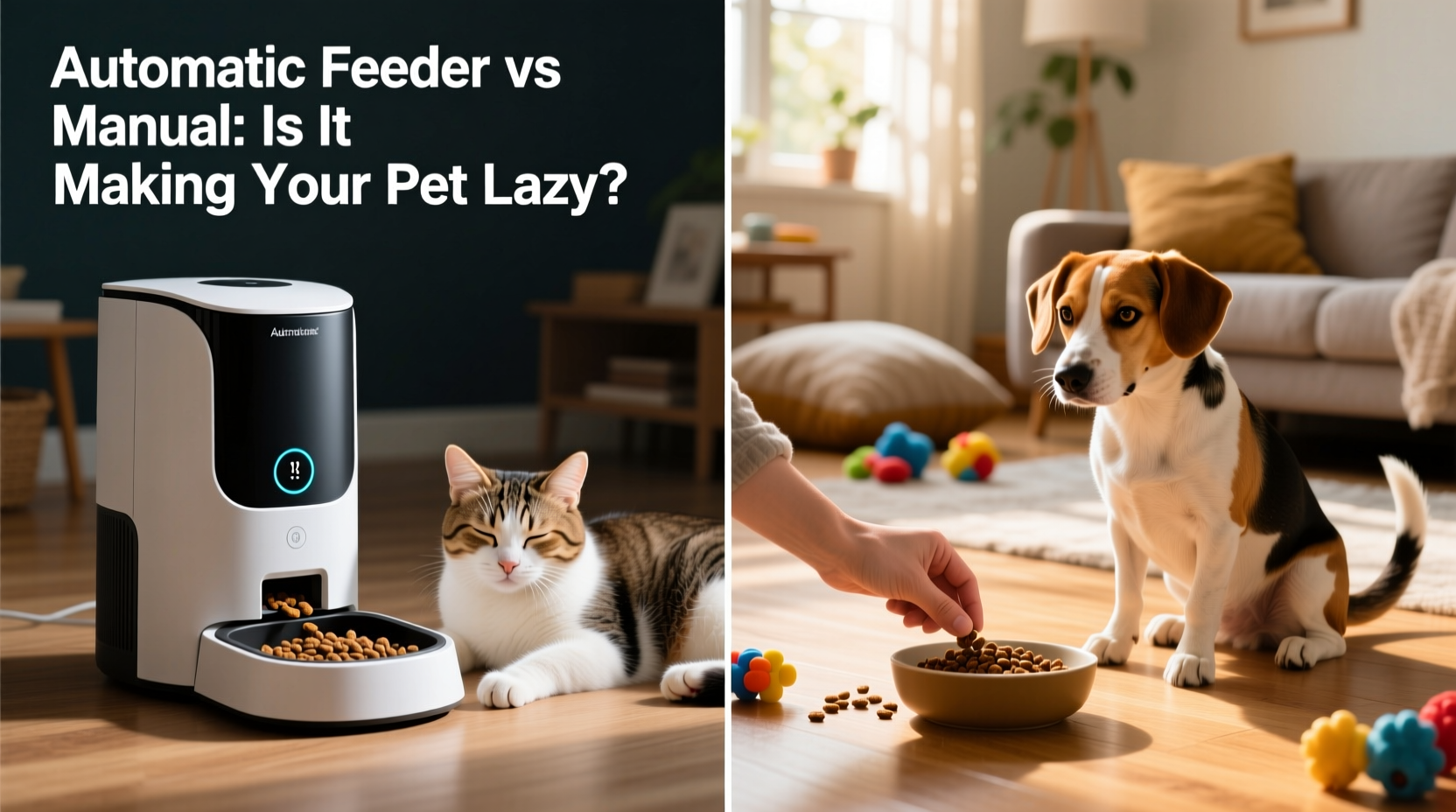
Automatic feeders dispense pre-measured food at scheduled times using programmable timers or smartphone-controlled apps. Some models even include cameras, voice recording features, and motion sensors to enhance interaction. These tools are especially useful for:
- Owners with unpredictable work schedules
- Families traveling frequently
- Pets requiring strict meal timing due to medical conditions
- Households with multiple pets needing separate feeding zones
The appeal lies in consistency and reliability. No more missed meals due to late commutes or weekend getaways. However, this efficiency comes with a trade-off: the removal of human interaction during mealtimes—a key moment for bonding and behavioral engagement.
The Psychology of Pet Feeding: Routine vs. Enrichment
Feeding isn’t just about nutrition—it’s a behavioral event. For dogs and cats, mealtimes represent anticipation, reward, and often physical effort (in the wild, hunting requires energy). When food appears predictably from a machine without any required action, pets may lose motivation to engage with their environment.
Dr. Lena Patel, veterinary behaviorist at the National Animal Wellness Institute, explains:
“Pets thrive on routine, but they also need cognitive stimulation. Removing all challenge from feeding can dull their natural instincts over time. The issue isn’t the device itself—it’s how it’s used.”
Manual feeding allows for integration of training cues (“sit,” “stay”), hand-feeding for socialization, and even scatter-feeding to encourage sniffing and movement. In contrast, passive dispensing lacks these layers of engagement.
Automatic vs Manual Feeding: A Comparative Breakdown
| Feature | Automatic Feeder | Manual Feeding |
|---|---|---|
| Consistency | High – meals delivered on schedule | Depends on owner’s routine |
| Portion Control | Precise – reduces overfeeding risk | Varies by caregiver attention |
| Interaction Level | Low – minimal human contact | High – direct bonding opportunity |
| Mental Stimulation | None unless paired with puzzles | Can incorporate training & games |
| Physical Activity | Limited – food comes easily | Can promote movement (e.g., fetch-for-food) |
| Bonding Potential | Minimal | Strong – builds trust and communication |
The data shows that while automatic feeders excel in logistical efficiency, they fall short in emotional and behavioral enrichment. This doesn't mean they’re inherently bad—but they must be integrated thoughtfully into a broader care strategy.
Real-World Example: Max the Indoor Cat
Max, a 4-year-old domestic shorthair, lived with a remote worker who began using an automatic feeder after switching to a hybrid schedule. Initially, the change seemed seamless—Max ate on time, maintained weight, and showed no signs of distress.
Over six months, however, his owner noticed he spent more time napping near the feeder, lost interest in toys, and rarely jumped onto window perches. A vet visit ruled out medical causes but flagged low environmental enrichment. The diagnosis? Behavioral lethargy linked to passive feeding.
Solution: The owner reintroduced two daily hand-fed meals using treat-dispensing balls and puzzle mats. Within three weeks, Max resumed playful pouncing, increased vertical exploration, and responded more readily to calls. The automatic feeder remained for midday use, but only after Max completed a simple task like touching a target stick.
This case illustrates that laziness isn’t always physical—it can stem from under-stimulated minds.
Strategies to Prevent Laziness When Using Automatic Feeders
You don’t have to abandon automation to keep your pet active. Instead, reframe the feeder as one tool in a holistic approach to pet wellness. Consider the following steps:
- Limit full automation to necessary times – Reserve the feeder for when you’re truly absent. Feed manually whenever possible, especially during peak activity hours (morning and evening).
- Pair feeding with mental challenges – Use puzzle feeders, snuffle mats, or hide kibble around the house so pets earn part of their meal through problem-solving.
- Incorporate movement before meals – Engage your dog in a short walk or play session before releasing food. For cats, use wand toys to simulate hunting prior to feeding.
- Use voice-enabled feeders interactively – If your model has a speaker, record encouraging phrases or call your pet’s name before dispensing food to reinforce attention and responsiveness.
- Vary feeding locations – Move the feeder occasionally or use it in tandem with portable bowls to create novelty and exploration incentives.
Checklist: Is Your Pet Getting Enough Engagement?
- ✅ Does your pet perform tasks (sit, wait, find) before eating?
- ✅ Are meals split between automated and interactive methods?
- ✅ Do you observe spontaneous play or exploration several times a week?
- ✅ Has your pet learned new behaviors or tricks in the past month?
- ✅ Is there variety in where and how food is delivered?
- ✅ Do you monitor changes in energy, curiosity, or responsiveness?
If most answers are “no,” it may be time to recalibrate your feeding approach—even if the automatic feeder is technically working perfectly.
The Role of Breed, Age, and Health in Activity Levels
Not all pets respond the same way to automated feeding. High-energy breeds like Border Collies or Abyssinian cats may show signs of frustration or boredom faster than lower-energy breeds such as Bulldogs or Persians. Similarly, younger animals typically require more stimulation than seniors.
However, age shouldn’t be an excuse for complete passivity. Even older pets benefit from gentle mental engagement. A study published in *Applied Animal Behaviour Science* found that senior dogs exposed to food puzzles showed improved mood and reduced confusion symptoms compared to those fed solely from bowls.
Medical considerations also matter. Pets with arthritis, diabetes, or digestive issues may benefit from the consistency of automatic feeders. In such cases, focus enrichment efforts elsewhere—short massages, scent trails, or verbal cue games can provide cognitive boosts without physical strain.
FAQ: Common Concerns About Automatic Feeders and Pet Behavior
Can automatic feeders cause obesity in pets?
Not directly. Obesity stems from calorie imbalance—consuming more energy than expended. However, because automatic feeders often deliver food without requiring effort, pets may become less active overall. Combine portion-controlled automation with regular exercise and mental challenges to mitigate this risk.
Do pets form attachments to automatic feeders?
Yes—some pets develop strong associations between the machine and food, leading to anticipatory behaviors like pacing or vocalizing before meals. While not harmful in moderation, excessive fixation can indicate insufficient stimulation. Rotate feeding methods and add alternative rewards (play, grooming) to diversify reinforcement sources.
Are there smart feeders that promote activity?
Emerging models integrate gamification. For example, some feeders release food only after detecting movement via connected collars or require pets to press levers or navigate mazes. While still niche, these “active access” feeders bridge the gap between convenience and enrichment.
Conclusion: Balance Technology With Instinct
Automatic feeders aren’t making your pet lazy by default—but they can contribute to a lifestyle lacking in challenge and connection if used in isolation. The goal isn’t to reject technology, but to harness it wisely. Think of the automatic feeder as the “when” of feeding, while you remain responsible for the “how” and “why.”
By preserving moments of manual feeding, embedding food into play, and continuously assessing your pet’s energy and curiosity, you maintain a balance between modern convenience and species-appropriate behavior. A healthy pet isn’t just well-fed—they’re mentally alert, physically capable, and emotionally fulfilled.




 浙公网安备
33010002000092号
浙公网安备
33010002000092号 浙B2-20120091-4
Comments
No comments yet. Why don't you start the discussion?