
Feeding your fish might seem like a simple daily ritual—sprinkle some flakes, watch them dart to the surface, and carry on. But behind that routine lies a critical factor in aquarium health: consistency. Whether you're managing a single betta or a community tank with dozens of species, how and when food is delivered affects water quality, digestion, behavior, and long-term survival. As technology advances, automatic fish feeders have become more accessible, promising precision and convenience. But do they truly outperform the human touch? And is the consistency they offer worth the investment?
This question isn't just about gadgets versus tradition—it's about understanding the biological needs of aquatic life and balancing practicality with responsibility. For many aquarists, especially those with busy schedules or frequent travel, automation offers peace of mind. Yet others argue that nothing replaces the observational benefits of daily interaction. Let’s examine both sides in depth.
The Role of Consistency in Fish Health
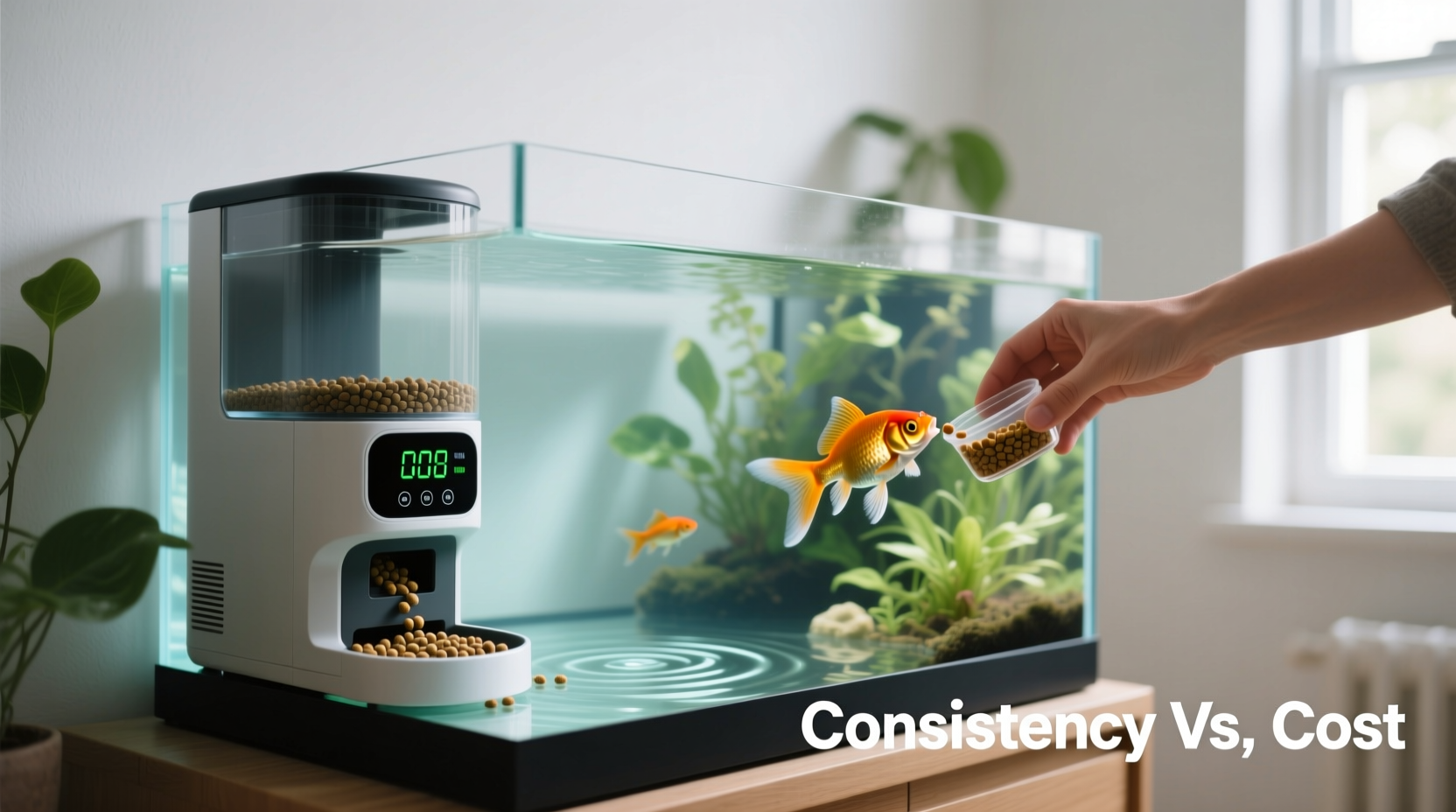
Fish thrive on predictability. In the wild, many species rely on environmental cues—like light changes or seasonal shifts—to anticipate feeding times. In captivity, these cues are replaced by human routines. When feeding occurs at irregular intervals, fish can experience stress, disrupted metabolism, and weakened immune systems.
Overfeeding is one of the most common mistakes in aquarium keeping, often stemming from inconsistent habits. Skipping a day and then overcompensating leads to excess food decay, which spikes ammonia and nitrite levels. Underfeeding, while less common, results in malnutrition and aggression as dominant fish monopolize limited resources.
“Consistent feeding schedules support stable gut flora, reduce aggression, and improve coloration and breeding readiness.” — Dr. Lena Torres, Aquatic Veterinarian
Studies show that fish fed at regular intervals exhibit better growth rates and lower cortisol (stress hormone) levels than those on erratic schedules. This makes consistency not just a convenience—it's a cornerstone of responsible fishkeeping.
How Automatic Feeders Work: Features and Limitations
Modern automatic fish feeders are compact devices that dispense pre-loaded dry food (flakes, pellets, granules) on a timed schedule. Most models connect to smartphone apps via Bluetooth or Wi-Fi, allowing remote programming, monitoring, and adjustments. Key features include:
- Dual or multiple feeding times per day
- Adjustable portion sizes
- Moisture-resistant storage chambers
- Vacation mode for extended absences
- Feed level indicators
High-end models even integrate with smart home systems and send alerts if dispensing fails. However, limitations exist. Most feeders only handle dry foods, excluding frozen, live, or gel-based diets essential for certain species like discus or marine angelfish. Mechanical jams, battery failures, or power outages can disrupt service. And improper calibration may lead to under- or over-dispensing—sometimes dumping an entire week’s supply in one go.
Manual Feeding: The Human Advantage
Despite technological advances, manual feeding remains the gold standard for attentive aquarists. It allows real-time observation of fish behavior—spotting early signs of illness, aggression, or poor appetite. A person can adjust portions based on activity levels, recent water changes, or breeding cycles. They can also offer dietary variety, rotating between flakes, freeze-dried, and supplemental foods.
Beyond nutrition, daily interaction builds familiarity. Many fish recognize their caretakers and swim to the front glass when they approach. This bond enhances the hobbyist experience and supports mental well-being for both keeper and pet.
However, manual feeding demands time and discipline. Life events—work trips, family emergencies, vacations—can interrupt routines. Even minor delays accumulate into stressors over time. Relying solely on memory increases the risk of skipped meals or double-feedings, especially in households with multiple caregivers.
Comparative Analysis: Automatic vs Manual Feeding
To evaluate which method suits different lifestyles and tank types, consider the following comparison across key categories:
| Factor | Automatic Feeder | Manual Feeding |
|---|---|---|
| Consistency | High – operates on precise schedule | Variable – depends on human reliability |
| Cost (Initial) | $30–$150+ | $0 (only food cost) |
| Maintenance | Weekly cleaning, battery checks, calibration | Daily presence required |
| Diet Flexibility | Limited to dry foods | Full range including live/frozen options |
| Vacation Support | Excellent – runs unattended for weeks | Poor – requires sitter or risk missed feedings |
| Observational Benefits | None – no visual check-ins | High – daily health monitoring possible |
| Risk of Malfunction | Moderate to high (jams, overfeeding) | Low (unless forgetful) |
The table reveals a clear trade-off: automation wins in scheduling reliability and vacation readiness but falls short in diet diversity and observational feedback. Manual feeding excels in personal engagement and adaptability but falters under inconsistent human behavior.
Real-World Example: Two Tanks, Two Approaches
Consider Mark, a software developer who owns two identical 30-gallon planted tanks. Tank A uses a mid-range automatic feeder set for two daily meals. Tank B is fed manually each morning and evening.
Over six months, Mark tracked water parameters, fish activity, and algae growth. Tank A showed slightly higher phosphate levels due to occasional overdispensing during humidity spikes. However, during a two-week business trip, Tank A remained stable while Tank B—which relied on a neighbor—was overfed twice, causing a mini algae bloom.
Tank B’s fish were more responsive to his presence and displayed brighter colors, likely due to varied feeding and direct interaction. Yet Tank A maintained superior consistency, with fewer ammonia spikes and more predictable molting cycles among shrimp.
Mark concluded that neither method was perfect. He now uses the automatic feeder as a backup during absences but prefers manual feeding when present. He also adjusted the feeder’s portion size after analyzing residue buildup.
When Automation Makes Sense
Automatic feeders aren’t universally necessary, but they shine in specific scenarios:
- Frequent travelers: Business professionals or retirees who leave home regularly benefit from scheduled feeding without relying on others.
- Larger households: Families where children might forget or overfeed can use automation to enforce rules.
- Multiple tanks: Managing five or more aquariums manually becomes impractical; automation streamlines maintenance.
- Night-shift workers: Those awake when fish are dormant can program feedings to align with natural rhythms.
For these users, the initial cost—often recouped within a year through avoided hotel boarding fees or emergency treatments—is justified by long-term stability.
Hybrid Approach: Best of Both Worlds
Many experienced aquarists adopt a hybrid model: using automatic feeders for baseline nutrition while reserving manual sessions for enrichment and inspection. This strategy combines consistency with engagement.
“We use timers for morning feedings but hand-feed at night. It keeps the system running smoothly and lets us bond with our cichlids.” — Jordan Lee, Aquarium Hobbyist & YouTube Content Creator
A step-by-step guide to implementing this approach:
- Assess your schedule: Identify days/times you’re consistently unavailable.
- Select a reliable feeder: Choose one with positive reviews, moisture protection, and adjustable settings.
- Load dry food only: Stick to flakes or sinking pellets; avoid clumping or oily foods.
- Program baseline meals: Set the feeder for one daily portion (e.g., morning).
- Hand-feed the second meal: Use this time to observe gill movement, fin condition, and substrate cleanliness.
- Monitor weekly: Check for leftover food, adjust portions, and clean the dispenser mechanism.
- Disable during vacations: If traveling, increase frequency temporarily but never exceed manufacturer guidelines.
FAQ: Common Questions About Automatic Feeders
Can automatic feeders damage my tank ecosystem?
Only if misused. Overfeeding is the primary risk. Ensure proper calibration and combine with regular water testing. Never rely solely on automation without periodic checks.
Are automatic feeders suitable for saltwater tanks?
Limited suitability. While reef-safe models exist, most marine setups require diverse diets—including liquid feeds and coral dips—that machines cannot deliver. Best used for hardy fish-only systems during absences.
Do fish prefer human-fed meals?
They don’t “prefer” per se, but they respond positively to interaction. Hand-feeding strengthens trust and allows targeted feeding for shy or subordinate individuals.
Action Checklist: Choosing Your Feeding Strategy
Use this checklist to determine the right path for your aquarium:
- ☐ I travel more than once every three months → Consider automatic feeder
- ☐ My tank contains sensitive species (e.g., discus, seahorses) → Prioritize manual feeding
- ☐ I own more than three tanks → Automation saves significant time
- ☐ I feed primarily dry food → Compatible with most feeders
- ☐ I value daily interaction with my fish → Manual feeding enhances enjoyment
- ☐ I’ve had issues with missed or double feedings → Automation improves consistency
- ☐ I’m willing to perform monthly maintenance on a device → Required for reliability
Conclusion: Balancing Cost, Care, and Consistency
The debate between automatic and manual feeding ultimately hinges on lifestyle, tank complexity, and personal values. Consistency is undeniably valuable—fish depend on it for health and harmony. But so is observation, adaptability, and connection. An automatic feeder isn’t a replacement for care; it’s a tool to extend it.
For some, the $50 investment in a quality device pays dividends in peace of mind and ecosystem stability. For others, the ritual of daily feeding is non-negotiable—a moment of calm in a chaotic world. The wisest choice may lie in integration: leveraging technology where humans fall short, while preserving hands-on stewardship where it matters most.




 浙公网安备
33010002000092号
浙公网安备
33010002000092号 浙B2-20120091-4
Comments
No comments yet. Why don't you start the discussion?