
For many cat owners, the daily chore of scooping litter is one of the least enjoyable parts of pet ownership. Enter the automatic litter box—a high-tech solution promising hands-free cleaning, reduced odor, and a cleaner home. But do these devices deliver on their promises, especially when it comes to containing unpleasant smells? While automatic litter boxes have gained popularity in recent years, they come with trade-offs that every pet owner should understand before investing hundreds of dollars into one.
This article breaks down the real advantages and drawbacks of automatic litter boxes, focusing particularly on odor control—what works, what doesn’t, and whether these systems truly “trap” the smell as advertised. We’ll also look at user experiences, expert insights, and practical considerations to help you decide if an automated system fits your lifestyle and expectations.
How Automatic Litter Boxes Work
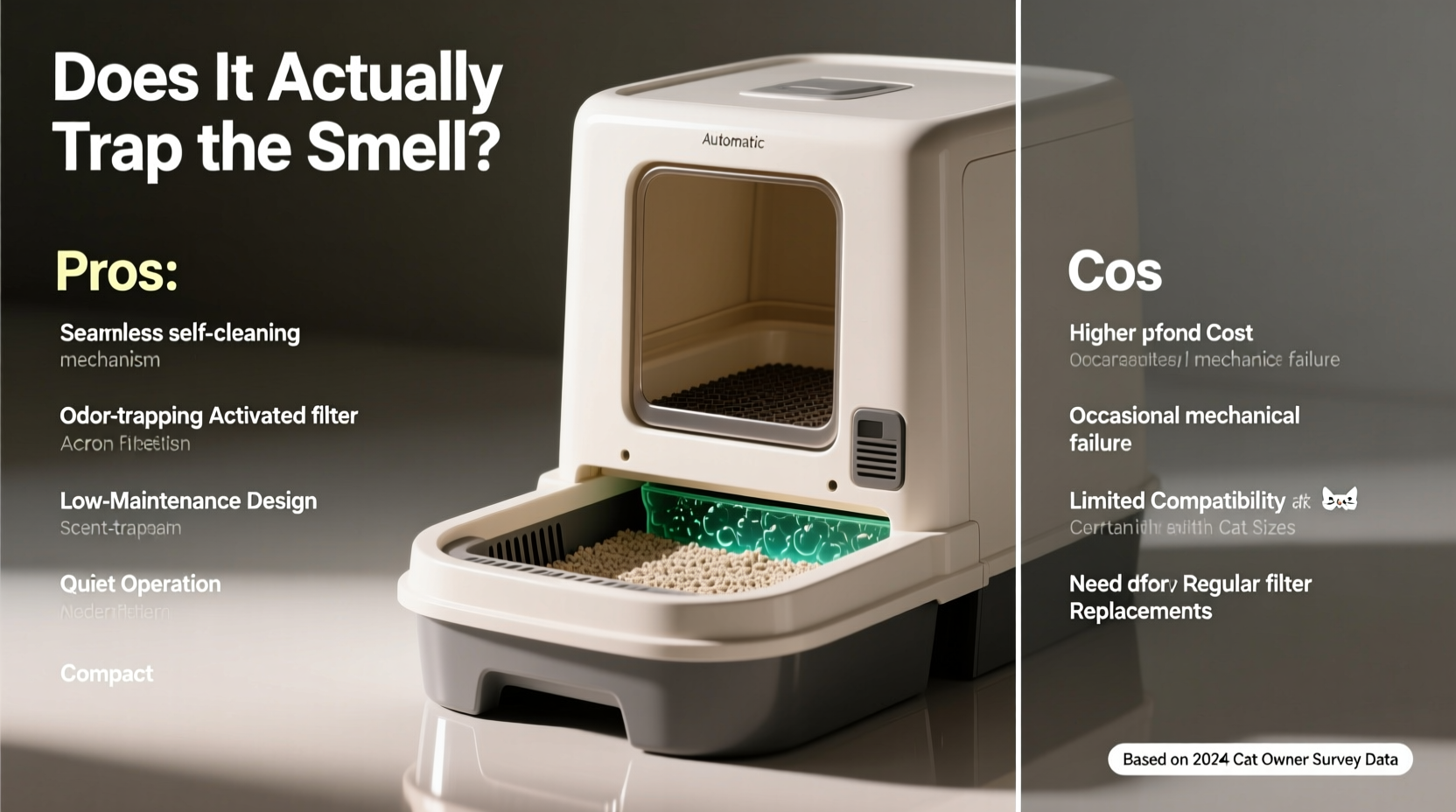
At their core, automatic litter boxes use sensors and mechanical rakes or rotating trays to separate waste from clean litter after your cat exits the box. Most models activate within 7 to 15 seconds of the cat leaving, sifting solid waste (and sometimes clumped urine) into a sealed waste drawer or bag. The goal is to remove waste promptly, reducing bacterial growth and minimizing odor buildup.
There are two primary mechanisms:
- Rake-based systems: A rake moves through the litter after each use, pulling clumps into a rear compartment.
- Rotating sieve systems: The entire tray rotates slowly, allowing clean litter to fall back while waste remains trapped and is deposited into a sealed container.
The waste compartment is usually lined with a disposable bag or cartridge, which can be sealed and removed every few days, depending on usage. Some advanced models even send app notifications when the waste bin is full or maintenance is required.
Pros of Automatic Litter Boxes
When they work well, automatic litter boxes offer several compelling benefits.
1. Reduced Daily Maintenance
The most obvious advantage is eliminating the need for daily scooping. For busy households or those with mobility challenges, this can be life-changing. Instead of daily cleanup, owners typically only need to empty the waste drawer every 5–7 days and refresh litter monthly.
2. Improved Odor Control (When Designed Well)
High-end models incorporate multiple odor-fighting features:
- Sealed waste compartments with carbon filters
- Enclosed designs that contain ammonia and sulfur compounds
- Automatic lid closure post-use
- Some include built-in air purifiers or deodorizing sprays
Because waste is removed quickly, there’s less time for bacteria to break down urea into smelly ammonia gas.
3. Better Hygiene and Cleaner Paws
Many models feature raised entrances or mesh grids that help sift excess litter off paws before cats exit, reducing tracked litter around the house. This contributes to a cleaner environment overall.
4. Data Tracking and Smart Features
Premium models like the Litter-Robot or PetSafe ScoopFree Ultra connect to smartphone apps, logging usage patterns. This can help detect changes in bathroom habits—early signs of urinary tract infections or digestive issues.
“Timely waste removal is key to odor control. Automatic boxes reduce exposure time between elimination and waste isolation, which directly impacts smell.” — Dr. Lena Patel, DVM, Feline Health Consultant
Cons and Common Complaints
Despite their appeal, automatic litter boxes aren’t foolproof—and they’re certainly not ideal for every cat or household.
1. Noise Can Be a Dealbreaker
The mechanical sounds of raking, rotating, or motor activation can startle sensitive cats. Some models operate at 60–70 decibels—similar to a dishwasher. Cats may avoid the box entirely if they associate it with loud noises.
2. High Upfront and Ongoing Costs
Prices range from $300 to over $700 for top-tier models. Additionally, proprietary litter trays or liners can cost $15–$30 per month, making long-term ownership expensive compared to traditional litter boxes and scoopable clay or silica litter.
3. Not All Cats Adapt Easily
Cats are creatures of habit. An enclosed, moving box can seem intimidating. Some refuse to enter, while others jump out mid-cycle, risking injury or incomplete cleaning. Multi-cat households often see dominant cats monopolizing the box or blocking access during cycles.
4. Odor Isn’t Always Eliminated—Just Contained
While manufacturers claim “sealed-in odor,” many users report lingering smells, especially in poorly ventilated rooms. If the waste drawer isn’t emptied regularly, gases can escape through small gaps. Moisture buildup inside the unit can also lead to mold or mildew, introducing new odors.
5. Maintenance and Mechanical Failures
These are complex machines with motors, sensors, and moving parts. Over time, rakes can jam, sensors misfire, or motors burn out. Cleaning requires disassembly, and replacement parts can be costly or hard to find.
Do Automatic Litter Boxes Actually Trap the Smell?
The short answer: Sometimes—but not always, and never completely.
Well-designed automatic boxes significantly reduce odor compared to un-scooped traditional boxes, thanks to rapid waste separation and sealed containment. However, “trapping” smell depends on several factors:
- Litter type: Clumping clay or crystal litters absorb moisture better than lightweight alternatives some automated boxes require.
- Ventilation: Placing the unit in a closed closet or basement corner without airflow increases odor concentration.
- Frequency of waste removal: Even sealed bins will stink if left full for over a week.
- Filter quality: Carbon filters lose effectiveness after 1–2 months and must be replaced.
A 2022 consumer review analysis by PetTech Insights found that 68% of users reported “noticeably less smell” with automatic boxes, but 41% still used additional air purifiers or odor-neutralizing sprays. In homes with multiple cats, satisfaction dropped to 52% due to faster waste accumulation and higher ammonia output.
In essence, automatic litter boxes manage odor more effectively than manual scooping done inconsistently—but they don’t eliminate it. They shift the source of the smell from the litter surface to the waste drawer, which must still be managed proactively.
Real-World Example: The Johnson Family Experience
The Johnsons, a family of four in Portland, adopted a rescue cat named Milo. With two young kids and tight schedules, daily litter scooping was often forgotten. They invested in a premium automatic model costing $650.
Initially, results were impressive: no scooping needed, minimal odor, and app alerts helped track Milo’s habits. But by month three, Milo began avoiding the box. The family discovered he was startled by the startup noise. They moved the unit to a quieter room and added a white-noise machine nearby, which helped. However, during summer humidity spikes, a damp, sour smell emerged from the waste drawer despite weekly changes.
They eventually started using odor-absorbing pods inside the drawer and upgraded their home’s ventilation. Their verdict: “It’s easier, but not magic. You still have to stay on top of maintenance.”
Comparison Table: Automatic vs. Traditional Litter Boxes
| Feature | Automatic Litter Box | Traditional Litter Box |
|---|---|---|
| Daily Maintenance | Minimal (empty drawer weekly) | Scoop daily, change litter weekly |
| Odor Control | Good (if sealed and maintained) | Fair (depends on scooping frequency) |
| Upfront Cost | $300–$700+ | $20–$50 |
| Litter Compatibility | Limited (specific types) | Any clumping or non-clumping |
| Cat Acceptance | Variable (noise, size, movement) | Generally high |
| Long-Term Reliability | Moderate (mechanical wear) | High (no moving parts) |
Actionable Checklist: Is an Automatic Litter Box Right for You?
Before purchasing, consider this checklist:
- ✅ Do you currently struggle with consistency in scooping?
- ✅ Is your cat comfortable with enclosed spaces and moderate noise?
- ✅ Do you have space for a large, enclosed unit (approx. 24” x 20” x 24”)?
- ✅ Are you prepared to spend $300+ upfront and $15–$30 monthly on supplies?
- ✅ Can you commit to weekly waste disposal and monthly deep cleaning?
- ✅ Do you have a well-ventilated area to place the unit?
- ✅ Do you own one cat, or multiple cats (which may require multiple units)?
If you answered “yes” to most, an automatic box could be a worthwhile investment. If not, a high-quality traditional box with daily scooping and odor-absorbing litter may serve you better.
Frequently Asked Questions
Can I use regular clumping litter in an automatic litter box?
It depends on the model. Some brands like Litter-Robot are compatible with standard clumping clay, while others (e.g., ScoopFree) require proprietary crystal trays. Always check manufacturer guidelines to avoid clogging or sensor errors.
How often should I clean the entire unit?
Perform a full teardown and wash every 2–3 months. Use mild soap and water; avoid harsh chemicals that could damage sensors or leave toxic residues. Replace carbon filters every 60–90 days.
Are automatic litter boxes safe for kittens or elderly cats?
Use caution. Kittens may not trigger weight sensors properly, leading to premature cycles. Senior cats with arthritis may move too slowly to exit before the rake activates. Monitor closely during initial use.
Final Thoughts: Balancing Convenience and Realism
Automatic litter boxes represent a significant leap in pet care convenience, but they are not a set-it-and-forget-it solution. They reduce labor and can improve odor management—especially when paired with proper ventilation and consistent maintenance. However, they introduce new variables: cost, mechanical complexity, and cat behavior challenges.
They don’t “trap” smell in the sense of making it disappear. Instead, they contain it more efficiently than open boxes, provided the system is well-maintained. For many owners, the trade-off is worth it. For others, especially those with finicky cats or tight budgets, a high-performance traditional setup might be just as effective.
The key is understanding your cat’s temperament, your household’s routine, and your tolerance for both mess and technology. There’s no universal best option—only the one that aligns with your real-life needs.




 浙公网安备
33010002000092号
浙公网安备
33010002000092号 浙B2-20120091-4
Comments
No comments yet. Why don't you start the discussion?