
For cat owners living in apartments, studios, or compact homes, managing litter box odor is a daily challenge. The confined space amplifies smells, making effective odor control essential not just for comfort but also for maintaining a healthy indoor environment. One of the most debated choices in modern cat care is whether an automatic litter box outperforms a traditional manual one when it comes to minimizing odor—especially in tight quarters. While both options have their strengths, the answer isn't always straightforward. It depends on usage habits, maintenance routines, technology quality, and even your cat’s preferences.
This article examines how automatic and manual litter boxes handle odor in small spaces, compares their effectiveness, and provides actionable guidance for choosing the best solution based on real-world performance and expert insights.
How Odor Forms in Cat Litter Boxes
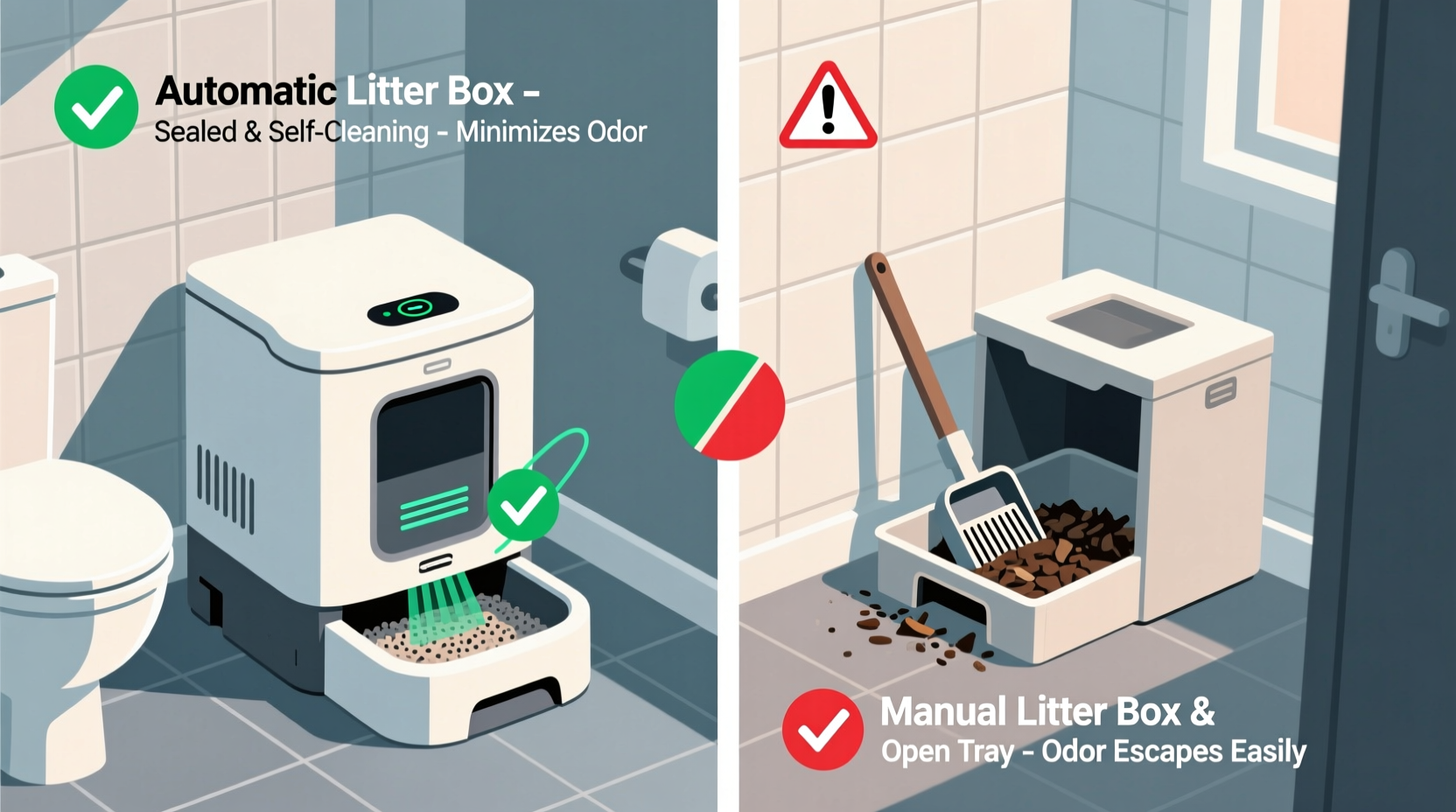
Before comparing litter box types, it’s important to understand where odor comes from. Cat waste produces ammonia as urea breaks down, especially in warm, humid environments. Feces contribute sulfur-based compounds that create strong, unpleasant smells. These odors intensify when waste sits in contact with litter over time, particularly if moisture is trapped.
In small spaces, poor ventilation and proximity to living areas mean even minor odors become noticeable quickly. A litter box placed under a kitchen counter or in a bathroom corner can easily dominate the room’s scent profile if not managed properly.
The key to odor reduction lies in three factors:
- Speed of waste removal: The faster solid and liquid waste is separated from clean litter, the less time it has to decompose and emit odor.
- Litter type and volume: Some litters absorb moisture and neutralize odors more effectively than others.
- Ventilation and enclosure design: Covered boxes can trap smells, but may also contain them—depending on airflow and filtration.
Manual Litter Boxes: Simplicity with Trade-offs
Manual litter boxes are the traditional choice—simple plastic trays filled with litter that require daily scooping. They come in open, top-entry, or covered designs, each affecting odor dispersion differently.
Covered models are popular in small spaces because they physically contain some odor. However, they can become hotspots for concentrated smells if not cleaned frequently. Without proper airflow, humidity builds up inside, accelerating bacterial growth and ammonia release.
Odor control in manual systems relies heavily on owner diligence. Daily scooping removes solids before significant decomposition occurs. Weekly full changes prevent buildup of residual waste deep in the litter bed. Using high-performance odor-control litter (such as activated charcoal-infused or plant-based formulas) enhances results.
Still, even with ideal maintenance, there's a delay between waste deposition and removal. In a studio apartment where the litter box might be near a sofa or bed, this gap allows odors to escape into the shared air.
“Even with excellent litter, a manually maintained box will emit detectable odor if scooping is delayed by more than 12 hours.” — Dr. Lena Patel, DVM, Feline Environmental Health Specialist
Automatic Litter Boxes: Technology for Timely Waste Removal
Automatic litter boxes use sensors, motors, and raking systems to detect when a cat has used the box and then separate waste within minutes. Most models deposit clumps into a sealed waste drawer or bag, isolating them from fresh litter and reducing exposure to air.
This rapid response significantly limits the window for odor development. Because waste is removed quickly—often within 7 to 15 minutes after use—it doesn’t sit soaking in urine-soaked litter, slowing bacterial breakdown and ammonia production.
Higher-end models include carbon filters, deodorizing gels, or even UV-C light sanitization to further suppress microbial activity. Some seal waste in disposable pods or liners, minimizing contact during disposal.
In small-space environments, this automation offers a distinct advantage: consistent, hands-off waste management without relying on memory or schedule. For busy professionals or multi-cat households, automatic systems reduce the risk of missed scooping days, which are major contributors to odor spikes.
Limitations of Automatic Systems
Despite their benefits, automatic litter boxes aren’t foolproof. Mechanical failures, sensor misreads, or power interruptions can delay cleaning cycles. Some cats dislike the noise or movement of the rake, leading to avoidance and potential accidents outside the box—worsening overall odor issues.
Additionally, cheaper models may leave behind residue or fail to fully isolate waste, allowing lingering smells to seep from the collection compartment. Regular maintenance of internal components and timely emptying of waste drawers remain essential.
Comparative Analysis: Odor Performance in Small Spaces
To evaluate which system performs better for odor reduction in limited square footage, consider the following comparison across key criteria:
| Feature | Manual Litter Box | Automatic Litter Box |
|---|---|---|
| Waste Removal Speed | Depends on user (typically 12–24 hrs) | 7–15 minutes after use |
| Odor Containment Design | Covered versions help slightly; prone to stagnation | Sealed waste compartments with optional filters |
| Maintenance Frequency | Daily scooping + weekly change | Empty waste drawer every 2–5 days; monthly cleaning |
| User Dependency | High – inconsistent scooping increases odor | Low – runs autonomously once set up |
| Initial Cost | $10–$30 | $200–$600 |
| Long-Term Odor Consistency | Variable – depends on routine | More consistent due to automation |
The data shows that while manual boxes are affordable and simple, their odor control is highly dependent on human behavior. In contrast, automatic systems offer faster intervention and better containment—critical advantages in small, poorly ventilated areas where smells accumulate rapidly.
Real-World Example: Odor Management in a Studio Apartment
Consider Sarah, a software developer living in a 450-square-foot studio in Seattle. Her Bengal cat, Milo, uses a standard covered manual litter box placed near the bathroom door. Despite daily scooping and using premium clumping litter, she noticed guests frequently commented on a faint ammonia smell, especially in warmer months.
After researching solutions, Sarah switched to a mid-tier automatic litter box with a carbon filter and sealed waste drawer. She positioned it in the same location but added a small air purifier nearby. Within a week, the persistent background odor disappeared. Even during work-from-home days with extended indoor time, no one mentioned any litter-related smells.
The improvement wasn’t due to better litter alone—it was the speed of waste isolation. With Milo using the box 3–4 times daily, the automatic unit removed waste over ten times faster than her previous manual routine allowed. This minimized decomposition time and reduced airborne volatiles.
Sarah did note an adjustment period: Milo was startled by the first few cleaning cycles but adapted within four days. She now empties the waste drawer every three days and cleans the unit monthly—a lighter workload than her prior scooping and full-litter changes.
Action Plan: Reducing Litter Odor in Tight Spaces
Whether you choose manual or automatic, certain practices dramatically improve odor outcomes in small homes. Follow this step-by-step guide to maximize freshness:
- Choose the right litter: Opt for crystal silica, pine pellets, or tofu-based litters known for natural odor absorption. Avoid low-density clay that compacts and traps moisture.
- Size matters: Use a larger box than minimum recommendations. More litter volume dilutes odor and reduces saturation.
- Optimize placement: Keep the box away from heat sources and direct sunlight. Avoid corners with poor airflow. If possible, place near a vent or fan.
- Implement air purification: Use a HEPA + carbon filter air purifier nearby to capture micro-particles and neutralize gases.
- Stick to a cleaning rhythm: For manual boxes, scoop at least once daily. For automatic models, empty the waste container before it reaches capacity to prevent overflow and odor leakage.
- Deep clean monthly: Wash the entire box with mild enzymatic cleaner to break down residual proteins and bacteria that cause lingering smells.
Checklist: Odor-Reducing Habits for Any Litter System
- ☑ Scoop or auto-clear waste within 1 hour of use (ideal)
- ☑ Use odor-neutralizing litter with high absorbency
- ☑ Empty waste containers at least twice a week
- ☑ Clean the full box with enzyme cleaner monthly
- ☑ Replace carbon filters (if applicable) every 1–3 months
- ☑ Monitor humidity levels—use a dehumidifier if above 60%
Frequently Asked Questions
Do automatic litter boxes really reduce smell?
Yes, when functioning correctly. By removing waste within minutes, automatic boxes limit the time urine and feces interact with litter and air, significantly reducing the formation of ammonia and sulfur compounds. Models with sealed compartments and carbon filters enhance this effect.
Can a manual litter box be as effective for odor control?
Possibly, but only with strict discipline. Daily scooping, high-quality litter, proper ventilation, and weekly full changes can keep odors manageable. However, in small spaces, even short lapses lead to noticeable smells—making consistency harder to maintain than with automated systems.
Are there health risks associated with litter box odor?
Prolonged exposure to high levels of ammonia can irritate respiratory passages, especially in individuals with asthma or allergies. While typical household levels aren’t dangerous, persistent strong odors indicate inadequate waste management and potential bacterial buildup, which should be addressed.
Final Recommendation: Matching Solution to Lifestyle
When it comes to reducing litter box odor in small spaces, automatic litter boxes generally outperform manual ones due to faster waste isolation, better sealing, and lower reliance on human habits. Their higher upfront cost is often justified by improved air quality, convenience, and peace of mind—particularly in studios, tiny homes, or shared apartments.
That said, a well-maintained manual system with superior litter and strategic placement can still work for single-cat households with disciplined routines. The critical factor isn’t the box type alone, but how consistently waste is removed and contained.
For those prioritizing odor control above all else in a compact environment, investing in a reliable automatic model—paired with good ventilation and regular upkeep—is the most effective path forward.




 浙公网安备
33010002000092号
浙公网安备
33010002000092号 浙B2-20120091-4
Comments
No comments yet. Why don't you start the discussion?