
Obesity in pets has become a growing concern among veterinarians and animal care experts. In the U.S., over 50% of dogs and cats are overweight or obese, according to the Association for Pet Obesity Prevention. One of the most common strategies pet owners explore is portion control through feeding tools—specifically, switching from a traditional food bowl to an automatic pet feeder. But does this switch actually make a measurable difference in weight management? The answer isn't as straightforward as marketing claims suggest. While automatic feeders offer structured meal timing and controlled portions, their effectiveness depends on how they're used, the pet's behavior, and the owner’s consistency.
The Role of Feeding Method in Pet Weight Management
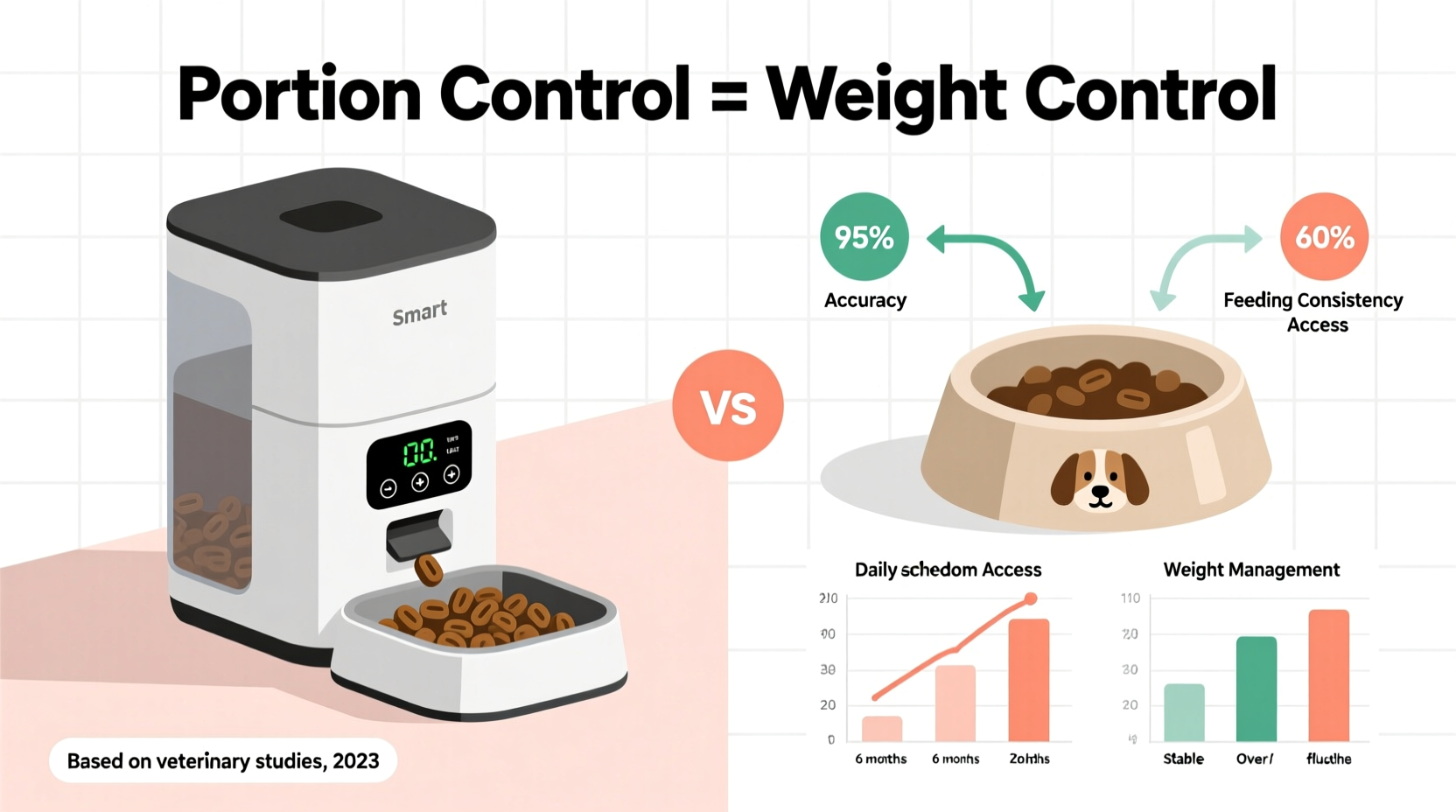
Weight gain in pets primarily results from calorie imbalance—consuming more energy than they expend. The feeding method plays a crucial role because it influences both portion size and feeding frequency. Traditional free-feeding, where food is left out all day, makes it difficult to monitor intake and often leads to overeating, especially in breeds predisposed to food motivation like Labradors or mixed-breed cats.
In contrast, scheduled feeding limits access to food to specific times. This approach allows owners to measure exact portions and prevent grazing. Automatic feeders automate this process by dispensing pre-set amounts at programmed intervals. However, simply owning a device doesn’t guarantee success. Without proper calibration and monitoring, even automated systems can contribute to overfeeding if portion sizes aren't aligned with the pet’s metabolic needs.
Automatic Feeders: Features That Support Weight Control
Modern automatic pet feeders come with features designed to promote healthier eating habits:
- Programmable meal schedules: Most models allow two to six meals per day, helping regulate metabolism through consistent timing.
- Portion control settings: Devices use rotating trays or auger systems to dispense precise amounts, reducing guesswork.
- Remote control via app: Owners can adjust meal times or skip servings remotely, useful during travel or schedule changes.
- Lockable lids: Prevents pets from accessing food between meals, curbing begging and sneaking.
- Feeding logs: Some advanced models track when meals were served, helping identify patterns related to weight changes.
These tools provide structure that many owners struggle to maintain manually. For example, someone working long hours may forget to serve dinner at a consistent time, leading to irregular feeding patterns that disrupt digestion and satiety signals. An automatic feeder eliminates human inconsistency, offering a predictable routine that supports metabolic health.
“Consistency in meal timing and portion size is one of the most effective non-dietary interventions for managing pet weight.” — Dr. Linda Chen, DVM, Veterinary Nutrition Specialist
Traditional Bowls: Simplicity vs. Risk of Overfeeding
Food bowls remain the standard for pet feeding due to their simplicity and low cost. However, their flexibility becomes a liability when weight control is the goal. Free-feeding with dry kibble is particularly problematic. Kibble is calorie-dense and easy to consume quickly, encouraging mindless snacking. Even when owners attempt scheduled feeding with bowls, human error—such as scooping inconsistent amounts or giving extra treats—undermines progress.
Beyond portion issues, bowls don’t address behavioral aspects of overeating. Some pets develop anxiety around food scarcity, leading them to gulp meals rapidly when available, which can cause bloating and reduce satiety. Others learn to manipulate owners into feeding early by whining or pawing at empty bowls. In these cases, removing the human element via automation can reduce emotional feeding decisions.
Comparison: Automatic Feeder vs. Bowl for Weight Control
| Feature | Automatic Feeder | Traditional Bowl |
|---|---|---|
| Portion Accuracy | High (pre-measured) | Variable (depends on owner) |
| Feeding Schedule Consistency | High (programmed) | Moderate to Low |
| Prevents Overeating Between Meals | Yes (if locked) | No |
| Monitoring Capability | Some models offer logs | Manual tracking required |
| Cost | $50–$200+ | $5–$20 |
| Suitability for Multi-Pet Households | Limited (unless pet-specific) | Flexible but risky |
Real-World Effectiveness: A Mini Case Study
Consider the case of Max, a 4-year-old neutered domestic shorthair cat living in suburban Chicago. Max weighed 14.2 lbs—well above the healthy range for his frame. His owner, Sarah, fed him dry food in a bowl twice daily but admitted to topping it off when he meowed. After a vet diagnosis of obesity-related joint strain, Sarah switched to a Wi-Fi-enabled automatic feeder set for three 1/3-cup meals per day, aligned with Max’s caloric needs.
Over 12 weeks, Max lost 1.8 lbs. The key wasn’t just the device, but the combination of precise portions, elimination of free-feeding, and Sarah’s adherence to the schedule. She used the app to log each meal and noticed Max was less vocal about food after two weeks, suggesting improved satiety regulation. The feeder also prevented her teenage son from giving Max extra snacks when unsupervised.
This case illustrates that while the feeder enabled better control, success depended on correct setup and behavioral follow-through. When Sarah tried increasing portions slightly after week eight (thinking Max seemed “hungry”), the weight loss stalled—confirming that even small deviations matter.
Common Pitfalls of Automatic Feeders
Despite their advantages, automatic feeders aren’t foolproof. Several factors can diminish their effectiveness:
- Incorrect portion programming: Many owners use manufacturer guidelines instead of veterinary recommendations, leading to overfeeding.
- Jamming or malfunction: Moist or oddly shaped kibble can clog mechanisms, resulting in missed meals or double dispensing.
- Pet rejection: Some animals are wary of mechanical noises or delayed access, causing stress or refusal to eat.
- Lack of supervision: Relying solely on automation without monitoring weight or body condition can mask problems.
- Incompatibility with wet food: Most feeders only handle dry kibble, limiting dietary variety important for hydration and satiety.
Additionally, automatic feeders do nothing to address treat consumption, table scraps, or outdoor hunting (in cats), all of which contribute to caloric surplus. Weight control requires a holistic approach beyond the feeding tool itself.
Step-by-Step Guide to Using an Automatic Feeder for Weight Management
If you’re considering an automatic feeder to help manage your pet’s weight, follow this evidence-based sequence:
- Consult your veterinarian: Determine your pet’s ideal weight and daily caloric needs based on age, breed, activity level, and health status.
- Choose the right feeder: Select a model with accurate portion control, scheduling flexibility, and reliability reviews. Consider battery backup for power outages.
- Measure current intake: For one week, log every meal and treat using your current bowl system to establish a baseline.
- Program the feeder: Input meals at consistent times (e.g., 7 AM, 1 PM, 7 PM) with portion sizes matching your vet’s recommendation.
- Transition gradually: Mix the new schedule with hand-fed meals over 5–7 days to reduce stress and ensure acceptance.
- Monitor weekly: Weigh your pet on the same scale weekly and record body condition score (use a chart provided by your vet).
- Adjust as needed: If weight loss stalls or accelerates too quickly, recalibrate portions in 10% increments under vet guidance.
- Evaluate after 8–12 weeks: Assess progress and decide whether to continue, modify, or discontinue use.
Expert Recommendations and Limitations
Veterinary nutritionists emphasize that no feeding device replaces informed decision-making. As Dr. Rachel Kim, a board-certified veterinary nutritionist, explains:
“The feeder is a tool, not a solution. I’ve seen pets gain weight on automatic feeders because owners doubled the recommended portions ‘just in case.’ Technology amplifies both good and bad habits.” — Dr. Rachel Kim, DACVN
Experts also caution against using feeders for pets with medical conditions like diabetes or gastrointestinal disorders, where meal timing and consistency are critical and must be closely observed. In multi-pet homes, automatic feeders can lead to competitive eating or food theft unless pets are separated during meals—a logistical challenge many underestimate.
FAQ
Can an automatic feeder help my pet lose weight?
Yes, but only if it’s used correctly. The feeder must dispense appropriate portion sizes on a consistent schedule, and overall calorie intake—including treats and snacks—must be managed. It supports weight loss by removing human inconsistency, but isn’t a standalone solution.
Are there risks to using an automatic feeder?
Risks include mechanical failure (leading to missed meals), improper portion settings, pet stress from noise or delayed access, and overreliance by owners who stop monitoring their pet’s condition. Regular maintenance and observation are essential.
Is a slow-feeder bowl a better alternative?
For some pets, yes. Slow-feed bowls extend mealtime, which can enhance satiety and reduce gulping. They’re lower-cost and don’t rely on electricity. However, they still require manual portion control and don’t prevent free-feeding. They work best when combined with scheduled feeding times.
Checklist: Is an Automatic Feeder Right for Your Pet?
- ☐ My pet is overweight and needs portion-controlled feeding
- ☐ I have an inconsistent daily schedule that affects feeding times
- ☐ I currently free-feed or struggle with portion accuracy
- ☐ My pet eats dry kibble (not exclusively wet food)
- ☐ I can commit to regular cleaning and maintenance of the device
- ☐ I’m willing to monitor my pet’s weight and adjust as needed
- ☐ I don’t have multiple pets competing for food (or can separate them)
Conclusion
The choice between an automatic pet feeder and a traditional bowl hinges on goals, lifestyle, and commitment to consistency. When used as part of a comprehensive weight management plan, automatic feeders offer measurable advantages in portion control and feeding regularity. They remove human variability and provide data-driven accountability. However, they are not magic solutions. Their success depends on accurate setup, ongoing monitoring, and integration with veterinary guidance.
A bowl, in skilled hands, can be just as effective—if the owner measures portions precisely and adheres to a strict schedule. But for those struggling with routine or tempted to overfeed, automation provides a valuable structural advantage. Ultimately, the best feeding method is the one that ensures your pet consumes the right amount of food at the right times, every day. Whether that’s achieved through technology or disciplined manual feeding, the outcome matters more than the tool.




 浙公网安备
33010002000092号
浙公网安备
33010002000092号 浙B2-20120091-4
Comments
No comments yet. Why don't you start the discussion?