
For pet owners juggling busy schedules or concerned about their pet’s eating habits, choosing the right feeding system can feel overwhelming. Two popular options—automatic pet feeders and gravity feeders—offer very different approaches to mealtime. One relies on technology to dispense food at set times with precise portions; the other operates on a simple, mechanical principle allowing pets to eat freely. The core question isn’t just convenience—it’s whether the added complexity of an automatic feeder truly pays off in terms of portion control, health, and peace of mind.
While both systems have loyal followings, the decision ultimately hinges on your pet’s needs, your lifestyle, and how much control you want over daily feeding. Let’s break down the mechanics, benefits, drawbacks, and long-term impacts of each to help you decide if the tech hassle is worth it.
How Each Feeder Works: Mechanics and Design
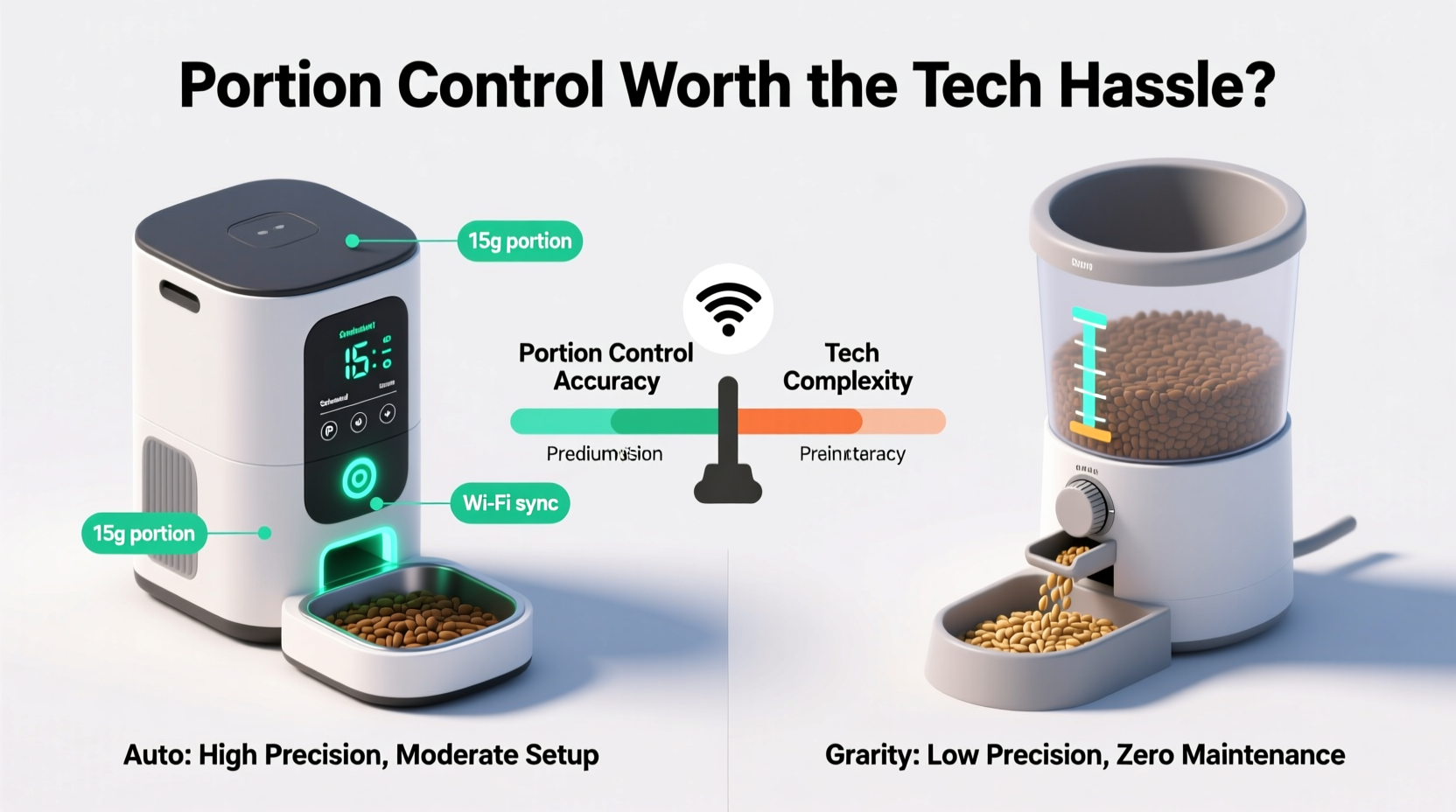
Gravity feeders are straightforward by design. They consist of a large hopper mounted above a feeding bowl. As the pet eats, gravity pulls more kibble down to refill the bowl automatically. There’s no timer, no electronics, and no portion regulation—just continuous access to food as long as the hopper is filled.
This design mimics free-feeding, a common practice for households where pets graze throughout the day. Gravity feeders are typically made from plastic or stainless steel, require zero power, and are easy to clean. Their simplicity makes them inexpensive and reliable, but also removes any control over how much food is consumed at once.
In contrast, automatic pet feeders use battery or plug-in power to operate motorized dispensing mechanisms. These devices are programmed to release specific amounts of food at scheduled times. Many models include features like voice recording, mobile app connectivity, portion size customization, and even cameras to monitor your pet remotely.
The technology allows for structured feeding routines, which can be especially helpful for pets on strict diets or owners who travel frequently. However, this sophistication comes with trade-offs: higher cost, potential technical failures, and maintenance demands such as cleaning sensors or replacing batteries.
Portion Control: Why It Matters for Pet Health
Obesity is one of the most common health problems in domestic pets. According to the Association for Pet Obesity Prevention, over 60% of cats and dogs in the U.S. are overweight or obese. Unregulated access to food—exactly what gravity feeders provide—can contribute significantly to this epidemic.
Portion control isn't just about weight management. It helps regulate digestion, prevents bloating, supports consistent energy levels, and is essential for pets with medical conditions like diabetes or pancreatitis. Scheduled, measured meals align better with natural feeding rhythms than constant grazing.
Automatic feeders excel here. By programming exact serving sizes and feeding windows, they eliminate guesswork. Some advanced models even allow variable portions across meals—useful for pets needing smaller breakfasts and larger dinners. Over time, this precision supports metabolic health and reduces vet visits linked to diet-related illness.
“Consistent portioning and feeding schedules can prevent obesity and improve long-term vitality in pets.” — Dr. Lena Torres, DVM, Veterinary Nutrition Specialist
On the flip side, gravity feeders offer no such control. A hungry or bored pet may consume far more than needed in a single sitting, especially if fed high-calorie kibble. Even pets that normally self-regulate can overindulge when food is always available. For households with multiple pets, this becomes even riskier—one animal might dominate the bowl, leaving others underfed or forcing competitive overeating.
Comparative Analysis: Automatic vs Gravity Feeders
| Feature | Automatic Feeder | Gravity Feeder |
|---|---|---|
| Portion Control | Yes – programmable servings | No – continuous refill |
| Scheduling | Yes – multiple meals per day | No – free access |
| Power Required | Yes (battery or outlet) | No |
| Maintenance | Moderate (clean sensors, replace batteries) | Low (basic cleaning) |
| Cost | $50–$200+ | $15–$40 |
| Best For | Pets needing diet control, frequent travelers, multi-pet homes | Healthy grazers, budget-conscious owners, low-tech users |
| Risk of Malfunction | Moderate to high (jams, software errors) | Very low |
When Technology Adds Value—and When It Doesn’t
The “tech hassle” of automatic feeders often deters some owners. Programming errors, Wi-Fi disconnections, or mechanical jams can lead to missed meals. In rare cases, malfunctions have resulted in pets going unfed for hours. Yet for many, these risks are outweighed by the benefits.
Consider a working professional who leaves home before sunrise and returns after dark. An automatic feeder ensures their dog receives two properly timed meals regardless of schedule changes. For diabetic cats requiring insulin tied to mealtimes, precise scheduling isn’t a luxury—it’s a medical necessity.
Conversely, a healthy adult cat in a quiet household may thrive on a gravity-fed system. If the pet naturally regulates intake and maintains ideal weight, there’s little need to introduce complexity. The key is matching the tool to the pet’s physiology and environment—not adopting tech for its own sake.
Real-World Example: Managing a Multi-Pet Household
Sarah, a pet owner in Austin, Texas, adopted a second cat—a younger, more energetic rescue—into her home where an older, sedentary cat already lived. She initially used a gravity feeder, assuming both would share peacefully. Within weeks, the younger cat began guarding the bowl, eating most of the food while the senior cat lost weight.
Switching to an automatic feeder didn’t solve the issue alone—but pairing it with scheduled feeding times and separate dining zones did. She programmed two meals per day and placed the automatic feeder in a room accessible only to the older cat via a microchip-enabled door. The younger cat ate from a timed feeder in another area. Within a month, both cats stabilized at healthy weights.
This case illustrates that while automatic feeders enable portion control, their real value emerges when integrated into a broader feeding strategy. The technology provided structure, but Sarah’s planning turned it into a solution.
Step-by-Step Guide to Choosing the Right Feeder
Deciding between these two systems doesn’t have to be confusing. Follow this practical sequence to make an informed choice:
- Assess your pet’s health status. Is your pet overweight, diabetic, recovering from surgery, or on a prescription diet? If so, portion control is likely essential.
- Evaluate your daily routine. Do you leave home for extended periods? Frequent travelers benefit more from automated systems.
- Count your pets. Multiple animals increase competition risk. Automatic feeders with access controls (e.g., RFID tags) can manage this better.
- Test your pet’s eating behavior. Does your pet stop when full? Or do they beg constantly and eat aggressively? Grazers may adapt to gravity feeders; binge-eaters need limits.
- Set a budget and tolerance for maintenance. Can you afford $100+ upfront and commit to regular cleaning and troubleshooting?
- Try a trial period. Rent or borrow a model before buying. Observe how your pet responds to scheduled meals versus free feeding.
- Monitor results over 2–4 weeks. Track weight, energy levels, stool quality, and behavioral changes to determine effectiveness.
Common Pitfalls and How to Avoid Them
Both feeders come with hidden challenges. With gravity feeders, stale food is a concern. Kibble exposed to air for hours can lose freshness and absorb moisture, especially in humid climates. Mold growth and rancidity are real risks. To mitigate this, choose models with narrow openings that limit exposure, and clean the bowl daily.
Automatic feeders bring different issues. Jamming is common with oddly shaped or soft-moistened kibble. Always check manufacturer guidelines on compatible food types. Long-term reliability varies widely—some units fail within months due to motor burnout or sensor errors. Opt for models with stainless steel components and positive user reviews focused on durability.
Another overlooked problem: over-reliance on automation. Some owners assume the device eliminates the need for supervision. But pets can still develop digestive upset, refuse meals due to stress, or knock over the unit. Regular monitoring remains essential.
Frequently Asked Questions
Can I use wet food in an automatic feeder?
Most standard automatic feeders are designed for dry kibble only. Wet food can spoil quickly and clog mechanisms. However, specialized models with refrigerated compartments or disposable pods exist—though they are significantly more expensive and require frequent cleaning.
Are gravity feeders safe for puppies or kittens?
They can be, but with caution. Young animals have higher nutritional needs and smaller stomachs, requiring more frequent, controlled meals. Free feeding may lead to inconsistent intake. Veterinarians often recommend scheduled feeding during growth phases, making automatic feeders a better fit for early development stages.
What happens if the automatic feeder runs out of power?
Many models have battery backups (typically 4–8 hours). High-end versions send smartphone alerts when power drops or food runs low. Always keep spare batteries on hand and consider using a surge protector or UPS for plug-in units. Test backup functionality monthly.
Final Recommendation: Match the Tool to the Need
The debate between automatic and gravity feeders isn’t about which is universally better—it’s about alignment with your pet’s needs and your capacity to manage the system. Portion control offers measurable health advantages, particularly for pets prone to overeating, those with medical conditions, or homes with multiple animals. In these cases, the “tech hassle” of an automatic feeder is not only justified but often necessary.
However, for pets that self-regulate well, live in stable environments, and don’t require strict dietary management, a gravity feeder remains a practical, low-cost solution. Simplicity has enduring value.
The smartest approach combines insight with intentionality. Don’t default to automation because it’s trendy, nor reject it because it seems fussy. Evaluate your pet’s biology, your lifestyle, and your goals. Then choose the method that supports long-term wellness—not just short-term convenience.




 浙公网安备
33010002000092号
浙公网安备
33010002000092号 浙B2-20120091-4
Comments
No comments yet. Why don't you start the discussion?