
For many pet owners, time is a luxury. Between work, family, and daily responsibilities, feeding your pet at consistent times can become a challenge. Automatic pet feeders promise relief—scheduled meals without lifting a finger. But when your pet is a \"greedy eater,\" one that bolts food or overeats at every opportunity, convenience may come at a cost. The question isn't just whether these devices work—but whether they're truly safe and responsible for pets prone to overeating.
While automatic feeders offer undeniable benefits in consistency and scheduling, they can also enable unhealthy eating behaviors if not used thoughtfully. This article explores the real trade-offs between automatic and manual feeding, especially for dogs and cats with high food motivation, and provides actionable guidance on using technology wisely without compromising pet health.
The Rise of the Automatic Pet Feeder
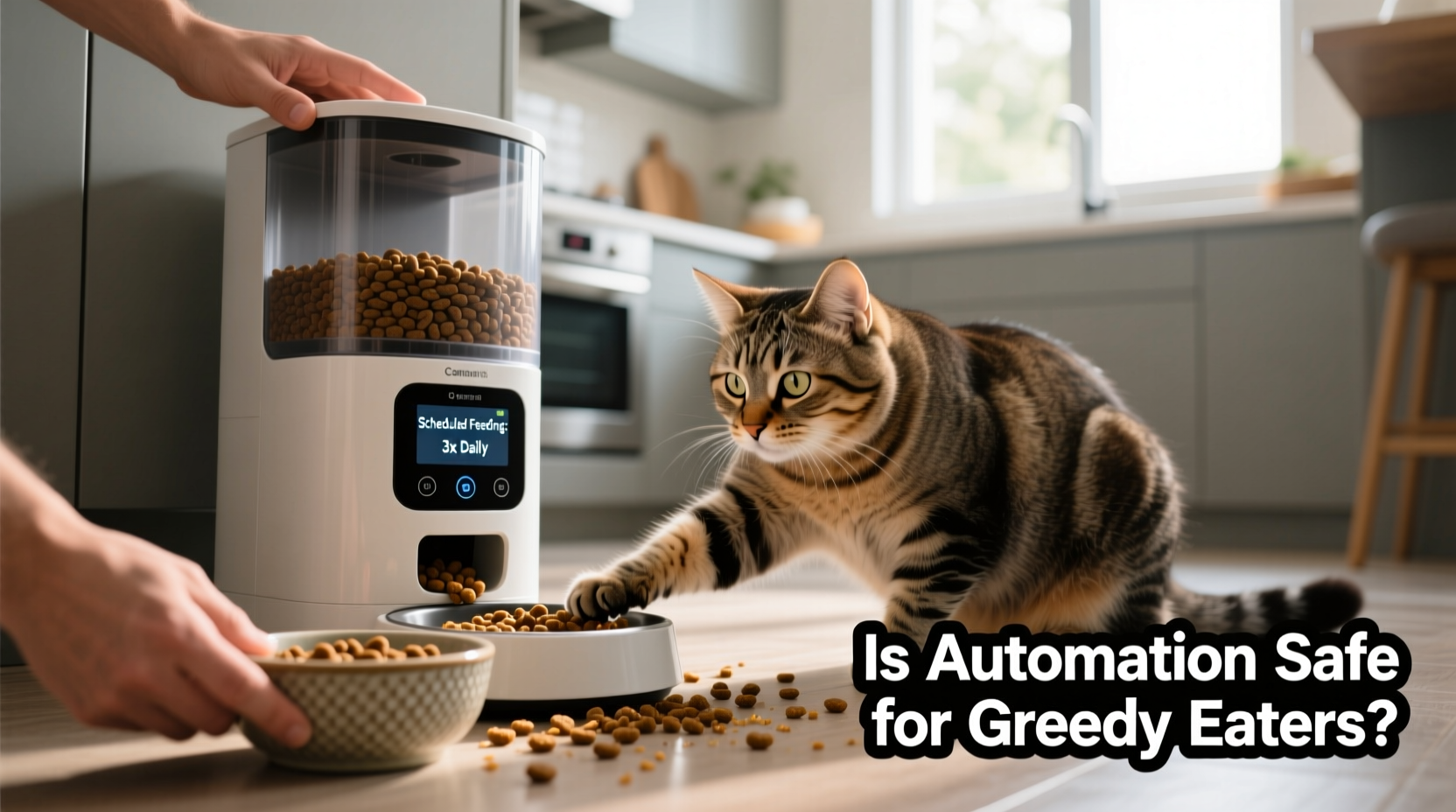
Automatic pet feeders have surged in popularity over the past decade. From Wi-Fi-connected models with portion control and mobile alerts to simple timer-based dispensers, today’s options cater to nearly every lifestyle. They’re marketed as solutions for busy households, frequent travelers, or anyone seeking more structure in pet care routines.
These devices typically allow owners to:
- Set precise meal times
- Control portion sizes
- Monitor feeding remotely (in smart models)
- Prevent family members from overfeeding
On paper, this sounds ideal. In practice, however, automation doesn’t account for behavior. A feeder can dispense food exactly at 7:00 AM, but it can't tell if your dog scarfs it down in three seconds or eats calmly over ten minutes. It won’t stop a cat from pawing at the tray for extra kibble after the portion is gone. And critically, it cannot intervene when instinct overrides fullness cues.
Greedy Eaters: What Makes Them Tick?
Some pets are naturally more food-motivated than others. Breeds like Beagles, Labradors, and Cocker Spaniels are famously driven by food. Cats, too, can develop obsessive relationships with their bowls, particularly if they’ve experienced food insecurity or live in multi-pet homes where competition exists.
Greediness isn’t just about hunger—it’s often behavioral. A pet may eat rapidly due to anxiety, habit, or evolutionary programming. In the wild, animals that eat quickly are more likely to survive competition. That instinct remains strong, even in well-fed domestic pets.
But rapid consumption poses serious health risks:
- Bloating and GDV (Gastric Dilatation-Volvulus): Common in large-breed dogs, eating too fast increases air intake, which can lead to life-threatening stomach torsion.
- Obesity: Overeating—even slightly above maintenance needs—leads to weight gain over time, increasing risks for diabetes, joint issues, and heart disease.
- Digestive upset: Gulping food reduces proper chewing and saliva mixing, impairing digestion and potentially causing vomiting or regurgitation.
“Just because a pet will eat doesn’t mean they should. Their instincts don’t align with modern feeding environments.” — Dr. Lena Torres, DVM, Veterinary Behavior Specialist
Automatic vs Manual: A Safety Comparison
When evaluating automatic feeders against manual feeding, it's essential to separate convenience from safety. Below is a detailed comparison focused on key factors relevant to greedy eaters.
| Factor | Automatic Feeder | Manual Feeding |
|---|---|---|
| Consistency | High – meals delivered at exact times regardless of owner availability | Variable – depends on human schedule; prone to delays or skipped meals |
| Portion Control | Moderate – preset portions help, but some models dispense inaccurately | High – owner can visually assess and adjust portions in real time |
| Eating Speed Monitoring | None – no ability to detect or slow rapid consumption | High – owner can observe pace and intervene if needed |
| Behavioral Oversight | Low – cannot detect stress, competition, or obsession around food | High – direct interaction allows detection of changes in appetite or mood |
| Risk of Overfeeding | Medium-High – malfunctions, double dispensing, or improper setup can cause excess | Low-Medium – depends on owner discipline, but easier to regulate |
| Emergency Response | None – cannot adapt to illness, refusal to eat, or blockages | Immediate – owner notices issues right away |
While automatic feeders excel in routine, they fall short in supervision. For pets with normal eating habits, this may be acceptable. For greedy eaters, the lack of oversight can turn a helpful tool into a risk multiplier.
Smart Use of Automatic Feeders: A Step-by-Step Guide
That said, automatic feeders aren’t inherently unsafe. When used correctly—and with modifications—they can support healthy feeding patterns even for food-driven pets. The key is integrating them into a broader feeding strategy rather than relying on them exclusively.
- Assess Your Pet’s Eating Behavior First
Observe several meals manually. Does your pet inhale food? Pant or pace before meals? Guard the bowl aggressively? These signs suggest high food motivation and require caution. - Choose the Right Feeder Model
Opt for feeders with:- Accurate portion control (preferably adjustable in small increments)
- Slow-feed compartments or puzzle-like dispensing mechanisms
- Wi-Fi alerts for missed meals or jammed mechanisms
- Pair with a Slow-Feed Bowl
Never let your pet eat directly from the feeder tray. Transfer the dispensed food into a slow-feed bowl or interactive puzzle toy. This forces engagement and slows consumption. - Limit Full Automation
Use the feeder for one or two meals only—ideally when you’re unavailable. Reserve at least one daily meal for manual feeding to maintain observation and bonding. - Monitor Weekly Weight and Body Condition
Weigh your pet monthly and perform a body condition score check. Look for ribs easily felt under a thin layer of fat, and a visible waist from above. Adjust portions if weight creeps up. - Schedule Regular Vet Check-Ins
Discuss your feeding setup with your veterinarian. Blood work and physical exams can catch early signs of diet-related conditions like insulin resistance or liver strain.
Real-World Example: Managing a Labrador’s Food Drive
Mark, a software engineer in Seattle, adopted a two-year-old Labrador named Duke who had a history of scavenging and rapid eating. Working long hours, Mark initially relied entirely on an automatic feeder. Within six weeks, Duke gained four pounds and began vomiting undigested kibble shortly after meals.
Concerned, Mark consulted his vet, who diagnosed mild gastritis linked to speed-eating. Together, they redesigned Duke’s feeding plan:
- The automatic feeder was reprogrammed to dispense only half of Duke’s breakfast.
- The second half was placed in a snuffle mat, requiring Duke to “hunt” for his food.
- Dinner remained a hands-on, sit-and-wait routine with Mark present.
- A weekly weigh-in became part of the household routine.
Within two months, Duke’s weight stabilized, vomiting ceased, and his overall demeanor improved. The feeder wasn’t discarded—it was repurposed as a tool within a balanced system.
Actionable Checklist: Safe Feeding for Greedy Eaters
Whether you use an automatic feeder or stick to manual methods, follow this checklist to ensure your pet’s feeding routine supports long-term health:
- ✅ Observe at least one meal per day in person
- ✅ Use portion-controlled meals based on vet-recommended calorie needs
- ✅ Incorporate slow-feeding tools (puzzle feeders, snuffle mats, maze bowls)
- ✅ Weigh your pet monthly and track trends
- ✅ Avoid free-feeding or topping off bowls throughout the day
- ✅ Limit treats to no more than 10% of daily calories
- ✅ Clean feeder mechanisms weekly to prevent mold or jams
- ✅ Have a backup feeding plan during power outages or device failures
Frequently Asked Questions
Can automatic feeders cause obesity in pets?
Yes—if improperly calibrated or used without oversight. Many feeders dispense slightly more than intended over time, and pets with high food drive won’t self-regulate. Without monitoring, this small surplus leads to gradual weight gain. Regular weight checks and portion validation are essential.
Are there automatic feeders designed for slow eating?
Some newer models incorporate slow-dispensing features, such as timed pellet drops or rotating mazes. However, most still release the full portion at once. True slow-feeding is best achieved by transferring dispensed food into a separate interactive bowl rather than relying on the feeder alone.
Should I stop using an automatic feeder if my pet is a greedy eater?
Not necessarily. You can continue using one as part of a hybrid approach. Use it for convenience during absences, but maintain manual feeding for at least one meal daily to monitor behavior and reinforce control. Technology works best when it supports—not replaces—responsible pet ownership.
Conclusion: Convenience Should Never Override Care
Automatic pet feeders are a testament to how technology can simplify pet care. But simplification shouldn’t come at the expense of vigilance—especially for pets hardwired to overeat. The safest feeding method isn’t purely automatic or strictly manual; it’s intentional. It combines the precision of scheduling with the irreplaceable value of human observation.
If you own a greedy eater, ask yourself: Is this device helping me care better—or just helping me disengage? Used wisely, an automatic feeder can be a useful ally. But it must operate within a framework of active oversight, behavioral awareness, and nutritional responsibility.




 浙公网安备
33010002000092号
浙公网安备
33010002000092号 浙B2-20120091-4
Comments
No comments yet. Why don't you start the discussion?