
In dining rooms, kitchens, and restaurant tables around the world, the humble toothpick remains a small but essential tool. Yet for something so simple, choosing how to store and dispense them has sparked a quiet debate: should you stick with the classic toothpick box or upgrade to an automatic dispenser? With sleek designs and touch-free mechanisms now available, many consumers wonder if the upgrade delivers real benefits—or just modern flair. This article dives deep into functionality, hygiene, cost, and user experience to determine whether switching from a traditional box to an automatic dispenser is truly worth it.
The Evolution of Toothpick Storage
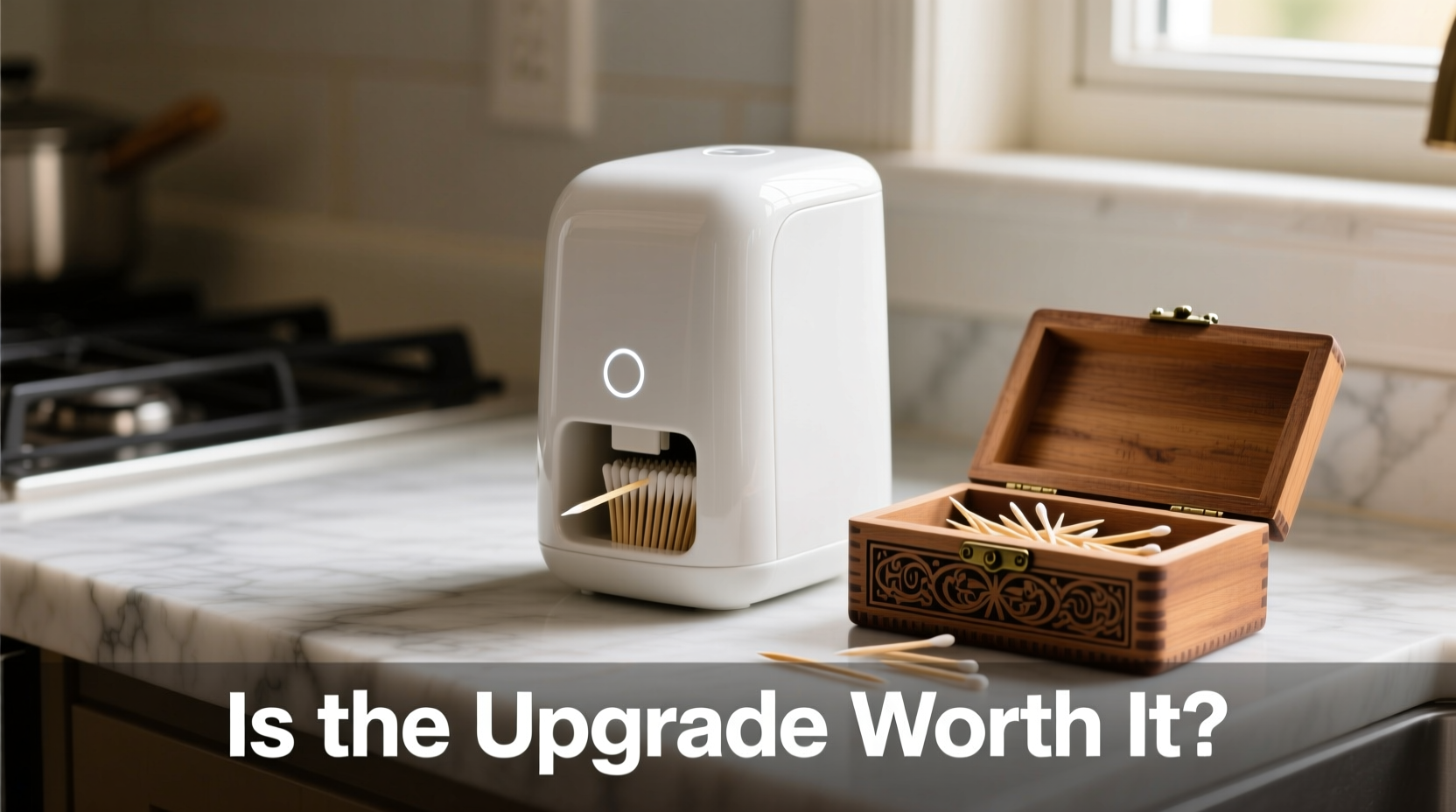
Toothpicks have been used for centuries, but their storage methods have evolved slowly. The standard paper or plastic toothpick box—often found in restaurants or tucked into kitchen drawers—has long dominated due to its simplicity and low cost. These boxes typically hold 250–500 picks and rely on manual retrieval, either by shaking one out or reaching in.
In recent years, however, automatic dispensers have emerged as a premium alternative. Equipped with motion sensors or push-button mechanisms, they release a single toothpick at a time without direct hand contact. Marketed toward both homes and commercial spaces, these devices promise improved hygiene, reduced waste, and a more refined aesthetic.
Hygiene: A Clear Advantage for Automatic Dispensers
One of the most compelling arguments for upgrading lies in hygiene. Traditional toothpick boxes require users to insert fingers into a shared container, increasing the risk of cross-contamination—especially in public or multi-user environments.
A study published in the *Journal of Environmental Health* found that communal dispensers like open boxes can harbor bacteria when handled frequently by multiple people. In contrast, automatic dispensers minimize contact, reducing the chance of germ transfer.
“Reducing touchpoints in shared spaces is a key principle of modern hygiene design. Touch-free dispensers align with best practices for minimizing surface contamination.” — Dr. Lena Patel, Public Health Consultant
Functionality and User Experience Compared
While hygiene is critical, usability matters just as much in everyday life. Let’s break down how each option performs across key categories.
| Feature | Toothpick Box | Automatic Dispenser |
|---|---|---|
| Access Speed | Fast (if not jammed) | Moderate (requires activation) |
| Refill Frequency | Frequent (small capacity) | Less frequent (larger reservoirs) |
| Waste Prevention | Poor (multiple picks often spill) | Excellent (one-at-a-time release) |
| Durability | Low (cardboard degrades; plastic cracks) | High (rigid plastic or metal construction) |
| Portability | High (lightweight, compact) | Low (bulky, requires batteries) |
From this comparison, automatic dispensers excel in controlled environments where precision and cleanliness are priorities. However, they may feel unnecessarily complex in casual or mobile settings, such as picnics or camping trips, where a simple box suffices.
Real-World Example: A Family Kitchen Upgrade
The Thompson family of four had always kept a cardboard toothpick box on their kitchen counter. Over time, they noticed toothpicks scattering after each use, and younger children would sometimes pull out handfuls, wasting dozens at once. After six months of replacing the box every few weeks, they invested in a countertop automatic dispenser.
Within weeks, they observed fewer messes, less waste, and greater consistency in usage. Their 8-year-old learned to press the button gently instead of grabbing freely. Though the initial cost was higher, the reduction in consumption paid back the difference within five months.
Cost Analysis: Upfront Investment vs Long-Term Savings
An average toothpick box costs between $0.50 and $1.50 and holds about 300 picks. In contrast, an automatic dispenser ranges from $15 to $40, depending on materials and brand. While the upfront price is steep, long-term savings come from reduced overuse and spillage.
Consider a household using 10 toothpicks per day:
- With a box: One box lasts ~30 days. At $1.25 per box, annual cost = $15.25.
- With an automatic dispenser: Same usage, but 30% less waste due to controlled dispensing → ~7 picks/day effective use. Same total supply lasts 43% longer.
Even with identical pick costs, the dispenser reduces annual consumption to roughly $10.50 worth of toothpicks—saving $4.75 per year. While modest, this saving compounds in high-traffic areas like cafes or offices, where hundreds of picks are used weekly.
Design and Aesthetic Appeal
Beyond function, appearance plays a role—especially in visible spaces like dining tables or reception desks. Toothpick boxes, particularly disposable ones, often look utilitarian or cluttered. Reusable plastic versions offer slight improvements but still lack elegance.
Automatic dispensers, on the other hand, are designed with aesthetics in mind. Many feature stainless steel finishes, minimalist shapes, or LED indicators. They blend seamlessly with modern kitchen appliances or upscale restaurant decor. Some models even double as conversation pieces.
However, this comes with trade-offs. Larger size means less counter space, and electronic components require occasional battery changes or charging. For minimalists or those prioritizing simplicity, the added complexity might outweigh visual gains.
Step-by-Step Guide to Choosing the Right Option
Deciding between a box and an automatic dispenser depends on your specific needs. Follow this decision path:
- Assess your environment: Is it a private home, shared office, or commercial space?
- Evaluate frequency of use: Do you go through hundreds of picks per week?
- Consider hygiene concerns: Are children, elderly, or immunocompromised individuals involved?
- Review budget: Can you absorb a one-time $20+ cost for potential long-term savings?
- Test portability needs: Will the dispenser stay in one place, or do you need mobility?
- Make your choice: High-traffic, hygiene-sensitive, or permanent setups favor automatic dispensers. Occasional or mobile use favors boxes.
FAQ
Do automatic toothpick dispensers work with all types of toothpicks?
No. Most models are designed for standard round or flat wooden picks of uniform length (typically 2.5 inches). Bamboo, extra-long, or novelty-shaped picks may not feed properly and could cause jams.
How often do automatic dispensers need maintenance?
Every 2–3 months, inspect the mechanism for debris buildup. Wipe internal rails with a dry cloth and replace batteries annually (or recharge monthly, depending on model). Proper upkeep prevents malfunctions and extends lifespan.
Are automatic dispensers eco-friendly?
Indirectly, yes. By preventing over-dispensing, they reduce waste. However, their plastic and electronic components make them less recyclable than paper boxes. Opt for models made with recycled materials when possible.
Final Verdict: Is the Upgrade Worth It?
The answer depends on context. For the average household with light toothpick use, a simple box remains practical, affordable, and sufficient. But for families with kids, hosts who entertain often, or business owners managing public spaces, an automatic dispenser offers measurable advantages in hygiene, portion control, and longevity.
The upgrade isn’t revolutionary—it won’t transform your daily routine—but it does refine a small habit with outsized impact over time. Like switching from a jar of screws to a magnetic tray, it’s about efficiency, order, and subtle quality improvements.
“The best upgrades aren’t always flashy. Sometimes, they’re the quiet fixes that eliminate friction in ways you didn’t realize mattered.” — Marcus Lin, Product Design Analyst
Ready to Make the Switch?
If you're tired of scattered picks, wasted supplies, or unhygienic sharing, now is the perfect time to explore automatic dispensers. Start with a mid-range model, test it in your most-used setting, and track usage for a month. Compare results against past consumption and judge the value for yourself. Small changes, consistently applied, lead to lasting improvements. Share your experience below—your insights could help others decide whether this tiny upgrade deserves a spot on their counter.




 浙公网安备
33010002000092号
浙公网安备
33010002000092号 浙B2-20120091-4
Comments
No comments yet. Why don't you start the discussion?