
Coffee is more than a morning ritual—it’s an experience shaped by aroma, body, acidity, and balance. At the heart of that experience lies the brewing method. For home baristas and casual drinkers alike, the choice between automatic and manual coffee makers isn’t just about convenience; it’s about flavor quality. While automatic machines promise consistency with minimal effort, manual methods offer precision and engagement. But when it comes to taste, which system truly delivers a superior cup?
The answer depends on several factors: water temperature, extraction time, grind consistency, user technique, and machine design. This article dives deep into how these variables play out across automatic drip machines, pod systems, French presses, pour-over setups, and espresso devices—helping you decide which approach aligns best with your palate and lifestyle.
Understanding Extraction: The Key to Great Coffee Flavor
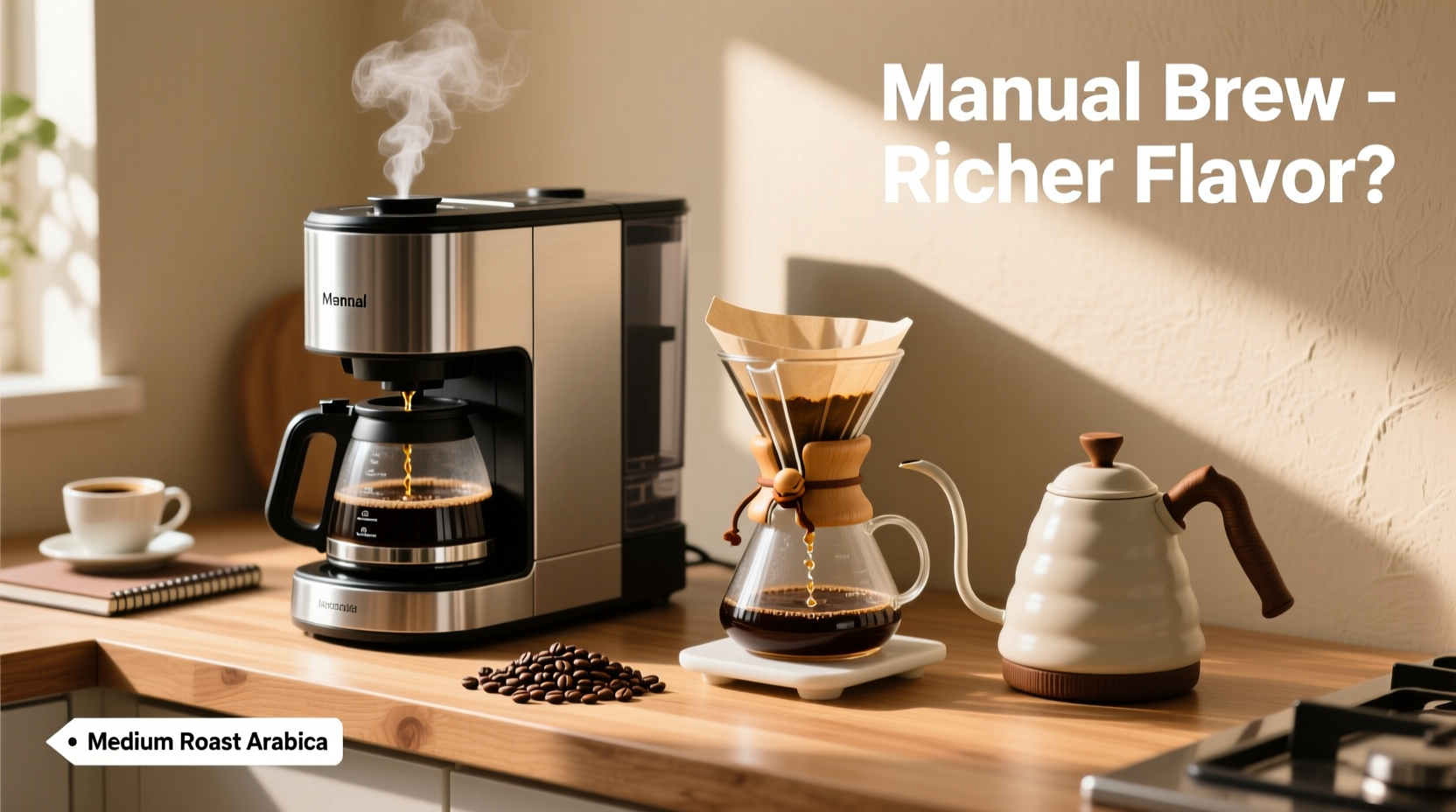
Brewed coffee is the result of extraction—the process of dissolving soluble compounds from ground coffee beans using hot water. Ideal extraction yields a balanced cup with clarity, sweetness, and complexity. Under-extraction produces sour, weak coffee; over-extraction leads to bitterness and harshness.
Three primary variables govern extraction:
- Water Temperature: Optimal range is 195°F to 205°F (90–96°C). Too cool, and extraction stalls; too hot, and delicate flavors burn off.
- Brew Time: Varies by method. Espresso takes 25–30 seconds; pour-over ranges from 2.5 to 4 minutes; French press needs 4 minutes.
- Grind Size: Must match the brewing method. Fine for espresso, medium-fine for pour-over, coarse for French press.
Manual brewers give users direct control over all three. Automatic machines regulate them internally—but not always precisely.
“Great coffee starts with even extraction. Manual methods allow skilled users to fine-tune every variable, but consistency requires practice.” — Dr. Sarah Lin, Coffee Science Researcher, University of California, Davis
Automatic Coffee Makers: Convenience vs. Flavor Fidelity
Automatic coffee makers include drip machines, single-serve pod systems (like Keurig), and super-automatic espresso machines. These prioritize ease of use, often at the expense of nuanced flavor development.
Drip Machines
Most household drip brewers heat water and distribute it over a filter basket via a showerhead. However, many budget models fail to reach optimal brewing temperatures. A 2018 study by the National Coffee Association found that nearly 30% of standard drip machines operated below 195°F, leading to under-extracted, flat-tasting coffee.
Better models—such as those certified by the Specialty Coffee Association (SCA)—feature thermal carafes, pre-infusion cycles, and precise heating elements. These can produce clean, balanced cups comparable to manual pour-overs, provided fresh beans and proper grind size are used.
Pod Systems
Single-serve pods offer speed and simplicity but sacrifice freshness and environmental sustainability. Pre-ground coffee in sealed pods degrades over time, losing volatile aromatics essential for flavor. Additionally, plastic waste and proprietary designs limit long-term appeal.
Super-Automatic Espresso Machines
These all-in-one units grind, tamp, brew, and steam milk with the push of a button. High-end models like the Jura E8 or Gaggia Anima Deluxe deliver consistent espresso shots, but they lack the tactile feedback and customization of manual lever or semi-automatic machines. Milk texture and shot timing are automated, reducing room for personal adjustment.
Manual Brewing Methods: Precision and Engagement
Manual coffee making turns brewing into a sensory ritual. It demands attention but rewards skill with greater flavor transparency and depth. Common manual methods include pour-over (e.g., Hario V60, Chemex), French press, AeroPress, and stovetop moka pot.
Pour-Over (V60, Chemex)
Pour-over excels in highlighting clarity and acidity. By controlling the pour rate, water distribution, and bloom phase, users influence extraction dynamics. A slow, spiral pour ensures even saturation, minimizing channeling and maximizing flavor nuance.
This method shines with light- to medium-roast specialty beans, revealing floral, fruity, or tea-like notes often muted in automatic brewing.
French Press
The immersion method of the French press allows full contact between grounds and water. It produces a rich, full-bodied cup with noticeable sediment and oils. While less refined than pour-over, it emphasizes chocolatey, nutty profiles ideal for darker roasts.
However, metal mesh filters let fine particles through, which some find gritty. Over-steeping (beyond 4 minutes) increases bitterness.
AeroPress
Combining immersion and pressure, the AeroPress offers versatility. It can mimic espresso strength or produce clean, bright filter-style coffee depending on technique. Its short brew time (1–2 minutes) minimizes over-extraction risk, making it forgiving for beginners.
Moka Pot
Stovetop moka pots generate steam pressure to push water through coffee, producing a concentrated, intense brew similar to espresso. While not true espresso (it lacks 9 bars of pressure), it delivers bold flavor with low acidity. Aluminum construction affects heat retention, requiring careful flame control.
“The difference between good coffee and great coffee often comes down to intention. Manual brewing forces you to be present—and that presence changes the outcome.” — James Hoffmann, World Barista Champion & YouTube Educator
Comparative Analysis: Automatic vs. Manual
| Factor | Automatic Brewers | Manual Brewers |
|---|---|---|
| Taste Potential | Good (high-end models); fair (budget) | Excellent (with proper technique) |
| User Control | Low to moderate | High |
| Consistency | High (once calibrated) | Depends on user skill |
| Convenience | Very high | Low to moderate |
| Learning Curve | Nearly none | Moderate to steep |
| Cost (Initial + Ongoing) | $$ (higher for premium models; ongoing pod costs) | $–$$ (low device cost; reusable filters) |
| Sustainability | Poor (plastic pods, energy use) | Excellent (reusable, minimal waste) |
The table reveals a clear trade-off: automation sacrifices control and peak flavor for speed and repeatability. Manual methods require investment in time and learning but unlock higher sensory fidelity.
Real-World Example: Two Homes, Two Approaches
Consider two households.
In one, a busy professional uses a $150 SCA-certified drip machine. They buy freshly roasted beans weekly, grind before brewing, and descale monthly. Their coffee is clean, warm, and reliable—perfect for weekday mornings. On weekends, they experiment with cold brew using the same machine’s cold setting.
In another home, a retired couple dedicates 15 minutes each morning to brewing Chemex coffee. They weigh beans, heat water to 200°F, and follow a timed pour-over sequence. Their cup displays vibrant citrus notes and jasmine aroma, changing subtly with each new bean origin.
Both enjoy excellent coffee—but the second achieves a level of refinement the first cannot replicate without switching methods. Neither is “wrong”; their choices reflect priorities: efficiency versus exploration.
Step-by-Step Guide: Improving Your Home Brew (Regardless of Method)
- Start with Fresh Beans: Buy whole-bean coffee roasted within the past 2–4 weeks. Store in an airtight container away from light and moisture.
- Use a Burr Grinder: Blade grinders create uneven particles, leading to inconsistent extraction. A burr grinder ensures uniformity critical for both automatic and manual methods.
- Measure Accurately: Use a 1:16 coffee-to-water ratio (e.g., 20g coffee to 320g water) as a starting point. Adjust based on taste.
- Pre-Wet Filters and Preheat Equipment: Rinse paper filters to remove paper taste and preheat vessels to maintain stable brewing temperature.
- Control Water Quality: Use filtered water with balanced mineral content. Avoid distilled or heavily softened water, which impair extraction.
- Experiment Mindfully: Change only one variable at a time—grind size, water temp, brew time—to understand its impact.
Frequently Asked Questions
Can an automatic machine make specialty-grade coffee?
Yes, but only high-end models with SCA certification consistently meet the standards for temperature stability, brew time, and water dispersion. Even then, results depend on bean freshness and grind quality. Most budget machines fall short of true specialty potential.
Is manual brewing worth the effort for taste improvement?
For discerning palates, yes. Manual methods expose subtle flavor layers—floral, fruity, earthy—that automatic machines often flatten. If you value flavor complexity and enjoy the process, manual brewing offers a richer experience.
Do I need expensive gear to make great coffee manually?
No. A $20 AeroPress, $30 hand grinder, and gooseneck kettle under $40 can outperform a $500 super-automatic machine when used correctly. Skill and attention matter more than price.
Checklist: Choosing Your Ideal Home Coffee Setup
- ☐ Define your priority: convenience, flavor, or both
- ☐ Assess available time per brew session
- ☐ Determine budget for initial purchase and ongoing supplies
- ☐ Choose a roast profile preference (light/medium = manual; dark/consistent = automatic)
- ☐ Test both methods if possible—borrow a friend’s V60 or try a café’s automatic brew side-by-side
- ☐ Commit to using fresh, high-quality beans regardless of method
Final Verdict: Taste Is Personal, But Control Wins on Flavor
Technically speaking, manual coffee makers have the upper hand when it comes to brewing better-tasting coffee. The ability to adjust water flow, temperature, and contact time allows skilled users to extract the fullest expression of a coffee’s character. No automatic machine, no matter how advanced, can replicate the adaptive intuition of a practiced hand.
That said, “better” is subjective. For someone who values a warm, familiar cup without fuss, a well-maintained automatic drip brewer may provide perfect satisfaction. For others, the ritual of manual brewing—the smell of blooming grounds, the sound of pouring water, the anticipation of the first sip—is inseparable from the pleasure of the drink itself.
The truth is, both paths lead to enjoyable coffee. But if peak flavor, origin transparency, and sensory detail are your goals, manual brewing offers a deeper journey. It’s not just about the cup—it’s about connection: to the bean, the process, and the moment.




 浙公网安备
33010002000092号
浙公网安备
33010002000092号 浙B2-20120091-4
Comments
No comments yet. Why don't you start the discussion?