
For home baristas and coffee enthusiasts, the choice between an automatic and a manual espresso machine often comes down to one pivotal question: Is mastering the art of pulling a perfect shot by hand really worth the effort? On paper, automatic machines promise convenience, consistency, and ease. Manual machines demand time, patience, and precision. But behind that labor lies the potential for something exceptional—a cup of espresso tailored exactly to your taste, with depth, balance, and character no algorithm can replicate.
The truth isn’t binary. It depends on your goals, your palate, and how much control you want over the brewing process. This article breaks down the real differences between automatic and manual espresso machines—not just in design or price, but in experience, outcome, and long-term satisfaction.
Understanding the Core Differences
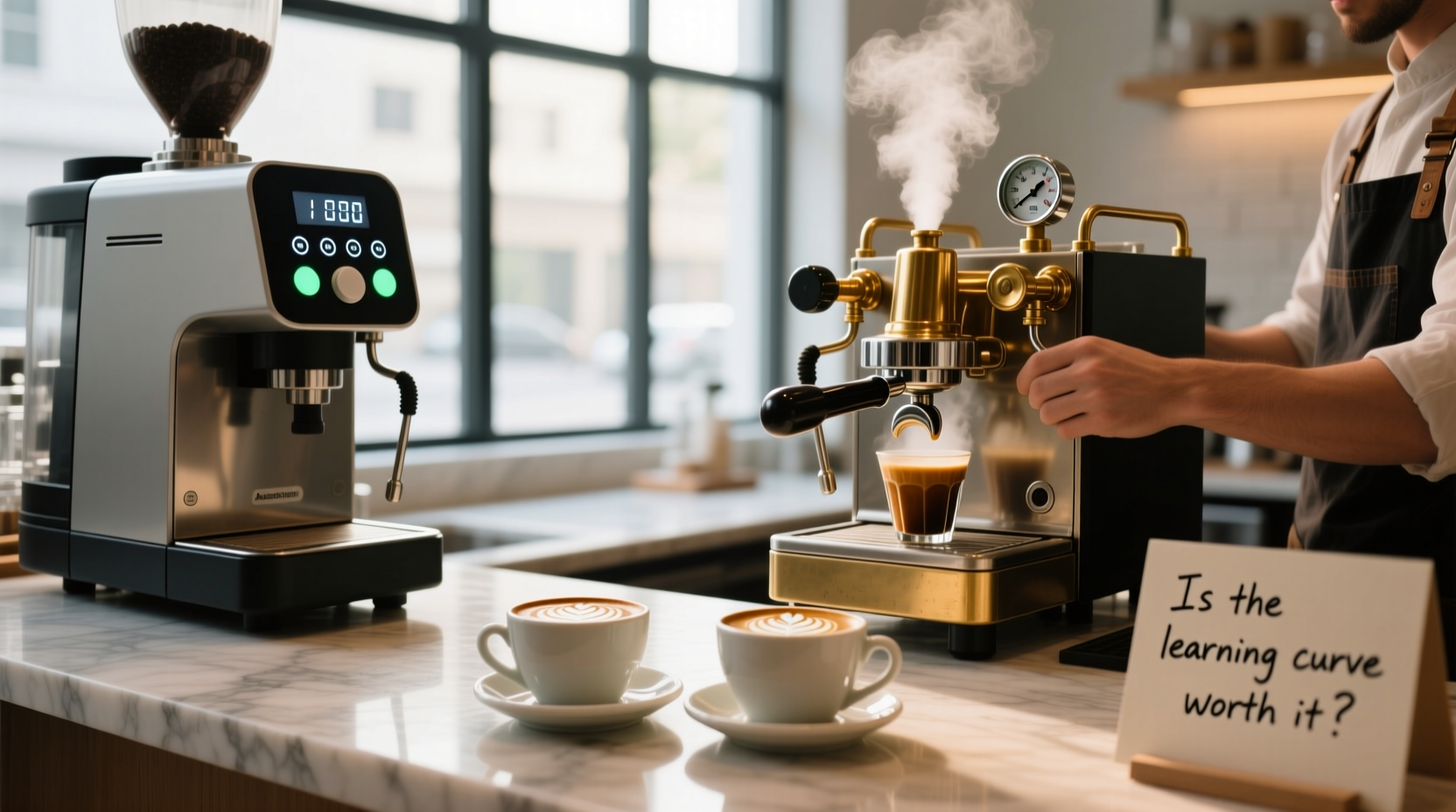
At first glance, both types of machines heat water and force it through ground coffee under pressure. But the way they achieve this—and who controls each variable—defines their fundamental divergence.
- Automatic Espresso Machines: These include semi-automatic and fully automatic models. Semi-automatics handle water delivery and pressure but require the user to grind, tamp, and start/stop the shot manually. Fully automatics do nearly everything, from grinding to tamping to stopping the shot at a pre-set volume.
- Manual (or Lever) Espresso Machines: These require full human involvement. You control every stage: grinding, dosing, tamping, pre-infusion timing, and pull strength. Some are spring-lever operated; others are direct lever, where you physically pull down a lever to create pressure.
While automatic machines rely on programmed consistency, manual machines treat espresso as a craft—one shaped by rhythm, feel, and feedback.
Performance and Control: What You Gain (and Lose)
The primary advantage of manual espresso machines is control. With an automatic machine, you’re limited to adjusting grind size, dose, and sometimes brew temperature. A manual machine lets you manipulate variables like ramp-up time, pressure profiling during the shot, and even the rate of extraction through lever resistance.
This level of nuance allows skilled users to highlight specific notes in single-origin beans—say, drawing out citrus brightness in an Ethiopian Yirgacheffe or enhancing chocolatey depth in a Brazilian blend. Automatic machines, while consistent, often flatten these subtleties into a standardized profile.
“Espresso isn’t just chemistry—it’s choreography. The best shots come from machines that let you dance with the variables.” — Luca Moretti, Specialty Coffee Trainer & WBC Judge
However, that control demands expertise. Pulling a balanced shot on a manual machine requires understanding how small changes affect flavor. Tamping too hard? Channeling risk increases. Pulling the lever too fast? You’ll spike pressure and extract bitterness. There's no auto-correct button.
In contrast, automatic machines excel in repeatability. Once dialed in, they deliver the same drink every time—ideal for households with multiple users or those who value speed over customization.
Learning Curve: Time Investment vs. Long-Term Reward
The learning curve for manual espresso machines is steep—there’s no sugarcoating it. Most beginners spend weeks dialing in their technique before producing anything close to a balanced shot. Many early attempts will be sour, bitter, or unevenly extracted.
But unlike other skills where mastery plateaus quickly, espresso brewing offers continuous refinement. As your palate develops and your muscle memory improves, so does your ability to adapt to different beans, roast levels, humidity, and equipment quirks.
A Realistic Timeline for Skill Development
- Week 1–2: Focus on basics—consistent grind size, even tamping, and observing shot time and yield.
- Week 3–4: Begin adjusting variables methodically. Learn to recognize signs of under- and over-extraction.
- Month 2–3: Experiment with pre-infusion techniques and pressure modulation on lever machines.
- Month 4+: Refine based on bean origin and roast profile. Start tasting subtle shifts in acidity, body, and finish.
Compare this to an automatic machine: within a day, most users can make a decent espresso. By the end of the week, they’re confident. But after that, improvement slows. The machine does the thinking. You become a curator, not a creator.
Mini Case Study: From Frustration to Fulfillment
Take Sarah, a graphic designer in Portland who bought a Flair Pro 2 after years of using a DeLonghi EC155. Her first month was discouraging—most shots ran too fast or tasted metallic. She kept notes, adjusted her grinder daily, and watched countless technique videos. By week six, she pulled her first balanced double: 28 seconds, 36g output from 18g in, with notes of red apple and brown sugar. “It wasn’t just good coffee,” she said. “It felt earned.”
Today, she hosts monthly ‘lever nights’ with friends, comparing beans and techniques. The machine sits proudly on her counter, not hidden away. For her, the learning curve wasn't a barrier—it was part of the joy.
Comparative Analysis: Automatic vs Manual Machines
| Feature | Automatic Machine | Manual Machine |
|---|---|---|
| Initial Ease of Use | High – minimal setup needed | Low – requires practice and calibration |
| Brew Consistency (once dialed in) | Very high – repeatable results | Moderate – depends on user skill |
| Customization Potential | Limited – preset parameters | Extensive – full control over pressure, timing, flow |
| Cost Range | $100–$1,000+ | $150–$700 (home lever), $3,000+ (commercial) |
| Maintenance Complexity | Moderate – descaling, cleaning group heads | Higher – more parts, seals, manual cleaning |
| Coffee Quality Ceiling | Good to very good | Potentially exceptional (in skilled hands) |
| Time Per Shot | 2–4 minutes | 5–8 minutes (including prep) |
The data shows a clear trade-off: convenience versus creative potential. Automatic machines win for efficiency and accessibility. Manual machines win for depth, engagement, and peak performance—if you're willing to invest the time.
When the Learning Curve Is Worth It
Not everyone needs a manual espresso machine. But for certain types of coffee lovers, the effort pays dividends far beyond caffeine delivery.
- You care about terroir and bean origin. Manual machines allow you to accentuate unique characteristics that automated systems often mute.
- You enjoy process-driven hobbies. Like playing an instrument or baking sourdough, there’s deep satisfaction in mastering a physical craft.
- You want to understand coffee, not just consume it. Every failed shot teaches you something about extraction, water chemistry, or grind distribution.
- You value ritual. The deliberate steps—from weighing dose to wiping the portafilter—create a mindful morning routine.
Checklist: Is a Manual Espresso Machine Right for You?
Answer these questions honestly before making the leap:
- Am I willing to spend 30+ minutes per session practicing, not just drinking?
- Do I already own or plan to buy a precision grinder?
- Can I dedicate counter space for a permanent setup?
- Do I find joy in refining small details over time?
- Am I comfortable with initial failure as part of the process?
If you answered “yes” to most of these, the learning curve likely is worth it. If not, an automatic machine may serve you better—without shame or compromise.
Frequently Asked Questions
Can I make better espresso with a manual machine than with a high-end automatic?
Yes—but only if you’ve developed the necessary skills. Top-tier automatics (like the Rocket R58 or Lelit Anna) produce excellent, consistent espresso. However, a skilled user on a well-maintained manual machine can surpass them in complexity and nuance, especially with lighter roasts or delicate single origins.
Are manual espresso machines harder to clean and maintain?
Slightly. They have more exposed parts (levers, springs, gaskets) that require regular inspection and occasional replacement. However, because they lack complex electronics and pumps, long-term reliability is often higher. Cleaning routines are similar: backflushing, group head scrubbing, and periodic descaling still apply.
Do I need special training to use a manual espresso machine?
No formal training is required, but self-education is essential. Invest time in learning about extraction principles, water-to-coffee ratios, and pressure dynamics. Online communities (like Home-Barista.com or Reddit’s r/espresso) offer invaluable peer support.
Conclusion: Skill, Satisfaction, and the Taste of Effort
The debate between automatic and manual espresso machines isn’t about which is objectively better—it’s about what kind of relationship you want with your coffee. An automatic machine is a reliable appliance. A manual machine is a partner in creation.
Yes, the learning curve is real. Yes, it takes time, patience, and resilience. But for those who pursue it, the reward isn’t just better-tasting espresso. It’s the quiet pride of pulling a flawless shot after months of trial, the ability to sense when a bean wants gentle pressure or quick ramp-up, and the deep connection to a tradition that spans decades of café culture.
If you're someone who values convenience above all, stick with automatic. But if you crave agency, expression, and the subtle thrill of mastery, then the learning curve isn’t a hurdle—it’s the path to something extraordinary.




 浙公网安备
33010002000092号
浙公网安备
33010002000092号 浙B2-20120091-4
Comments
No comments yet. Why don't you start the discussion?