
In an age where timekeeping precision is measured in atomic clocks and smartphone notifications, the enduring fascination with mechanical watches—particularly automatic ones—might seem like a relic of sentimentality. Yet, among collectors, connoisseurs, and what some might call “watch snobs,” there remains a deep-seated preference for mechanical movements over their quartz counterparts. This isn’t merely about telling time; it’s about artistry, engineering, and tradition. While quartz watches are undeniably accurate and affordable, they rarely evoke the same reverence. The divide between automatic and quartz goes beyond function—it touches on philosophy, emotion, and identity.
The Fundamental Difference: How They Work
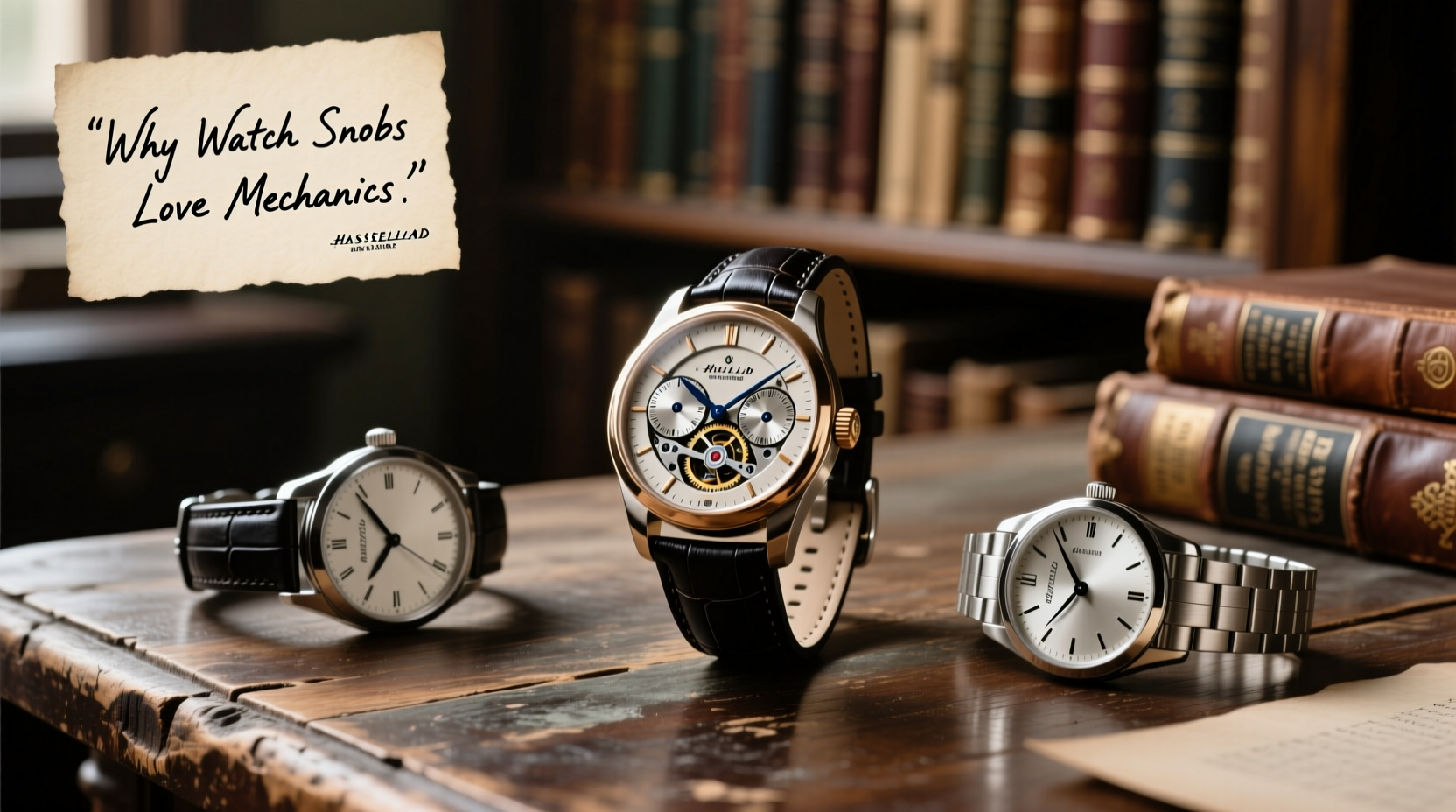
At the heart of the debate lies a basic technical distinction. Quartz watches operate using a battery-powered electronic oscillator regulated by a tiny piece of quartz crystal. When electrified, the crystal vibrates at a precise frequency (32,768 times per second), allowing the circuit to divide time into exact seconds. This system delivers exceptional accuracy—often within ±15 seconds per month.
Automatic watches, on the other hand, are entirely mechanical. They rely on a mainspring that stores energy when wound, either manually or through the motion of the wearer’s wrist via a rotor. This energy is released gradually through a series of gears and escapements, regulating the movement of the hands. These watches typically lose or gain several seconds per day—a flaw by modern standards, but one embraced as part of their character.
The mechanical complexity is staggering: a typical automatic movement contains over 100 components, sometimes exceeding 200 in high-complication pieces. Each gear, spring, and lever must be machined, assembled, and adjusted by hand or with precision tools. This intricate dance of metal parts is visible through exhibition casebacks, celebrated rather than hidden.
Craftsmanship and Heritage: The Soul of Mechanical Timepieces
For many enthusiasts, the appeal of mechanical watches lies not just in how they work, but in *how they were made*. Swiss watchmaking, in particular, carries centuries of heritage. Brands like Patek Philippe, Audemars Piguet, and Jaeger LeCoultre have operated since the 1800s, refining techniques passed down through generations. A single master watchmaker may spend months perfecting a grand complication—such as a perpetual calendar or minute repeater—that integrates multiple functions into one seamless mechanism.
Quartz watches, by contrast, emerged en masse after the 1969 release of the Seiko Astron, the world’s first quartz wristwatch. Its arrival triggered the \"Quartz Crisis,\" decimating traditional Swiss watchmakers who couldn’t compete with the affordability and accuracy of battery-powered timepieces. Entire factories closed. But from that crisis arose a renaissance—not of mass production, but of haute horlogerie. Mechanical watches evolved from utilitarian tools into luxury artifacts.
“Mechanical watches are not about measuring time—they’re about celebrating it.” — Dominique Renaud, co-founder of R&D Instruments and former head of Audemars Piguet Renaud & Papi
This shift transformed mechanical watches into objects of desire. Their value isn't derived solely from materials, but from the hours of labor, finishing details (like Geneva stripes or perlage), and the skill required to assemble them. Enthusiasts admire beveled edges, hand-engraved balance cocks, and the rhythmic sweep of the second hand—details absent in most quartz models.
Emotional Connection and Ritual
Wearing a mechanical watch involves ritual. Winding a manual timepiece each morning becomes a personal ceremony—an intimate interaction between owner and object. An automatic watch rewards consistency; if worn daily, it runs perpetually, almost like a living thing synced to its wearer’s rhythm. Let it sit idle for too long, and it stops, requiring reactivation—a reminder of its dependence on human engagement.
Quartz watches require none of this. Insert a battery, set the time, and forget it for years. That convenience is practical, but it lacks narrative. There’s no story in replacing a dead cell every three years. But winding a vintage Omega from the 1950s? That connects you to someone else’s past—to the engineer who built it, the person who wore it decades ago, the journey it took to reach your wrist.
This emotional resonance is central to why “watch snobs” favor mechanical movements. They don’t just tell time—they embody legacy, perseverance, and passion. As one collector put it: “My Rolex Submariner has outlasted two phones, three laptops, and a car. It will probably outlive me.”
Comparative Overview: Automatic vs Quartz
| Feature | Automatic Watch | Quartz Watch |
|---|---|---|
| Power Source | Mainspring (wound manually or automatically) | Battery |
| Average Accuracy | +/- 5 to +20 seconds per day | +/- 15 seconds per month |
| Maintenance Interval | Every 5–7 years (full service) | Every 2–3 years (battery replacement) |
| Lifespan Potential | Generational (with care) | Limited by electronics and obsolescence |
| Price Range (Entry-Level) | $300–$1,000+ | $20–$300 |
| Second Hand Motion | Smooth sweeping | Distinct tick per second |
| Environmental Impact | Long-term, repairable, sustainable | Batteries, e-waste, less repairable |
Real Example: The Heirloom Effect
Consider James, a 38-year-old architect in Boston. His grandfather left him a 1947 Jaeger LeCoultre Futurematic—an early automatic watch known for its elegant design and innovative self-winding mechanism. Though outdated by modern standards, James had it restored by a specialist. Now, he wears it weekly. It gains about 15 seconds a day, which he adjusts every Sunday morning while having coffee. To him, the slight inaccuracy doesn’t detract—it enhances the experience. “It’s not broken,” he says. “It’s alive.”
James could buy a $100 Casio G-Shock that’s more accurate and durable. But that wouldn’t carry the weight of memory, nor the tactile joy of holding a piece of family history. For people like James, mechanical watches aren’t just accessories—they’re vessels of continuity.
Why Quartz Still Has Its Place
It would be disingenuous to dismiss quartz watches entirely. They serve vital roles in everyday life, especially where reliability and low maintenance matter. Pilots, divers, and field technicians often rely on quartz instruments because they perform consistently under extreme conditions. Brands like Citizen (Eco-Drive) and Breitling (SuperQuartz) have elevated quartz technology with solar charging and thermocompensation for improved accuracy.
Moreover, quartz democratized access to precise timekeeping. Before the 1970s, owning a reliable watch was a luxury. Today, anyone can own a timepiece accurate to within seconds per year. That’s a profound achievement. However, democratization also diluted exclusivity—the very quality that fuels the allure of mechanical watches.
Expert Insight: The Philosophy of Imperfection
In horology circles, there's growing appreciation for the idea that imperfection adds soul. Unlike digital devices designed for flawless repetition, mechanical watches breathe. Their rate varies slightly with temperature, position, and wear pattern. High-end manufacturers regulate movements in multiple positions to minimize deviation, but never eliminate it.
“The beauty of a mechanical watch is that it’s never perfectly accurate—and that’s okay. It reflects the human condition: striving for precision, yet inherently variable.” — François-Paul Journe, independent watchmaker and founder of FPJourne
This perspective reframes inaccuracy not as failure, but as authenticity. A quartz watch ticks identically whether it’s on a CEO’s wrist or buried in a drawer. A mechanical watch responds to how it’s treated. Neglect it, and it stops. Care for it, and it keeps ticking for decades. That reciprocity fosters attachment.
Frequently Asked Questions
Are automatic watches less reliable than quartz?
In terms of pure timekeeping accuracy, yes—quartz watches are significantly more precise. However, reliability also includes longevity and repairability. Well-maintained automatic watches can function reliably for generations, whereas quartz watches may become obsolete due to unavailable replacements for integrated circuits or proprietary batteries.
Do watch snobs ignore all quartz watches?
Not universally. Some high-end quartz watches—like those from Grand Seiko, Breitling, or certain limited editions from Rolex (e.g., Oysterquartz)—are respected for their craftsmanship and rarity. The disdain is generally aimed at mass-produced, disposable quartz models, not all battery-powered timepieces.
Is buying a mechanical watch worth it for a beginner?
Yes—if you value craftsmanship and long-term ownership. Start with accessible brands like Tissot, Hamilton, or Seiko’s Presage line. These offer real mechanical movements at reasonable prices and serve as excellent entry points into horological appreciation.
Step-by-Step Guide: Getting Started with Mechanical Watches
- Educate Yourself: Read about key brands, complications (date, chronograph, moonphase), and movement types (manual vs automatic).
- Set a Budget: Determine how much you’re willing to invest. Entry-level options start around $300; mid-tier ($1,000–$3,000) offers significant quality leaps.
- Try Them On: Visit authorized dealers or reputable vintage shops. Feel the weight, examine the finish, and listen for smooth operation.
- Choose Based on Lifestyle: Prefer durability? Consider a dive watch like the Seiko SKX. Want elegance? Try an Omega De Ville or Longines Master Collection.
- Learn Basic Care: Avoid magnets, extreme shocks, and water exposure unless rated. Service every 5–7 years.
- Wear It Regularly: Keep your automatic moving. Use a winder if needed, but nothing replaces wrist motion.
Conclusion: Beyond Utility, Into Art
The preference for mechanical movements among watch enthusiasts isn’t snobbery—it’s discernment. It’s recognizing that some things cannot be reduced to specs and benchmarks. Yes, a $10 quartz watch keeps better time than a $20,000 Patek. But one measures seconds; the other honors centuries of innovation, patience, and human ingenuity.
Choosing a mechanical watch is a statement: that you value process over convenience, depth over speed, and permanence over disposability. In a world obsessed with upgrades and obsolescence, these timepieces stand as quiet rebels—reminders that beauty lives in complexity, and meaning emerges from motion.




 浙公网安备
33010002000092号
浙公网安备
33010002000092号 浙B2-20120091-4
Comments
No comments yet. Why don't you start the discussion?