
In a world where time is measured with atomic precision by smartphones, the choice between an automatic and a quartz watch may seem trivial. Yet, for many, a wristwatch is more than a tool—it’s a statement, a legacy, or even a piece of art. The debate between automatic (mechanical) and quartz movements isn’t just about accuracy; it’s about philosophy, craftsmanship, and personal values. While quartz watches dominate in reliability and affordability, automatics command respect through heritage and engineering elegance. But does that prestige justify the higher cost and ongoing maintenance?
This article dissects the real differences between automatic and quartz movements, examines the true cost of ownership, and explores whether the ritual of caring for a mechanical timepiece enhances—or detracts from—its value.
The Core Differences: How They Work
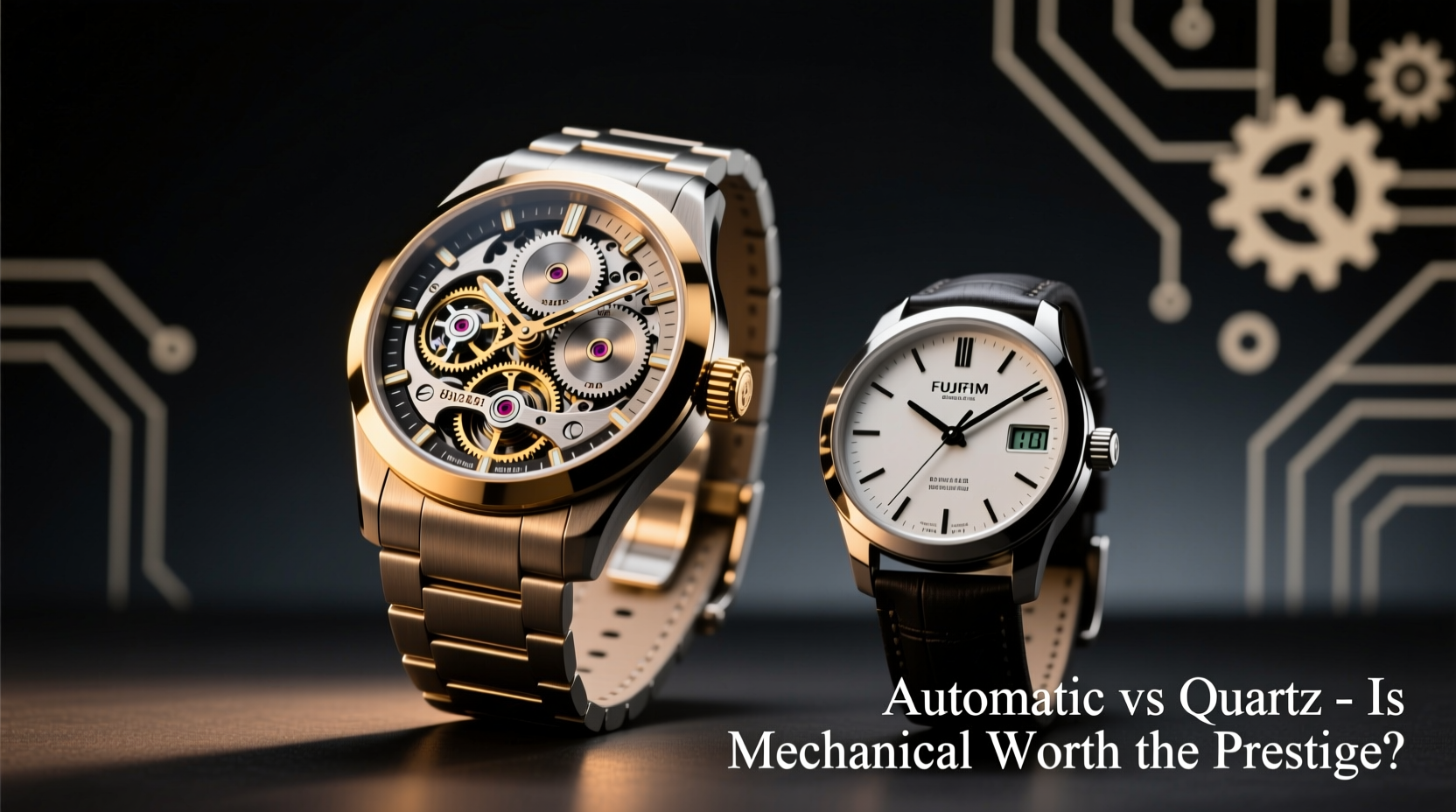
At their heart, automatic and quartz movements operate on entirely different principles.
Quartz movement relies on a battery-powered electronic oscillator regulated by a tiny quartz crystal. When electrified, the crystal vibrates at a precise frequency—32,768 times per second—providing exceptional timekeeping accuracy, typically within ±15 seconds per month.
Automatic (or self-winding mechanical) watches, on the other hand, are powered by kinetic energy. As the wearer moves their wrist, a rotor inside the watch spins and winds the mainspring, storing energy that powers the movement. This intricate system of gears, springs, and levers operates without batteries, relying solely on mechanical ingenuity.
The absence of electronics gives automatic watches a certain romantic appeal. Each tick is the result of hundreds of micro-movements working in harmony—a miniature engine on the wrist. But this complexity comes with trade-offs in precision and upkeep.
Maintenance: The Hidden Cost of Prestige
One of the most significant distinctions between automatic and quartz watches lies in long-term care. While both require occasional attention, the nature and frequency differ greatly.
Quartz watches demand minimal maintenance. A battery change every 2–3 years is usually sufficient. Some models include sealed cases that resist dust and moisture, reducing servicing needs. Over a decade, total upkeep rarely exceeds $50 unless complications arise.
Automatic watches, however, require more deliberate stewardship. Most manufacturers recommend a full service every 5 to 7 years. This involves disassembling the movement, cleaning each component, re-lubricating gears, and reassembling the watch under controlled conditions. Costs vary widely but typically range from $200 to $600, depending on brand and complexity.
Failure to service an automatic watch can lead to degraded performance, oil drying out, increased friction, and eventual damage to critical components like the escapement or balance wheel. Unlike a quartz watch—which simply stops when the battery dies—an unserviced mechanical watch may suffer irreversible wear.
“Servicing isn't optional for fine mechanical watches. It's preservation. Think of it like restoring a classic car—you wouldn’t let it sit unused for decades.” — Daniel Reeves, Master Watchmaker & Horology Instructor
Performance Comparison: Accuracy, Durability, and Convenience
When comparing functionality, quartz watches consistently outperform automatics in key areas.
| Feature | Quartz Watch | Automatic Watch |
|---|---|---|
| Accuracy | ±15 seconds per month | ±5 to ±30 seconds per day |
| Power Source | Battery | Mainspring (wound by motion or hand) |
| Maintenance Interval | Every 2–3 years (battery) | Every 5–7 years (full service) |
| Average Service Cost | $10–$30 | $200–$600+ |
| Lifespan (with care) | 15–25 years | 50+ years (often heirloom quality) |
| Environmental Sensitivity | Low (resists shocks, temp changes) | Moderate to high (magnetism, position, shock affect rate) |
Despite lower accuracy, automatic watches often outlive their owners. With proper servicing, they can function reliably for generations. Quartz watches, while durable, face obsolescence as replacement parts become scarce or discontinued—especially for older models.
Convenience also plays a role. An automatic watch left unworn for two days may stop and require resetting and rewinding. Many owners use watch winders to maintain tension in the mainspring during storage. Quartz watches, meanwhile, keep ticking until the battery expires, making them ideal for low-frequency use.
Is the Prestige Worth the Effort?
Prestige in horology isn’t assigned arbitrarily. It stems from history, technical mastery, and cultural significance. Brands like Patek Philippe, Rolex, and Jaeger LeCoultre have spent over a century refining mechanical movements, pushing boundaries with innovations like perpetual calendars, tourbillons, and minute repeaters. These feats of micro-engineering are not replicable in mass-market quartz designs.
Wearing an automatic watch signals appreciation for craftsmanship. The sweeping motion of the second hand—smooth and continuous—is instantly recognizable to enthusiasts. It reflects the rhythm of the balance wheel oscillating at 28,000 vibrations per hour. In contrast, quartz watches “tick” once per second, a stark reminder of digital efficiency over analog grace.
But does emotional resonance outweigh practicality?
For collectors and aficionados, the answer is often yes. The act of winding a watch, observing its intricate mechanics through a sapphire caseback, or inheriting a family timepiece creates a personal connection unmatched by any quartz alternative. For others—those who prioritize punctuality, simplicity, and budget—the allure may feel overrated.
Mini Case Study: Two Professionals, Two Choices
Consider Mark and Julia, both corporate consultants in their mid-30s.
Mark wears a $1,200 quartz-powered Citizen Eco-Drive. It never needs a battery because it runs on light, keeps perfect time, and survives airport X-rays, gym sessions, and international travel. He forgets about it daily—by design. For him, a watch is a functional accessory, nothing more.
Julia owns a vintage 1968 Omega Seamaster, restored and serviced every six years. She winds it manually each morning, enjoys checking its rate deviation, and recently passed it down to her son with a handwritten note explaining its history. To her, the ritual of care deepens her bond with the object.
Neither is wrong. Their choices reflect differing relationships with time itself—one sees it as data, the other as memory.
Expert Tips for Making the Right Choice
Selecting between automatic and quartz shouldn’t be based on trends or peer pressure. Consider these factors before investing:
- Lifestyle: Frequent travelers or active individuals may prefer the set-and-forget reliability of quartz.
- Budget: Factor in long-term costs. A $500 automatic may cost more in services over 15 years than a $300 quartz.
- Emotional Value: Do you enjoy tinkering, learning, and engaging with your possessions? Mechanical watches reward curiosity.
- Heirloom Intent: If you plan to pass it down, automatics offer greater sentimental and collectible potential.
- Brand Philosophy: Some brands excel in quartz innovation (e.g., Grand Seiko’s 9F series), blurring the line between utility and luxury.
Checklist: Choosing Your Movement Type
- Define your primary use: daily wear, formal events, backup, or collection?
- Estimate annual usage: Will it be worn weekly or monthly?
- Set a realistic maintenance budget: Can you afford $300 every six years?
- Determine emotional priorities: Do you value tradition, precision, or convenience most?
- Research specific models: Compare actual performance, not just specs.
- Try before you buy: Visit a retailer to experience weight, sound, and motion firsthand.
Frequently Asked Questions
Do automatic watches need to be wound every day?
Not necessarily. Most modern automatics have a power reserve of 40–70 hours. If worn daily, natural motion keeps them wound. Watches stored overnight or over weekends typically continue running. However, if left idle for more than two days, manual winding is recommended before reuse.
Can I overwind my automatic watch?
No—modern automatic movements include slipping mechanisms that prevent overwinding. Once the mainspring is fully tensioned, the winding system disengages. Excessive force could damage the crown or stem, but normal winding poses no risk.
Are quartz watches less valuable than automatics?
Generally, yes—in terms of resale and collectibility. Most quartz watches depreciate faster and lack the artisanal appeal of mechanical ones. However, rare exceptions exist, such as the original 1969 Seiko Astron or limited-edition Grand Seiko quartz models, which have gained collector status.
Conclusion: Time as a Reflection of Values
The question isn’t whether automatic watches are objectively better than quartz—they aren’t. It’s whether their maintenance aligns with what you value in life. Is time something to be tracked efficiently, or experienced mindfully? Is ownership about utility, or legacy?
Quartz watches represent progress: accessible, accurate, and dependable. Automatic watches represent continuity: human touch, enduring design, and mechanical poetry. Neither diminishes the other.
If you’re drawn to the idea of a machine that breathes with your motion, one that demands attention yet rewards patience, then the upkeep is not a burden—it’s part of the relationship. But if your life moves too fast for rituals, there’s no shame in choosing clarity over charm.




 浙公网安备
33010002000092号
浙公网安备
33010002000092号 浙B2-20120091-4
Comments
No comments yet. Why don't you start the discussion?