
At first glance, a bag charm and a keychain might seem interchangeable—one dangles from a zipper pull, the other from a set of keys. But dig deeper, and you’ll find distinct purposes, design philosophies, and cultural significance behind each. While both serve decorative and functional roles, they aren’t simply two names for the same accessory. Understanding the nuances helps you make smarter style choices and get more value from your accessories.
Defining the Basics: What Is a Bag Charm?
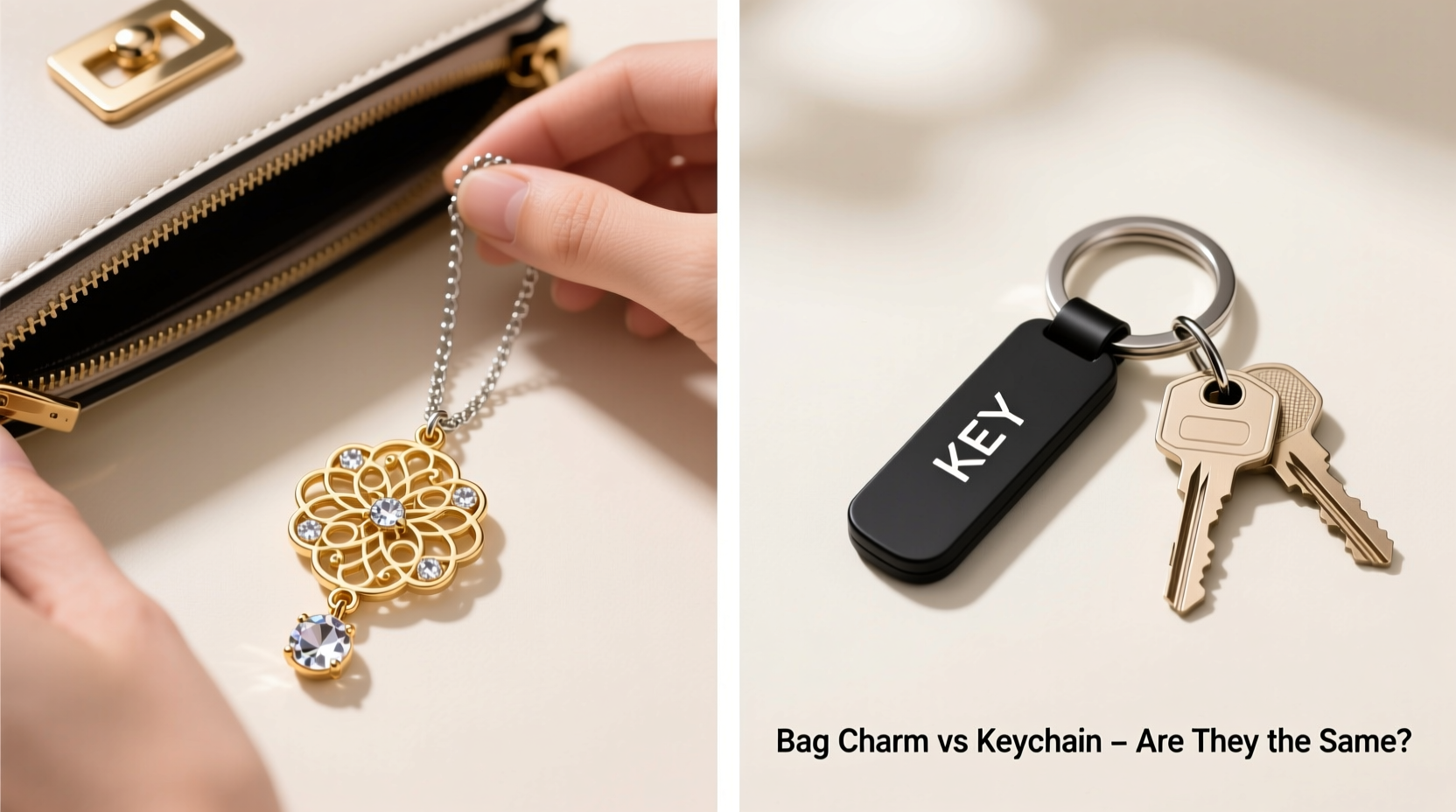
A bag charm is a decorative accessory designed specifically to attach to handbags, clutches, or totes. It’s typically clipped onto a zipper pull, D-ring, or strap using a lobster clasp, ring, or magnetic fastener. Unlike generic keychains, bag charms are curated with aesthetics in mind—often crafted from premium materials like enamel, metal alloys, resin, or even semi-precious stones.
Designers like Gucci, Coach, and Fendi have popularized bag charms as collectible fashion statements. These aren’t just add-ons; they’re extensions of personal branding. A well-chosen charm can elevate a simple tote into a statement piece, reflecting individuality, mood, or even seasonal trends.
What Exactly Is a Keychain?
A keychain is primarily functional—a tool for organizing and identifying keys. Most are built for durability, not decoration. They often feature rugged materials like steel, rubber, or heavy-duty plastic. While some modern keychains incorporate stylish elements (think engraved initials or branded logos), their core purpose remains utility: keeping keys together and easy to access.
Keychains may include additional tools—bottle openers, USB drives, mini flashlights—emphasizing practicality over flair. Even designer keychains, while sleek, prioritize sturdiness. They’re meant to survive daily wear: tossed into pockets, dropped on pavement, or jangled in a crowded purse.
“Keychains solve a problem. Bag charms create an experience.” — Lila Nguyen, Accessories Designer at Maison & Co.
Functional Differences: Purpose and Placement
The distinction isn’t just cosmetic—it’s contextual. Here’s how their functions diverge:
- Bag charms enhance visibility and personalization. On a crowded café chair or airport carousel, a unique charm helps you spot your bag instantly.
- Keychains prevent loss through organization. Splitting house, car, and office keys across color-coded or shaped tags reduces confusion.
- Bag charms are usually larger and more delicate, intended to be seen and admired.
- Keychains are compact and robust, engineered for constant handling.
While you *can* hang a keychain on a purse, doing so often looks haphazard unless it’s intentionally styled. Conversely, attaching a fragile enamel bag charm to your house keys risks damage from friction and impact.
Style and Material Comparison
Material choice reflects intent. Bag charms lean toward luxury finishes—glossy enamel, polished brass, Swarovski crystals—because they’re meant to be showcased. Keychains favor matte metals, silicone grips, or reinforced polymers that resist scratches and corrosion.
| Feature | Bag Charm | Keychain |
|---|---|---|
| Primary Purpose | Decoration & identity | Utility & organization |
| Common Materials | Enamel, metal alloys, fabric, beads | Stainless steel, aluminum, rubber, plastic |
| Size Range | 2–6 inches (often larger) | 1–3 inches (compact) |
| Durability Focus | Aesthetic preservation | Impact resistance |
| Attachment Style | Lobster clasp, ring, magnet | Split ring, carabiner, loop |
| Price Range (Average) | $15–$200+ | $5–$50 |
Can You Use a Keychain as a Bag Charm?
Yes—but with caveats. A stylish keychain can double as a bag charm if it complements your bag’s aesthetic. For instance, a minimalist titanium key fob adds subtle sophistication to a structured leather satchel. However, avoid bulky or sharp-edged keychains that could scratch delicate fabrics or snag linings.
Conversely, using a fragile bag charm as a keychain risks chipping, tarnishing, or detachment. Enamel charms, in particular, are prone to cracking under stress. If you love a specific charm, consider purchasing a duplicate or opting for a more durable version made for dual use.
Mini Case Study: The Commuter’s Dilemma
Sophia, a graphic designer in Chicago, wanted her tote to stand out at transit hubs. She attached her vintage-inspired keychain—complete with a tiny camera pendant—to her work bag. Within weeks, the charm scratched her silk scarf inside the bag, and the paint began chipping from daily contact with her keys.
She switched to a soft fabric tassel bag charm with a secure lobster clasp. Not only did it survive daily use, but colleagues started complimenting her style. “I realized I was using a tool as jewelry,” she said. “Once I got the right accessory, my bag felt truly ‘mine.’”
How to Choose the Right Accessory for Your Needs
Selecting between a bag charm and a keychain comes down to three factors: function, fashion, and frequency of use.
- Ask yourself: Is this for show or for use? If visibility and self-expression matter most, go for a bag charm.
- Consider where it will live. Keys endure rough handling; bags don’t need armor-plating. Match the accessory to its environment.
- Think about coordination. A cohesive look—matching metals, colors, or themes—between your bag charm and jewelry elevates your overall aesthetic.
Checklist: Choosing Between a Bag Charm and Keychain
- ☐ Do I want to personalize or identify my bag quickly? → Choose a bag charm.
- ☐ Am I organizing multiple keys? → Choose a keychain.
- ☐ Will this item face daily friction or drops? → Lean toward a keychain.
- ☐ Is visual appeal more important than durability? → Opt for a bag charm.
- ☐ Do I already own something that could serve both roles? → Test it with care.
FAQ
Can I put a bag charm on my keys?
You can, but it’s not recommended unless the charm is specifically built for durability. Most bag charms lack the structural reinforcement needed for constant jostling and may break or tarnish prematurely.
Are designer bag charms worth the price?
For collectors and brand loyalists, yes. Limited-edition charms from luxury houses often retain or increase value. For everyday use, affordable alternatives offer similar style at lower cost.
Do bag charms damage handbags?
Potentially. Heavy or metallic charms can rub against leather or fabric, causing wear over time. Use lightweight designs or rotate them periodically to minimize strain on straps or zippers.
Final Thoughts: More Than Just a Label
The question “Are bag charms just keychains for purses?” oversimplifies a nuanced accessory culture. While they share a common form—a dangling item on a ring—they serve different roles in our lives. A keychain solves a logistical problem. A bag charm answers an emotional one: the desire to express identity through everyday objects.
Fashion evolves, and so do accessories. Today, hybrid designs blur the line—dual-purpose charms with reinforced cores, modular systems, and smart materials that balance beauty and resilience. But understanding the original intent behind each helps you make intentional choices.




 浙公网安备
33010002000092号
浙公网安备
33010002000092号 浙B2-20120091-4
Comments
No comments yet. Why don't you start the discussion?