
In recent years, bag charms and keychains have become staples in personal style expression. From luxury leather bags adorned with delicate trinkets to minimalist keyrings dangling from everyday keys, these accessories are everywhere. But is there a real difference between a bag charm and a keychain, or is the distinction just marketing spin? While they may look similar at first glance, their purpose, design, and cultural significance diverge in subtle but meaningful ways. Understanding these nuances helps you make smarter choices about what to buy, how to use it, and why.
Defining the Terms: What Exactly Is a Bag Charm?
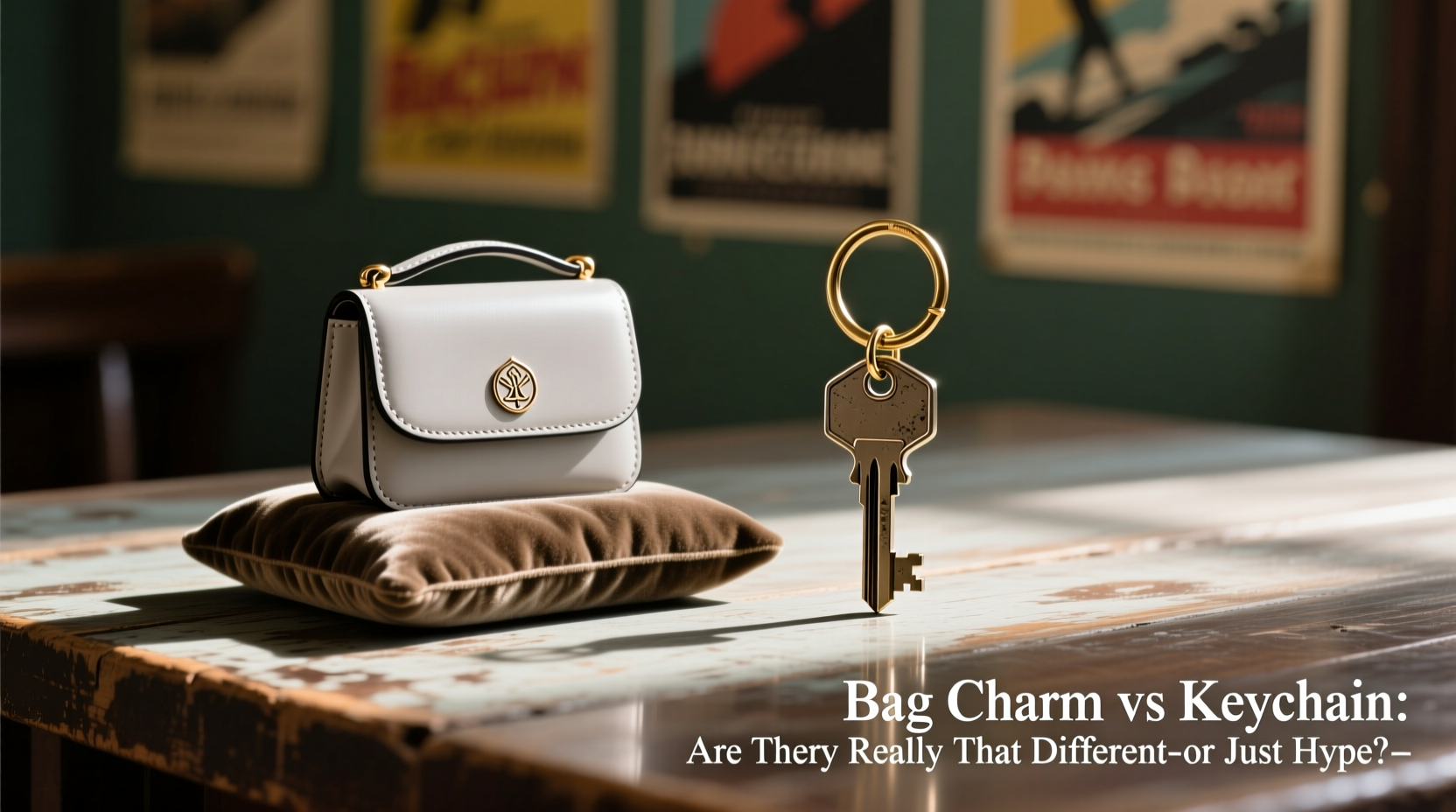
A bag charm is an accessory designed primarily to enhance the appearance of a handbag, tote, or backpack. It’s typically attached via a metal loop, clip, or chain to a bag’s zipper pull, handle, or D-ring. Unlike functional items, bag charms are mostly decorative—though some include small practical elements like a mirror, coin pouch, or even a USB drive.
High-end fashion brands often release limited-edition charms as part of seasonal collections. These can cost hundreds or even thousands of dollars, turning them into status symbols. For example, Chanel’s iconic CC turnlock charm or Gucci’s enamel bee pendant are not just accessories—they’re collectibles.
What Makes a Keychain Different?
A keychain, by contrast, is fundamentally utilitarian. Its primary role is to hold keys together in an organized way while making them easy to locate. Most keychains feature a split ring, carabiner, or sturdy loop designed to withstand daily wear and tear. Materials range from durable metals and reinforced nylon to silicone and rubber.
While many keychains are purely functional, modern designs increasingly blend utility with personality. Engraved initials, branded logos, or whimsical shapes (like tiny food replicas or cartoon characters) allow users to personalize something otherwise mundane. Still, durability and accessibility remain top priorities.
“Keychains are tools first, fashion statements second. Bag charms flip that equation.” — Marcus Lin, Accessories Designer at Urban Thread Co.
Functional vs. Fashion: A Side-by-Side Comparison
The core difference lies in intent. A keychain exists to serve; a bag charm exists to impress. This leads to distinct design philosophies, materials, and usage patterns. The table below outlines key distinctions:
| Feature | Bag Charm | Keychain |
|---|---|---|
| Primary Purpose | Decoration, personalization | Organization, utility |
| Typical Attachment | Bag zipper, handle, strap | Keyring, belt loop, lanyard |
| Material Focus | Style-driven (enamel, crystals, leather) | Durability-focused (steel, aluminum, rubber) |
| Lifespan Expectancy | Moderate (prone to chipping, scratching) | Long (built for impact and friction) |
| Price Range | $15–$2,000+ (luxury collectibles) | $3–$50 (mass-market to premium) |
| Portability | Low (often swapped between bags) | High (carried daily) |
When the Lines Blur: Hybrid Accessories
Not all accessories fit neatly into one category. The rise of “key charm” hybrids—items that function as both a key organizer and a stylish bag accent—has blurred the line. Some designers now create dual-purpose pieces: a sleek metal token with a built-in key holder on one side and a dangling tassel on the other. These allow users to transition seamlessly from office to evening outings without switching accessories.
For instance, a minimalist titanium disc engraved with a constellation pattern might clip onto a set of house keys during the day and then be moved to a clutch bag at night. In this case, the same object serves two roles depending on context. This flexibility appeals to consumers who value both aesthetics and efficiency.
Mini Case Study: Emma’s Daily Switch-Up
Emma, a graphic designer in Brooklyn, owns three high-end handbags and a growing collection of charms. She keeps her work bag minimal—a structured tote with only a small leather tag bearing her initials. But on weekends, she attaches a vintage-inspired gold owl charm to her crossbody bag. “It feels like putting on jewelry for my bag,” she says. “I don’t bring my keys on dates, so I’ll unclip them from my keychain and attach them to the owl’s base. It’s cute, functional, and saves me from losing my keys under restaurant tables.”
This practice shows how modern users are redefining traditional categories. The charm becomes a temporary keyholder, and the keychain loses its permanence. Context, not category, determines function.
How to Choose: Practical Considerations
Selecting between a bag charm and a keychain—or deciding whether to invest in both—depends on your lifestyle and priorities. Ask yourself the following questions before purchasing:
- Do I want to express personality through my accessories?
- Am I likely to carry this every day, or only occasionally?
- Will it be exposed to rough handling, moisture, or frequent detachment?
- Is durability more important than visual appeal?
- Do I already own a bag that encourages charm customization?
Checklist: Choosing the Right Accessory
- ✅ Assess your daily routine: Do you need something rugged or refined?
- ✅ Match the accessory to your bag type: Structured bags suit bold charms; slouchy styles pair well with subtler accents.
- ✅ Check attachment mechanism: Ensure clips or rings are secure and compatible with your bag’s hardware.
- ✅ Consider material care: Enamel and painted surfaces require gentle handling; stainless steel or silicone are low-maintenance.
- ✅ Set a budget: Bag charms can escalate in price quickly—determine how much you're willing to spend on non-essential decor.
Frequently Asked Questions
Can I use a keychain as a bag charm?
Absolutely. Many people repurpose stylish keychains as bag charms, especially if they feature unique designs or sentimental value. Just ensure the size and weight won’t damage delicate fabrics or zippers.
Are bag charms worth the price?
For collectors or fans of luxury fashion, yes—some charms retain or increase in value over time. However, if you're focused on practicality, most high-end charms offer little functional return on investment. View them as wearable art rather than tools.
Do bag charms damage handbags?
Potentially. Heavy or sharp-edged charms can scratch leather or strain stitching over time. To prevent damage, opt for lightweight models with smooth finishes, and rotate their placement periodically to avoid concentrated wear.
Final Thoughts: Beyond the Hype
The debate between bag charm and keychain isn't about superiority—it's about intention. One celebrates individuality; the other prioritizes reliability. Yet, in today’s customizable world, the boundary between them is less rigid than ever. Consumers aren’t forced to pick sides. Instead, they can curate a mix that reflects both their aesthetic tastes and practical needs.
Rather than chasing trends or brand prestige, focus on what adds genuine value to your daily life. Whether it’s a whimsical charm that brings a smile or a no-nonsense keychain that survives subway commutes, the best accessory is the one you reach for without thinking.




 浙公网安备
33010002000092号
浙公网安备
33010002000092号 浙B2-20120091-4
Comments
No comments yet. Why don't you start the discussion?