
Bag charms have evolved from simple decorative accessories into functional fashion statements. Whether dangling from a luxury handbag or clipped onto a tote, they personalize your carry while sometimes offering added utility. But when it comes to attachment methods—chain straps versus ribbon ties—a critical question arises: which is truly more secure? Beyond aesthetics, the choice impacts how long your charm stays attached, how easily it detaches accidentally, and even the longevity of your bag’s hardware. This article breaks down the mechanics, materials, and real-world performance of both options to help you make an informed decision.
Understanding Bag Charm Attachment Methods
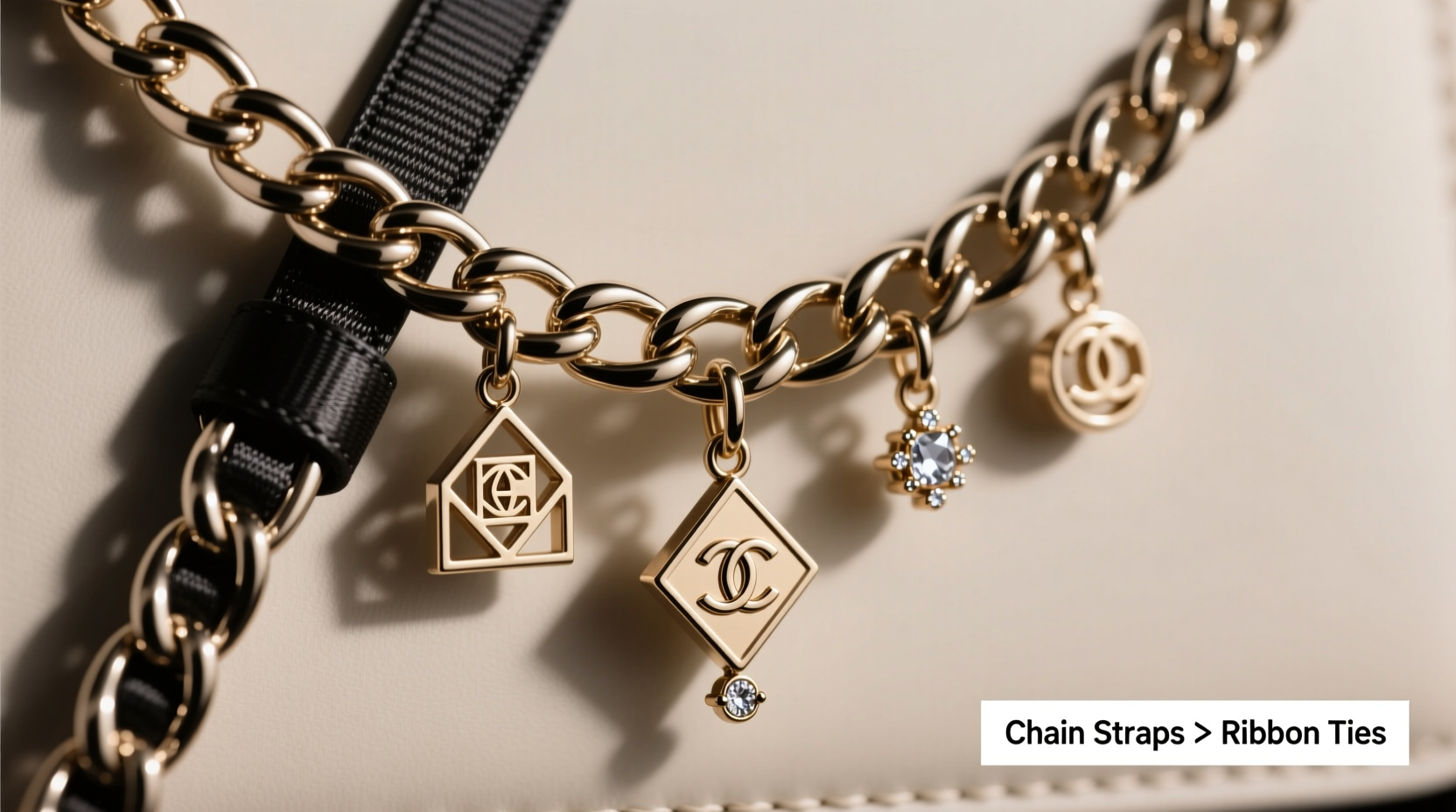
Before comparing security, it's essential to understand how each attachment type works. Chain straps and ribbon ties serve the same basic purpose—connecting a charm to a bag—but they do so in fundamentally different ways.
- Chain Straps: Typically made of metal links (often brass, stainless steel, or alloy), these connect via a lobster clasp, spring ring, or toggle mechanism. They attach directly to a bag’s D-rings, zippers, or built-in loops.
- Ribbon Ties: Fabric-based attachments, usually silk, satin, or grosgrain ribbons, tied around handles, straps, or zippers. These rely on knots for retention and are often part of limited-edition or seasonal charm designs.
The difference isn't just visual. Each method interacts differently with movement, weight, friction, and environmental stress—all factors that influence security.
Security Showdown: Chain Straps vs. Ribbon Ties
When evaluating security, consider three key criteria: resistance to accidental detachment, durability over time, and response to stress (like tugging or snagging).
| Criteria | Chain Straps | Ribbon Ties |
|---|---|---|
| Accidental Detachment Risk | Low (with quality clasps) | Moderate to High (knots loosen) |
| Wear & Tear Resistance | High (metal resists abrasion) | Low (fabric frays, fades) |
| Weight Capacity | High (supports heavier charms) | Low (best for lightweight pieces) |
| Environmental Resilience | Good (resists moisture, UV) | Poor (stains, mildew-prone) |
| User Adjustment Ease | Moderate (requires clasp handling) | High (easy to tie/untie) |
From this comparison, chain straps clearly outperform ribbon ties in structural integrity and long-term reliability. Metal chains resist fraying, don’t degrade under UV exposure, and maintain tension without loosening—unlike fabric knots, which gradually slip due to vibration and motion.
Why Chain Straps Offer Superior Security
The mechanical advantage of a metal chain lies in its rigidity and locking mechanisms. A properly closed lobster clasp creates a physical barrier that prevents disengagement unless intentionally opened. In contrast, a ribbon tie depends solely on knot friction, which diminishes with movement. Daily use—placing a bag on chairs, pulling it from cars, or stacking items inside—generates micro-motions that slowly unravel soft ties.
Moreover, chain straps distribute weight evenly across links, reducing strain on any single point. Ribbons, especially thin ones, concentrate stress at the knot and where they rub against bag hardware, accelerating wear.
“Over five years of inspecting returned luxury accessories, we’ve seen nearly 70% of lost charms were attached with ribbons or soft cords. The failure point is almost always the knot.” — Lena Park, Product Integrity Analyst at LuxCare Accessories
Real-World Scenario: The Commuter’s Dilemma
Consider Sarah, a marketing executive who commutes daily via subway and uses her designer tote as both a work bag and weekend accessory. She initially chose a floral charm with a delicate silk ribbon because it matched her outfit palette. Within two weeks, the ribbon had faded from sun exposure, and during a crowded train ride, the knot slipped open. The charm fell between seats and was never recovered.
She replaced it with a vintage-style key charm on a short brass chain with a secure lobster clasp. Despite frequent bag handling, coffee shop floors, and being tossed into overhead bins on flights, the charm remained firmly attached for over ten months—with no signs of loosening or damage.
This case illustrates how environment and usage patterns amplify the weaknesses of ribbon ties and highlight the resilience of chain straps in active lifestyles.
When Ribbon Ties Make Sense
Despite their lower security, ribbon ties aren’t obsolete. They serve specific purposes where charm function leans more toward fashion than permanence.
- Seasonal Decor: Holiday-themed charms with red velvet ribbons are meant to be temporary.
- Brand Identity: Some designers use signature ribbons (e.g., Gucci’s red-and-green web) to reinforce branding.
- Soft Aesthetic: For bohemian or romantic styles, ribbons add texture and fluidity that metal chains can’t replicate.
If you choose a ribbon-tied charm, treat it as a semi-disposable accessory. Rotate it seasonally, avoid high-friction areas, and retie the knot weekly to maintain tension.
Step-by-Step: How to Maximize Charm Security
Whether you prefer chains or ribbons, follow this sequence to ensure your charm stays put:
- Inspect Attachment Hardware: Check D-rings, zippers, or loops on your bag for stability. Wobbly rings compromise any charm’s hold.
- Choose the Right Clasp Type: Opt for lobster clasps over spring rings—they’re stronger and less prone to accidental opening.
- Match Weight to Method: Heavy charms (over 50g) should only use chain straps; lightweight beads or enamel pieces may suit ribbons.
- Test for Snag Points: Swing the bag gently to see if the charm catches on handles or zippers. Adjust placement accordingly.
- Monthly Maintenance: Clean chains with a jewelry cloth; re-tighten ribbon knots and inspect for fraying.
Checklist: Secure Your Bag Charm Like a Pro
- ✅ Confirm your bag’s attachment point is sturdy
- ✅ Use a metal chain with a lobster clasp for daily-use charms
- ✅ Avoid ribbon ties for heavy or valuable charms
- ✅ Retie fabric knots every 7–10 days
- ✅ Store charms separately when not in use to prevent tangling
- ✅ Carry a spare mini charm with you for quick swaps
Frequently Asked Questions
Can I convert a ribbon-tied charm to a chain strap?
Yes—many jewelers or handbag repair specialists can add a jump ring and small chain to fabric-based charms. This upgrade enhances security while preserving sentimental or branded designs.
Do chain straps scratch my bag’s hardware?
Potentially. If both the chain and bag hardware are metal, constant contact may cause micro-scratches. To prevent this, choose coated chains (e.g., enamel or rubberized links) or position the charm away from direct metal-to-metal contact.
Are there hybrid options available?
Increasingly, yes. Some brands now offer “chain-core” ribbons—fabric sleeves wrapped around a thin internal chain. These combine visual softness with mechanical security, though they tend to be pricier and less common.
Final Verdict: Chains Win on Security
While ribbon ties offer undeniable charm (pun intended) in terms of color, texture, and seasonal flair, they simply cannot match the security of a well-constructed chain strap. For everyday carry, travel, or investment bags, metal chains with reliable clasps are the superior choice. They resist environmental damage, withstand repeated use, and dramatically reduce the risk of losing a cherished accessory.
That said, fashion is personal. If you love the look of ribbons, limit their use to low-risk scenarios—special occasions, indoor events, or decorative display bags stored behind glass. For everything else, trust the strength of the chain.




 浙公网安备
33010002000092号
浙公网安备
33010002000092号 浙B2-20120091-4
Comments
No comments yet. Why don't you start the discussion?