
In recent years, the accessory game has shifted dramatically. What was once a simple utilitarian tool—the keychain—has evolved into a statement piece, only to now face competition from an unexpected rival: the bag charm. As luxury brands flood social media with ornate trinkets dangling from handbags, a pressing question emerges: Are personalized keychains fading into obscurity, or is this just another fleeting trend amplified by influencer culture?
The truth lies somewhere between aesthetics, utility, and personal identity. While bag charms dominate fashion feeds, personalized keychains still serve a functional purpose. But with shifting consumer behaviors and evolving style norms, it's worth examining whether one is truly replacing the other—or if they simply fulfill different roles in modern life.
The Rise of the Bag Charm: More Than Just Bling
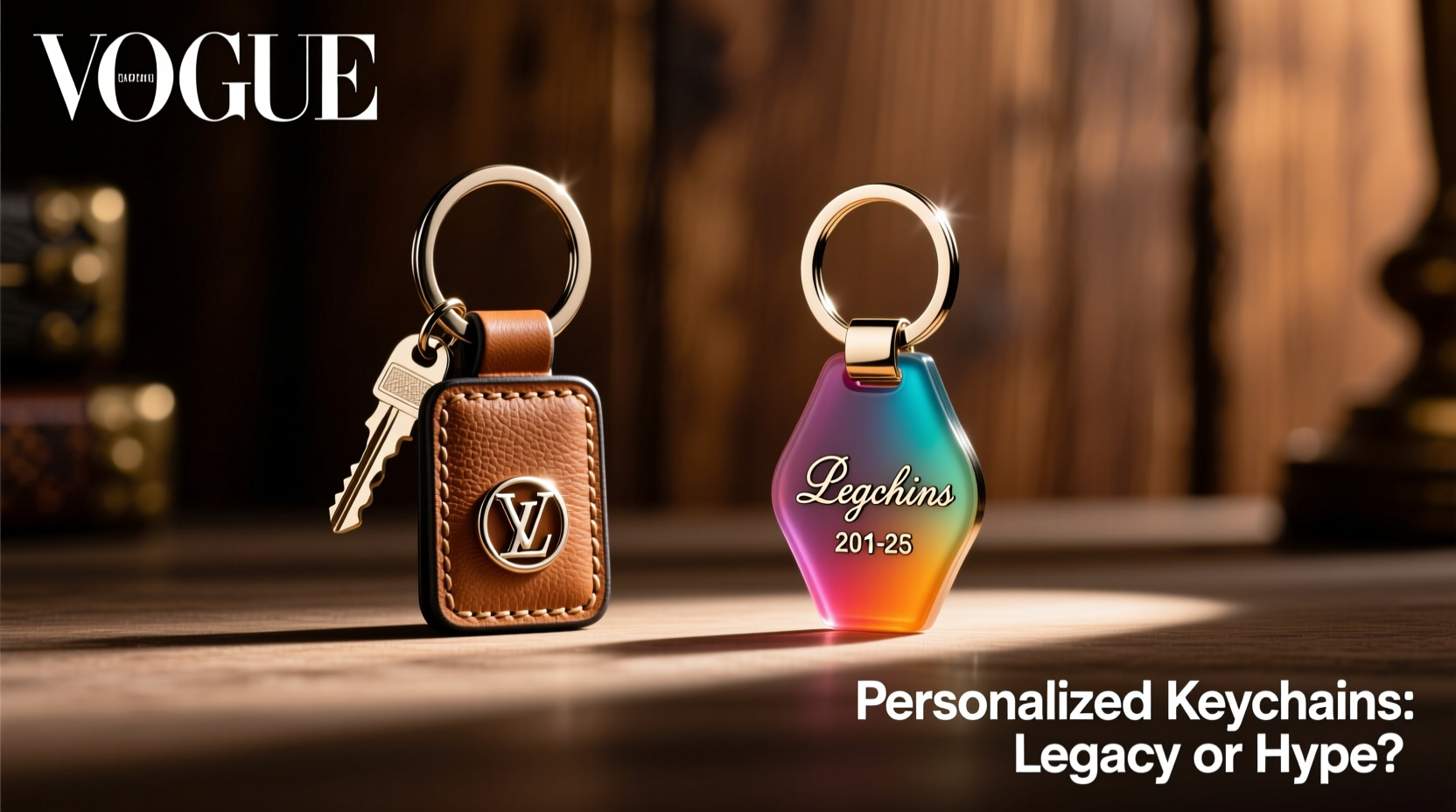
Bag charms began as subtle embellishments—a tassel here, a branded tag there. Today, they’ve transformed into bold expressions of personality. Major fashion houses like Gucci, Louis Vuitton, and Prada now offer charms priced upwards of $300, often designed to dangle prominently from high-end handbags.
These accessories are not meant to be practical. They don’t hold keys or help locate your bag in a crowded space. Instead, they’re crafted for visibility—designed to catch light, swing with movement, and signal taste. In the age of Instagram and TikTok, where visual storytelling reigns supreme, bag charms thrive as digital eye candy.
“Bag charms are less about function and more about narrative. They tell people who you are—or who you want to be.” — Lila Nguyen, Fashion Anthropologist at Parsons School of Design
This shift reflects broader cultural changes. Consumers increasingly view accessories as extensions of self-expression rather than mere tools. A charm shaped like a vintage camera might nod to a love of film photography; a celestial-themed pendant could reflect spiritual interests. The symbolism outweighs the utility.
Personalized Keychains: Still Relevant or Fading Out?
While bag charms rise in popularity, personalized keychains haven’t disappeared—they’ve adapted. Once seen primarily as promotional giveaways or sentimental gifts (engraved names, wedding dates, pet silhouettes), they’ve found new life through customization platforms like Etsy and Amazon Handmade.
Modern keychains blend sentiment with smart design. You’ll find minimalist titanium tags laser-engraved with coordinates of meaningful locations, leather fobs stamped with initials, or even NFC-enabled trackers embedded inside metal casings. These aren’t just identifiers—they’re compact tech hubs and emotional anchors.
Unlike bag charms, keychains remain rooted in necessity. Keys still need organizing. People still lose them. And in emergencies, a well-labeled keychain can make all the difference. Their enduring utility ensures they won’t vanish entirely, even as trends shift.
Key Differences Between Bag Charms and Personalized Keychains
| Feature | Bag Charms | Personalized Keychains |
|---|---|---|
| Purpose | Decorative, expressive | Functional, organizational |
| Average Price | $50–$500+ | $10–$75 |
| Attachment Point | Handbag zipper, strap, D-ring | Keyring, carabiner, lanyard |
| Customization Focus | Design, brand alignment | Name, date, message, location |
| Lifespan | Seasonal/trend-dependent | Durable, long-term use |
Real-World Example: Emma’s Transition from Keychains to Charms
Emma Rodriguez, a 29-year-old graphic designer based in Austin, used to collect personalized keychains. Her favorites included one engraved with her rescue dog’s name and another with GPS coordinates of her first solo trip abroad. Over time, though, she noticed fewer friends carrying traditional keyrings.
“I switched to using a tracker like Tile inside a sleek aluminum casing,” she explains. “It does the job without being flashy. But I started wanting something visible—something fun on my tote.”
She purchased a neon-green acrylic banana charm during a trip to Tokyo. “It gets compliments every time I take my bag out. It’s silly, but it makes me smile.” For Emma, the charm isn’t replacing her keychain—it’s coexisting. She keeps her minimalist key organizer tucked away, while the charm takes center stage.
This dual-accessory approach is becoming common among urban professionals and creatives who value both efficiency and expression.
How to Decide Which One Fits Your Lifestyle
Choosing between a bag charm and a personalized keychain isn't about following trends—it's about aligning with how you live. Consider these factors before investing:
- Daily Routine: If you frequently switch bags or carry minimal items, a charm adds flair without clutter. If you juggle multiple keys, a personalized fob helps keep things sorted.
- Budget: Bag charms from designer labels can cost as much as entry-level handbags. Keychains generally offer better value per use.
- Emotional Connection: Want to honor a memory? A custom-engraved keychain may mean more than a trendy trinket.
- Visibility Needs: Do you often misplace your keys? A bright, chunky keychain improves retrieval speed. Bag charms do nothing for this.
Checklist: Choosing the Right Accessory for You
- ☐ Assess how often you lose or mix up keys
- ☐ Determine your primary bag type (backpack, tote, crossbody)
- ☐ Decide whether you prioritize looks or function
- ☐ Set a budget range ($15–$50 vs. $100+)
- ☐ Think about longevity—will this feel dated in six months?
- ☐ Consider gifting potential—keychains tend to be more universally appreciated
FAQ: Common Questions About Bag Charms and Keychains
Are bag charms worth the price?
For some, yes—if they bring joy or enhance confidence. However, most lack functional ROI. View them as wearable art, not investments. Resale value is typically low unless they’re limited editions tied to major collections.
Can I personalize a bag charm?
Some brands and artisans offer semi-custom options—like choosing colors or adding initials—but full personalization is rare due to design constraints. Engraving is usually reserved for keychains.
Do bag charms damage handbags?
Potentially. Heavy or abrasive charms can scratch delicate leathers or strain stitching over time. Always check attachment methods and opt for padded clips or soft loops when possible.
The Future of Accessories: Coexistence, Not Replacement
Rather than declaring keychains “over,” it’s more accurate to say their role is evolving. Like watches post-smartphone, they’ve transitioned from essential tools to curated objects with emotional or aesthetic weight. Meanwhile, bag charms have carved out a niche in fashion-forward spaces where visibility matters more than practicality.
The future likely holds a hybrid model: tech-integrated key organizers hidden from view, paired with rotating decorative charms that change with seasons or moods. Sustainability concerns may also push consumers toward multifunctional pieces—charms that double as bottle openers, USB drives, or emergency whistles.
“We’re seeing a split between invisible utility and visible identity. Both are valid. The market supports both.” — Marcus Lin, Product Strategist at Wearable Futures Lab
Conclusion: Make the Choice That Serves You—Not the Hype
Trends come and go, but personal preference endures. Whether you lean toward the whimsy of a rainbow-shaped bag charm or the quiet reliability of a monogrammed key fob, what matters most is how the accessory fits into your daily rhythm.
Don’t discard your keychains because influencers say they’re outdated. Likewise, don’t ignore bag charms if they spark joy in your routine. The best accessory is the one you reach for without thinking—the one that feels like *you*.




 浙公网安备
33010002000092号
浙公网安备
33010002000092号 浙B2-20120091-4
Comments
No comments yet. Why don't you start the discussion?