
At first glance, a keychain is a keychain — small, portable, and designed to hold keys. But when it comes to choosing between a bag keychain and a car keychain, subtle yet significant differences emerge. While both serve the basic purpose of organizing and carrying keys, their construction, intended use, and long-term performance vary in ways that matter more than most people realize. Understanding these distinctions helps avoid frustration, premature wear, or even security risks.
Whether you're replacing a lost keychain, upgrading your everyday carry, or simply curious about functionality, this guide breaks down what sets bag and car keychains apart — and whether you can truly swap one for the other without consequences.
Design and Intended Use: Purpose Shapes Form
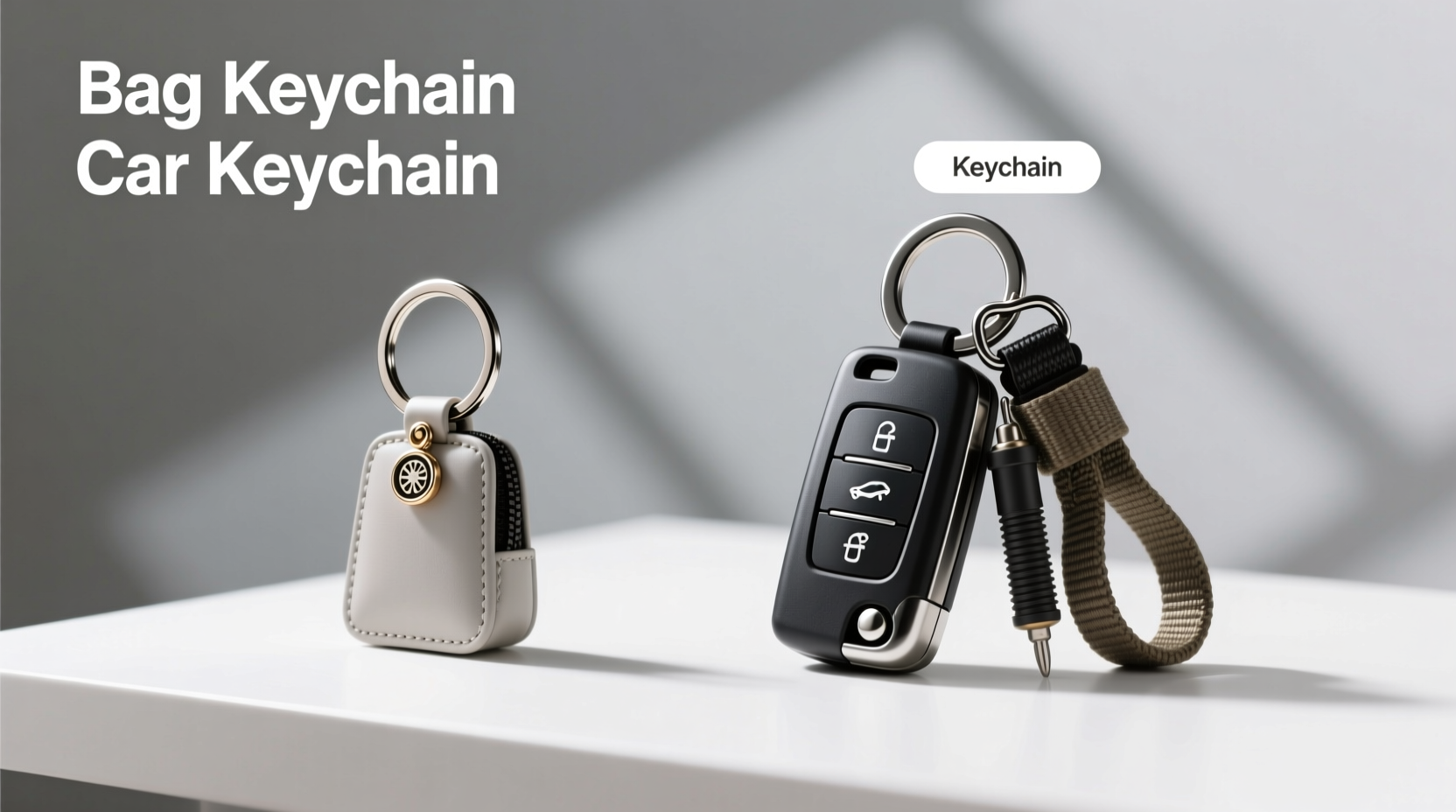
The primary difference between a bag keychain and a car keychain lies in their intended environment and usage frequency. A bag keychain is typically designed for light-duty organization — holding house keys, USB drives, or small accessories clipped to a purse, backpack, or tote. These are often decorative, lightweight, and made from materials like fabric, plastic, or thin metal alloys.
In contrast, a car keychain is built for repeated, forceful use. It must endure daily exposure to weather, constant jostling in pockets or bags, and the mechanical stress of inserting and removing keys from locks or ignition systems. As such, car keychains are generally sturdier, with reinforced rings, thicker clasps, and materials engineered for impact resistance — commonly stainless steel, aerospace-grade aluminum, or high-density polymers.
“Car keychains undergo significantly more mechanical stress than those used solely for fashion or light utility. The engineering reflects that.” — Daniel Reeves, Industrial Designer at KeyForge Systems
Material Durability: What Holds Up Over Time?
Durability isn’t just about looks — it’s about longevity under real-world conditions. To illustrate how materials differ across use cases, consider the following comparison:
| Feature | Bag Keychain | Car Keychain |
|---|---|---|
| Primary Material | Fabric, plastic, decorative metal | Stainless steel, hardened alloy, rubberized coating |
| Key Ring Strength | Thin gauge (2–3mm), prone to bending | Heavy-duty (4–6mm), resistant to twisting |
| Weather Resistance | Limited; may corrode or degrade | High; sealed joints, rust-resistant finishes |
| Weight Capacity | Up to 0.5 lbs (225g) | 1+ lbs (450g+) safely supported |
| Lifespan (Average) | 6–12 months with regular use | 2–5 years depending on model |
Using a delicate bag keychain for your car keys might work initially, but over time, the cumulative strain leads to bent rings, broken connectors, or even total failure. In cold climates, moisture exposure accelerates corrosion in lower-grade metals. Meanwhile, a heavy-duty car keychain on a handbag may feel unnecessarily bulky and could scratch delicate linings or surfaces.
Functional Features: Beyond Just Holding Keys
Modern car keychains often include features tailored to vehicle owners: bottle openers, tire tread gauges, LED lights, or integrated fob protectors. Some even have built-in trackers using Bluetooth or GPS technology. These additions reflect the evolving role of the car keychain as both a tool and a safeguard.
Bag keychains, on the other hand, lean toward personalization. Engraved initials, charm attachments, or seasonal designs make them ideal for expressing style. They’re also more likely to integrate with fashion-forward accessories like wristlets or lanyards. However, these extras rarely offer mechanical utility and can become liabilities if they snag or break off during use.
Attempting to use a highly decorated bag keychain for car keys increases the risk of damage not only to the keychain itself but potentially to the vehicle’s interior — imagine a dangling pendant scratching your dashboard every time you start the engine.
Real-World Example: When the Wrong Choice Caused Problems
Sarah, a graphic designer from Portland, attached her embroidered fabric keychain — originally meant for her studio keys — to her car fob after losing the original ring. Within three weeks, the stitching unraveled while she was locking her car late at night. The keys dropped into a storm drain, requiring a tow and an expensive replacement.
“I didn’t think a little fabric loop could fail so dramatically,” she said. “But once I realized how much force I actually apply pulling keys out of my pocket, it made sense. Now I keep my cute ones for my tote, and my car gets something solid.”
This scenario isn't uncommon. Emergency roadside services report a steady number of incidents tied to failed key attachments — especially among users who prioritize appearance over structural integrity.
Can You Use Either Interchangeably? A Practical Checklist
If you're considering cross-using keychains, ask yourself the following before making a switch:
- Is the key ring thick enough? If it bends easily between your fingers, it’s too weak for car use.
- Are keys exposed to weather? Rain, snow, or humidity demands corrosion-resistant materials.
- How many keys are attached? More than three standard keys may exceed the load limit of a bag-style chain.
- Do you frequently drop or toss your keys? Impact resistance becomes critical in active lifestyles.
- Is security a concern? Car keychains often feature locking mechanisms to prevent accidental detachment.
Step-by-Step: Choosing the Right Keychain for Your Needs
- Assess your primary use case: Daily driver? Occasional commuter? Urban walker? This determines stress levels.
- Inventory your keys: Count them and note weight. Heavy bundles need stronger support.
- Evaluate your environment: Do you walk through rain, store keys in humid areas, or carry them loosely in a large bag?
- Select material accordingly: Stainless steel or titanium for cars; lighter composites acceptable for bags.
- Test the mechanism: Open and close the clasp 10 times. Does it feel smooth and secure? Any wobble indicates poor craftsmanship.
- Consider future needs: Will you add a tracker, badge, or additional accessory later? Leave room for expansion.
Frequently Asked Questions
Can I use a car keychain on my purse or backpack?
Yes, absolutely. A car keychain will function perfectly on a bag, though it may feel heavier or look more utilitarian. The added durability can be a benefit if you carry heavy loads or move through rugged environments.
Are silicone or rubber keychains safe for cars?
High-quality silicone or rubber-coated keychains are increasingly popular for vehicles due to their grip, noise reduction, and shock absorption. Just ensure the internal metal ring is made from rust-resistant material like stainless steel.
Do keychain materials affect key fobs or electronics?
Metal keychains generally don’t interfere with key fob signals unless they completely enclose the device in a Faraday cage-like structure. However, excessive vibration from loose chains may contribute to internal wear over years of use.
Final Thoughts: Function First, Fashion Second
The short answer is yes — you *can* technically use a bag keychain for car keys or vice versa. But should you? Often, the answer is no. While interchangeability seems convenient, mismatching form and function leads to avoidable failures, safety concerns, and unnecessary replacements.
Reserve decorative or lightweight keychains for low-stress roles: holding apartment keys, luggage tags, or office access cards. Reserve robust, automotive-grade models for anything involving vehicles, frequent access, or outdoor exposure.
By aligning your choice with actual usage patterns, you gain peace of mind, reduce clutter from broken parts, and extend the life of both your keys and accessories.




 浙公网安备
33010002000092号
浙公网安备
33010002000092号 浙B2-20120091-4
Comments
No comments yet. Why don't you start the discussion?