
For those who toss and turn through sweltering nights, bedding isn’t just about luxury—it’s a critical factor in sleep quality. If you identify as a hot sleeper, you’ve likely experimented with lighter pajamas, adjusted your thermostat, or even invested in cooling pillows. But one of the most impactful changes you can make lies beneath you: your sheets.
The debate between bamboo and Egyptian cotton sheets has intensified in recent years, especially among people seeking breathable, temperature-regulating fabrics. Both materials are praised for softness and durability, but when it comes to staying cool at night, they perform very differently. Understanding the science behind their construction, fiber properties, and real-world performance can help you make an informed decision—especially if your comfort hinges on keeping your body temperature in check.
Understanding Fabric Performance for Hot Sleepers
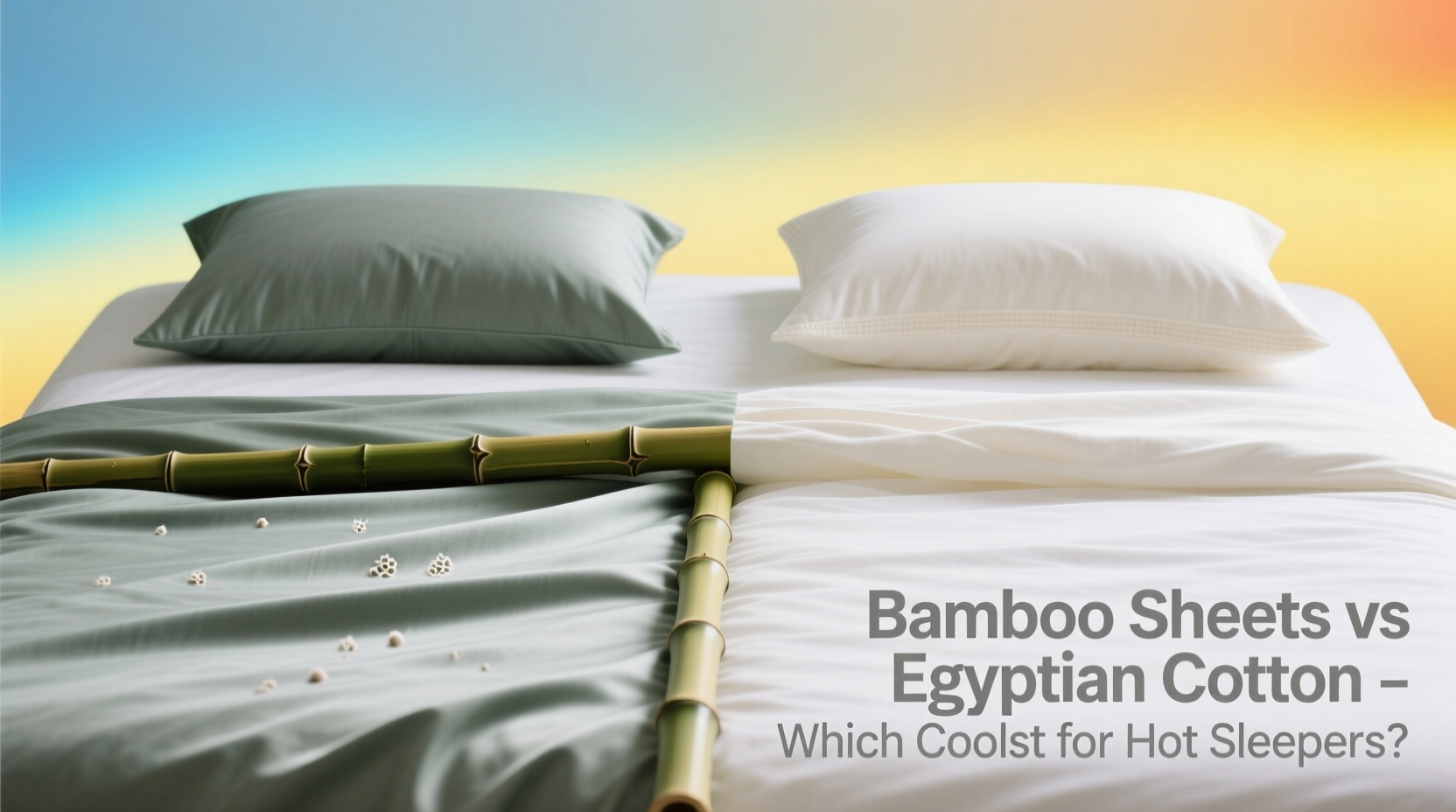
Hot sleepers generate more body heat during sleep or struggle to dissipate it efficiently. This can be due to medical conditions, hormonal fluctuations, room temperature, or even mattress design. The right bed linens can mitigate overheating by enhancing airflow, absorbing moisture, and minimizing heat retention.
Fabric composition directly influences three key factors:
- Thermal conductivity – How quickly heat moves away from the skin.
- Moisture-wicking – The ability to pull sweat away from the body and evaporate it.
- Breathability – Airflow through the fabric structure to prevent heat buildup.
Natural fibers like cotton and bamboo generally outperform synthetics in breathability, but not all natural fibers are equal. Egyptian cotton is renowned for its long staple fibers and silky texture, while bamboo—often processed into viscose or lyocell—offers superior moisture management and a silk-like drape.
How Bamboo Sheets Keep You Cool
Bamboo-derived sheets, typically made from bamboo viscose or bamboo lyocell, have gained popularity in the sleep wellness market for their eco-friendly sourcing and exceptional cooling capabilities. Unlike traditional cotton, bamboo grows rapidly without pesticides and requires significantly less water.
When processed into fabric, bamboo fibers naturally contain micro-gaps and grooves that enhance air circulation. These microscopic channels allow heat to escape and promote continuous airflow across the skin surface. Additionally, bamboo fabric can absorb up to 40% more moisture than cotton, making it highly effective at managing night sweats and humidity.
A 2020 study published in *Textile Research Journal* found that bamboo viscose exhibited lower thermal resistance compared to combed cotton, meaning it retains less heat. This makes it particularly suitable for individuals who experience frequent nighttime flushing or live in humid climates.
Beyond temperature regulation, bamboo sheets tend to feel cooler to the touch due to their smooth fiber structure. Many users report an immediate sensation of relief upon contact, similar to sleeping on sateen but with greater breathability. They also resist odor-causing bacteria thanks to a natural antimicrobial property known as “bamboo kun,” which persists even after multiple washes.
Egyptian Cotton: Luxury With Limitations for Heat
Egyptian cotton remains a gold standard in high-end bedding, prized for its long-staple fibers that produce strong, soft, and lustrous yarns. When tightly woven into percale or sateen finishes, these sheets offer a buttery hand-feel and excellent durability—often lasting five years or more with proper care.
However, despite its reputation, Egyptian cotton has inherent limitations for hot sleepers. While it is breathable compared to polyester blends, it doesn’t wick moisture as effectively as bamboo. Once saturated with sweat, cotton holds onto dampness longer, creating a clammy sensation that disrupts sleep.
Additionally, higher thread count Egyptian cotton sheets (especially above 600 TC) may reduce airflow due to denser weaves. A common misconception is that higher thread count equals better quality—but beyond a certain point, tight weaving compromises breathability. For hot sleepers, a 300–400 thread count percale weave offers better ventilation than a 800-thread-count sateen.
“While Egyptian cotton provides unmatched softness and longevity, its moisture retention can be a drawback for individuals prone to overheating.” — Dr. Lena Patel, Sleep Wellness Specialist
Another consideration is environmental impact. Although Egyptian cotton is natural, its cultivation is water-intensive and often involves chemical fertilizers. In contrast, bamboo regenerates quickly and sequesters carbon more efficiently, making it a more sustainable choice overall.
Direct Comparison: Bamboo vs Egyptian Cotton
To clarify the differences, here's a side-by-side comparison of key performance metrics relevant to hot sleepers:
| Feature | Bamboo Sheets | Egyptian Cotton Sheets |
|---|---|---|
| Cooling Performance | Excellent – naturally thermoregulating and quick-drying | Good – breathable but retains more heat |
| Moisture Wicking | Superior – absorbs and evaporates sweat faster | Moderate – absorbs well but dries slowly |
| Softness | Silky-smooth, cool-to-the-touch feel | Luxuriously soft, especially with sateen finish |
| Durability | High – resistant to pilling and wear (especially lyocell) | Very high – long-lasting with proper care |
| Thread Count Relevance | Less critical – performance depends on fiber, not density | Important – optimal range 300–500 for balance of softness and breathability |
| Eco-Friendliness | High – fast-growing, low-water crop | Moderate – water-intensive farming practices |
| Hypoallergenic Properties | Yes – naturally antibacterial and resistant to dust mites | No – unless specially treated |
This table illustrates that while both fabrics have strengths, bamboo clearly outperforms Egyptian cotton in categories most crucial to hot sleepers: cooling, moisture management, and hygiene.
Real-World Experience: A Case Study
Sarah M., a 42-year-old nurse from Miami, struggled with disrupted sleep due to night sweats exacerbated by her rotating shift schedule. She had used high-end Egyptian cotton sateen sheets for years, drawn by their softness and hotel-like aesthetic. However, she frequently woke up damp and uncomfortable, especially during summer months.
After reading about bamboo’s cooling properties, she switched to a set of OEKO-TEX certified bamboo lyocell sheets. Within two nights, she noticed a significant difference. “It wasn’t just that I was sweating less—it felt like the sheets were actively pulling the heat away from my body,” she said. “Even on nights when I forgot to turn on the AC, I stayed dry and didn’t wake up sticky.”
Over six months, Sarah reported improved sleep efficiency and fewer awakenings. Her partner, who previously avoided the bed due to perceived “cold spots” from the bamboo sheets, also adapted quickly and now prefers them year-round.
This case highlights how material change alone—not mattress, pillow, or room adjustments—can transform sleep quality for heat-sensitive individuals.
Choosing the Right Option: A Practical Checklist
Selecting the ideal sheet for your needs goes beyond marketing claims. Use this checklist to guide your decision:
- ✅ Are you a hot sleeper or experience night sweats? → Lean toward bamboo.
- ✅ Do you prioritize a crisp, cool feel over plush softness? → Choose bamboo percale or lyocell.
- ✅ Do you value sustainability and low environmental impact? → Bamboo scores higher.
- ✅ Do you prefer the classic luxury feel of hotel-style bedding? → Egyptian cotton sateen may suit you better.
- ✅ Are you sensitive to odors or allergens? → Bamboo’s natural antimicrobial traits are advantageous.
- ✅ Do you want low-maintenance, durable sheets? → Both perform well, but bamboo resists staining and fading longer.
Keep in mind that personal preference plays a role. Some people enjoy the heavier drape of cotton, while others find it suffocating. Testing a single fitted sheet before committing to a full set can help determine compatibility.
Proper Care Tips to Maximize Cooling Performance
No matter which fabric you choose, maintenance affects performance. Over time, residue from detergents, body oils, and minerals in hard water can clog fibers, reducing breathability and wicking ability.
Follow this step-by-step care routine to preserve cooling efficiency:
- Wash in cold water – High temperatures can damage fibers and cause shrinkage, especially in bamboo.
- Use mild, eco-friendly detergent – Avoid bleach, fabric softeners, and optical brighteners that coat fibers.
- Tumble dry on low or air dry – Excessive heat degrades elasticity and softness.
- Rotate sheet sets weekly – Allows fibers to recover and reduces wear.
- Deep clean monthly – Soak in warm water with ½ cup white vinegar to remove buildup.
Frequently Asked Questions
Do bamboo sheets get softer over time?
Yes. Unlike cotton, which may pill or thin with washing, bamboo sheets often become even softer after several cycles. Their fibers relax and align, enhancing the silky texture without sacrificing strength.
Can I use bamboo sheets in winter?
Absolutely. While bamboo excels in cooling, it’s thermally adaptive. It won’t feel cold like linen in winter but instead regulates temperature to prevent overheating under blankets. Many users find them comfortable year-round.
Are all bamboo sheets the same?
No. Quality varies widely. Opt for products labeled as “bamboo lyocell” (like TENCEL™) or “mechanically processed bamboo” for eco-friendliness and durability. Avoid blends with polyester, which diminish breathability.
Final Recommendation
For hot sleepers, the evidence strongly favors bamboo sheets over Egyptian cotton. Superior moisture management, enhanced breathability, and natural cooling properties make bamboo the smarter functional choice. While Egyptian cotton remains a symbol of luxury and craftsmanship, its limitations in heat dissipation and slower drying times make it less ideal for those battling night sweats or living in warm environments.
That said, the best sheets are the ones you’ll actually use consistently. Consider starting with a single bamboo fitted sheet or a sample swatch to test comfort. Look for certifications like OEKO-TEX, FSC, or GOTS to ensure ethical production and absence of harmful chemicals.
If you're tired of waking up drenched and restless, don’t overlook the power of your linens. Switching to bamboo could be the simplest, most effective upgrade you make to your sleep environment this year.




 浙公网安备
33010002000092号
浙公网安备
33010002000092号 浙B2-20120091-4
Comments
No comments yet. Why don't you start the discussion?