
In recent months, social media feeds, fashion editorials, and celebrity red carpet appearances have been flooded with a striking accessory: the bangle. Once considered traditional or reserved for ceremonial wear, bangles are now front and center in mainstream fashion. But what’s driving this sudden revival? And how do they differ from their close cousin—the bracelet? The conversation around bangles isn’t just about aesthetics; it’s a blend of cultural reclamation, sustainable fashion, and personal expression. As consumers move toward bold, statement-making jewelry, bangles are stepping into the spotlight—again.
The Resurgence of Bangles: A Cultural and Fashion Movement
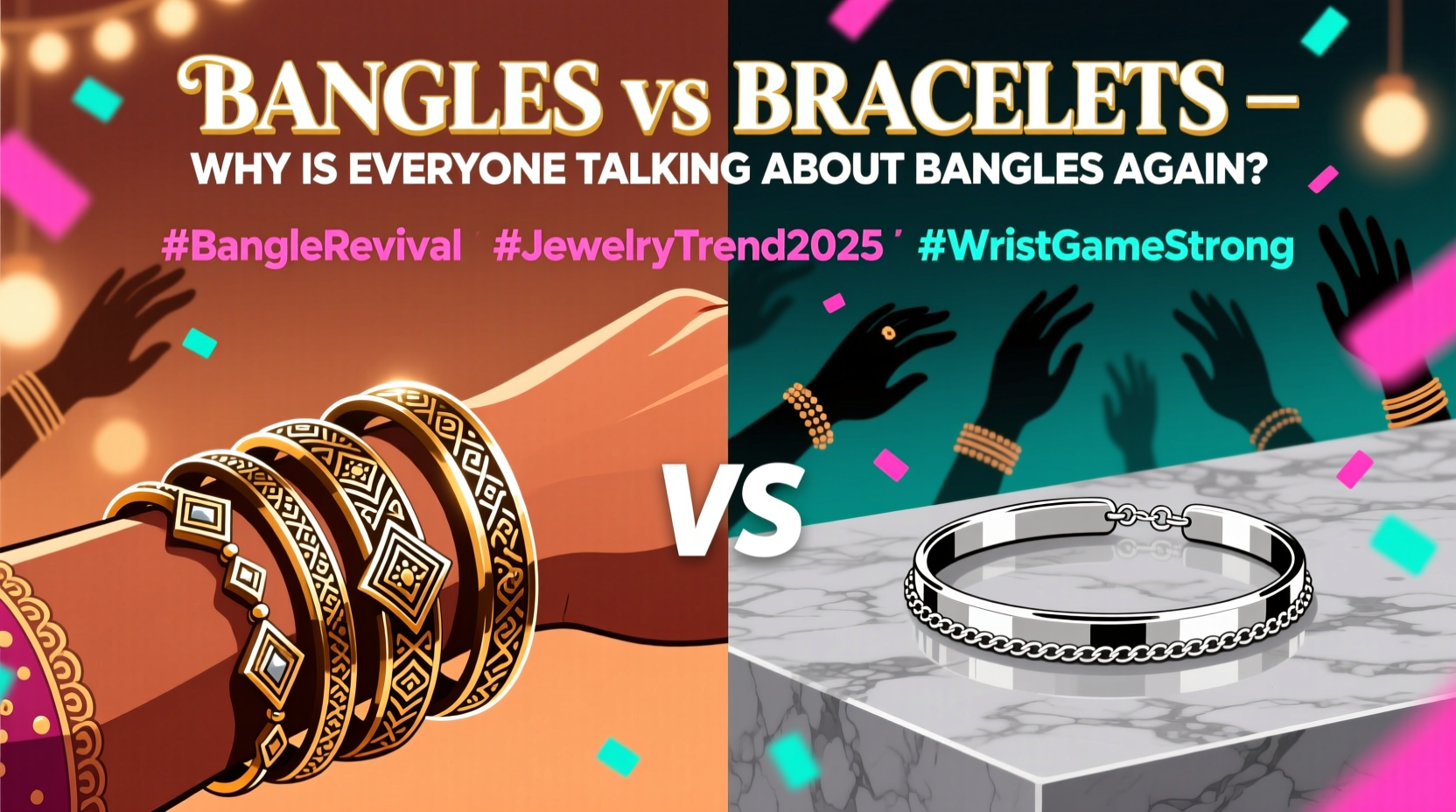
The renewed interest in bangles isn't accidental. Designers, influencers, and everyday wearers are embracing them as symbols of heritage, identity, and empowerment. Unlike bracelets, which often feature clasps, hinges, or flexible chains, bangles are rigid, circular bands typically slipped over the hand. Their durability and symbolic weight—especially in South Asian, Middle Eastern, and African cultures—make them more than mere adornments.
One key driver of this trend is the growing appreciation for cultural authenticity in fashion. Younger generations are reclaiming traditional pieces once dismissed as “too ethnic” or “old-fashioned.” Celebrities like Mindy Kaling, Priyanka Chopra Jonas, and Rihanna have normalized wearing stacked gold or lacquered bangles in high-profile settings, bridging tradition with modernity.
“Bangles carry memory. When someone wears them, they’re not just accessorizing—they’re honoring lineage, ritual, and resilience.” — Dr. Leena Mehta, Cultural Anthropologist & Jewelry Historian
Bangles vs Bracelets: Understanding the Key Differences
While both bangles and bracelets encircle the wrist, their construction, symbolism, and wearability differ significantly. Understanding these distinctions helps explain why bangles are gaining unique traction in today’s market.
| Feature | Bangles | Bracelets |
|---|---|---|
| Structure | Rigid, solid ring; must be slipped over the hand | Flexible; often has a clasp, hinge, or chain |
| Mobility | Fixed position on wrist; may make noise when moving | Can slide up/down; generally silent |
| Cultural Significance | Strong ties to marriage, fertility, religious rites (e.g., mangalsutra, chooda) | More decorative; fewer ritual associations |
| Stacking Potential | High—often worn in multiples for visual impact | Moderate—can stack but limited by clasps and bulk |
| Durability | Very durable; less prone to breakage | Vulnerable at clasp points or hinges |
Why Now? The Forces Behind the Bangles Comeback
Several converging trends have created the perfect environment for bangles to return to prominence:
- Nostalgia and Heritage Revival: Gen Z and Millennials are increasingly drawn to heirloom pieces and ancestral traditions. Wearing bangles connects them to family history and cultural roots.
- Sustainable Fashion: Bangles, especially those made from metal, wood, or glass, are long-lasting and often passed down. This aligns with the slow fashion movement.
- Statement Jewelry Trend: Minimalist jewelry has given way to bold, expressive accessories. Bangles offer volume, sound, and visual rhythm that bracelets often lack.
- Inclusivity in Design: Modern brands are creating bangles in diverse materials, sizes, and finishes—making them accessible beyond traditional communities.
- Sound as Identity: The gentle clink of bangles has become part of personal branding. Influencers note that the sound adds sensory richness to video content.
Mini Case Study: Riya’s Wedding Journey
Riya, a 28-year-old software engineer based in Toronto, avoided wearing traditional Indian jewelry for years, fearing it would mark her as “too different” in professional spaces. After her engagement, she worked with a local artisan to design a custom set of rose-gold bangles embedded with tiny diamonds—modern enough for daily wear, meaningful enough for her wedding day.
She posted her “getting ready” video on Instagram, showing the process of stacking her bangles while explaining their significance. The post went viral, amassing over 200K views. “I realized my culture wasn’t something to hide,” she said. “It was my strength. Now I wear bangles even to meetings—and people ask about them.” Her story reflects a broader shift: bangles are no longer confined to rituals; they’re tools of visibility and pride.
How to Style Bangles in 2024: A Practical Guide
Wearing bangles confidently requires understanding proportion, material harmony, and occasion. Here’s a step-by-step approach to integrating them into your wardrobe:
- Assess Your Wrist Size: Measure your hand at the widest point (usually across the knuckles). Bangles need to slip over your hand comfortably without forcing.
- Choose a Focal Point: Decide if your outfit will highlight your neckline, hands, or wrists. Avoid competing statement pieces.
- Start with a Base Layer: Pick one or two neutral-toned bangles (e.g., plain gold or matte black) as anchors.
- Add Texture and Color: Introduce lacquered, engraved, or gemstone-studded bangles for contrast.
- Balance the Stack: Mix widths—pair thick bangles with thin ones. Odd numbers (3, 5, 7) often look more dynamic.
- Test Mobility: Move your hands naturally. If bangles pinch or catch on sleeves, adjust the order or remove one.
- Consider the Occasion: Delicate glass bangles suit daytime; metallic stacks elevate evening wear.
Checklist: Building Your First Bangles Collection
- ✅ Measure your hand width to determine correct bangle size
- ✅ Select one classic metal bangle (gold, silver, or rose gold)
- ✅ Add one colored or textured bangle (lacquer, enamel, or stone-inlay)
- ✅ Include one culturally meaningful piece (if desired—e.g., a family heirloom)
- ✅ Test the stack for comfort and sound level
- ✅ Store bangles upright or in padded slots to prevent scratches
- ✅ Clean metal bangles monthly with a polishing cloth
Frequently Asked Questions
Can bangles be worn every day?
Absolutely. Modern bangles made from durable materials like stainless steel, titanium, or coated alloys are ideal for daily wear. Just avoid exposing delicate lacquered or glass bangles to water or impact.
Are bangles only for certain cultures?
No. While bangles hold deep significance in many cultures—including Indian, Egyptian, and Native American—they are now embraced globally as versatile fashion items. Respectful appreciation matters, but ownership isn’t restricted.
How do I stop my bangles from making noise?
If the clinking bothers you, try using anti-slip silicone strips inside the bangles, wear fewer pieces, or opt for muted materials like wood or fabric-covered bangles.
Final Thoughts: Why This Moment Belongs to the Bangles
The comeback of bangles isn’t a fleeting trend—it’s a cultural recalibration. In an era where authenticity, sustainability, and self-expression dominate consumer values, bangles offer more than beauty. They offer resonance. Their rigidity symbolizes strength; their sound, presence; their stackability, layers of identity.
As fashion continues to evolve, the distinction between bangles and bracelets will remain important—not as competition, but as complementary forms of storytelling. Bracelets whisper elegance; bangles announce arrival. And right now, the world is listening.




 浙公网安备
33010002000092号
浙公网安备
33010002000092号 浙B2-20120091-4
Comments
No comments yet. Why don't you start the discussion?