
Winter dressing isn’t just about bundling up—it’s about strategy. The right combination of clothing layers keeps you warm, dry, and mobile, even in freezing conditions. At the core of this system are two essential components: base layers and outerwear. But if you're trying to simplify your wardrobe or save money, you might wonder: can you really get by with just one? The short answer is sometimes—but it depends on where you live, what you’re doing, and how cold it gets.
Understanding the distinct roles of base layers and outerwear helps clarify why both exist—and when it’s safe to compromise.
The Role of Base Layers: Managing Moisture, Not Just Heat
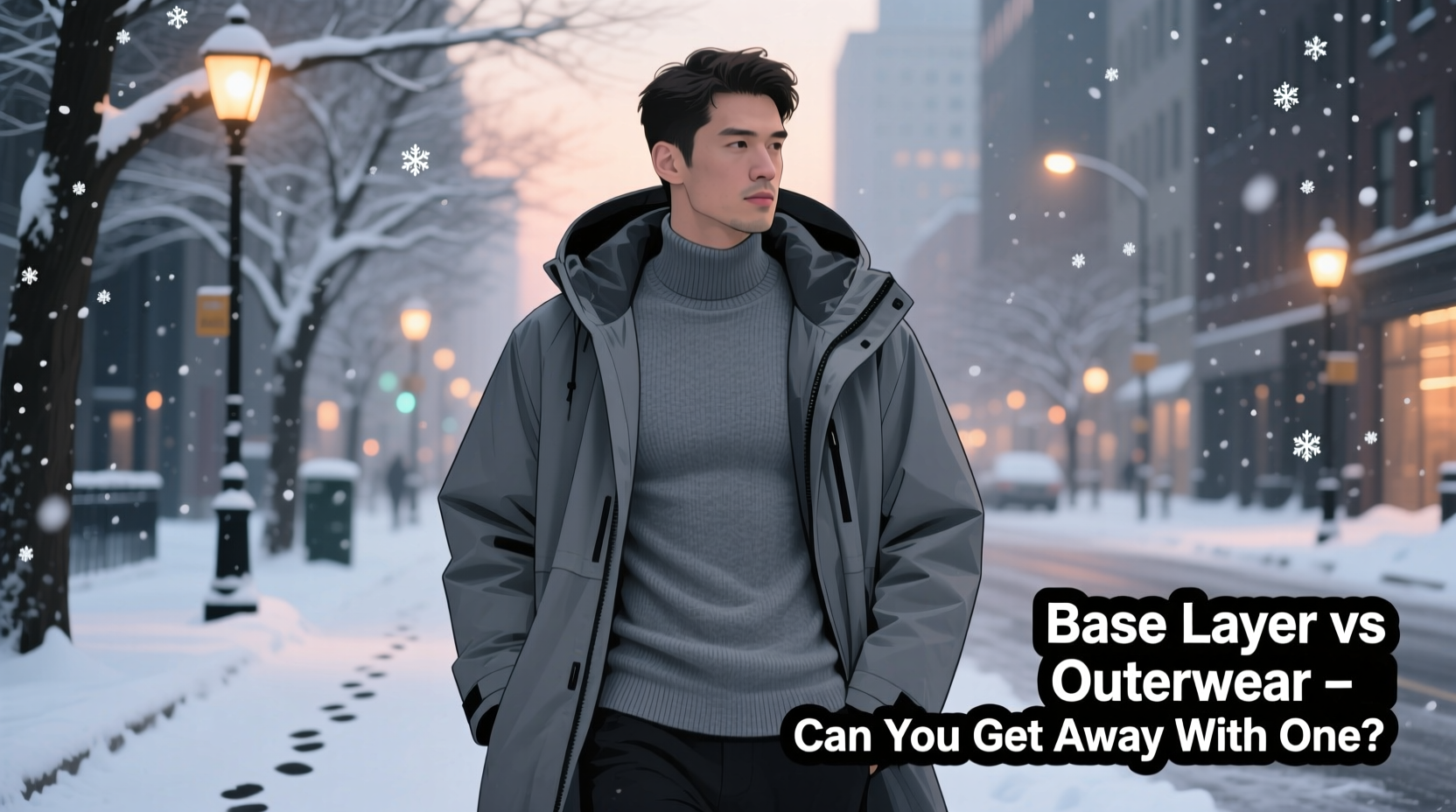
A base layer sits directly against your skin. Its primary job isn’t insulation; it’s moisture management. When you move—whether walking to work, shoveling snow, or hiking—your body produces sweat. In cold weather, that moisture can quickly turn from a minor inconvenience into a danger if it soaks into your clothes and cools against your skin.
High-quality base layers are made from materials like merino wool or synthetic fabrics such as polyester blends. These wick moisture away from the skin, allowing it to evaporate before chilling you. Cotton, while soft, is a poor choice because it absorbs moisture and holds it, increasing the risk of hypothermia in extreme cold.
Base layers come in different weights: lightweight for active use in cool conditions, midweight for moderate activity in cold weather, and heavyweight for low movement in frigid temperatures. They form the foundation of the three-layer system—base, mid, and outer—and skipping them means losing control over one of the biggest threats in winter: dampness.
Outerwear: Your Shield Against the Elements
If the base layer manages internal conditions, outerwear handles external ones. A good winter jacket or shell protects against wind, rain, snow, and abrasion. Most technical outerwear is designed to be waterproof, windproof, and breathable—allowing vapor (sweat) to escape while blocking outside moisture.
Common outerwear includes insulated parkas, hardshells, softshells, and hybrid designs. Insulated jackets provide warmth but may lack breathability during high-exertion activities. Hardshells offer superior protection but usually require mid-layers for warmth. Softshells balance flexibility and light weather resistance but aren’t ideal in heavy storms.
Without outerwear, even the best base layer leaves you exposed to wind chill and precipitation. And once wet, no amount of body heat can compensate for the rapid heat loss caused by damp clothing.
Comparing Functions: What Happens If You Skip One?
| Layer | Primary Function | Risks of Skipping | When It Might Be Acceptable |
|---|---|---|---|
| Base Layer | Moisture wicking, temperature regulation | Sweat accumulation, chilling, odor buildup | Mild winter days, short commutes, indoor-heavy routines |
| Outerwear | Wind/snow/rain protection, insulation retention | Exposure to elements, rapid heat loss, wet clothing | Indoor environments, heated vehicles, urban errands in light cold |
This comparison shows that neither layer fully replaces the other. Each addresses a different environmental challenge. However, context matters. In milder climates or controlled settings, compromises become possible.
Real-World Example: Urban Commuter in Portland, OR
Consider Sarah, who lives in Portland, where winters average 35–45°F (2–7°C), with frequent drizzle but rarely sub-zero temps. She walks 10 minutes to her office, spends most of the day indoors, and drives home. On many days, she wears a cotton sweater and a water-resistant trench coat. She skips a dedicated base layer and relies on her outerwear for both protection and warmth.
In this case, it works—because her exposure is brief, her exertion is low, and indoor heating reduces cumulative stress. But if Sarah took up winter hiking or faced longer outdoor exposure, that same setup would fail quickly. Sweat would build under her cotton sweater, and without a wicking base layer, she’d feel clammy and chilled by afternoon.
“People underestimate how much activity affects thermal comfort. Even walking briskly changes your microclimate.” — Dr. Lena Torres, Outdoor Apparel Researcher, University of Colorado
When Can You Get Away With Just One?
There are specific scenarios where relying solely on either base layers or outerwear may suffice—but they come with caveats.
Using Only Outerwear (No Base Layer)
- Short outdoor exposure: Running errands, commuting briefly.
- Low physical activity: Sitting at an outdoor event, standing at a bus stop.
- Moderate temperatures: Above 35°F (2°C) with dry conditions.
In these cases, a well-insulated, breathable jacket may be enough—especially if you’re wearing non-cotton middle layers like fleece or wool sweaters that mimic some base layer functions.
Using Only a Base Layer (No Outerwear)
This is far riskier but occasionally viable:
- Indoor-centric lifestyles: Working from home with minimal outdoor time.
- Layered indoor environments: Buildings with consistent heating.
- Active recovery wear: Wearing a thermal base layer under regular clothes during light outdoor tasks.
However, any precipitation or strong wind makes this approach unsafe. Without a windbreak, even mild breezes can create significant wind chill.
Step-by-Step Guide: Assessing Your Winter Layer Needs
- Evaluate your daily routine: How many minutes do you spend outdoors? Are you active or stationary?
- Check local winter averages: Look up typical lows, wind speed, and precipitation frequency.
- Assess your current clothing: Do your shirts wick moisture? Is your coat waterproof?
- Test in real conditions: Try a walk without a jacket or base layer and note discomfort points.
- Adjust based on feedback: Add missing layers only where necessary—don’t over-layer unnecessarily.
Frequently Asked Questions
Can I wear a thick cotton t-shirt instead of a base layer?
Possibly in mild conditions, but not recommended. Cotton retains moisture and loses insulating ability when wet. In cold or active scenarios, it increases the risk of chilling. Merino wool or synthetic alternatives are far safer.
Is a puffer jacket enough without a base layer?
For sedentary use in dry, moderately cold weather, yes. But during movement, body heat and sweat will build up inside the puffer. Without a wicking base layer, you’ll end up damp and cold once you stop moving.
What if I’m on a budget—should I prioritize base layers or outerwear?
Prioritize outerwear first if you face wet or windy conditions. A waterproof, windproof shell protects against immediate environmental threats. However, if you're active (e.g., walking, skiing), invest in a quality base layer early—it prevents discomfort and health risks from damp clothing.
Final Checklist: Can You Skip a Layer?
- ☑ Temperature stays above freezing
- ☑ Outdoor time is under 20 minutes per outing
- ☑ No precipitation or strong wind expected
- ☑ Activity level is low (no sweating)
- ☑ You have alternative moisture-wicking or protective layers already
If all these are true, simplifying your system may be feasible. But if any factor is uncertain, stick to the full layering system.
Conclusion: Smart Choices Beat Shortcuts
You might get away with just one layer in winter—but “getting away with it” doesn’t mean thriving. True winter comfort and safety come from understanding your environment and equipping yourself accordingly. Base layers and outerwear serve fundamentally different purposes: one manages your body’s output, the other defends against external forces. Combining them creates resilience.
That said, rigid rules don’t suit every lifestyle. Urban dwellers in mild zones can adapt. The key is awareness: know when you’re cutting corners out of convenience versus necessity, and adjust as conditions change.




 浙公网安备
33010002000092号
浙公网安备
33010002000092号 浙B2-20120091-4
Comments
No comments yet. Why don't you start the discussion?