
As holiday season approaches, many homeowners look for compact, charming ways to bring festive cheer into their space—especially in smaller homes, apartments, or offices. Tabletop Christmas trees have surged in popularity, offering a space-saving alternative to full-sized evergreens. But when it comes to power source, a key decision arises: should you go with a battery-powered model or stick with a traditional plug-in version?
The answer isn’t one-size-fits-all. Each option brings distinct advantages and trade-offs in terms of convenience, safety, aesthetics, and long-term usability. Whether you're decorating a cozy apartment nook, a dorm room, or a bustling office desk, understanding these differences can help you choose the tree that truly wins for your lifestyle.
Portability and Placement Flexibility
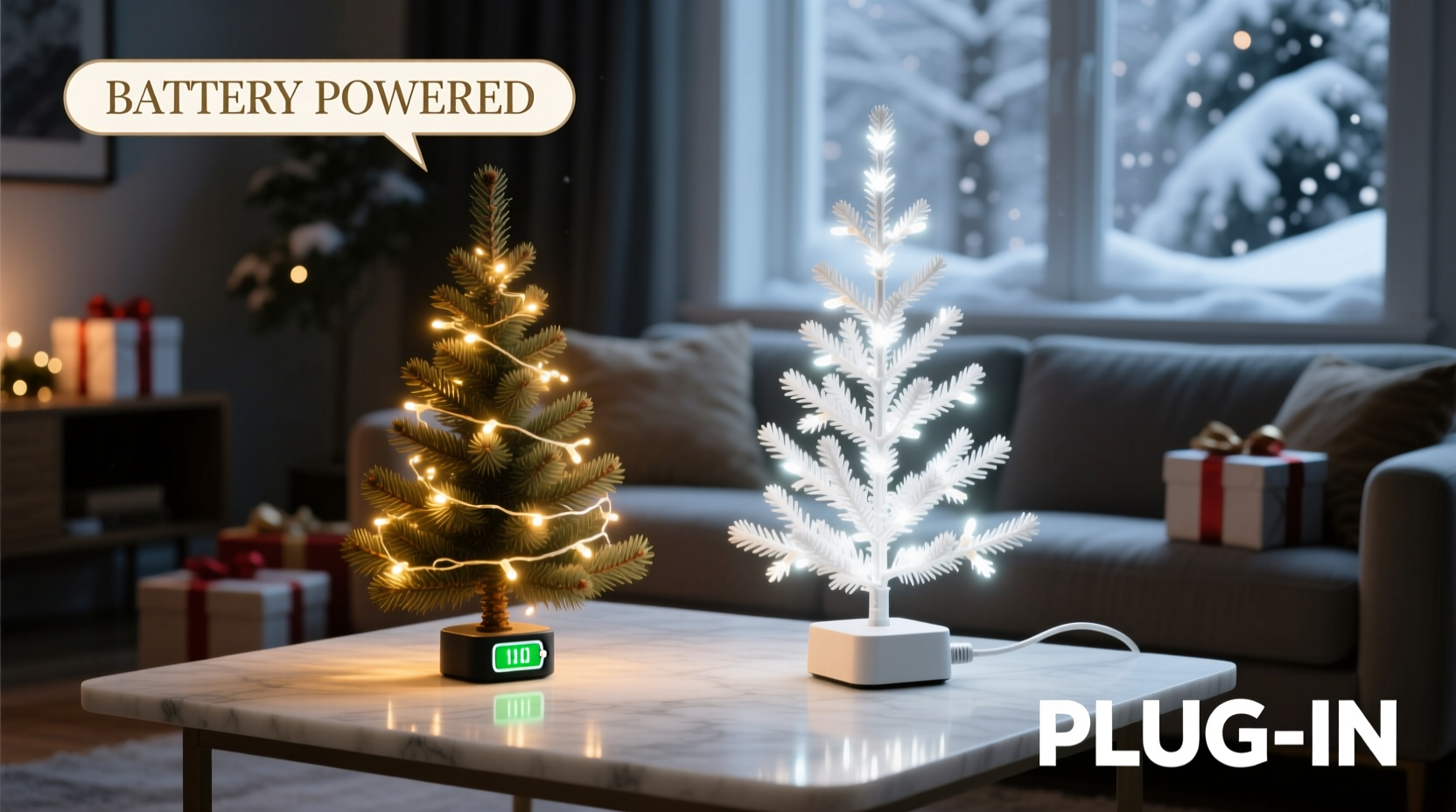
One of the most compelling reasons to consider a battery-powered tabletop tree is its unmatched portability. Without the need for an electrical outlet, you’re free to place the tree wherever it enhances your décor—on a bookshelf, a bathroom vanity, a covered porch, or even as part of a centerpiece on the dining table.
This freedom is particularly valuable in spaces where outlets are limited or awkwardly placed. In older homes, for example, wall sockets may be sparse, making plug-in decorations a logistical challenge. Battery-powered trees eliminate the need for extension cords snaking across floors, reducing tripping hazards and preserving the clean lines of your holiday setup.
Plug-in trees, while less flexible in placement, offer uninterrupted operation. Once plugged in, they run continuously without worrying about dead batteries. This makes them ideal for high-visibility areas like living rooms or entryways, where you want the tree lit from dusk until bedtime every night of the season.
Safety Considerations: Which Is Safer?
Safety is a top concern during the holidays, especially in homes with children, pets, or flammable décor nearby. Both battery-powered and plug-in trees are generally safe when used correctly, but they present different risk profiles.
Battery-powered trees generate minimal heat, especially LED-lit models, significantly reducing fire risk. Since they operate at low voltage, there's little danger of electric shock—even if the wires are exposed or the tree is knocked over. This makes them a preferred choice for households with curious toddlers or playful pets.
Plug-in trees, while still safe under normal conditions, rely on standard household current. Though modern designs include built-in fuses and use cool-burning LEDs, any electrical device connected to mains power carries a higher inherent risk. Overloaded circuits, frayed cords, or improper indoor/outdoor use can increase hazards. However, UL-certified plug-in trees with shatterproof bulbs and grounded plugs are rigorously tested and considered very safe when properly maintained.
“Low-voltage lighting systems, like those in battery-operated trees, are inherently safer, especially in high-traffic or child-accessible areas.” — Dr. Alan Reeves, Electrical Safety Consultant, National Home Safety Institute
Lighting Quality and Performance
When it comes to brightness, consistency, and light effects, plug-in trees typically outperform their battery-powered counterparts. Because they draw continuous power from an outlet, plug-in models can support brighter LEDs, multi-color sequences, twinkling modes, and even sound-synchronized lighting displays.
Battery-powered trees often use lower-wattage LEDs to conserve energy. While perfectly adequate for ambient glow, they may appear dimmer in well-lit rooms. Some users report flickering or inconsistent brightness as batteries deplete, especially if using lower-quality alkaline cells. Rechargeable batteries help mitigate this, but require regular charging discipline.
Another factor is runtime. Most battery-powered trees last between 24 and 72 hours on a set of AA or AAA batteries, depending on usage settings. If left on constantly, you might need to replace or recharge batteries multiple times over the holiday season. Plug-in trees, by contrast, deliver consistent brightness all season long with zero downtime.
Comparison Table: Key Features at a Glance
| Feature | Battery-Powered Trees | Plug-In Trees |
|---|---|---|
| Portability | Excellent – No cord required | Limited – Must be near outlet |
| Runtime | 24–72 hours per battery set | Unlimited (while plugged in) |
| Brightness | Moderate – May dim over time | High – Consistent output |
| Safety | Higher – Low voltage, cool operation | Good – Safe if certified and maintained |
| Setup Ease | Very easy – Just insert batteries | Easy – Requires outlet access |
| Long-Term Cost | Higher – Ongoing battery expense | Lower – No consumables |
Real-World Example: Two Homes, Two Choices
Consider Sarah, who lives in a studio apartment in downtown Chicago. Her living space doubles as her home office, and outlets are clustered behind her desk. She wanted a festive accent on her coffee table, three feet from the nearest socket. A plug-in tree would have required an unsightly extension cord across the floor. Instead, she chose a 20-inch battery-powered tree with warm white LEDs. It sits beautifully in the center of the table, glowing each evening without cluttering her minimalist space. She uses a USB-rechargeable battery pack, so she only needs to charge it once a week.
Meanwhile, Mark and Lisa have a spacious suburban home with a grand staircase. They wanted a holiday focal point in their foyer, right next to a conveniently located outlet. They opted for a 30-inch plug-in tabletop tree with multicolor twinkling lights and built-in music. The tree runs from 5 PM to 11 PM daily, creating a vibrant welcome for guests. With reliable power and no battery changes needed, it’s a hassle-free addition to their already elaborate décor.
Their choices weren’t about which tree was objectively better—but which fit their environment and habits best.
Cost and Long-Term Value
Upfront, battery-powered and plug-in trees are similarly priced, ranging from $25 to $80 for quality models. However, the long-term cost differs significantly.
Battery-powered trees shift part of the expense to ongoing battery purchases. If you use standard disposable batteries and run the tree six hours a day for 30 days, you could go through 2–3 sets of batteries per season. At $5–$8 per set, that adds $15–$25 annually. Over five years, that’s nearly $100 in added costs—not including environmental waste.
Rechargeable batteries reduce this burden, but they require an initial investment in both batteries and a charger, plus time to maintain them. Still, over time, they prove more economical and eco-friendly.
Plug-in trees have no recurring power costs. Once purchased, they can last for years with proper storage. Their cords and plugs are generally durable, though they should be inspected annually for wear. For families planning to reuse their tree across multiple seasons, plug-in models often deliver better long-term value.
Step-by-Step: How to Choose the Right Tree for Your Needs
Follow this practical decision-making process to determine which type of tabletop tree suits your situation best:
- Assess your available space and outlet access. Measure the distance from your desired display spot to the nearest working outlet. If it’s more than 4–5 feet, a battery-powered tree is likely the better fit.
- Determine your lighting schedule. Will you want the tree lit for several hours each night? If yes, consider whether you’re willing to manage batteries or prefer set-and-forget operation.
- Evaluate safety concerns. Do you have young children, pets, or high-traffic areas? Battery-powered trees offer greater peace of mind in such environments.
- Decide on lighting preferences. Want dynamic effects like color-changing or pulsing lights? Plug-in models usually support more advanced features.
- Plan for storage and reusability. If you intend to reuse the tree yearly, prioritize sturdiness and ease of disassembly. Check customer reviews for durability notes.
- Calculate total cost of ownership. Factor in not just purchase price, but also expected battery expenses or potential cord replacements.
Frequently Asked Questions
Can I leave a battery-powered tree on overnight?
Yes, most modern battery-powered trees are safe to leave on, especially those using LED lights. However, doing so will drain batteries quickly. For safety and efficiency, use a model with a built-in timer or manually turn it off when not in use.
Are plug-in trees safe on wooden surfaces?
Yes, provided the tree uses LED lights, which emit very little heat. Avoid placing any electrical device near flammable materials for extended periods, and inspect cords regularly for damage. Never use outdoor-rated cords indoors unless designed for dual use.
Which type is better for outdoor use?
Neither standard battery-powered nor plug-in tabletop trees are designed for prolonged outdoor exposure unless explicitly labeled weather-resistant. That said, battery-powered models are better suited for covered patios or porches due to their lack of cords. Always check the manufacturer’s specifications before placing any tree outside.
Final Verdict: Which Wins?
There is no universal winner—only the best choice for your specific context.
If **portability, safety, and cord-free design** are your priorities—especially in small spaces, rental units, or homes with kids and pets—a battery-powered tree wins. Its flexibility and low-risk operation make it ideal for casual, mobile, or minimalist holiday styling.
But if you value **consistent brightness, advanced lighting features, and long-term cost savings**, then the plug-in tree takes the crown. It’s the go-to for permanent displays, high-traffic areas, and those who want their décor to shine brightly without maintenance interruptions.
Many savvy decorators now opt for a hybrid approach: using a plug-in tree as the main holiday accent in the living area, and supplementing with one or two battery-powered models in bedrooms, bathrooms, or entry tables. This strategy combines the strengths of both types, creating a cohesive, festive atmosphere throughout the home.
Conclusion: Make Your Holiday Brighter—On Your Terms
The choice between battery-powered and plug-in tabletop Christmas trees ultimately reflects your lifestyle, space, and holiday priorities. There’s no single right answer—only what works best for you. By weighing factors like placement, safety, lighting quality, and long-term value, you can select a tree that enhances your celebrations for years to come.




 浙公网安备
33010002000092号
浙公网安备
33010002000092号 浙B2-20120091-4
Comments
No comments yet. Why don't you start the discussion?