
Choosing your first reptile pet is an exciting decision, but it comes with important considerations—especially if you're looking for a companion you can regularly handle. Two of the most popular beginner-friendly reptiles are the bearded dragon and the leopard gecko. Both are widely available, relatively easy to care for, and known for their docile nature. But when it comes to handling comfort, temperament, and interaction potential, they differ in key ways that could influence your choice.
This guide compares these two reptiles head-to-head, focusing on factors that matter most to new owners who want a pet they can confidently pick up, hold, and bond with. From daily care routines to personality traits, we’ll help you make an informed decision based on real-world experience and expert insights.
Temperament and Handling Behavior
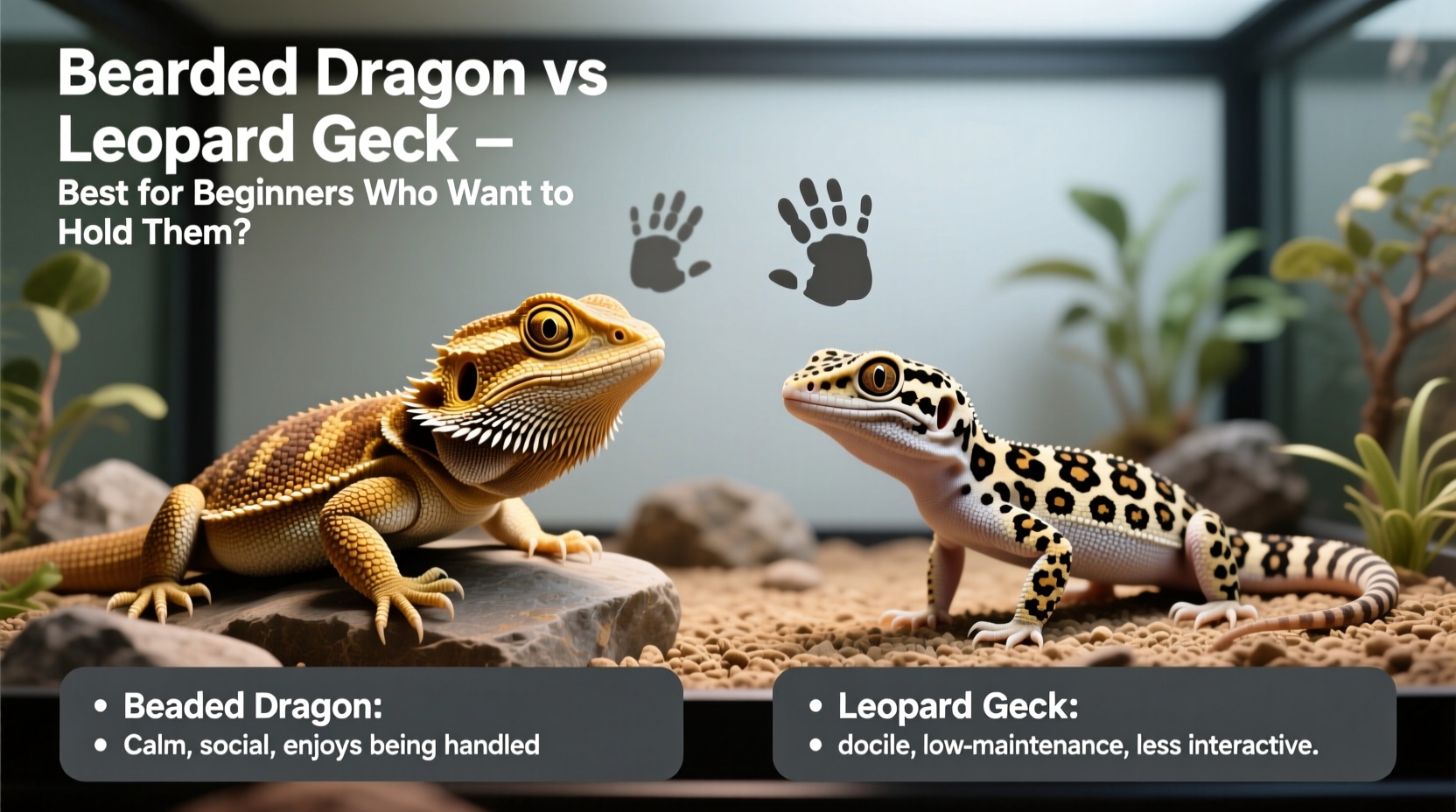
One of the biggest reasons people choose reptiles as pets is their calm demeanor. However, not all reptiles enjoy human contact equally. When comparing bearded dragons and leopard geckos, temperament during handling is a major differentiator.
Bearded dragons are often described as the “dogs of the reptile world.” They’re naturally curious, observant, and tend to develop strong bonds with their owners. Many will climb onto your hand willingly, sit still while being held, and even fall asleep on your lap. Their tolerance for extended handling sessions makes them ideal for those who want frequent physical interaction.
In contrast, leopard geckos are more reserved. While they can become accustomed to handling, they rarely seek out interaction. Most prefer short, gentle sessions and may show signs of stress—such as tail wagging or attempting to flee—if handled too much or too roughly. That said, they are generally calm and rarely bite, making them safe for cautious beginners.
Key Behavioral Differences During Handling
- Bearded dragons often look around curiously when held and may walk slowly across your arms.
- Leopard geckos typically stay still or move slowly; sudden movements usually indicate discomfort.
- Bearded dragons may close their eyes slowly when relaxed—a sign of trust.
- Leopard geckos may drop their tails if startled, though this is less common in well-socialized individuals.
“Bearded dragons have a social flexibility that’s rare among reptiles. With consistent, gentle interaction, they learn to recognize their owners and often show preference for familiar handlers.” — Dr. Rebecca Tran, Exotic Animal Veterinarian
Care Requirements Compared
While temperament plays a big role in handling suitability, long-term enjoyment depends heavily on how manageable the animal’s care routine is. Both species require commitment, but their environmental and dietary needs vary significantly.
| Aspect | Bearded Dragon | Leopard Gecko |
|---|---|---|
| Enclosure Size (Adult) | 40–75 gallons | 20 gallons |
| Temperature Gradient | Basking zone: 95–110°F Ambient: 75–85°F |
Warm side: 88–92°F Cool side: 75–80°F |
| UVB Lighting Required | Yes – essential for calcium metabolism | No – nocturnal, doesn’t rely on UVB |
| Diet | Insects + leafy greens/veggies (omnivore) | Insects only (insectivore) |
| Hydration Method | Misting, shallow water bowl, occasional baths | Shallow water bowl only |
| Cleaning Frequency | Daily spot clean, full clean every 4–6 weeks | Daily spot clean, full clean monthly |
The table above highlights a critical point: **bearded dragons require more complex setups** due to their need for UVB lighting, higher temperatures, and varied diet. This means additional equipment (lights, thermometers, hygrometers) and more frequent monitoring. Leopard geckos, by comparison, thrive in simpler enclosures without special lighting, making them easier and cheaper to maintain over time.
Lifespan and Long-Term Commitment
Both reptiles are long-lived compared to many small pets, so understanding their expected lifespans is crucial before bringing one home.
- Bearded dragons live 8–12 years on average, with some reaching 14+ years under optimal care.
- Leopard geckos commonly live 10–15 years, and there are documented cases of individuals living beyond 20 years.
While the difference may seem minor, the longer lifespan of leopard geckos means a greater long-term responsibility. For families or individuals considering a pet for a child, this longevity should be factored into the decision. A leopard gecko adopted during elementary school could still be around through college.
Additionally, older bearded dragons may develop health issues such as metabolic bone disease (if calcium intake was insufficient earlier in life), while aging leopard geckos are prone to joint stiffness and reduced appetite. Regular veterinary checkups with an exotic animal specialist are recommended for both species as they age.
Step-by-Step Guide to Safe Handling
No matter which species you choose, proper handling technique is essential for building trust and preventing injury. Follow this step-by-step approach to ensure positive experiences for both you and your reptile.
- Wash your hands thoroughly with unscented soap to remove oils, lotions, or food residues that might confuse or irritate the reptile.
- Approach calmly and avoid sudden movements. Let the reptile see your hand coming.
- Slide your hand under the body from below rather than grabbing from above, which mimics predator behavior.
- Support the entire body, especially the legs and tail base. Never dangle or squeeze.
- Start with short sessions (3–5 minutes) several times a week, gradually increasing duration as the reptile becomes comfortable.
- Watch for stress signals: darkening coloration (bearded dragons), rapid breathing, tail twitching (geckos), or attempts to escape.
- Return gently to the enclosure and allow time to rehydrate and rest afterward.
Consistency is key. Reptiles learn through repetition, so regular, calm interactions build familiarity and reduce fear over time. Avoid handling during shedding periods or within 48 hours after feeding, as both can increase sensitivity.
Real-Life Example: Sarah’s First Reptile Experience
Sarah, a college student living in a small apartment, wanted a low-maintenance pet she could interact with between classes. She researched both bearded dragons and leopard geckos before choosing a young leopard gecko named Luna.
At first, Luna would freeze or retreat when picked up. Sarah followed a strict routine: short daily handling sessions, always supporting Luna’s body, and offering a cricket as a treat afterward. Within six weeks, Luna began climbing onto her hand voluntarily and would remain still for up to ten minutes at a time.
However, Sarah noticed that Luna became agitated when visitors tried to hold her. In contrast, her roommate’s bearded dragon, Ziggy, seemed eager to explore anyone’s arms and didn’t mind being passed around during study breaks.
Sarah realized that while her gecko was affectionate in her own quiet way, it required patience and respect for boundaries. Her experience illustrates that “better” depends on personal expectations: Luna offered companionship on her terms, whereas Ziggy was inherently more outgoing.
Frequently Asked Questions
Can I hold my reptile every day?
Yes, but moderation matters. Bearded dragons typically tolerate daily handling of 10–20 minutes. Leopard geckos do best with shorter, less frequent sessions (5–10 minutes, 3–4 times per week). Always monitor for signs of stress and adjust accordingly.
Do bearded dragons like being held more than leopard geckos?
Generally, yes. Bearded dragons are diurnal (active during the day) and naturally more interactive. They often appear to enjoy exploration and human contact. Leopard geckos are crepuscular (most active at dawn/dusk) and tend to be more solitary, though individual personalities vary.
Which reptile is safer for young children to handle?
Bearded dragons are often considered better for supervised child interaction due to their larger size, sturdier build, and higher tolerance for handling. However, children must be taught gentle techniques. Leopard geckos are fragile and can drop their tails if mishandled, so extra caution is needed.
Final Checklist Before Choosing
Use this checklist to evaluate which reptile aligns best with your lifestyle and goals:
- ☐ Do I want frequent, interactive handling? → Lean toward bearded dragon
- ☐ Am I on a tight budget or limited space? → Consider leopard gecko
- ☐ Can I manage UVB lighting and a more complex setup? → Required for bearded dragon
- ☐ Do I prefer a quieter, low-key pet? → Leopard gecko may suit you better
- ☐ Will someone else care for the pet during vacations? → Both need daily attention, but bearded dragons require more specialized backup care
- ☐ Am I prepared for a 10+ year commitment? → Essential for either choice
Conclusion: Which Is Better for Beginners Who Want to Hold Them?
If your primary goal is to have a reptile you can comfortably hold and interact with on a regular basis, the **bearded dragon** has the edge. Its friendly disposition, daytime activity pattern, and willingness to engage make it the superior choice for hands-on beginners. It’s not uncommon for bearded dragons to form visible attachments to their caregivers, following them around rooms and relaxing in their presence.
That said, the **leopard gecko** remains an excellent option for those seeking a simpler care routine and a calm, manageable companion. While less demonstrative, a well-socialized leopard gecko can still enjoy brief handling and provide years of quiet companionship.
The “better” pet ultimately depends on what kind of relationship you envision. If you prioritize interaction and don’t mind investing in a slightly more demanding habitat, go with the bearded dragon. If you value simplicity and a subtle bond built over time, the leopard gecko may be your perfect match.




 浙公网安备
33010002000092号
浙公网安备
33010002000092号 浙B2-20120091-4
Comments
No comments yet. Why don't you start the discussion?