
In the fiercely competitive world of true wireless earbuds, two names consistently rise to the top: Apple’s Beats Studio Buds and Samsung’s Galaxy Buds 2. While both promise premium audio and seamless integration with their respective ecosystems, a growing number of users—especially those in the Android camp—are asking: are Samsung users actually missing out by not switching to Beats?
The answer isn’t as straightforward as brand loyalty might suggest. With nuanced differences in sound signature, noise cancellation, design, and software support, this comparison goes beyond marketing claims. Let’s break down what each model offers and whether Galaxy Buds 2 owners should consider making the switch.
Sound Quality: Clarity vs Warmth
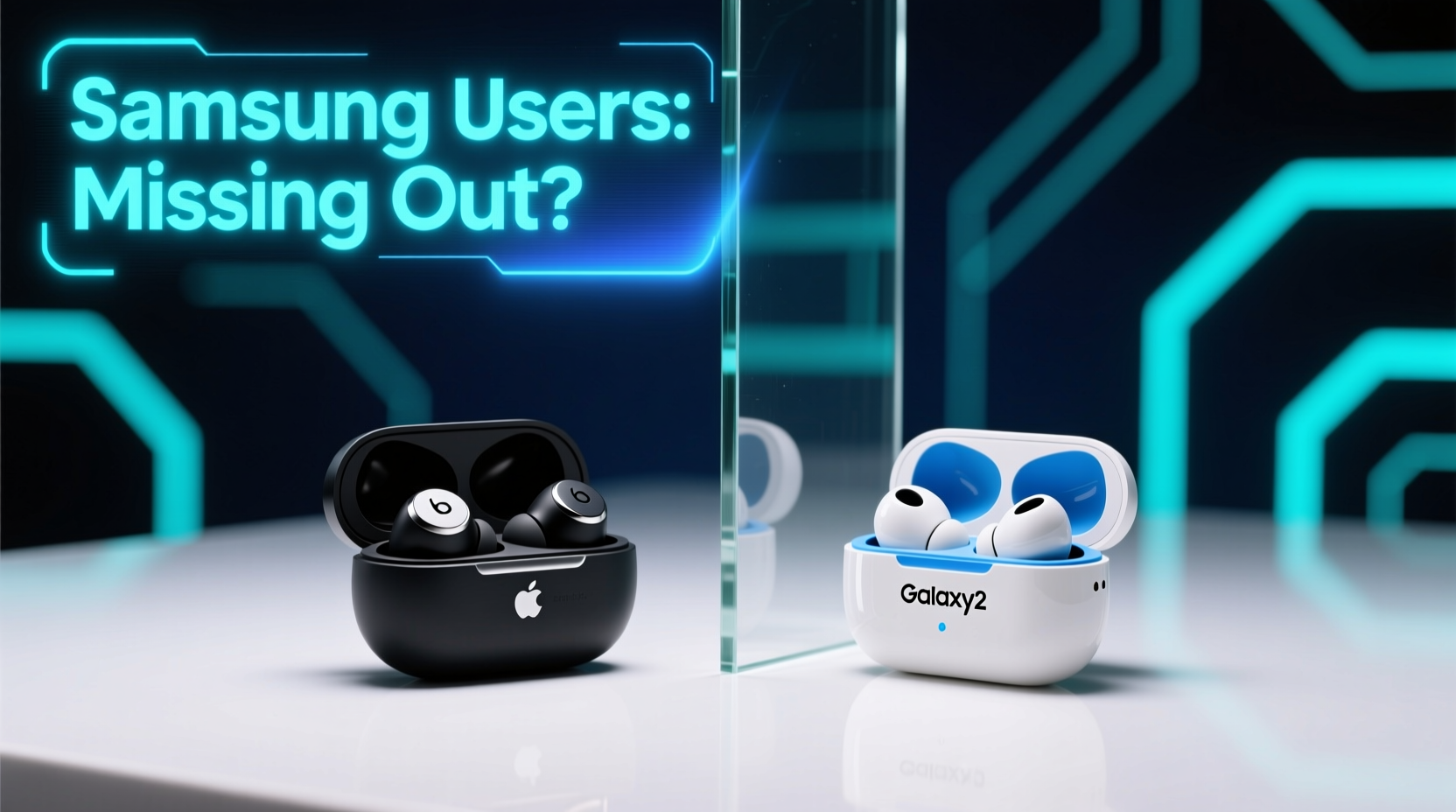
Audio performance is often the deciding factor for audiophiles and casual listeners alike. The Beats Studio Buds deliver a bass-forward sound profile that stays true to the brand’s legacy. This makes them ideal for genres like hip-hop, EDM, and pop, where deep lows and energetic mids enhance the listening experience. However, some may find the highs slightly recessed, which can dull vocal clarity in acoustic or classical tracks.
In contrast, the Galaxy Buds 2 adopt a more balanced tuning. Samsung has leaned into natural tonality, offering crisp highs and well-defined mids without overpowering the bass. This gives them an edge for podcast listeners, audiobook enthusiasts, and fans of live recordings. Thanks to AKG-tuned drivers and support for Samsung Scalable Codec (SSC), they maintain solid Bluetooth audio quality even under weak signal conditions.
Noise Cancellation & Transparency: How Well Do They Block the World?
Active Noise Cancellation (ANC) is no longer a luxury—it’s expected. The Beats Studio Buds offer effective ANC that handles low-frequency hums like airplane engines and AC units well. However, they struggle slightly with mid-range noises such as voices or keyboard typing. Their transparency mode is natural-sounding, allowing ambient awareness without artificial amplification.
The Galaxy Buds 2 shine in adaptive noise control. Using dual microphones and machine learning, they adjust ANC strength based on your environment. Walk into a noisy subway? The buds automatically ramp up suppression. Sit down in a quiet café? They dial it back to preserve spatial awareness. This dynamic response gives Samsung a practical advantage for users constantly moving between environments.
“Adaptive ANC isn’t just a gimmick—it reduces listener fatigue over long periods by preventing over-isolation.” — Jordan Lee, Audio Engineer at SoundLab Pro
Design & Comfort: Fit Matters More Than You Think
Both models feature compact, stemless designs, but ergonomics differ significantly. The Beats Studio Buds have a slightly bulkier build and sit deeper in the ear. While secure during workouts, some users report discomfort after extended wear, especially those with smaller ear canals.
Samsung’s Galaxy Buds 2 are among the lightest in their class at just 5.7 grams per bud. Their oval shape conforms naturally to most ear geometries, and the included silicone tips (three sizes) ensure a snug, stable fit. Many users report wearing them for hours without pressure points—a major win for commuters or remote workers on back-to-back calls.
| Feature | Beats Studio Buds | Galaxy Buds 2 |
|---|---|---|
| Weight (per bud) | 5.1 g | 5.7 g |
| IP Rating | IPX4 (sweat/water resistant) | IPX2 (limited splash protection) |
| Battery Life (with ANC off) | Up to 24 hours (with case) | Up to 20 hours (with case) |
| Fast Charging (5 min = ?) | 1 hour playback | 1 hour playback |
| Wireless Charging | Yes | Yes |
Ecosystem Integration: Where Loyalty Pays Off
This is where the debate intensifies. If you’re deeply invested in the Apple ecosystem, the Beats Studio Buds pair instantly with iPhones, iPads, and Macs via the H1 chip. Seamless switching between devices, Siri voice activation, and precise battery level readouts make them feel like an extension of your Apple setup.
But here’s the catch: they work surprisingly well on Android too. You get full touch controls, access to the Beats app for firmware updates, and customizable EQ settings. Unlike older Beats models, these aren’t crippled outside iOS.
For Samsung users, the Galaxy Buds 2 integrate flawlessly with Galaxy phones and tablets. Features like 360 Audio, Voice Detect (which pauses music when you speak), and automatic device switching within the Samsung account ecosystem elevate the user experience. However, on non-Samsung Android devices, many of these smart features vanish or become unreliable.
Battery Life & Charging: Small Differences, Big Impact
On paper, the Beats Studio Buds offer superior battery life—up to 8 hours on a single charge (with ANC on), compared to the Galaxy Buds 2’s 5–6 hours. With the charging case, Beats reach 24 hours; Samsung delivers around 20. Both support fast charging (5 minutes for ~1 hour of playback) and Qi wireless charging.
In real-world use, the difference becomes noticeable during travel or long workdays. Beats users may go two full days without recharging the case, while Galaxy Buds 2 owners often need a midday top-up. That said, Samsung’s case is slightly smaller and more pocketable, which balances the trade-off for some.
Mini Case Study: The Cross-Platform User
Take Mark, a freelance designer who uses a MacBook Pro for editing, an iPad for sketching, and a Samsung Galaxy S23 for communication. He initially bought Galaxy Buds 2 for Android compatibility but found himself frustrated when hopping between his Mac and iPad—no instant pairing, no consistent volume sync, and no spatial audio.
After testing the Beats Studio Buds, he made the switch. Despite using a Samsung phone daily, he gained smoother transitions across Apple devices, better microphone quality on Zoom calls, and stronger ANC in co-working spaces. His only compromise? Losing Voice Detect and some Galaxy-exclusive wellness integrations.
His takeaway: if your digital life spans multiple ecosystems, Beats offer broader functionality than Samsung’s tightly walled garden.
Checklist: Should You Switch from Galaxy Buds 2 to Beats Studio Buds?
- ✅ You regularly use Apple devices alongside your Samsung phone
- ✅ You prioritize strong bass and immersive sound for music
- ✅ You value reliable ANC in transit or office environments
- ✅ You want better microphone clarity for calls and recordings
- ✅ You don’t rely heavily on Samsung-specific features like 360 Audio or Bixby integration
Frequently Asked Questions
Can Beats Studio Buds connect to Samsung phones reliably?
Yes. Since their 2021 redesign, Beats Studio Buds work seamlessly with Android. You’ll get full touch controls, battery indicators, and access to the Beats app for updates and EQ customization.
Do Galaxy Buds 2 work well with iPhones?
Poorly. While they can pair via Bluetooth, you lose almost all smart features—no quick setup, no ambient sound modes, no firmware updates through iOS. They function as basic earbuds only.
Which has better call quality?
Beats Studio Buds edge ahead thanks to beamforming microphones and improved wind noise reduction. They perform noticeably better in outdoor or windy conditions.
Final Verdict: Are Samsung Users Missing Out?
Not entirely—but there are trade-offs. Galaxy Buds 2 remain one of the best true wireless options for pure Samsung users. Their comfort, balanced sound, and intelligent ecosystem features make them a compelling choice.
However, if your tech stack includes Apple devices, or if you value stronger noise cancellation and richer audio dynamics, the Beats Studio Buds present a legitimate upgrade. They prove that cross-platform usability, when done right, can outweigh brand exclusivity.
The real miss isn’t about hardware—it’s about flexibility. Samsung’s ecosystem lock-in limits its buds’ appeal beyond its own devices, while Beats have evolved into genuinely universal earbuds. For users open to breaking brand chains, switching might not mean missing out—it could mean gaining more.




 浙公网安备
33010002000092号
浙公网安备
33010002000092号 浙B2-20120091-4
Comments
No comments yet. Why don't you start the discussion?