
Keeping a nightstand functional and visually clean is a subtle but meaningful part of bedroom organization. One of the most common yet overlooked items on this surface is the tissue box. While seemingly minor, how you store your tissues—on top of the bedside table or tucked into a drawer with a drawer tissue box—can significantly impact both accessibility and visual order. The choice between leaving a tissue box in full view versus using a discreet drawer insert affects not just aesthetics, but also hygiene, convenience, and long-term tidiness.
This article explores the practical differences between these two approaches, evaluates their pros and cons, and offers real-world guidance to help you make an informed decision based on your lifestyle, room layout, and organizational preferences.
Understanding the Two Approaches
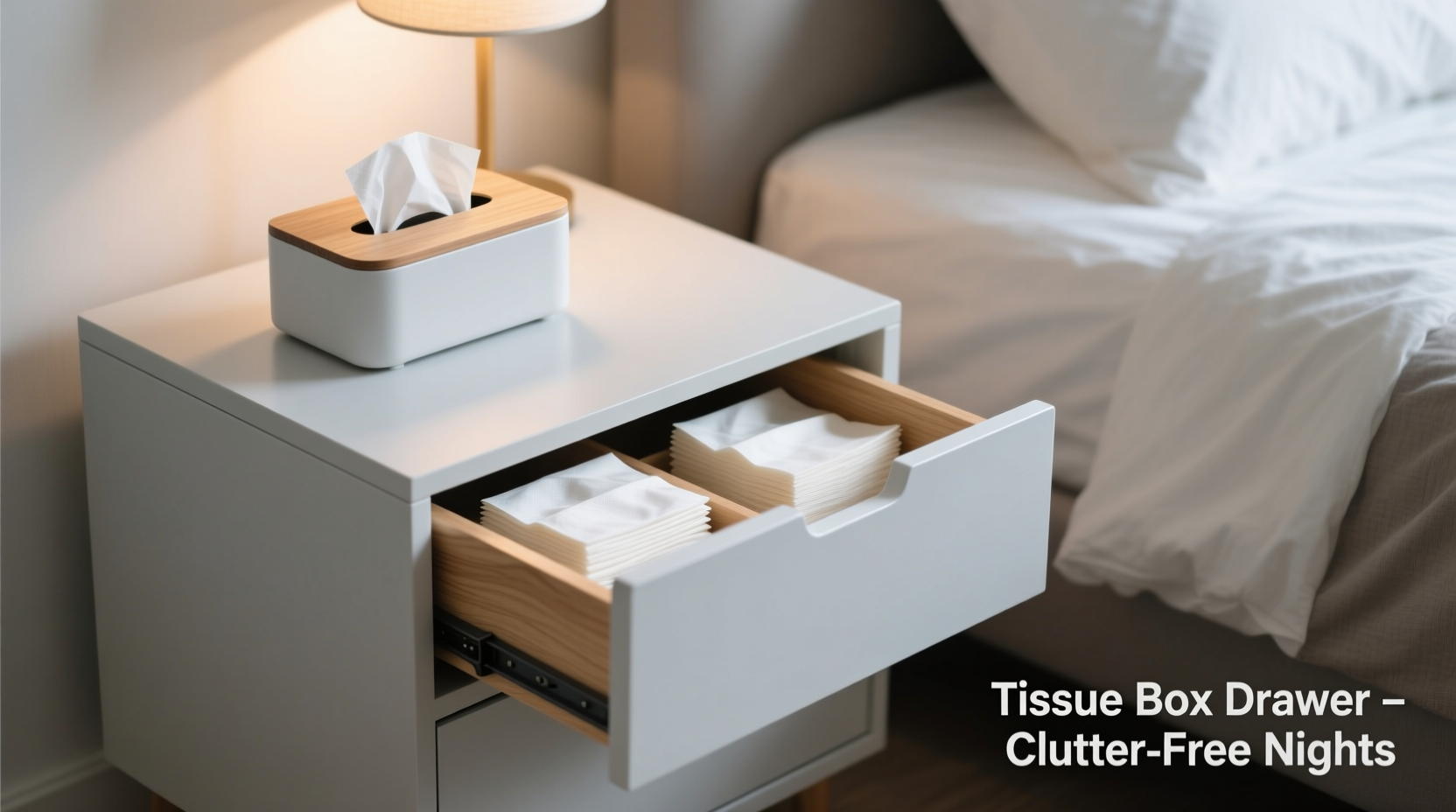
The central dilemma comes down to visibility versus concealment. A bedside table typically has a flat surface where items are placed openly. When you keep a tissue box here, it's immediately visible and within arm’s reach. Alternatively, a drawer tissue box fits inside a nightstand drawer, often with a cutout or fabric cover that allows you to pull tissues from below while hiding the rest of the box.
Each method supports different priorities: open access versus streamlined appearance. The best choice depends on usage frequency, personal habits, and the overall design goals of your bedroom space.
Pros and Cons: Bedside Table Tissue Box
Leaving a tissue box on top of your nightstand is the traditional and most straightforward option. It requires no special accessories and ensures tissues are always visible and easy to grab.
- Pros:
- Instant access during nighttime congestion or emergencies
- No need to modify drawers or purchase inserts
- Easier to monitor when the box is running low
- Ideal for shared rooms where multiple people need quick access
- Cons:
- Contributes to surface clutter, especially if other items (glasses, books, phone) are present
- May look unattractive unless styled carefully
- More exposed to dust and accidental spills
- Limits available space for decorative or functional objects
For individuals who prioritize function over form, this setup works well. However, in minimalist or high-design bedrooms, a visible tissue box can disrupt the sense of calm and order.
Pros and Cons: Drawer Tissue Box Insert
A drawer tissue box insert is a small organizer designed to fit inside a nightstand drawer. It holds a standard tissue box vertically or horizontally and features an opening at the front so tissues can be pulled out without opening the drawer fully.
- Pros:
- Maintains a clean, uncluttered nightstand surface
- Protects tissues from dust and moisture
- Allows use of drawer space efficiently while still providing access
- Offers a more refined, intentional look aligned with modern interior trends
- Cons:
- Slightly slower access—requires hand movement into drawer depth
- Can become jammed if tissues aren’t fed properly through the slot
- Requires compatible drawer size and sometimes installation effort
- Harder to notice when the box is empty
Interior designers often recommend drawer tissue boxes for clients seeking a “hotel suite” level of bedroom elegance. As one designer notes:
“Discreet storage solutions like drawer tissue holders eliminate visual noise. They support relaxation by reducing subconscious clutter.” — Lena Torres, Interior Stylist & Wellness Space Consultant
Comparison Table: Key Decision Factors
| Factor | Bedside Table (Open) | Drawer Tissue Box |
|---|---|---|
| Accessibility | Excellent – direct line of sight and reach | Good – requires reaching into drawer |
| Aesthetics | Fair – adds visual bulk unless styled | Excellent – maintains clean lines |
| Dust Protection | Poor – fully exposed | Good – enclosed environment |
| Space Efficiency | Poor – occupies valuable surface area | Excellent – uses unused drawer volume |
| Refill Monitoring | Easy – box is always visible | Difficult – must open drawer or remember usage |
| Installation | None required | May require measuring and fitting |
Real-Life Scenario: The Allergy-Prone Household
Consider Sarah, a freelance writer who suffers from seasonal allergies. During spring, she wakes up congested several times a week. Her original setup used a drawer tissue box to maintain a tidy nightstand. However, she found herself fumbling in the dark, missing the pull tab, or accidentally closing the drawer before grabbing enough tissues.
After switching back to a bedside table placement—this time using a fabric-covered tissue box that matched her bedding—she regained reliable access without sacrificing all aesthetics. She now refills more often and keeps the surrounding area minimal to reduce clutter.
This case illustrates that while drawer systems offer elegance, they may fall short in high-usage scenarios. Functionality should never be compromised solely for appearance.
Step-by-Step Guide: Choosing the Right Option for You
- Assess your nightly tissue use: Do you use tissues regularly due to illness, allergies, or dry air? High usage favors open access.
- Evaluate your nightstand space: Measure surface area and drawer depth. If surface space is limited, consider drawer storage.
- Test both methods temporarily: Try the tissue box on the table for one week, then switch to a drawer insert the next week.
- Observe ease of use: Note how often you struggle to retrieve tissues or knock things over.
- Decide based on balance: Choose the method that best balances convenience, cleanliness, and visual appeal in your routine.
Checklist: Optimizing Your Nightstand Setup
- ☐ Determine daily tissue usage frequency
- ☐ Measure nightstand drawer interior for compatibility
- ☐ Decide on aesthetic priority (minimalist vs. practical)
- ☐ Choose a tissue box style (standard, covered, eco-friendly)
- ☐ Position tissues for dominant-hand access
- ☐ Limit additional items on the nightstand to three essentials
- ☐ Clean around and under the tissue area weekly
Frequently Asked Questions
Can I use any tissue box in a drawer tissue holder?
Most drawer inserts are designed for standard rectangular tissue boxes (approx. 4.5 x 4.5 x 5 inches). Larger or uniquely shaped boxes (like pop-top or pocket packs) may not fit properly. Always check dimensions before purchasing.
Are drawer tissue boxes worth the investment?
If you value a clutter-free, polished bedroom aesthetic and have adequate drawer space, yes. They range from $10–$25 and can last for years. For renters or those with shallow drawers, they may not be practical.
How do I prevent tissues from tearing when pulling from a drawer?
Ensure the tissue box is inserted correctly with the first tissue threaded through the dispenser slot. Avoid over-packing the drawer around the box, as pressure can cause jams. Opt for brands with reinforced perforations for smoother pulls.
Final Thoughts and Recommendation
The decision between a bedside table tissue box and a drawer tissue box isn't about which is universally better—it's about alignment with your personal habits and environment. For those who value speed and simplicity, especially in health-sensitive situations, keeping tissues on the nightstand surface makes sense. But if your goal is a serene, orderly bedroom with intentional design, integrating a drawer tissue box is a smart upgrade.
Many find a middle ground: using a stylish, fabric-covered box on the nightstand, surrounded by only essential items like a lamp, book, and water glass. Others prefer the hidden efficiency of a drawer system, particularly in master bedrooms designed for relaxation.
Ultimately, the best solution reduces friction in your routine while supporting a peaceful sleep environment. Whether you choose visibility or concealment, the key is consistency and thoughtful placement.




 浙公网安备
33010002000092号
浙公网安备
33010002000092号 浙B2-20120091-4
Comments
No comments yet. Why don't you start the discussion?