
When you spot a buzzing cluster under your eaves or in the garden, it’s natural to wonder: is this a bee hive or a wasp nest? More importantly, what kind of threat does it pose to your family and home? While both bees and wasps are vital pollinators, their behavior, nesting habits, and level of danger differ significantly. Understanding these differences isn’t just about peace of mind—it’s essential for making informed decisions about safety, property damage, and humane intervention.
Understanding the Key Differences
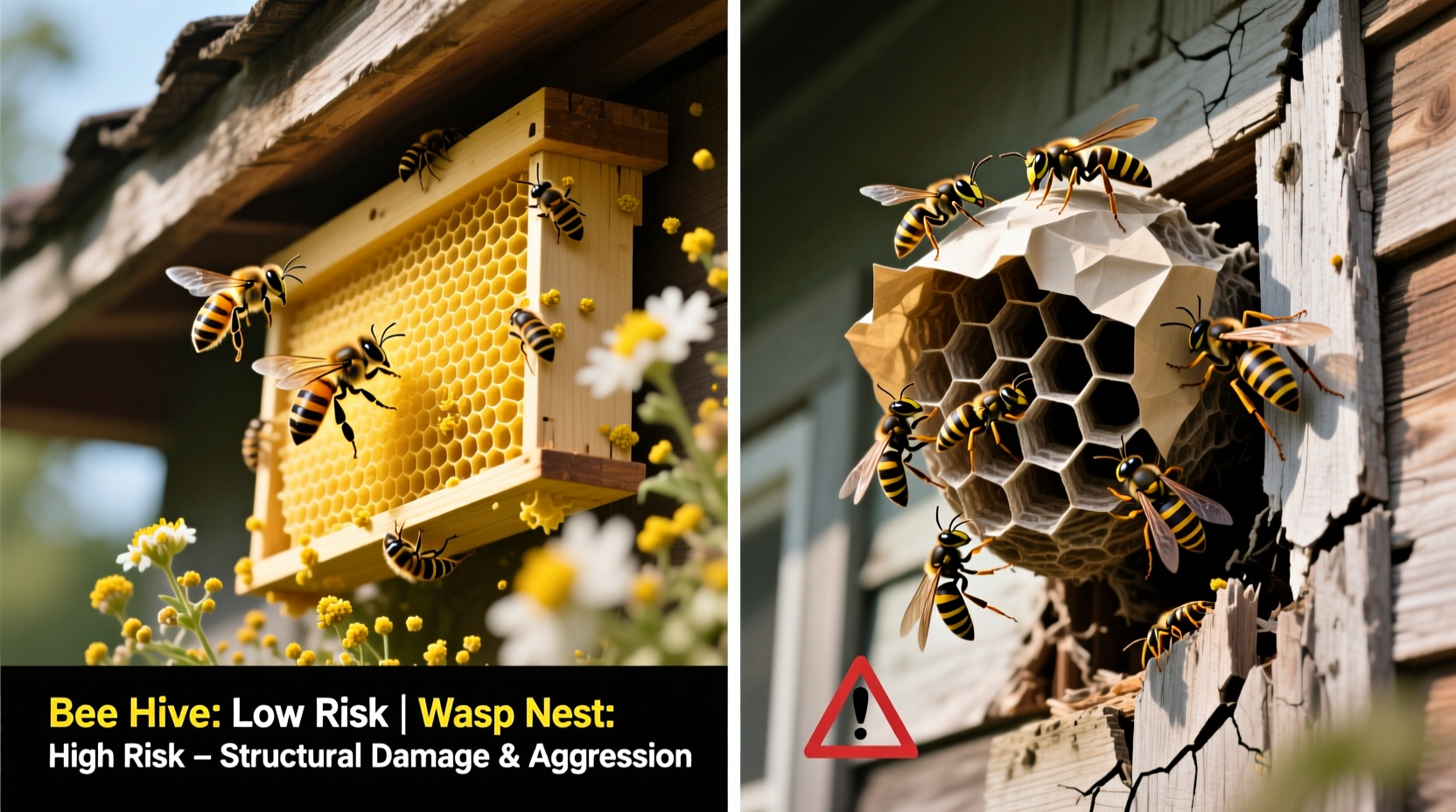
The first step in assessing risk is accurate identification. Bees and wasps may look similar at a glance, but they have distinct physical traits, social behaviors, and nesting preferences.
Honeybees are typically smaller, fuzzier, and golden-brown with black stripes. They’re built for pollen collection, which makes them less aggressive unless directly threatened. Their primary goal is colony survival through nectar gathering and hive maintenance.
Wasps—like yellow jackets, paper wasps, and hornets—are sleeker, smoother, and more brightly colored. They’re predators, feeding on insects and scavenging human food. This brings them into closer contact with people, especially during late summer barbecues or outdoor dining.
Nesting habits also vary. Bee hives are usually found in enclosed spaces: wall voids, attics, or hollow trees. They build wax combs that store honey and house brood. Wasp nests, by contrast, are often exposed—attached to eaves, porch ceilings, or shrubs—and made of a papery material created from chewed wood fibers.
Risk Comparison: Stings, Aggression, and Allergies
Not all stinging insects pose the same level of threat. The danger depends on species behavior, nest location, and human interaction.
Honeybees are generally docile. They only sting when defending their hive, and doing so is fatal for the bee. Because they die after stinging, they avoid confrontation. However, if a hive is located near high-traffic areas—like a front door or children’s play zone—the risk of accidental disturbance increases.
Wasps, particularly yellow jackets, are far more aggressive. They can sting repeatedly and are quick to defend their nest. Unlike bees, they don’t lose their stinger. Their territorial nature means even minor vibrations—like mowing the lawn nearby—can trigger an attack.
“While both bees and wasps can cause allergic reactions, wasps are responsible for more emergency room visits due to their aggressive tendencies and repeated stinging capability.” — Dr. Alan Reyes, Entomologist & Pest Management Specialist
Allergic reactions are rare but serious. Approximately 0.5% of the population experiences anaphylaxis from insect stings. If anyone in your household has known allergies, proximity to any active nest becomes a critical health concern.
Structural Risks: Can They Damage Your Home?
One major difference between bees and wasps lies in their potential for structural damage.
Bee hives, once established inside walls or attics, can become problematic over time. While bees themselves don’t chew wood or damage framing, the wax and honey they store can attract pests like ants, rodents, and carpet beetles. If a hive is abandoned without proper removal, the honey can ferment, leak into drywall, and promote mold growth—a costly and unsanitary issue.
Wasps, on the other hand, do cause direct structural impact—but not in the way many assume. They don’t eat wood like termites. Instead, they scrape wooden surfaces (decks, siding, fences) to gather fibers for nest building. Over time, this can lead to cosmetic wear, especially on untreated wood. However, the nests themselves are temporary. Most wasp colonies die off in winter, leaving behind a papery shell that poses no long-term harm.
| Aspect | Bee Hive | Wasp Nest |
|---|---|---|
| Nest Material | Beeswax | Paper (chewed wood pulp) |
| Colony Lifespan | Perennial (can last years) | Annual (dies in winter) |
| Aggressiveness | Low (defensive only) | High (territorial) |
| Structural Risk | Medium (honey leakage, mold) | Low (cosmetic wood scraping) |
| Sting Behavior | Single sting, then dies | Multiple stings, reusable stinger |
Real-World Scenario: The Garage Wall Incident
In suburban Ohio, a homeowner noticed increased bee activity near a small gap in the garage wall. Over several weeks, the number of insects grew. Assuming it was a temporary swarm, he ignored it. By late summer, honey began seeping through the drywall, attracting ants and emitting a musty odor.
A pest control specialist confirmed a mature honeybee hive inside the wall cavity. Removing it required cutting open the wall, extracting combs, cleaning residue, and sealing entry points. Total cost: $1,200. Had the hive been addressed earlier—or relocated by a beekeeper—the damage could have been avoided entirely.
This case highlights two key lessons: early detection matters, and passive tolerance can lead to expensive consequences.
What You Should Do: A Step-by-Step Action Plan
Discovering a nest doesn’t mean immediate panic. Follow this timeline to assess and respond safely:
- Observe from a Safe Distance (Day 1–2): Note insect size, color, flight pattern, and nest location. Is it bees or wasps?
- Determine Proximity to Human Activity (Day 3): Is the nest near doors, patios, or play areas? High-traffic zones increase risk.
- Contact a Professional (Day 4–5): For bees, call a local beekeeper—they may remove the hive at low or no cost. For wasps, hire a licensed exterminator.
- Secure the Area (Ongoing): Keep children and pets away. Place warning tape or signs if necessary.
- Post-Removal Prevention (After Removal): Seal entry points, install mesh over vents, and trim back overhanging branches.
FAQ: Common Questions Answered
Can I leave a bee hive alone if it's not bothering me?
If the hive is in a remote location and not interfering with daily life, some homeowners choose coexistence. However, be aware that hives grow over time. What starts as a minor presence can become a major infestation. Additionally, swarming bees may establish secondary colonies nearby.
Do wasp nests come back every year?
No. Most wasp colonies die off in winter. Only fertilized queens survive to start new nests in spring. However, they may return to the same general area if conditions are favorable. Removing old nests and sealing entry points reduces recurrence.
Are bees protected by law?
While there’s no federal law banning bee removal, many states encourage conservation due to declining pollinator populations. Some municipalities require non-lethal removal methods. Always check local regulations before taking action.
Prevention Checklist
- Inspect your home’s exterior twice a year for cracks, gaps, or holes.
- Seal openings around windows, vents, and utility lines with caulk or steel wool.
- Keep garbage cans tightly covered and clean outdoor eating areas promptly.
- Trim tree branches and vines that touch the house.
- Install screens on attic and crawl space vents.
- Avoid using strong floral scents or sugary drinks outdoors during peak insect season.
Final Thoughts: Safety, Responsibility, and Coexistence
Both bee hives and wasp nests demand attention, but the appropriate response varies. Wasps pose a greater immediate threat due to aggression and repeated stinging. Bees, while gentler, can cause long-term structural issues if left unmanaged. The best approach balances safety with environmental responsibility.
Whenever possible, opt for relocation over extermination—especially for honeybees. These vital pollinators support ecosystems and agriculture. Partnering with a local beekeeper protects your home and helps preserve a declining species.
Ignoring a nest might seem easier in the short term, but proactive management prevents bigger problems down the line. Whether it’s sealing a crack, calling a professional, or learning to identify insect behavior, your actions today ensure a safer, more harmonious home environment tomorrow.




 浙公网安备
33010002000092号
浙公网安备
33010002000092号 浙B2-20120091-4
Comments
No comments yet. Why don't you start the discussion?