
The question seems simple—can you use beef broth instead of beef stock, or vice versa? Yet behind this common kitchen dilemma lies a nuanced distinction that affects flavor, texture, and the final outcome of soups, stews, sauces, and braises. While many grocery stores and recipes use the terms interchangeably, professional kitchens treat them as distinct ingredients with specific roles. Understanding the difference isn’t about culinary pedantry—it’s about making informed choices that elevate your cooking. Whether you're simmering a French onion soup, reducing a pan sauce, or meal-prepping a hearty chili, knowing when to reach for broth or stock can mean the difference between good and exceptional.
Definition & Overview
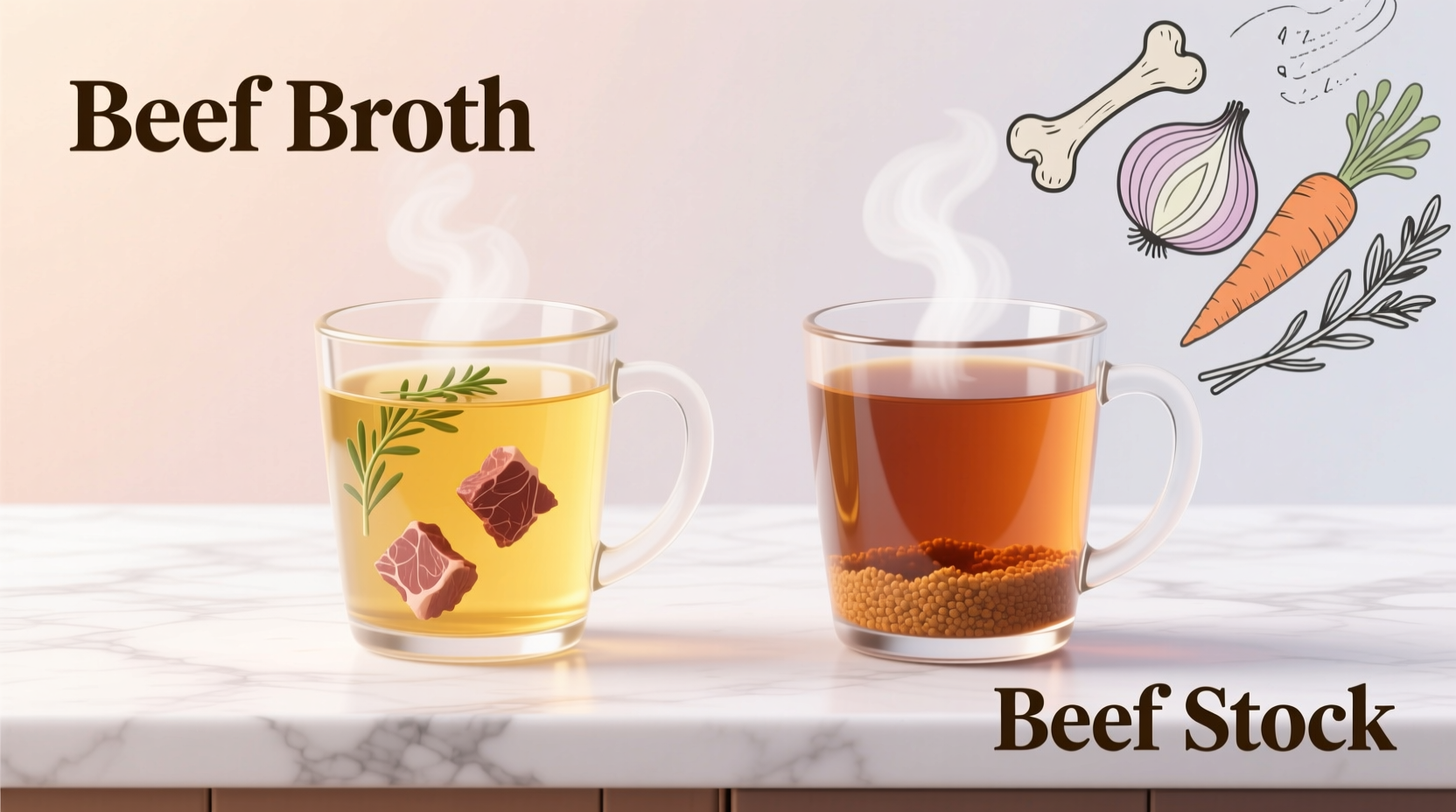
Beef broth is a flavorful liquid made by simmering meat—often from cuts like chuck, shank, or brisket—along with aromatic vegetables (typically onions, carrots, and celery), herbs, and seasonings such as bay leaves, thyme, and black pepper. The focus is on extracting savory, seasoned flavor quickly, usually within 2 to 4 hours. Broth is designed to be palatable on its own, often sipped as a light meal or base for quick soups.
Beef stock, by contrast, is built on structure and depth. It relies primarily on **bones**—especially collagen-rich joints, knuckles, and marrow bones—simmered for extended periods, typically 6 to 12 hours or longer. The goal is not just flavor but body: the slow breakdown of connective tissues releases gelatin, which gives stock its signature mouthfeel and ability to enrich sauces and gravies. Stock is rarely consumed alone; it's a foundational building block, a silent force multiplier in complex dishes.
Historically, stock-making was a cornerstone of classical French cuisine, where chefs used long-simmered bone broths as the base for demi-glace, jus, and velouté. Broth, while also rooted in tradition, evolved more as a nourishing, accessible liquid—common in Jewish penicillin-style chicken soup or Asian medicinal tonics. In modern usage, especially in American supermarkets, the lines have blurred. Many commercial “beef stocks” contain little actual bone content and are closer to seasoned broth. This has led to widespread confusion—but also opportunity. Knowing the original intent allows cooks to adapt wisely.
Key Characteristics
| Characteristic | Beef Broth | Beef Stock |
|---|---|---|
| Primary Ingredient | Meat and aromatics | Bones (with some meat) |
| Simmer Time | 2–4 hours | 6–12+ hours |
| Flavor Profile | Savory, seasoned, immediate umami | Deep, earthy, mineral-rich, subtle umami |
| Mouthfeel | Thin, light-bodied | Rich, viscous, gelatinous when cooled |
| Color | Amber to light brown | Deep mahogany, sometimes nearly black |
| Salt Content | Often salted | Rarely salted (chef-controlled seasoning) |
| Culinary Function | Base for soups, sipping, quick reductions | Foundation for sauces, braises, glazes |
| Shelf Life (Refrigerated) | 4–5 days | 5–7 days |
| Freezable | Yes, up to 6 months | Yes, up to 1 year (ideal for batch prep) |
Practical Usage: How to Use Each in Cooking
The choice between beef broth and beef stock should be guided by the dish’s structural and flavor needs. Substitutions are possible, but they come with trade-offs.
When to Use Beef Broth
- Quick soups and noodle bowls: Ramen, pho-inspired broths, or Italian wedding soup benefit from broth’s ready-to-drink seasoning and clarity.
- Grain cooking liquid: Substitute water with broth to add instant depth to rice, quinoa, or farro.
- De-glazing pans: A splash of broth lifts browned bits without overwhelming the dish with gelatin.
- Dairy-based sauces: In creamy mushroom stroganoff or cheese sauces, broth integrates smoothly without creating a sticky texture.
Because most commercial broths are salted, adjust added salt carefully. Always taste before seasoning further. Low-sodium versions offer more control but may lack depth—compensate with umami boosters like tomato paste, soy sauce, or dried mushrooms.
When to Use Beef Stock
- Braises and pot roasts: The gelatin in stock stabilizes emulsions and coats meat fibers, yielding tender, succulent results.
- Reduction sauces: A demi-glace or bordelaise requires a strong, gelatin-rich base to achieve a glossy, clingy consistency.
- Stuffing and dressings: Stock keeps bread-based mixtures moist during baking without making them soggy.
- Hearty stews: Dishes like beef bourguignon rely on stock to build a robust, cohesive sauce over time.
Homemade stock, chilled and skimmed of fat, can be portioned into ice cube trays or vacuum-sealed bags for long-term storage. Professional kitchens often reduce stock further into glaze (glace de viande), intensifying flavor and minimizing volume.
Pro Tip: If using store-bought stock, check the ingredient list. True beef stock should list \"beef bones\" as the first ingredient. Avoid products with yeast extract, excessive sodium, or artificial flavors if aiming for clean, authentic taste.
Variants & Types
Not all beef broths and stocks are created equal. Variations exist based on preparation method, source material, and processing.
By Form
- Liquid (fresh or shelf-stable): Most common in cartons or cans. Convenient but varies widely in quality.
- Concentrated (paste, cubes, granules): Sold as bouillon. High in salt and preservatives but useful in a pinch. Reconstitute with hot water at a 1:1 ratio unless specified.
- Frozen: Often higher quality, with less processing. Ideal for batch cooking.
By Source & Quality
- Conventionally produced: Made from industrial byproducts, often lacks depth. May contain caramel color or hydrolyzed proteins to mimic richness.
- Organic/grass-fed: Higher welfare standards and better flavor. Grass-fed beef bones yield a cleaner, more complex stock.
- Artisanal/small-batch: Simmered longer, with attention to layering flavors. Some include roasted bones or mirepoix for deeper complexity.
Specialty Forms
- Roasted beef stock: Bones are browned before simmering, adding caramelized notes and darker color—ideal for French onion soup or gravy.
- Raw (white) stock: Unroasted bones produce a lighter-colored stock, used when color purity matters, such as in consommé.
- Vegetable-enhanced: Some stocks include additional vegetables beyond mirepoix, like leeks, parsnips, or tomatoes, for layered sweetness.
For maximum versatility, keep both forms on hand: a high-quality liquid broth for everyday use and a concentrated or frozen stock for special projects.
Comparison with Similar Ingredients
Confusion often arises not just between broth and stock, but among other savory liquids commonly found in kitchens.
| Ingredient | Base Material | Gelatin Content | Best Used For |
|---|---|---|---|
| Beef Broth | Meat, vegetables, herbs | Low | Soups, sipping, seasoning |
| Beef Stock | Bones, connective tissue | High | Sauces, braises, reductions |
| Bone Broth | Bones (very long simmer) | Very high | Nutritional drinks, gut health, immune support |
| Bouillon | Dehydrated concentrate | Negligible | Emergency substitute, camping, quick flavor |
| Demi-Glace | Reduced stock + espagnole | Extremely high | Restaurant sauces, finishing touches |
Note: “Bone broth” is essentially an aggressively simmered stock, often marketed for health benefits due to collagen and amino acid content. While nutritious, it functions similarly to stock in cooking but may be too rich for direct substitution without dilution.
Can You Swap Beef Broth and Beef Stock?
Yes—but with caveats.
In **most home recipes**, especially soups, casseroles, or grain dishes, broth and stock are interchangeable. If a recipe calls for stock and you only have broth, proceed—but consider enhancing body with a tablespoon of tomato paste, a splash of red wine, or a parmesan rind. Conversely, if using stock in place of broth, dilute slightly with water if the gelatin content threatens to make the dish gummy.
However, in **precision cooking**, substitutions matter.
- A delicate consommé clarified with egg whites requires the clarity and low fat of a properly made stock.
- A silky pan sauce finished with butter (monter au beurre) depends on stock’s gelatin to create a stable emulsion.
- A low-sodium diet recipe relying on unsalted stock will be compromised by salty broth.
One real-world example: a chef preparing a classic boeuf bourguignon. Using broth instead of stock may result in a thinner sauce that fails to cling to the meat. The dish still tastes good, but lacks the luxurious texture expected of the dish. In contrast, using homemade stock in a simple weekday lentil soup might be overkill—broth delivers sufficient flavor with less effort.
\"Stock is architecture. Broth is flavor. You can season stock, but you can't thicken broth.\"
— Chef Thomas Keller, The French Laundry Cookbook
Practical Tips & FAQs
Q: Can I make my own beef stock at home?
A: Absolutely. Roast 3–4 pounds of beef bones (knuckle, marrow, oxtail) at 400°F (200°C) for 45 minutes until deeply browned. Transfer to a stockpot, cover with cold water, and add 1 chopped onion, 2 carrots, 2 celery stalks, 2 garlic cloves, 1 bay leaf, and 5 sprigs of thyme. Simmer uncovered for 8–12 hours, skimming foam early. Strain, cool, and refrigerate. Skim fat before use.
Q: Is boxed beef broth acceptable for serious cooking?
A: Some brands are surprisingly good. Look for “no chicken powder,” “made with beef bones,” and minimal additives. Brands like Kettle & Fire, Osso Good, or Pacific Foods offer bone-in options. Still, reduce store-bought broth by half to concentrate flavor and remove excess wateriness.
Q: How do I fix a broth that’s too salty?
A: Add raw diced potato and simmer for 15 minutes—starch absorbs salt. Remove before serving. Alternatively, dilute with water or unsalted stock, or balance with acidity (a splash of vinegar or lemon juice).
Q: Can I freeze broth and stock?
A: Yes. Pour into ice cube trays for small portions (great for deglazing), or use silicone molds for 1-cup servings. Label with date and type. Use within 6 months for broth, 1 year for stock.
Q: What’s the best way to store opened broth?
A: Transfer unused liquid to a glass jar, seal, and refrigerate for up to 5 days. Never leave an open carton in the fridge—paper containers can impart off-flavors.
Q: Are vegetarian “beef” broths comparable?
A: Plant-based alternatives (like those from Edward & Sons or Better Than Bouillon) use mushroom, tomato, and soy extracts to mimic umami. They work well in soups and grains but lack gelatin and meaty depth. Not a true substitute in meat-centric dishes.
Storage Checklist:
☐ Cool completely before storing
☐ Use airtight containers
☐ Label with contents and date
☐ Freeze flat in zip-top bags to save space
☐ Leave headspace in containers for expansion
Summary & Key Takeaways
Beef broth and beef stock are not the same, though they can often stand in for one another in casual cooking. Broth emphasizes flavor and convenience, made from meat and seasoned for immediate use. Stock prioritizes structure and depth, extracted slowly from bones to deliver body and richness. The gelatin in stock transforms sauces and braises, while broth excels in quick, aromatic applications.
Substitutions are possible: use broth in place of stock with added umami boosters, or dilute stock when a lighter touch is needed. However, for restaurant-quality results—especially in reductions, glazes, and classic French dishes—true bone-based stock remains irreplaceable.
Home cooks can bridge the gap by making stock in batches, using roasted bones for depth, and reducing commercial broths to intensify flavor. Reading labels carefully and understanding ingredient priorities empowers smarter choices at the grocery store and in the kitchen.
Ultimately, the decision isn’t about strict rules—it’s about intention. Ask: does this dish need flavor, or does it need foundation? Answer that, and you’ll know whether to reach for broth or stock.
Call to Action: Try this experiment: make two batches of beef stew—one with store-bought broth, one with homemade stock. Taste them side by side. The difference in mouthfeel and depth will clarify everything.




 浙公网安备
33010002000092号
浙公网安备
33010002000092号 浙B2-20120091-4
Comments
No comments yet. Why don't you start the discussion?