
Many home cooks use the terms “beef broth” and “beef stock” interchangeably, but in professional kitchens and thoughtful cooking, the distinction matters. While both liquids form the foundation of soups, stews, sauces, and braises, their composition, extraction methods, and final applications differ significantly. Confusing one for the other can alter the depth, clarity, and richness of a dish. Understanding these differences empowers cooks to choose the right base for the right purpose—whether crafting a delicate consommé or a deeply savory gravy.
The confusion arises partly because commercial labeling often blurs the lines. Supermarket cans labeled “beef broth” may behave more like a seasoned stock, while some “stock” products lack the body expected from traditional bone-based preparations. True differentiation lies not in marketing but in method: what goes into the pot, how long it simmers, and what role it plays on the plate.
Definition & Overview
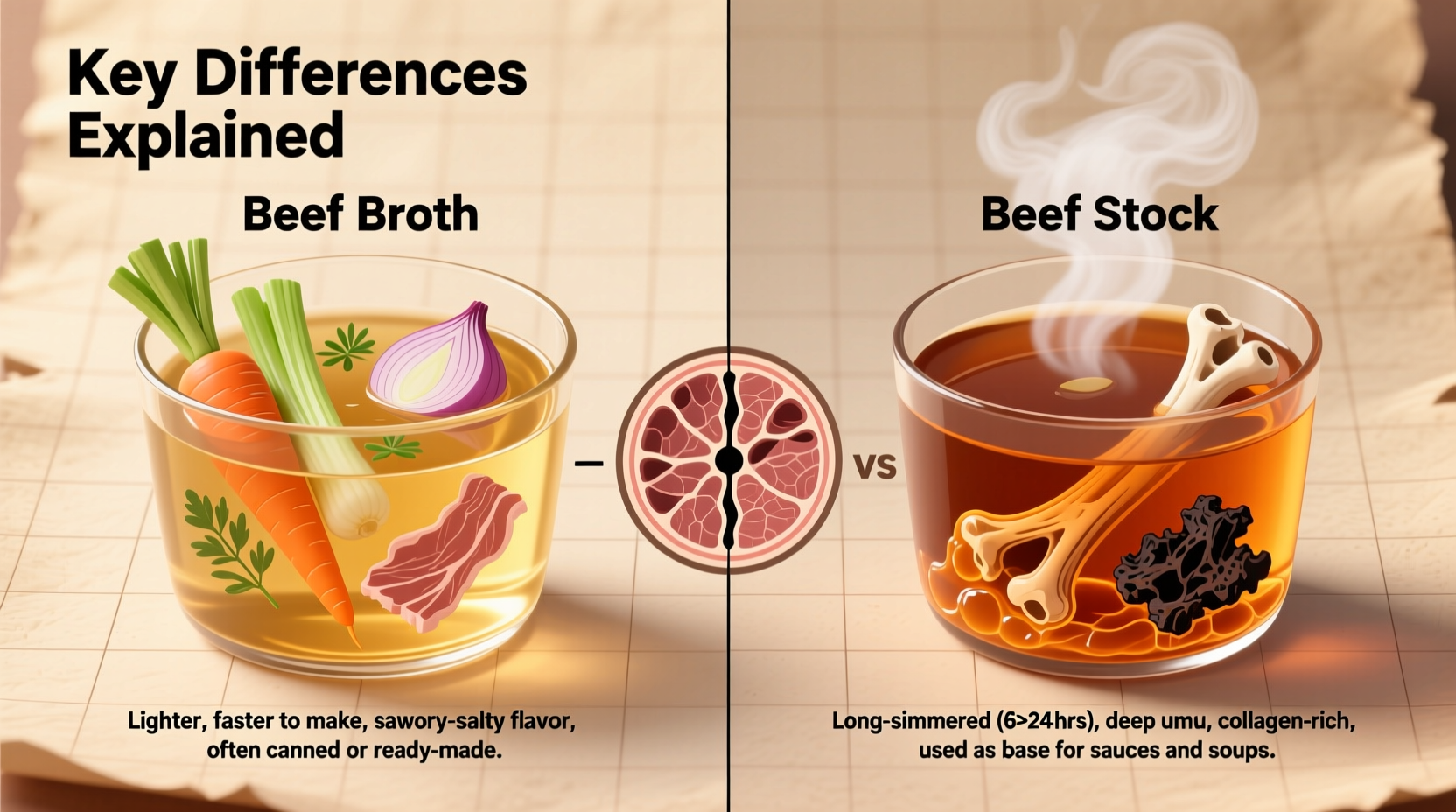
Beef broth is a flavorful liquid made primarily by simmering meat—often beef trimmings, stew meat, or leftover cooked beef—with aromatic vegetables (typically onion, carrot, celery), herbs, and seasonings such as bay leaf, thyme, and black pepper. It is designed to be palatable on its own, with a well-rounded, seasoned taste. Broth tends to have a lighter body and clearer appearance than stock, though this varies by preparation.
Beef stock, by contrast, is extracted mainly from bones—especially marrow, knuckle, and oxtail bones—often roasted first to deepen flavor. It may include minimal meat and relies on extended simmering (8–24 hours) to dissolve collagen into gelatin, creating a rich, viscous texture when cooled. Stock is typically underseasoned, serving as a neutral, concentrated building block rather than a finished product.
Historically, stock-making was a cornerstone of classical French cuisine, where chefs treated it as the “fond” (foundation) of sauces and refined dishes. Broth, meanwhile, has roots in home kitchens and medicinal traditions, valued for its digestibility and nourishing qualities. Today, both are essential tools, each suited to specific culinary goals.
Key Characteristics
| Characteristic | Beef Broth | Beef Stock |
|---|---|---|
| Primary Ingredients | Meat, vegetables, herbs, salt | Bones (roasted), connective tissue, mirepoix |
| Simmer Time | 1–3 hours | 8–24 hours |
| Texture | Light, thin, clear | Rich, full-bodied, gelatinous when cooled |
| Flavor Profile | Savory, seasoned, immediate umami | Deep, complex, mineral-rich, subtle sweetness |
| Salt Content | Usually seasoned (contains salt) | Typically unsalted or lightly salted |
| Culinary Role | Finished liquid, soup base, seasoning agent | Concentrated foundation for sauces, reductions, braises |
| Shelf Life (Homemade) | 4–5 days refrigerated; 6 months frozen | 5–7 days refrigerated; up to 1 year frozen |
Practical Usage: How to Use Each in Cooking
Beef broth shines when you need a ready-to-use, flavorful liquid. Its balanced seasoning and clean taste make it ideal for:
- Soups and stews where the liquid is part of the final dish (e.g., beef barley soup, pho, minestrone).
- Grain cooking—substituting water with broth adds depth to rice, quinoa, or couscous.
- Quick pan sauces—deglazing a skillet after searing meat with broth creates an instant sauce.
- Degusting or sipping—high-quality broth is often consumed plain for health or hydration.
Because broth contains salt, adjust additional seasoning carefully. A general rule: if a recipe calls for broth and includes added salt, taste before finalizing seasoning.
Beef stock excels in applications requiring body and concentration. Its high gelatin content provides mouthfeel and emulsifying power, making it indispensable for:
- Restaurant-style pan sauces—reduced stock forms the backbone of demi-glace, bordelaise, or red wine sauce.
- Braising liquids—its viscosity helps create a luscious sauce as meat cooks low and slow.
- Gravy enhancement—adding a few tablespoons of reduced stock deepens color and richness.
- Clarified consommés—stock’s purity and protein content allow for precise clarification using egg whites.
Stock is rarely used straight from the pot. Instead, it’s often reduced to intensify flavor and thicken naturally. For example, simmering 1 quart of stock down to 1 cup creates a glaze-like concentrate called *glace de viande*, which can elevate sauces, marinades, or compound butters.
Pro Tip: When using store-bought stock, reduce it by half before incorporating into sauces. This compensates for lower gelatin content and concentrates flavor lost during commercial processing.
Variants & Types
Both broth and stock come in various forms, each with distinct advantages depending on storage, convenience, and intended use.
By Form
- Homemade: Offers superior flavor control, freshness, and no preservatives. Requires time and planning but yields unmatched quality.
- Canned or Carton (Commercial): Convenient and shelf-stable. Varies widely in sodium, gelatin, and ingredient quality. Read labels carefully—some contain yeast extract, MSG, or artificial flavors.
- Concentrated (Bouillon, Paste, Cubes): Dehydrated versions of broth or stock. Dissolve in water to reconstitute. High in salt; best used sparingly for seasoning rather than as a primary liquid.
- Freeze-Dried Granules: Lightweight and long-lasting. Ideal for camping or emergency kits, though flavor is often flat compared to fresh.
By Culinary Style
- White Beef Stock: Made from unroasted bones, resulting in a lighter color and milder flavor. Used in pale sauces or dishes where color matters.
- Brown Beef Stock: Bones are roasted until deeply caramelized before simmering, producing a richer, more robust liquid. The standard for most savory applications.
- Pho Broth: A hybrid—technically a broth but prepared with charred onions, ginger, and spices over several hours. Includes both meat and bones, straddling the line between broth and stock in texture and function.
- Pressure-Cooker Versions: Modern adaptations using electric pressure cookers can extract gelatin from bones in 2–3 hours, mimicking traditional stock with less time.
Home Cook Hack: Save beef scraps (bones, ends, fat caps) in a freezer bag. Once you have 2–3 pounds, roast them and make stock on a weekend. One batch can yield 6–8 cups—freeze in 1-cup portions for easy access.
Comparison with Similar Ingredients
Several ingredients are commonly mistaken for beef broth or stock. Clarifying these distinctions prevents culinary missteps.
| Ingredient | Difference from Beef Broth/Stock | When to Use |
|---|---|---|
| Bouillon Cube | Dehydrated, highly salted, often contains fillers and artificial flavors. Not equivalent in depth or body. | Emergency seasoning boost; never a true substitute for homemade stock. |
| Beef Consommé | A clarified, intensely flavored version of broth or stock, purified using egg whites and ground meat. | Elegant clear soups, garnished presentations, refined sauces. |
| Gravy Base (e.g., Au Jus) | Au jus is the natural juices from roasted meat; thinner and less concentrated than stock. | Serving alongside roast beef; quick pan sauces with deglazing. |
| Vegetable Broth | Lacks animal-derived gelatin and deep umami. Flavor profile is earthy, not meaty. | Vegan/vegetarian dishes, light soups, or when avoiding meat. |
| Maggi Seasoning / Liquid Aminos | Wheat-based or soy-derived umami enhancers, not broths. Add depth but no body. | Stir-fries, marinades, or seasoning drops—not a liquid base. |
“A great sauce begins with a great stock. If your foundation is weak, everything built upon it will falter.” — Auguste Escoffier
Practical Tips & FAQs
Can I substitute broth for stock (or vice versa)?
Yes—but with caveats. In soups or grain dishes, broth can replace stock without issue. However, in sauces or braises requiring body, broth lacks the gelatin to provide richness. To compensate, add a teaspoon of powdered gelatin per cup or reduce broth longer to concentrate it. Conversely, using stock in place of broth risks oversalting a dish later, since stock is usually unsalted and requires seasoning at the end.
Why doesn’t my homemade stock gel?
Gelation depends on collagen content. Use joints, knuckles, feet, or oxtail—these parts are rich in connective tissue. Avoid using only meaty bones like rib or sirloin. Simmer gently for at least 8 hours; boiling too hard can break down gelatin. Chill overnight: if it doesn’t set, reduce further by half to concentrate remaining gelatin.
How do I store homemade broth and stock?
Cool rapidly by placing the pot in an ice bath. Refrigerate within 2 hours. Skim fat once chilled—it preserves the surface but can turn rancid. Store in airtight containers:
- Refrigerator: Up to 5 days
- Freezer: 6–12 months (use wide-mouth jars or silicone trays for easy portioning)
Label with date and type. Frozen cubes are ideal for small additions to sauces or sautés.
Is boxed “stock” actually stock?
Most commercial stocks fall short. They often contain less gelatin, more sodium, and stabilizers instead of natural body. Look for brands that list “beef bones” as the first ingredient and avoid those with “caramel color,” “autolyzed yeast,” or “natural flavors” unless you know the source. Better yet, supplement with homemade batches.
What’s the best way to reduce stock?
Simmer uncovered in a wide, shallow pan to increase evaporation. Reduce by half for a standard concentrate; by 90% for glace. Stir occasionally to prevent scorching. Cool quickly and store in small containers. A 1:4 reduction means 4 cups become 1 cup—intensely flavorful and efficient to store.
Can I make vegetarian stock that mimics beef stock?
Not exactly—but you can achieve umami depth. Roast mushrooms (especially shiitake), tomatoes, and onions until charred. Simmer with soy sauce, tomato paste, and a strip of kombu. Add a splash of liquid smoke sparingly. While it won’t have the mouthfeel of gelatin, it offers a satisfying savory base for plant-based dishes.
Storage Checklist:
☐ Cool rapidly after cooking
☐ Skim fat or leave as protective layer
☐ Label containers with type and date
☐ Freeze in 1-cup or 2-cup portions
☐ Leave headspace in jars (liquid expands when frozen)
Summary & Key Takeaways
Beef broth and beef stock are not interchangeable in technique or outcome. Broth is seasoned, meat-based, and ready to serve—a flavorful liquid ideal for soups, grains, and quick sauces. Stock is built on bones, simmered long to extract gelatin, and left unsalted to serve as a versatile foundation for reductions, gravies, and professional dishes.
The choice between them should be intentional:
- Use broth when you want a tasty, drinkable liquid or a simple flavor boost.
- Use stock when you need body, richness, and the ability to reduce into a concentrated essence.
- Always consider salt levels: broth adds seasoning, stock does not.
- Homemade versions outperform commercial ones in gelatin and flavor integrity.
Mastering the difference elevates everyday cooking. Whether you’re building a weeknight stew or refining a restaurant-quality sauce, selecting the correct base ensures your dish starts on solid ground—literally and figuratively.




 浙公网安备
33010002000092号
浙公网安备
33010002000092号 浙B2-20120091-4
Comments
No comments yet. Why don't you start the discussion?