
Running out of thyme mid-recipe doesn’t mean compromising flavor. This versatile herb—beloved in French, Mediterranean, and American cuisines—is often essential in stews, roasts, soups, and marinades. But when it’s missing from your spice rack, knowing which substitute delivers a comparable depth without altering the dish’s character becomes crucial. The right alternative depends not only on availability but on understanding flavor profiles, potency, and culinary context. Whether you're using fresh or dried herbs, navigating substitutions requires precision. This guide explores the most effective replacements for thyme, detailing how each performs across different dishes, their flavor intensity, proper conversion ratios, and practical applications. From close botanical relatives like marjoram and oregano to bold stand-ins like rosemary or herbes de Provence, this resource equips home cooks and culinary professionals with actionable knowledge to maintain balance and authenticity—even without thyme.
Definition & Overview
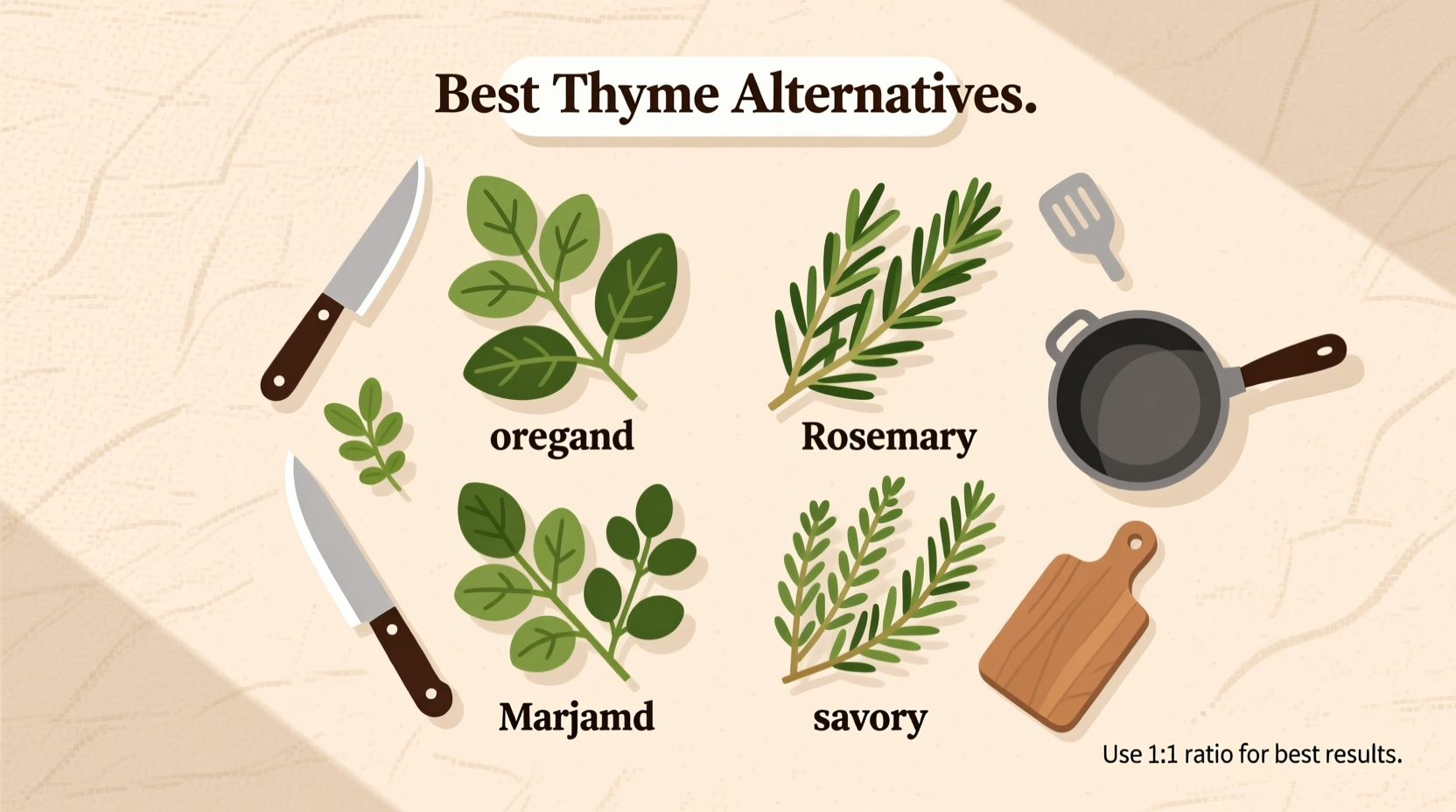
Thyme (Thymus vulgaris) is a perennial herb native to the Mediterranean region and a cornerstone of French and Provençal cooking. It belongs to the Lamiaceae family, sharing lineage with mint, oregano, basil, and rosemary. Known for its small, oval leaves and woody stems, thyme imparts a subtle yet complex flavor: earthy, slightly floral, with hints of camphor, lemon, and pepper depending on the variety. Two primary forms are used in cooking—fresh and dried—with dried thyme being more concentrated and commonly found in pantries worldwide.
Culinary thyme acts as both a background note and a structural element in long-cooked dishes. Its essential oils contain thymol, a compound contributing to its antiseptic aroma and preservative qualities, which also enhances shelf-stable preparations like stocks and braises. While often paired with bay leaf, parsley, and garlic in bouquet garni, thyme stands independently in rubs, sauces, vegetable sautés, and meat glazes. Because of its widespread use, identifying accurate substitutes isn’t about direct replication—it’s about achieving harmonic balance within the dish’s overall profile.
Key Characteristics
| Characteristic | Description |
|---|---|
| Flavor Profile | Earthy, slightly minty, with floral and peppery undertones; some varieties exhibit citrus (e.g., lemon thyme) |
| Aroma | Warm, herbal, faintly medicinal due to thymol content |
| Form Available | Fresh sprigs, dried leaves, ground powder |
| Heat Stability | High—ideal for long simmers and roasting; flavor mellows over time |
| Culinary Function | Base seasoning, aromatic foundation, bouquet garni component |
| Shelf Life | Fresh: 2–3 weeks refrigerated; Dried: 1–3 years if stored properly |
Practical Usage
Thyme's strength lies in its ability to blend seamlessly into savory dishes without dominating. In a coq au vin, lamb stew, or roasted chicken, it supports other flavors while adding dimension. When substituting, match not just taste but function: will the replacement withstand prolonged heat? Does it release flavor gradually or burst quickly?
Use these general substitution guidelines based on form:
- 1 tsp dried thyme ≈ 1 tbsp fresh thyme
- Substitutes should be added early in cooking unless otherwise noted (e.g., delicate herbs like chervil).
- Always start with less—especially with potent herbs like rosemary—and adjust after tasting.
In creamy mushroom risotto, omitting thyme might leave the dish flat. A half-teaspoon of marjoram can restore that gentle warmth. In a tomato-based ragu, oregano works well as a near-equivalent. For grilled meats, a mix of rosemary and sage mimics thyme’s woodsy backbone. The key is adjusting ratios and considering synergy with existing ingredients.
Pro Tip: If no single substitute matches perfectly, combine two milder herbs—such as a pinch of oregano plus a dash of marjoram—to approximate thyme’s layered complexity without overpowering the dish.
Variants & Types
Not all thyme is the same, and recognizing variants helps refine substitution choices:
- Common Thyme (Thymus vulgaris): Standard culinary type; balanced earthiness.
- Lemon Thyme (Thymus citriodorus): Citrus-forward; excellent in fish, poultry, and dressings. Substitute with lemon zest + regular thyme or lemongrass in small amounts.
- Wild Thyme (Thymus serpyllum): More intense, slightly bitter; use sparingly.
- French vs. English Thyme: French tends to be more floral and refined; English has a stronger, camphorous edge.
Dried thyme loses volatility over time. Test potency by rubbing a pinch between fingers—if the scent is faint, replace it or increase quantity slightly when substituting.
Best Substitutes for Thyme
1. Marjoram
Often called “sweet thyme,” marjoram (Origanum majorana) is the closest relative in flavor and application. Slightly sweeter and less pungent than oregano, it offers a soft, floral warmth ideal for delicate dishes like poached fish, egg dishes, or white bean purées. Use a 1:1 ratio when replacing fresh or dried thyme, though reduce by 25% if the recipe already includes other robust herbs.
“Marjoram lacks thyme’s sharpness but brings an elegant roundness that complements rather than competes.” — Cook’s Science
2. Oregano
A staple in Italian and Mexican cooking, oregano (Origanum vulgare) is bolder and more assertive than thyme. While both belong to the same genus, oregano leans toward peppery, grassy notes with a hint of bitterness. Best suited for tomato sauces, grilled vegetables, and hearty meat dishes. Use at a 3:4 ratio—¾ tsp oregano per 1 tsp thyme—to avoid overwhelming the palate.
3. Rosemary
Rosemary (Salvia rosmarinus, formerly Rosmarinus officinalis) is significantly stronger and more resinous. Its pine-like intensity suits lamb, roasted potatoes, and focaccia but can dominate lighter fare. Due to potency, use only one-third the amount: ⅓ tsp dried rosemary per 1 tsp dried thyme. Strip leaves from stem and chop finely to distribute evenly.
4. Herbes de Provence
This commercial blend typically contains thyme, rosemary, marjoram, oregano, and lavender. Even if your mix includes thyme, it functions as a ready-made substitute due to dominant herbal synergy. Use a 1:1 ratio for dried thyme. Avoid versions with added lavender if preparing savory mains; reserve those for rustic breads or vegetable tarts.
5. Savory (Summer or Winter)
Savory—particularly summer savory (Satureja hortensis)—is sometimes known as “the bean herb” for its traditional pairing with legumes. Flavor-wise, it bridges thyme and marjoram: peppery yet fragrant. Use in equal measure for soups, lentils, and sausages. Winter savory (Satureja montana) is more intense; reduce by half.
6. Tarragon
While not a direct flavor match, tarragon’s anise-like sweetness works in specific applications where thyme plays a secondary role—particularly in béarnaise sauce, chicken salad, or butter-poached seafood. Not recommended for stews or red meat dishes. Substitute cautiously: ¾ tsp tarragon per 1 tsp thyme, and add near the end of cooking.
7. Sage
Sage (Salvia officinalis) brings a musty, slightly peppery note common in autumnal and holiday dishes. While stronger than thyme, it pairs well with poultry, squash, and brown butter sauces. Use at ½ the amount—½ tsp dried sage replaces 1 tsp dried thyme—and crush leaves before adding to release oils gradually.
8. Basil
Fresh basil adds a sweet, clove-like brightness best reserved for quick-cooking or raw applications. In tomato salads, caprese, or pesto-based dishes, it can stand in for fresh thyme when combined with a touch of oregano. Not suitable for long simmers. Use 1:1 for fresh herbs only.
Comparison with Similar Ingredients
Understanding distinctions prevents misapplication. Here’s how thyme compares to frequent substitutes:
| Herb | Flavor Difference | Best Used In | Substitution Ratio (for 1 tsp dried thyme) |
|---|---|---|---|
| Oregano | Bolder, spicier, less floral | Pizza sauce, chili, grilled meats | ¾ tsp |
| Marjoram | Sweeter, softer, more floral | Chicken, stuffing, light stews | 1 tsp |
| Rosemary | Piney, intense, camphor-rich | Lamb, roasted root vegetables | ⅓ tsp |
| Savory | Peppery, clean, similar depth | Bean dishes, sausages, broths | 1 tsp |
| Sage | Musty, earthy, slightly bitter | Thanksgiving stuffing, brown butter | ½ tsp |
Practical Tips & FAQs
Can I use Italian seasoning instead of thyme?
Yes. Most Italian seasoning blends contain oregano, basil, rosemary, marjoram, and sometimes thyme. Use a 1:1 ratio as a direct substitute. Check the label—if thyme is listed, the blend will perform even better. Ideal for pasta sauces, baked fish, and meatballs.
Is dried thyme as good as fresh?
Dried thyme concentrates flavor and works better in long-cooked dishes like soups and braises. Fresh thyme offers brighter top notes and is preferable in finishing dishes like salads or compound butters. As a rule, triple the volume when swapping dried for fresh (i.e., 1 tsp dried = 1 tbsp fresh).
How do I store dried herbs to preserve potency?
Keep in airtight containers away from heat, light, and moisture—never above the stove. Label with purchase date. Dried thyme retains optimal flavor for 1–2 years. Test freshness by crushing a bit in your palm; weak aroma indicates degradation.
What’s the best thyme substitute for French onion soup?
Marjoram or a pinch of herbes de Provence. Both provide the gentle herbal base needed without clashing with caramelized onions and Gruyère. Avoid rosemary or sage, which would overpower the dish’s delicate balance.
Can I skip thyme entirely?
In short-cooked dishes like stir-fries or omelets, omitting thyme may go unnoticed. In slow-simmered recipes—beef bourguignon, split pea soup, or braised short ribs—the absence creates a noticeable gap in depth. Always substitute rather than skip when possible.
Are there non-herb alternatives?
Not directly. Some spice blends like poultry seasoning (which contains thyme) work in savory applications. Ground celery seed (¼ tsp) can mimic thyme’s earthy-mineral tone in a pinch, especially in stuffings. However, no single spice replicates thyme’s full aromatic spectrum.
Case Study – Emergency Beef Stew Fix: Midway through a beef stew, a cook realized thyme was depleted. With only rosemary and oregano available, they used ½ tsp oregano and ¼ tsp crushed rosemary. After 30 minutes of simmering, the stew developed a robust, slightly rustic profile—different from classic thyme-based versions but equally satisfying. The takeaway: strategic blending compensates for missing single herbs.
Summary & Key Takeaways
Thyme’s unique combination of earthiness, subtlety, and heat stability makes it a kitchen essential—but it’s not irreplaceable. Successful substitution hinges on matching culinary intent, not just flavor. Marjoram and savory offer the closest parallels, while oregano, rosemary, and herbes de Provence serve as strong functional alternatives in appropriate contexts. Always consider the dish’s duration, protein base, and accompanying seasonings before choosing a stand-in.
Remember these core principles:
- Use marjoram for delicate, floral notes in poultry and vegetables.
- Reach for oregano in tomato-heavy or Mediterranean-inspired dishes.
- Employ rosemary sparingly—it dominates easily.
- Blend herbs when no perfect substitute exists.
- Adjust ratios based on form (dried vs. fresh) and potency.
- Store dried herbs properly to extend usability and consistency.
Mastering herb substitution empowers adaptability in the kitchen. Rather than viewing a missing ingredient as a setback, treat it as an opportunity to refine your palate and deepen your understanding of flavor architecture. With this guide, you’re equipped to navigate any thyme shortage confidently—delivering delicious results every time.
Explore your spice cabinet with curiosity—not panic. The best meals often begin with improvisation.




 浙公网安备
33010002000092号
浙公网安备
33010002000092号 浙B2-20120091-4
Comments
No comments yet. Why don't you start the discussion?