
Anime has long been a medium for exploring complex human emotions, often pushing beyond entertainment to deliver profound psychological narratives. Among its most compelling contributions are protagonists who grapple not just with external conflicts, but with internal struggles—depression, anxiety, trauma, identity crises, and existential dread. These characters don’t merely endure hardship; they reflect real-world emotional battles in ways that resonate deeply with audiences. Their journeys aren’t about becoming invincible heroes, but about learning to live despite pain.
In an era where mental health awareness is growing, these portrayals offer more than catharsis—they provide validation. For viewers navigating similar challenges, seeing a character articulate fear, numbness, or self-doubt can be transformative. This article examines some of the most emotionally layered anime protagonists whose stories stand out for their authenticity, depth, and enduring relatability.
Shinji Ikari – Neon Genesis Evangelion
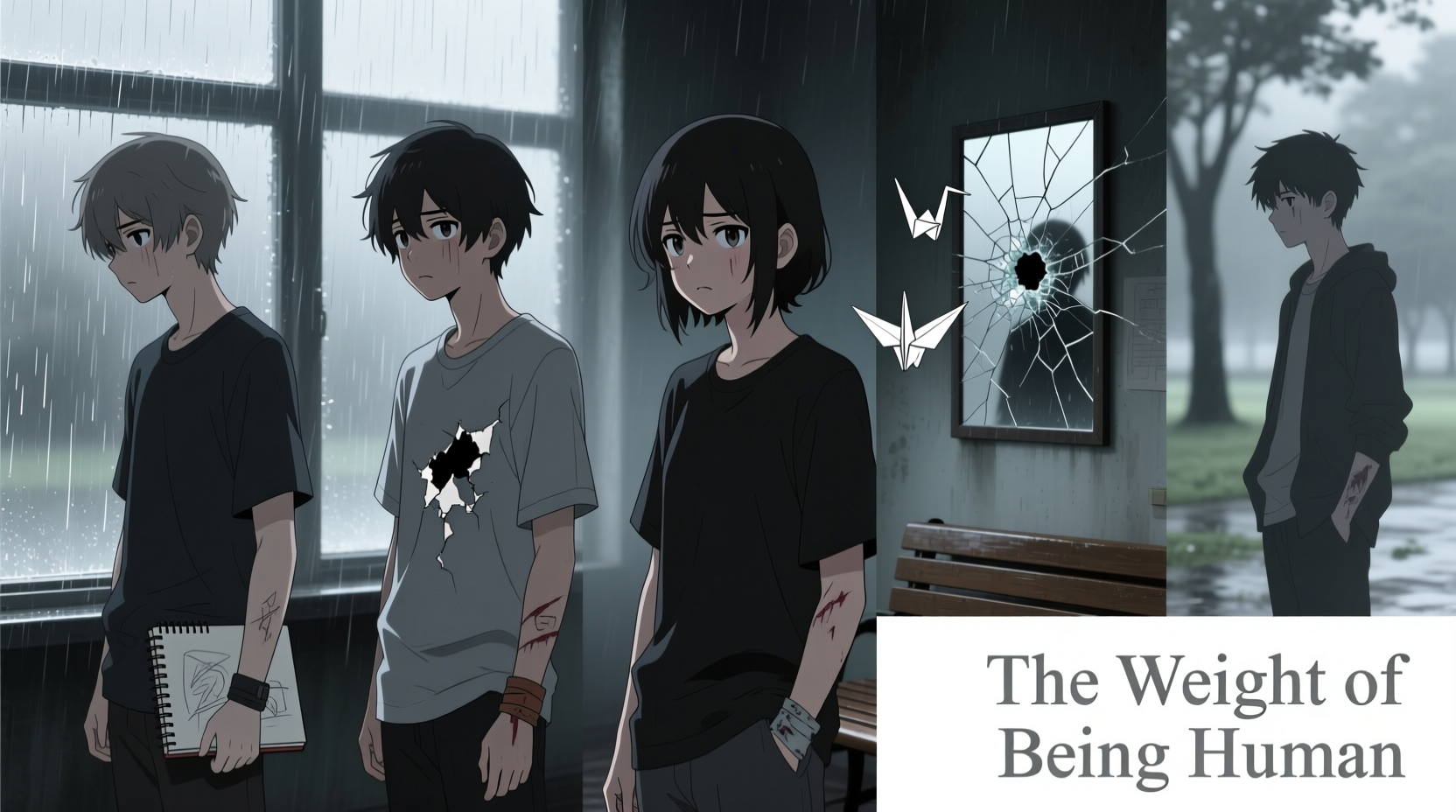
No discussion of mental health in anime is complete without addressing Shinji Ikari. As the reluctant pilot of the Evangelion Unit-01, Shinji embodies vulnerability in a genre often dominated by stoic warriors. From the opening episodes, his inner monologue reveals a deep-seated fear of rejection, abandonment, and failure. He doesn’t want to fight; he wants to be wanted.
Created during Japan’s economic stagnation and rising youth alienation, *Neon Genesis Evangelion* reflects societal anxieties through Shinji’s psyche. His passive behavior, social withdrawal, and repeated questioning of “Who am I?” mirror symptoms of depression and chronic low self-worth. What makes him profoundly relatable is not his eventual heroism, but his hesitation—the way he agrees to fight not from courage, but from a desperate need for approval.
“Don’t run away.” — Misato Katsuragi
“I’m not running away… I’m just… taking a step back!” — Shinji Ikari
This exchange encapsulates Shinji’s core conflict: the desire to connect warring with the terror of being hurt. The series’ infamous finale dives into surreal psychoanalysis, confronting themes of Instrumentality, ego dissolution, and the painful necessity of individual existence. Shinji’s arc asks whether connection is worth the risk of suffering—a question many grappling with mental health issues face daily.
Spike Spiegel – Cowboy Bebop
Spike Spiegel moves through life with the effortless cool of a jazz solo—smooth, improvisational, and tinged with melancholy. On the surface, he’s a bounty hunter with sharp reflexes and sharper wit. Beneath that veneer lies a man haunted by a past he can neither escape nor fully remember. His relationship with Julia, a lost love entangled with the Red Dragon Syndicate, becomes symbolic of unresolved grief and emotional disconnection.
Spike suffers from what psychologists might diagnose as PTSD mixed with existential detachment. He flirts with death, takes reckless risks, and uses humor to deflect serious conversations. His famous line, “Ain’t it funny how the things you hate stay with you forever?” speaks volumes about repressed trauma. Unlike traditional heroes who seek redemption, Spike seems to be searching for closure—or perhaps permission to stop running.
The final episode, “The Real Folk Blues,” strips away all action to reveal Spike’s internal emptiness. Returning to confront Vicious isn’t about victory; it’s about facing the part of himself he abandoned. His journey underscores a crucial truth: healing isn’t always about survival. Sometimes, it’s about finally stopping.
Yukako Yamagishi – JoJo’s Bizarre Adventure: Diamond is Unbreakable
While often framed as an antagonist, Yukako Yamagishi offers one of anime’s most nuanced depictions of obsessive love and borderline personality traits. Her infatuation with high school classmate Koichi Hirose begins as admiration but spirals into fixation, manipulation, and self-harm—all while maintaining a facade of normalcy.
What sets Yukako apart is her complexity. She isn’t villainized for her feelings; instead, the narrative treats her obsession with empathy. Her Stand ability, \"Love Deluxe,\" which allows her to bind others with unbreakable tape, serves as a metaphor for emotional dependency. She literally wraps people in layers meant to protect, yet suffocate.
Her arc culminates not in punishment, but transformation. After being rejected, she attempts suicide—only to survive and begin rebuilding her sense of self. In later appearances, including *Thus Spoke Kishibe Rohan*, she’s shown working toward independence, still carrying scars but no longer defined by them. Her story affirms that even extreme emotional dysregulation can coexist with growth and dignity.
Chihiro Ogino – Spirited Away
Hayao Miyazaki’s *Spirited Away* may appear whimsical, but at its heart lies a powerful narrative about childhood anxiety, displacement, and resilience. Ten-year-old Chihiro finds herself trapped in a spirit world after her parents are transformed into pigs—an event symbolizing loss of stability and parental neglect.
Chihiro begins as timid, tearful, and overwhelmed. Her initial helplessness isn’t played for laughs; it’s portrayed with sincerity. Yet, over time, she learns to navigate bureaucracy, negotiate with deities, and advocate for others—even saving her friend Haku from self-erasure. Her journey mirrors cognitive behavioral therapy principles: gradual exposure, skill-building, and reclaiming agency.
Unlike many protagonists who gain power through magic or lineage, Chihiro grows through perseverance and empathy. Her triumph isn’t defeating a villain, but remembering her name—and thus, her identity. For viewers dealing with dissociation or anxiety, this message is quietly revolutionary: you are still *you*, even when everything feels lost.
McDowell Twins (Kaede & Sawa) – Wandering Son
*Wandering Son* remains one of the most sensitive portrayals of gender identity and adolescent mental health in anime. Centered on fifth-grader Shuichi Nitori and his friend Yoshino Takatsuki, both exploring their gender identities, the series also features Kaede and Sawa McDowell—identical twins whose divergent paths highlight how mental health intersects with family dynamics and societal expectations.
Kaede, assigned female at birth, presents masculinely and experiences gender dysphoria masked as general discomfort. Sawa, meanwhile, conforms outwardly but struggles with anxiety and perfectionism. Their shared experience of being compared, judged, and expected to be “the same” exacerbates their individual crises. The pressure to perform normalcy leads to panic attacks, academic burnout, and strained relationships.
The brilliance of their portrayal lies in subtlety. There are no dramatic breakdowns or melodramatic revelations—just quiet moments of exhaustion, misgendering, and longing. These characters remind us that mental health isn’t always loud. Sometimes, it’s the silence between siblings who no longer know how to talk to each other.
Expert Insight: Why Emotional Authenticity Matters
“Anime’s strength lies in its willingness to sit with discomfort. Characters like Shinji or Chihiro don’t ‘get over’ their pain—they learn to carry it differently. That’s closer to real recovery than any instant cure.” — Dr. Lena Tran, Clinical Psychologist & Media Analyst
Comparative Table: Mental Health Themes Across Key Protagonists
| Character | Anime | Primary Mental Health Theme | Relatability Factor | Growth Outcome |
|---|---|---|---|---|
| Shinji Ikari | Neon Genesis Evangelion | Depression, Avoidance, Identity Fragmentation | High – fear of rejection, need for validation | Chooses individual existence over fusion |
| Spike Spiegel | Cowboy Bebop | PTSD, Existential Nihilism | High – emotional detachment, running from past | Finds peace through confrontation, not survival |
| Yukako Yamagishi | JoJo’s Bizarre Adventure | Obsessive Love, Self-Worth Issues | Moderate-High – intense attachment patterns | Survives crisis, begins independent life |
| Chihiro Ogino | Spirited Away | Anxiety, Displacement, Identity Loss | Very High – common childhood fears | Regains confidence and autonomy |
| Kaede & Sawa McDowell | Wandering Son | Gender Dysphoria, Social Anxiety | Specific but profound for LGBTQ+ youth | Ongoing journey toward self-acceptance |
Actionable Checklist: How to Engage with These Stories Mindfully
- Reflect on personal resonance: Which character’s struggle echoes your own? Journal about why.
- Avoid romanticizing pain: Appreciate the artistry without glorifying self-destruction.
- Use media as a conversation starter: Discuss these portrayals with friends or therapists.
- Seek balance: Pair heavy anime with uplifting content to prevent emotional fatigue.
- Validate your feelings: If a scene triggers sadness or recognition, acknowledge it without judgment.
Mini Case Study: Finding Solace in Shinji
Rafael, a 24-year-old graduate student in Toronto, began watching *Evangelion* during a depressive episode triggered by academic pressure and family estrangement. Initially drawn to the mecha battles, he found himself unexpectedly moved by Shinji’s monologues.
“I kept thinking, ‘Why doesn’t he just try harder?’ Then it hit me—I was saying the same thing to myself,” Rafael recalls. “Seeing someone voice that inner paralysis made me realize I wasn’t lazy. I was scared.”
He started therapy shortly after finishing the series. While he doesn’t claim full recovery, he credits Shinji’s story with helping him articulate emotions he’d buried for years. “It didn’t fix me,” he says, “but it made me feel less alone.”
Frequently Asked Questions
Can watching anime about mental health make my symptoms worse?
Potentially. While many find comfort in relatable portrayals, intense or triggering content may exacerbate anxiety or depression in vulnerable individuals. It’s important to practice media mindfulness—pause if overwhelmed, pair viewing with supportive activities, and consult a professional if distress persists.
Are these portrayals medically accurate?
Some align closely with clinical experiences (e.g., Shinji’s avoidance behaviors), while others dramatize for narrative effect (e.g., Evangelion’s Instrumentality). They should be seen as emotional truths rather than diagnostic tools. Always refer to licensed professionals for medical insight.
Why do so many mentally complex protagonists come from older anime?
Series like *Evangelion* and *Cowboy Bebop* emerged in the 1990s, a period of cultural introspection in Japan following economic decline. Creators had greater creative freedom to explore psychological depth. Modern anime continues this legacy, though often within more commercial frameworks.
Conclusion: Stories That Heal Because They Hurt
The best anime protagonists with mental health depth don’t offer easy answers. They stumble, withdraw, lash out, and cry. And in doing so, they give permission to audiences to do the same. Relatability isn’t about perfection—it’s about honesty. Whether it’s Shinji’s whispered “I mustn’t run away,” Chihiro’s quiet determination, or Yukako’s painful evolution, these characters remind us that emotional wounds don’t negate worth.
These stories won’t replace therapy, medication, or human connection. But they can serve as mirrors, companions, and catalysts. In a world that often demands constant strength, anime teaches a different lesson: that fragility, too, can be heroic.




 浙公网安备
33010002000092号
浙公网安备
33010002000092号 浙B2-20120091-4
Comments
No comments yet. Why don't you start the discussion?