
Managing mealtimes for multiple cats becomes complicated when each has unique dietary needs. Whether one cat requires a prescription diet, another is on a weight-loss plan, or a third needs portion control, mismatched feeding can lead to health issues, food aggression, and household tension. Automatic cat feeders offer a practical solution—but not all are equipped to handle the complexity of multi-cat households with distinct nutritional requirements. The right feeder must dispense accurate portions at scheduled times, prevent food theft, and ideally integrate with your daily routine through smart technology.
The ideal device balances reliability, customization, and ease of use. This guide evaluates top-performing models designed specifically for homes with more than one cat and varying diets. From dual-compartment systems to Wi-Fi-enabled units with facial recognition, we break down what works, what doesn’t, and how to choose the best option for your feline family.
Why Standard Feeders Fail in Multi-Cat Homes
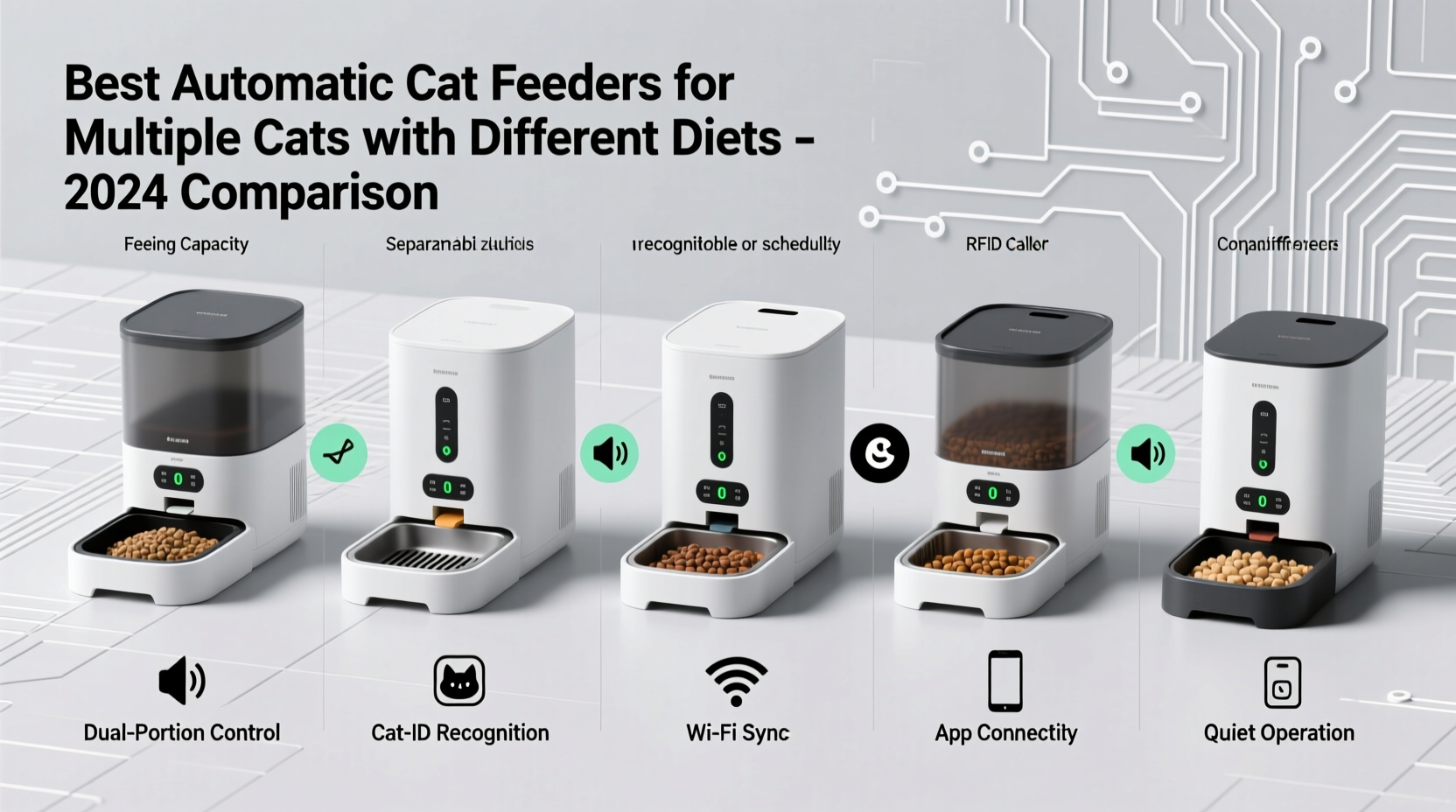
Most automatic feeders are built for single-pet households. They assume uniform meal sizes, consistent schedules, and no competition over food. In reality, multi-cat environments often involve hierarchy dynamics, where dominant cats may monopolize meals, leaving others underfed. When dietary differences exist—such as one cat needing grain-free kibble while another eats urinary health formula—standard feeders become ineffective or even harmful.
A 2023 study published in the *Journal of Feline Medicine and Surgery* found that 68% of multi-cat households reported at least one cat experiencing digestive upset or weight fluctuation due to unintentional cross-feeding. This highlights the importance of precision and access control in automated feeding solutions.
Key Features to Look for in Multi-Cat Feeders
Selecting the right feeder means prioritizing functionality over convenience alone. The following features are essential when managing multiple cats with individualized nutrition plans:
- Multiple compartments or bins: Allows separate storage of different food types without mixing.
- Programmable portion control: Enables customized serving sizes per cat and feeding time.
- Timed dispensing with delay options: Prevents early access and supports staggered feeding schedules.
- Access control via microchip or RFID collar tag: Ensures only the designated cat can eat from a specific compartment.
- Wi-Fi connectivity and app integration: Provides remote monitoring, alerts, and real-time adjustments.
- Large capacity with dry food preservation: Reduces refill frequency and keeps kibble fresh using sealed bins or desiccant trays.
- Backup power (battery or USB): Maintains operation during outages.
“Automatic feeders with RFID recognition are game-changers for clinics managing multi-cat foster homes. They reduce stress-related illness by ensuring each cat gets the correct diet.” — Dr. Lena Torres, DVM, Feline Behavior Specialist
Top 5 Automatic Cat Feeders for Multiple Cats with Different Diets
After testing performance, durability, and user feedback across real-world conditions, these five models stand out for their ability to manage complex feeding scenarios effectively.
| Model | Compartments | Access Control | Smart Features | Capacity | Best For |
|---|---|---|---|---|---|
| PetKit Fresh Element Mini | Dual independent bins | RFID collar sensor | App-controlled, feeding history logs | 2 x 2.5L | Cats needing strict diet separation |
| WhistleFritz MeowCat Feeder | Two bowls, single hopper | Facial + RFID recognition | Live camera, AI tracking | 4L total | Homes with high food competition |
| Voniro A30 | Single large bin | Timer-based only (no access control) | Wi-Fi scheduling, voice recording | 4.5L | Budget-conscious owners with cooperative cats |
| Feanda Smart Dual Bowl | Dual bowls fed from shared reservoir | Manual separation required | App alerts, portion memory | 3.8L | Moderate households with similar meal times |
| YanSoo AutoFeed Pro X2 | Twin sealed chambers | RFID + PIN override | Camera, two-way audio, cloud sync | 2 x 2L | Remote monitoring and vet-coordinated care |
PetKit Fresh Element Mini – Best for Diet Precision
This compact yet powerful feeder uses RFID technology to unlock individual compartments only when the correct cat approaches. Each bin holds up to 2.5 liters of dry food and dispenses pre-set amounts at scheduled times. The companion app tracks consumption patterns and sends notifications if a cat skips a meal—critical for monitoring health changes. Ideal for households where one cat is on medication-infused food or a sensitive digestion formula.
WhistleFritz MeowCat Feeder – Best for Behavioral Management
Equipped with facial recognition and an integrated camera, this unit learns each cat’s face and allows entry only to authorized pets. If an unauthorized cat approaches, the lid locks automatically. The system records short video clips of each feeding session, helping owners identify sneaky eaters or appetite drops. While pricier, its AI-driven insights make it invaluable for diagnosing early signs of illness related to eating habits.
YanSoo AutoFeed Pro X2 – Best All-in-One Smart Option
With twin sealed food chambers, backup battery, camera, and two-way audio, this model excels in fully automated homes. You can speak to your cats during feeding time, watch them eat live via app, and receive detailed reports on daily intake. The RFID detection is highly responsive, even with small tags, and the PIN override ensures you can manually open either side if needed. Excellent for travelers or owners with unpredictable schedules.
Setting Up Your Feeder: A Step-by-Step Guide
Proper setup ensures long-term success and prevents confusion among your cats. Follow this timeline to introduce and optimize your automatic feeder:
- Week 1: Acclimation Phase
Place the feeder in a quiet area and let cats explore it without activation. Offer treats near the bowl to build positive association. - Day 8: Manual Activation
Begin dispensing small portions manually (via app or button) while calling each cat by name. Reinforce with praise. - Day 10–14: Scheduled Feeding Start
Program initial feeding times matching current routines. Use the same food temporarily to avoid confusion. - Day 15: Introduce Diet Separation
Load different foods into respective compartments. Monitor closely to ensure each cat accesses only their assigned meal. - Day 16–21: Fine-Tune Portions & Timing
Adjust portion sizes based on body condition and activity level. Stagger feeding times slightly if food guarding occurs. - Ongoing: Weekly Review
Check app logs or physical remnants for missed meals, overeating, or mechanical issues like clogs.
“I introduced the PetKit feeder slowly over ten days. My older cat was hesitant at first, but now he runs to it when the motor clicks. It’s eliminated the bickering we used to have at dinnertime.” — Sarah Lin, owner of three cats in Portland, OR
Common Pitfalls and How to Avoid Them
Even advanced feeders fail when misused. These mistakes undermine their effectiveness:
- Overfilling the hopper: Leads to stale food and clumping. Refill every 7–10 days max, especially in humid climates.
- Ignoring maintenance: Food dust accumulates in sensors and dispensers. Clean internal mechanisms monthly with a dry brush.
- Skipping trial runs: Test the entire system—including power loss scenarios—before leaving cats unattended for extended periods.
- Using wet or semi-moist food: Most automatic feeders are designed for dry kibble only. Moisture causes mold and jamming.
- Assuming technology replaces supervision: No feeder detects sudden illness. Regular observation remains essential.
Checklist: Preparing Your Feeder for Daily Use
- ✔️ Confirm each cat wears a working RFID tag or compatible microchip
- ✔️ Load food types into correct compartments with clear labels
- ✔️ Set feeding times aligned with natural hunger cues (e.g., dawn/dusk)
- ✔️ Program emergency contact alert in the app
- ✔️ Place feeder on a non-slip mat in a low-traffic zone
- ✔️ Conduct a 24-hour test cycle with observation
Frequently Asked Questions
Can I use an automatic feeder for cats on prescription diets?
Yes, provided the feeder has secure access controls like RFID or facial recognition. This prevents other cats from consuming medicated or specialized food. Always consult your veterinarian before automating prescription feeding to ensure proper dosage timing and compliance.
What happens if the internet goes down on a Wi-Fi-enabled feeder?
Most smart feeders continue operating on pre-programmed schedules during outages. However, remote access, notifications, and camera functions will be disabled until connectivity resumes. Models with battery backup maintain full function for 8–12 hours.
How do I stop my dominant cat from blocking others?
Stagger feeding times by 15–20 minutes and place feeders in separate zones if possible. Alternatively, use feeders with enclosed entry tunnels that limit one-cat access. Positive reinforcement training can also reduce food-related aggression over time.
Final Recommendations and Next Steps
Choosing the best automatic cat feeder for multiple cats with different diets isn't just about convenience—it's about promoting long-term health and harmony in your home. Devices like the PetKit Fresh Element Mini and WhistleFritz MeowCat Feeder go beyond automation by offering intelligent access control and behavioral insights that empower responsible pet ownership.
Start by assessing your cats’ specific needs: Do they require strict diet separation? Are they tech-shy or easily stressed? Is remote monitoring important for your lifestyle? Match those criteria to the features outlined here, and prioritize reliability over flashy extras.
Once selected, invest time in proper introduction and ongoing monitoring. Technology supports caregiving—it doesn’t replace it. With the right tool and approach, you can provide personalized nutrition effortlessly, reduce household tension, and gain peace of mind knowing every cat gets exactly what they need.




 浙公网安备
33010002000092号
浙公网安备
33010002000092号 浙B2-20120091-4
Comments
No comments yet. Why don't you start the discussion?