
Thunderstorms can be terrifying for toddlers. The sudden booms of thunder, flashing lights, and unpredictable changes in atmosphere trigger fear responses in young children who don’t yet understand what’s happening. Unlike adults, toddlers lack the cognitive ability to rationalize storms as natural phenomena, making their anxiety both intense and real. But with the right approach, parents and caregivers can significantly reduce a child’s distress. The most effective calming techniques combine preparation, sensory regulation, emotional reassurance, and distraction. These methods are not about eliminating fear entirely—they’re about helping toddlers feel safe, supported, and in control when the world outside feels chaotic.
Understanding Toddler Fear During Storms
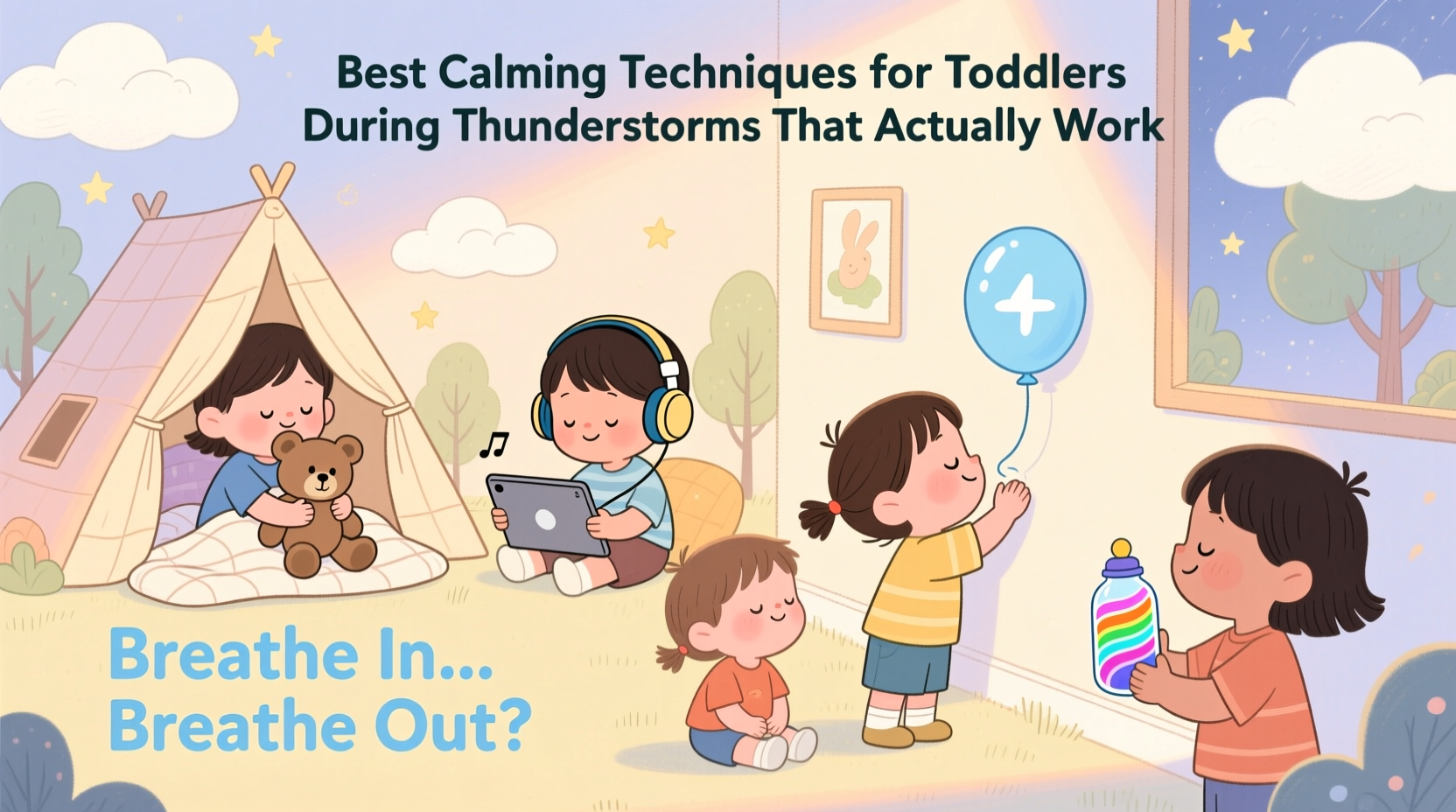
Toddlers between the ages of 1 and 3 are still developing their sense of security and understanding of cause and effect. Loud noises like thunder activate the amygdala—the brain’s fear center—long before the prefrontal cortex (responsible for logic) can interpret the sound as harmless. This biological reality explains why a toddler might burst into tears at the first clap of thunder, even if they were calm moments before.
Fear is not weakness; it’s a survival mechanism. However, when fear becomes overwhelming, it interferes with a child’s ability to self-regulate. Unchecked anxiety can lead to sleep disturbances, increased clinginess, or regression in developmental milestones like toilet training or language use. That’s why proactive calming strategies are essential—not just for surviving one storm, but for building long-term emotional resilience.
“Children aren’t born with fear of storms—they learn how to respond based on their environment and caregiver reactions. A calm adult presence is the most powerful tool in reducing a toddler’s anxiety.” — Dr. Lena Peterson, Child Psychologist and Author of *Early Emotional Resilience*
Pre-Storm Preparation: Building Confidence Before the Sky Rumbles
The most effective calming begins before the first raindrop falls. Preparing your toddler ahead of time reduces the element of surprise and empowers them with knowledge. When children understand what’s happening, even in simple terms, they feel more in control.
Use age-appropriate language to explain storms. Instead of saying “It’s just noise,” which dismisses their feelings, try: “The clouds are bumping together, and that makes a loud sound called thunder. It’s loud, but it can’t hurt us.” Pair this with picture books about weather, such as Thunder Cake by Patricia Polacco or Little Cloud by Eric Carle, to normalize the experience through storytelling.
Step-by-Step Guide: Creating a Calm-Down Kit
A dedicated calm-down kit gives toddlers tangible tools to manage their emotions. Assemble it together so they feel ownership. Include items that engage multiple senses:
- Comfort object: A favorite stuffed animal or lovey.
- Sensory toy: A soft textured ball, squishy gel pad, or fidget spinner.
- Noise buffer: Child-safe headphones or a small white noise machine.
- Visual aid: A battery-powered nightlight or lava lamp to soften dark rooms.
- Distractors: A laminated sheet with stickers, coloring pages, or simple puzzles.
- Personalized item: A photo of family members with a note: “We’re safe together.”
Store the kit in an accessible place. When a storm approaches, retrieving it becomes part of a reassuring routine.
In-the-Moment Techniques That Actually Work
When thunder strikes and your toddler is already distressed, immediate intervention is key. The goal isn’t to stop the crying instantly, but to co-regulate—help your child return to a state of calm by modeling stability yourself.
1. Physical Reassurance Through Touch
Holding your toddler close provides deep pressure stimulation, which lowers cortisol levels and activates the parasympathetic nervous system. Sit with them on your lap, facing away from windows, and offer slow, rhythmic strokes down their back. Humming or singing a familiar lullaby adds auditory comfort. Avoid forcing contact—if your child resists being held, sit nearby and keep your voice soft and steady.
2. Sensory Distraction and Environmental Control
Reduce external stimuli that amplify fear. Close curtains to block lightning flashes. Play calming background music or nature sounds at low volume. Use a fan or white noise app to mask thunderclaps. For some toddlers, wearing noise-dampening headphones with soothing audio (like a favorite story or song) creates a protective auditory bubble.
3. Breathing Together: Simple Co-Regulation
Toddlers can’t practice deep breathing independently, but they can mirror you. Try “balloon breaths”: inhale slowly through the nose while pretending to blow up a balloon, then exhale slowly through pursed lips. Make it playful—“Let’s fill our invisible balloons together!” Repeat five times. This technique slows heart rate and signals safety to the brain.
4. Redirect Attention with Purposeful Play
Engage your child in an absorbing activity. Build a blanket fort indoors and pretend it’s a storm-proof cave. Read a book using dramatic voices. Offer playdough and say, “Let’s make thunder monsters and squish them!” The key is interaction—you’re not distracting to avoid emotion, but helping them process it through creative expression.
| Technique | Best For | When to Use |
|---|---|---|
| Physical holding & rocking | High distress, clinging behavior | Immediately after loud thunder |
| White noise or music | Sensitivity to sound | During continuous rumbling |
| Breathing exercises | Hyperarousal, rapid breathing | When child is slightly calmer |
| Interactive play | Curious or active toddlers | Between thunderclaps |
| Dark-room games | Fear of lightning flashes | At onset of storm |
Real Example: How One Family Managed Nighttime Storm Anxiety
The Rivera family noticed their 2-year-old daughter, Maya, began waking up screaming during storms. At first, they tried reassuring her verbally, but she remained inconsolable. After consulting a pediatric behavioral specialist, they implemented a multi-step plan.
They started by reading weather-themed books during the day and introducing a “storm buddy”—a stuffed owl named Thunder who “protects” the house. They installed a soft-glow nightlight shaped like clouds and played a looping ocean wave recording during storm season. When a storm hit at night, instead of rushing in immediately, they waited 30 seconds, then entered calmly, picked her up, and said, “I hear the thunder too. We’re safe. Let’s listen to the waves with Thunder Owl.”
Within three weeks, Maya stopped waking up during storms. She now reaches for her owl when she hears thunder and says, “It’s okay, we have our light.” This case illustrates how consistency, environmental adaptation, and emotional validation create lasting change.
Common Mistakes That Worsen Toddler Storm Anxiety
Even well-meaning parents can accidentally intensify fear. Recognizing these pitfalls helps avoid counterproductive responses:
- Minimizing feelings: Saying “Don’t be scared” invalidates emotion. Instead, acknowledge: “That was loud! It’s okay to feel startled.”
- Overexposure: Forcing a child to watch lightning or stand near windows increases trauma risk.
- Inconsistent reactions: If one parent comforts while another laughs at the fear, the child receives mixed messages.
- Using storms as punishment: Phrases like “The thunder is angry because you didn’t clean up” link weather to moral judgment, increasing anxiety.
- Waiting until panic sets in: Proactive calming works better than crisis management.
Long-Term Strategies for Reducing Storm Sensitivity
While immediate calming is crucial, long-term emotional health depends on consistent support and gradual desensitization. Consider these ongoing practices:
Model calm behavior. Children observe how adults react. If you tense up at thunder, they learn to do the same. Narrate your own coping: “I hear thunder. I’m going to take a deep breath. That helps me feel okay.”
Use positive reinforcement. Praise brave behavior, no matter how small: “You stayed in your bed during the thunder—that was so strong!” Avoid rewards like candy, which create dependency. Instead, offer verbal recognition or a sticker on a “bravery chart.”
Introduce storm sounds gradually. On sunny days, play low-volume thunder recordings while engaging in fun activities. Pair the sound with something positive—snacks, dancing, or storytime—to rewire associations.
Track patterns. Keep a simple log of storm dates and your child’s reaction. Over time, you’ll notice improvement, which reinforces persistence.
“Exposure without support creates fear. Exposure with support builds courage. The difference is the adult’s presence.” — Dr. Arjun Mehta, Developmental Pediatrician
FAQ: Common Questions About Calming Toddlers During Storms
How do I know if my toddler’s fear is normal or a sign of something more serious?
It’s normal for toddlers to fear loud noises. Concern arises if fear persists beyond age 4, causes extreme physical reactions (vomiting, inability to speak), disrupts daily functioning, or leads to avoidance behaviors (refusing to go outside after rain). In such cases, consult a child psychologist.
Should I let my toddler sleep in our bed during storms?
Occasional co-sleeping is fine during acute stress, but rely on it sparingly. Instead, bring their mattress into your room or sleep in their bed temporarily. This maintains proximity without disrupting long-term sleep routines. Always return to their bed before morning to reinforce independence.
Can watching weather reports help or hurt?
For toddlers, weather reports are too abstract and often alarming. Avoid exposing them to news coverage. Instead, use simple apps with friendly icons (like smiling suns or cloud characters) to talk about weather in a controlled way.
Checklist: Your Action Plan for Storm Season
Stay prepared with this practical checklist:
- ✅ Read at least one storm-themed children’s book per month
- ✅ Assemble a calm-down kit with your toddler’s input
- ✅ Install blackout curtains or blinds in their room
- ✅ Download a white noise or nature sounds app
- ✅ Practice a mock storm drill once every few weeks
- ✅ Record a personalized calming message to play during storms
- ✅ Keep a log of storm reactions to track progress
- ✅ Model calm breathing and verbal reassurance daily
Conclusion: Turning Fear Into Resilience
Thunderstorms will come and go, but how we respond shapes our toddlers’ emotional development. The techniques that truly work aren’t quick fixes—they’re rooted in empathy, consistency, and co-regulation. By preparing in advance, staying present during distress, and reinforcing courage over time, you’re not just calming a child during a storm. You’re teaching them that discomfort doesn’t have to mean danger, and that they are never alone in their fear.
Start tonight. Talk about clouds. Sing a quiet song. Hold your toddler a little closer when the thunder rolls. Small actions build big confidence. Share your experiences, what works for your family, and how your child has grown through the noise. Together, we can raise a generation that faces life’s storms—literally and metaphorically—with strength and calm.




 浙公网安备
33010002000092号
浙公网安备
33010002000092号 浙B2-20120091-4
Comments
No comments yet. Why don't you start the discussion?