
Finding your footing in the world of drone flying can be overwhelming—especially when your first flight ends in a tree or a crash on the sidewalk. For new pilots, one of the most valuable features is obstacle avoidance. It acts as a digital co-pilot, detecting walls, trees, and poles before you do. When combined with a compact design, this technology makes drones easier to transport, simpler to control, and far more forgiving during learning curves.
Today’s market offers several beginner-friendly models that balance size, safety, and smart navigation. These drones don’t just prevent accidents—they build confidence. Whether you’re capturing weekend hikes, filming family events, or simply exploring the skies, choosing a compact drone with reliable obstacle detection is a game-changer. This guide breaks down the top options, explains how obstacle systems work, and helps you make an informed decision based on real-world usability.
Why Obstacle Avoidance Matters for New Pilots
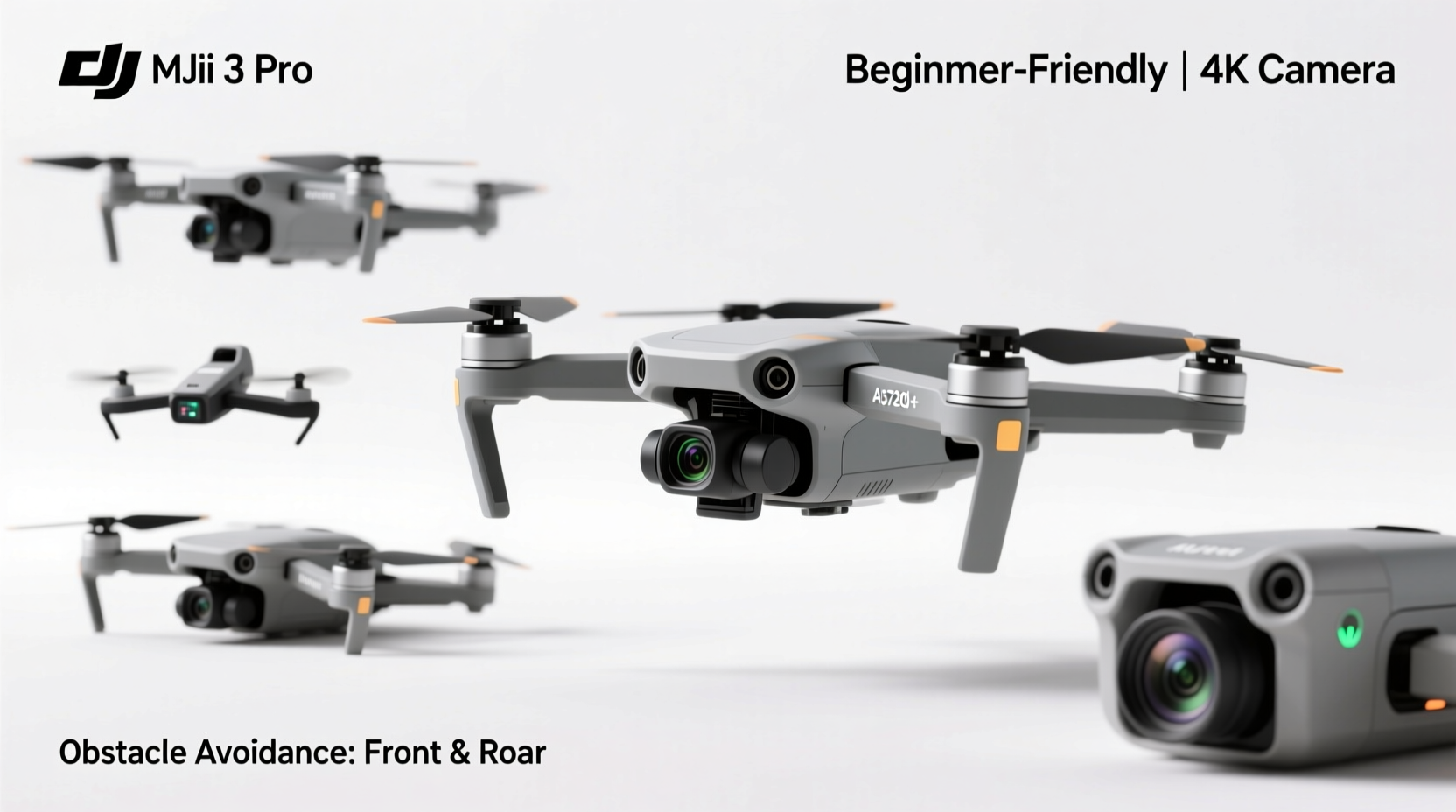
Beginners often struggle with spatial awareness. Judging distance from objects while viewing through a screen creates a disconnect between perception and reality. Without warning systems, even minor joystick errors can lead to collisions that damage propellers, cameras, or entire frames.
Obstacle avoidance uses sensors—typically ultrasonic, infrared, or stereo vision—to detect nearby surfaces. Advanced models combine multiple sensor types with algorithms that predict movement and adjust flight paths automatically. Most beginner drones feature front and bottom sensors, allowing them to stop before hitting walls and land smoothly over uneven terrain.
“Drones with obstacle sensing reduce crash rates by up to 70% among novice users,” says David Lin, UAV researcher at the Institute for Aerial Innovation. “They’re not foolproof, but they give new pilots breathing room to learn stick control and camera framing.”
This doesn’t mean you can fly blindly. Sensors have limitations—low-light conditions, thin wires, or fast movements may not register in time. But having even basic detection dramatically increases success during early flights.
Top 5 Compact Drones for Beginners with Obstacle Avoidance
The following models stand out for their blend of portability, intelligent flight features, and ease of use. Each includes some level of obstacle detection and is designed with entry-level pilots in mind.
- DJI Mini 4 Pro
- Autel Robotics EVO Nano+
- Parrot Anafi USA (Compact Edition)
- Hubsan Zino Mini Pro
- Skydio 2+ (for aggressive learning)
DJI Mini 4 Pro – Best Overall Choice
The Mini 4 Pro continues DJI’s dominance in compact drone design. Weighing under 249 grams, it avoids FAA registration in many countries and fits in a jacket pocket. Despite its size, it packs forward, backward, upward, and downward obstacle sensing using a four-directional vision system.
Its AI-powered QuickShots automate cinematic moves like orbits and rocket ascents. The 4K HDR camera delivers sharp, stabilized footage, and the transmission range reaches up to 20 kilometers with OcuSync 3+. Battery life is around 31 minutes, which is exceptional for this class.
Autel EVO Nano+ – Strong Alternative with Thermal Option
Autel positions itself as a privacy-focused competitor to DJI. The EVO Nano+ weighs slightly more than the Mini 4 Pro but still stays below key regulatory thresholds. It features tri-directional obstacle sensing (front, back, and bottom) and advanced APAS 4.0 (Autonomous Path Planning System).
One standout feature is the available thermal imaging variant, useful for outdoor enthusiasts checking campsite temperatures or inspecting rooftops. Its 50MP camera captures detailed stills, and low-light performance exceeds expectations for its size.
Parrot Anafi USA – Rugged and Secure
While less common in consumer circles, Parrot’s Anafi series is trusted by public safety agencies. The compact version retains encrypted data storage, making it ideal for users concerned about signal interception. It includes front and bottom obstacle detection and boasts a 32x zoom camera with 4K resolution.
The folding arms make it highly portable, and wind resistance up to 50 km/h ensures stable flights in unpredictable weather. However, battery life is limited to 25 minutes, and support resources are fewer compared to DJI.
Hubsan Zino Mini Pro – Budget-Friendly Entry
Priced significantly lower than competitors, the Zino Mini Pro surprises with decent obstacle sensing and solid image quality. It uses dual-vision sensors in front and bottom, sufficient for avoiding major collisions. The 1/1.3” CMOS sensor records smooth 4K video and performs well in daylight.
Its app interface isn't as polished as DJI's, and GPS accuracy can drift in urban areas. Still, for under $500, it offers excellent value for those testing the waters of aerial photography.
Skydio 2+ – Most Advanced Avoidance, Steeper Learning Curve
Skydio leads in autonomous navigation. Using six 4K cameras, it builds a real-time 3D map of surroundings, enabling full 360-degree obstacle avoidance. It excels at follow-me mode, weaving through trails and trees with precision unmatched by other compact drones.
However, it weighs over 500 grams and lacks foldable arms, reducing portability. Also, availability has been inconsistent due to U.S. import restrictions. Best suited for active creators who prioritize autonomy over size.
Comparison Table: Key Features at a Glance
| Model | Weight | Obstacle Sensing | Battery Life | Camera | Price Range |
|---|---|---|---|---|---|
| DJI Mini 4 Pro | 249g | Front, Back, Up, Down | 31 min | 4K HDR | $759–$959 |
| Autel EVO Nano+ | 249g | Front, Back, Down | 28 min | 4K, 50MP photos | $799–$899 |
| Parrot Anafi USA | 500g | Front, Down | 25 min | 4K, 32x zoom | $1,199 |
| Hubsan Zino Mini Pro | 249g | Front, Down | 33 min | 4K | $499 |
| Skydio 2+ | 530g | 360° Surround | 27 min | 4K | $1,099 |
What to Look for in a Beginner Drone with Obstacle Detection
Selecting the right drone involves more than checking boxes. Consider these practical factors:
- Weight and Portability: Under 250 grams avoids registration in many regions and allows easy travel.
- Sensor Coverage: Front and downward sensors are essential; side or rear detection improves safety in dynamic environments.
- Battery Life: Longer flight times reduce interruptions and help build piloting rhythm.
- App Interface: A clean, intuitive mobile app makes settings adjustments and flight logging easier.
- Crash Protection: Propeller guards and durable frames minimize repair costs after minor impacts.
Step-by-Step Guide to Your First Safe Flight
Flying a drone safely requires preparation. Follow this timeline before launching:
- Day 1 – Unbox and Inspect: Charge all batteries. Examine propellers for cracks and ensure motors spin freely.
- Day 2 – Install App and Register: Download the official app, create an account, and register your drone if required by law.
- Day 3 – Practice Indoors or in Open Yard: Use GPS-free attitude mode in a large, empty space to get used to controls without wind interference.
- Day 4 – Enable Obstacle Mode: Turn on obstacle sensing in the app. Fly slowly toward a wall to test automatic stopping distance.
- Day 5 – First Outdoor Flight: Choose a calm, open field away from people. Keep altitude below 40 feet and stay within visual line of sight.
- Day 6+ – Gradual Exploration: Begin incorporating automated shots and practice landing in designated zones.
“Your first ten flights should focus on muscle memory, not footage quality,” advises Maria Tran, certified drone instructor. “Let the obstacle system handle risks while you master yaw, pitch, and throttle.”
Mini Case Study: Learning from a Park Incident
James, a photography student in Portland, bought a DJI Mini 3 Pro (predecessor to the Mini 4 Pro) to film campus events. On his third flight, he launched near a grove of tall pines. As he backed away to frame a wide shot, the drone began drifting sideways into branches.
Thanks to the rear obstacle sensors, the drone halted mid-motion and hovered in place. The app alerted him with a vibration and on-screen prompt. He repositioned safely and completed the flight without damage.
“I thought I was being careful,” James said later. “But that moment showed me how fast things go wrong. The sensors gave me a second chance.”
This scenario underscores why reactive tech matters—even cautious users face blind spots.
Checklist: Pre-Flight Safety & Setup
Use this checklist every time you prepare to fly:
- ✅ Fully charged battery and remote controller
- ✅ Firmware updated on drone and app
- ✅ Obstacle avoidance enabled in flight settings
- ✅ Clear flight zone (no people, animals, or power lines)
- ✅ Weather check: winds under 20 km/h, no rain
- ✅ Calibrated compass and IMU (Inertial Measurement Unit)
- ✅ Memory card inserted and formatted
Frequently Asked Questions
Do all compact drones with obstacle avoidance work in low light?
No. Most rely on visual sensors that require adequate ambient light. Performance degrades at dusk or in shaded forests. Some models like the Skydio 2+ use infrared augmentation, but even these have limits. Avoid flying in dim conditions regardless of sensor claims.
Can I turn off obstacle avoidance?
Yes, most drones allow disabling the feature. This is useful when flying close to fences or netting where sensors might误trigger braking. However, keep it on during early learning stages.
Are cheaper drones with obstacle sensing reliable?
It depends. Brands like Hubsan and Holy Stone offer budget models, but their software lags behind leaders like DJI and Skydio. Expect slower reaction times and occasional false stops. For consistent reliability, invest in established platforms.
Final Thoughts and Next Steps
Starting your drone journey with obstacle avoidance isn’t a shortcut—it’s a foundation. These systems absorb the cost of early mistakes, turning frustration into progress. The DJI Mini 4 Pro remains the gold standard for beginners seeking compact size and intelligent safety. Alternatives like the Autel EVO Nano+ and Hubsan Zino Mini Pro offer compelling options across different budgets.
Remember, technology supports skill—it doesn’t replace it. Spend time understanding airspace rules, practicing manual maneuvers, and reviewing flight logs. Over time, you’ll rely less on alerts and more on instinct.




 浙公网安备
33010002000092号
浙公网安备
33010002000092号 浙B2-20120091-4
Comments
No comments yet. Why don't you start the discussion?