
Waking up with a dry throat, stuffy nose, or itchy skin during colder months is more than just uncomfortable—it’s often a sign your bedroom air lacks adequate humidity. For those living in apartments, dorms, or cozy sleeping spaces, finding an effective yet unobtrusive solution can be tricky. Large humidifiers may over-humidify or dominate nightstands, while undersized models might not do enough to improve air quality. The ideal compromise? A compact humidifier designed specifically for small bedrooms—powerful enough to make a difference but discreet enough to blend into tight spaces.
Today’s market offers a range of compact humidifiers that combine quiet operation, efficient mist output, energy efficiency, and minimalist design. Whether you’re sensitive to noise, short on surface area, or simply want a clutter-free aesthetic, choosing the right model can transform your sleep environment. This guide explores top-performing compact humidifiers, key features to consider, and real-world usage strategies to maintain healthy humidity levels without sacrificing space.
Why Small Bedrooms Need Smart Humidification
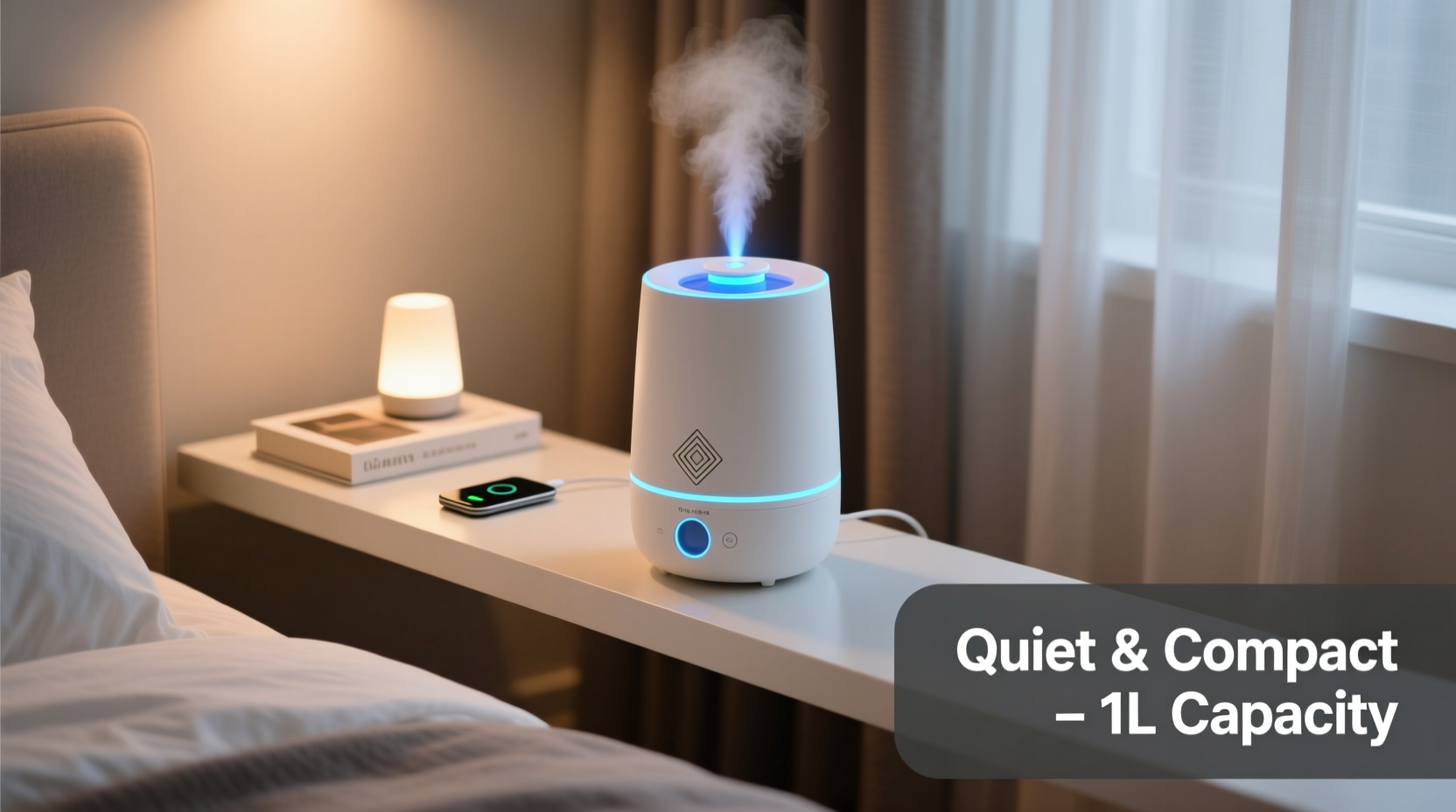
Small bedrooms typically range from 100 to 200 square feet. While this size seems manageable, poor air circulation, heating systems, and seasonal changes can create microclimates that rapidly dry out indoor air. Relative humidity below 30% can lead to irritated sinuses, cracked lips, static electricity, and even disrupted sleep patterns. On the other hand, exceeding 50% increases the risk of mold and dust mites.
A well-chosen compact humidifier maintains ideal humidity (between 30% and 50%) without overwhelming the room. Unlike bulky console units, compact models are engineered for precision and portability. Many operate at under 30 decibels—quieter than a whisper—making them ideal for light sleepers. Their smaller water tanks reduce refill frequency less dramatically than expected due to targeted dispersion, and their footprint rarely exceeds that of a coffee mug.
“Maintaining balanced humidity in small sleeping areas directly improves respiratory comfort and skin health, especially in winter.” — Dr. Lena Torres, Environmental Health Specialist
Top 5 Compact Humidifiers for Small Bedrooms
After evaluating performance, noise level, ease of cleaning, and spatial efficiency, these five models stand out as the best compact humidifiers for small bedrooms:
- Levoit Classic 200S Smart – Wi-Fi enabled ultrasonic humidifier with app control and auto-humidity mode. Covers up to 215 sq ft. Features a 2-liter tank, 24-hour runtime on low, and a sleek vertical design that saves horizontal space.
- TaoTronics TT-AH026 – Ultrasonic cool-mist humidifier with essential oil diffuser tray. 1.5L capacity, 16-hour max runtime, and a circular base only 7 inches in diameter. Ideal for bedside tables.
- Honeywell HUL520W – Evaporative humidifier with wick filter. Known for consistent output and self-regulating humidity. Takes up slightly more depth but has a narrow front profile. Excellent for allergy sufferers.
- Asakuchi Mini Humidifier (USB-Powered) – Ultra-portable personal humidifier. Runs on USB power, holds 500ml, and fits in the palm of your hand. Perfect for studio apartments or minimalist setups.
- Okami Petite Mist Pro – Dual-nozzle design for wider mist distribution in confined areas. 1.8L tank, touch controls, and a slim rectangular body that tucks neatly beside books or lamps.
Key Features to Look for in Space-Saving Models
Not all compact humidifiers are created equal. Size alone doesn’t guarantee suitability. Consider these critical features when selecting a unit for a small bedroom:
- Footprint vs. Height: Some models save floor space by being tall and narrow rather than wide. Measure your available area accordingly.
- Tank Capacity: Between 1L and 2L is optimal. Smaller tanks require frequent refills; larger ones may be too bulky.
- Noise Level: Look for units rated below 35 dB. True “silent” models use DC motors and advanced sound insulation.
- Mist Control: Adjustable settings let you fine-tune output based on season and comfort.
- Auto Shut-Off: Essential for safety and peace of mind when running overnight.
- Cleaning Accessibility: Units with wide openings and minimal internal crevices prevent mold buildup and simplify maintenance.
| Model | Dimensions (inches) | Tank Size | Noise Level | Runtime (Low) | Special Feature |
|---|---|---|---|---|---|
| Levoit Classic 200S | 6.7 × 6.7 × 10.2 | 2L | 28 dB | 24 hrs | Smart app control |
| TaoTronics TT-AH026 | 7.1 Ø × 10.6 | 1.5L | 32 dB | 16 hrs | Essential oil compatibility |
| Honeywell HUL520W | 9 × 7 × 12 | 1.45L | 34 dB | 14 hrs | Wick filter prevents over-humidifying |
| Asakuchi Mini | 3.9 Ø × 6.3 | 0.5L | 25 dB | 8 hrs | USB-powered, portable |
| Okami Petite Mist Pro | 5 × 4 × 11 | 1.8L | 30 dB | 20 hrs | Dual mist nozzles |
Step-by-Step: Optimizing Placement and Use
Even the best humidifier won’t perform well if used incorrectly. Follow this sequence to maximize effectiveness in a small bedroom:
- Measure Your Room: Confirm square footage to ensure the model you choose is appropriately sized. Most compact units cover 150–250 sq ft.
- Choose a Central, Elevated Spot: Avoid corners or behind furniture. Elevate the unit on a nightstand or shelf away from walls.
- Use Distilled Water: Prevents mineral buildup in ultrasonic models and reduces white dust. Extends time between cleanings.
- Set the Right Output Level: Start on low and increase only if needed. High settings in small rooms can lead to condensation on windows.
- Monitor Humidity: Use a standalone hygrometer or a smart humidifier with built-in sensors to stay within 30–50% RH.
- Clean Weekly: Empty the tank daily, rinse thoroughly, and perform a deep clean with vinegar or manufacturer-approved solution weekly.
- Refill Before Bed: Ensure uninterrupted operation through the night, especially during dry winter months.
Mini Case Study: Cozy Studio Living in Chicago
Jamal, a graphic designer living in a 180-square-foot studio apartment in downtown Chicago, struggled with dry skin and congestion every winter. His previous full-size humidifier took up half his nightstand and was so loud it disrupted his focus during late-night work sessions. After researching compact options, he chose the Levoit Classic 200S for its smart features and vertical design.
He placed it on a floating shelf near his bed, connected it to his home Wi-Fi, and set a schedule to run from 9 PM to 7 AM. Using the app, he monitored room humidity and adjusted output based on outdoor temperature. Within a week, he noticed fewer nighttime awakenings due to dry throat and improved skin condition. The unit’s narrow footprint allowed him to keep his lamp, book, and phone charger on the nightstand without crowding.
“I didn’t realize how much space I was wasting,” Jamal said. “Now my room feels balanced, and I don’t have to move things around just to refill a tank.”
Checklist: Choosing & Using a Compact Humidifier
Before purchasing and setting up your compact humidifier, go through this checklist to ensure long-term satisfaction:
- ✅ Measure available space (width, depth, height)
- ✅ Confirm room size matches humidifier’s coverage rating
- ✅ Prioritize noise level under 35 dB for undisturbed sleep
- ✅ Choose a model with auto shut-off and adjustable mist
- ✅ Opt for easy-to-clean components (wide tank opening, removable parts)
- ✅ Decide between cool mist, warm mist, or dual options based on preference
- ✅ Plan placement: elevated, central, away from electronics
- ✅ Buy distilled water or a demineralization cartridge if using hard water
- ✅ Set a weekly cleaning reminder
- ✅ Pair with a digital hygrometer for accurate monitoring
Frequently Asked Questions
Can a compact humidifier handle a bedroom with high ceilings?
Yes, as long as the square footage falls within the unit’s recommended range. However, higher ceilings may require longer runtime or strategic placement (e.g., mid-wall shelf) to promote better air mixing. Cool-mist ultrasonic models generally disperse upward more effectively than evaporative types.
How often should I clean a small humidifier?
Empty and rinse the water tank daily. Perform a thorough cleaning—using white vinegar or a manufacturer-recommended solution—at least once a week to prevent bacterial growth and mineral deposits. More frequent cleaning is needed in homes with hard water.
Are there humidifiers small enough for a nightstand with limited space?
Absolutely. Models like the Asakuchi Mini or Okami Petite Mist Pro are designed specifically for cramped surfaces. Their footprints are comparable to a standard alarm clock or tissue box, making them ideal for shared nightstands or studio layouts.
Final Thoughts: Breathe Easier Without Cluttering Your Space
The right compact humidifier does more than add moisture to the air—it enhances comfort, supports respiratory health, and contributes to restful sleep, all without compromising your bedroom’s functionality or aesthetics. In small spaces, every inch matters, and today’s best models prove that performance doesn’t have to come at the cost of footprint.
Whether you prioritize smart connectivity, whisper-quiet operation, or minimalist design, there’s a compact humidifier tailored to your lifestyle. By focusing on key features like tank efficiency, noise control, and ease of maintenance, you can enjoy consistent humidity without cluttering your nightstand or disrupting your routine.




 浙公网安备
33010002000092号
浙公网安备
33010002000092号 浙B2-20120091-4
Comments
No comments yet. Why don't you start the discussion?